
Pin It

El Califa de León Gaonera Tacos (The World's First Michelin-Starred Taco, Made at Home)

El Califa de León Gaonera Tacos (The World's First Michelin-Starred Taco, Made at Home)
Jump to Recipe
Prep 25 min Cook 15 min Serves 4 (2 tacos each)
Quick answer: Slice 1.5 lbs of NY strip against the grain into 1/4-inch pieces and lightly pound them flat between plastic wrap. Make salsa verde first: char tomatillos, serranos, and garlic in a dry cast iron skillet until blackened in spots, then blend with white onion, salt, and cilantro until smooth. Warm 8 corn tortillas on a dry comal, 30 seconds per side. For the cook: heat a cast iron skillet on HIGH for 3 full minutes until it just begins to smoke. Add 2 tablespoons of lard and wait until it shimmers. Lay 3 to 4 beef slices flat in a single layer with no crowding. The moment the beef hits the pan, sprinkle with a pinch of salt AND squeeze fresh lime juice directly over the cooking meat — this is the El Califa de León technique. Cook 30 to 45 seconds on the first side until lightly browned underneath, flip once, another 30 to 45 seconds. Transfer immediately to a warm corn tortilla. Top with finely diced white onion, rough-chopped cilantro, and a spoonful of salsa verde. A lime wedge on the side. Total active cook time per batch is under 90 seconds. Cook in small batches and eat immediately — the taquero at El Califa cooks for each customer in sequence; holding the cooked beef even 2 minutes dulls the lime brightness and makes it steam. The entire recipe — including fresh salsa — comes together in under 40 minutes and costs about $18 in ingredients versus a round-trip flight to Mexico City.

Shop the tools

Gear matched to this recipe. These are Amazon affiliate links — we may earn a small commission if you buy, at no extra cost to you.

As an Amazon Associate, Copycat Spices earns from qualifying purchases. Product images are generic illustrations, not the exact item listed.

El Califa de León Gaonera Tacos (The World's First Michelin-Starred Taco, Made at Home)

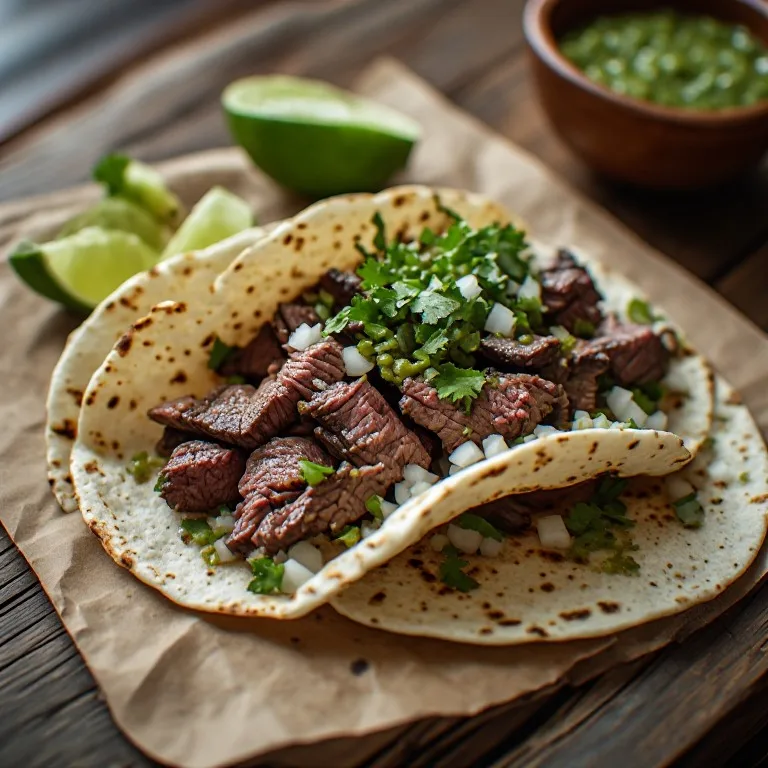
The world's first Michelin-starred taco: thinly sliced sirloin seared in lard with salt and lime squeezed directly onto the cooking meat, in a fresh corn tortilla. No shortcuts on technique — here is exactly how El Califa de León's taquero does it.

Easy Prep: 25 min Cook: 15 min Total: 40 min4 (2 tacos each) servings ~$4.50/serving
Prep25 min
Cook15 min
Total40 min
Servings
4
At home~$4.50/serving
vs
Restaurant~$20.25/serving
You save ~78%

The Story Behind the Recipe

Taquería El Califa de León has occupied a roughly 10-foot-wide space in Mexico City's San Rafael neighborhood since 1968, when the Sánchez Manzo family started selling tacos from what amounted to a hole in a wall. The stand is named after Rodolfo Gaona, the legendary Mexican bullfighter from the city of León, Guanajuato, who was nicknamed El Califa de León — the Caliph of León — for his nobility and elegance in the ring. For more than 50 years, taquero Arturo Rivera Martínez worked the comal in silence while Mexico City office workers, taxi drivers, and architects queued outside on the sidewalk. Then, in May 2024, Michelin published its first-ever Mexico City guide, and El Califa de León became the first taco stand in history to receive a Michelin star. The award triggered a global wave of press. Lines that had been 30 minutes became 2 hours. Australian food media flew in for pop-up appearances. The stand's phone number went viral. Rivera Martínez did not change a single thing.

The menu at El Califa is short: gaonera, filet, costilla, suadero. The gaonera — named for the bullfighter — is thinly sliced sirloin strip, cooked in lard on a screaming-hot comal, seasoned with nothing but salt and a squeeze of fresh lime juice squeezed directly over the cooking meat. "The secret is the simplicity of our taco," Rivera Martínez told the Associated Press after the award. "It has only a tortilla, red or green sauce, and that's it. That, and the quality of the meat." A single taco costs roughly 50 Mexican pesos — around $2.50 USD. The simplicity is not a limitation; it is the entire point. The Michelin inspectors, accustomed to judging 12-course tasting menus, recognized that a taco cooked with that precision, that consistency, and that quality of sourcing deserved the same designation. The lime-while-cooking technique is the one thing most home versions miss — the citric acid hits the hot meat surface and creates a subtle, irreplaceable brightness that lime squeezed afterward never achieves.

Nutrition Facts

Per serving (4 (2 tacos each) servings)
Calories315
Total Fat12g
Total Carbs22g
Dietary Fiber2g
Sugars2g
Protein26g
Sodium510mg

* Estimated values based on standard recipe preparation. Actual values may vary.

Ingredients

  • For the Gaonera (Sirloin Strip Tacos)
  • For the El Califa-Style Salsa Verde
  • For Serving

Instructions

💡
Pro tip: This recipe tastes even better the next day. The flavors need time to meld together in the fridge.
❄️
Storage: Keeps in an airtight container in the fridge for up to 2 weeks. Freezer-friendly for up to 3 months.
🎃 Free Halloween cookbook — download now The Copycat Halloween Cookbook A ready-made, photo-illustrated PDF of our best halloween copycat recipes — free to download, no building required. Pay what you want to support if you love it.

Free PDF — instant download. We'll also send new seasonal copycat recipes now and then; unsubscribe anytime. Or just download it →

Taquería El Califa de León is a 10-foot-wide taco stand in Mexico City’s San Rafael neighborhood that has been serving the same four tacos since 1968. In May 2024, it became the first taco stand in history to receive a Michelin star — and the first Mexican taco stand of any kind to be recognized by Michelin in that guide’s inaugural Mexico City edition.

The taquero, Arturo Rivera Martínez, did not add a tasting menu or change the pricing. A taco still costs roughly $2.50 USD. The line is now two hours long instead of thirty minutes.

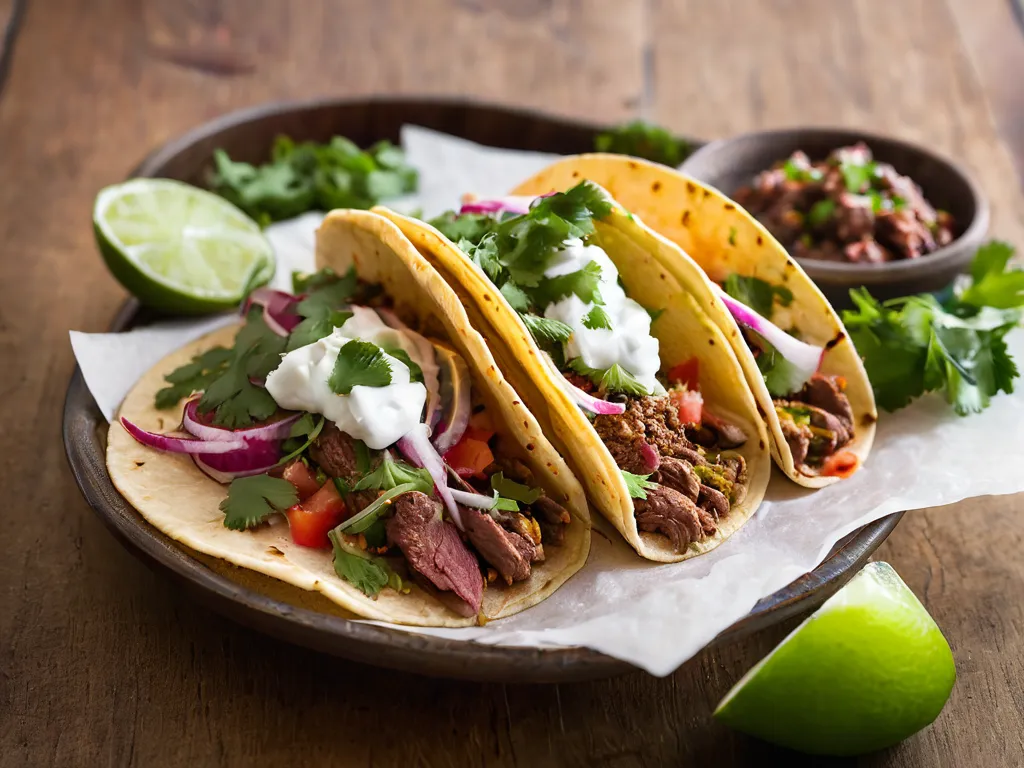
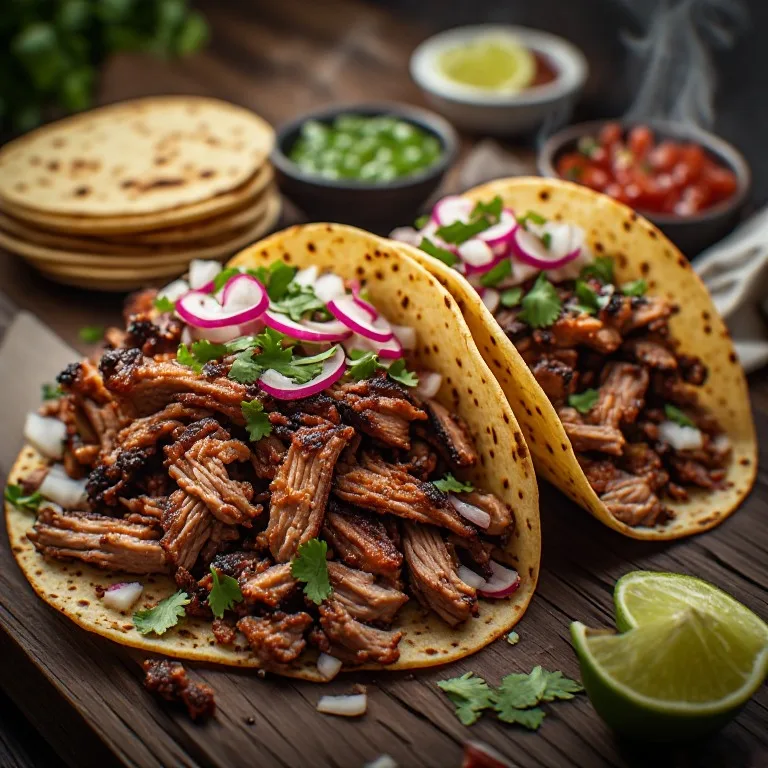
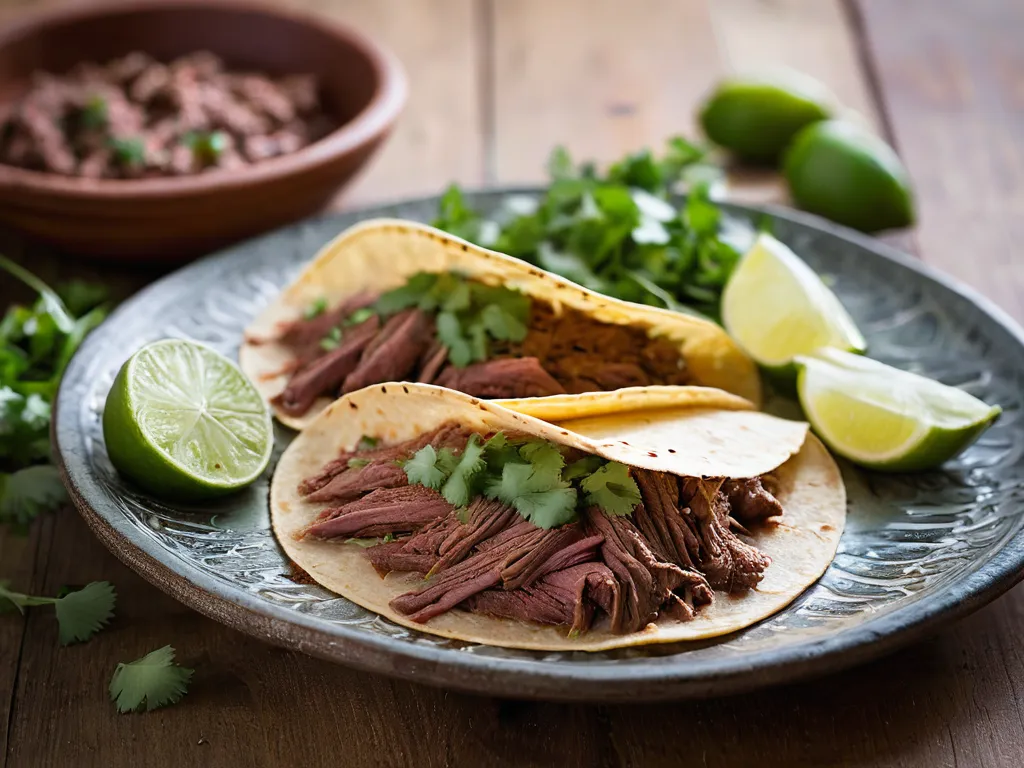
The signature taco is the gaonera: thinly sliced sirloin strip seared in lard, with salt and fresh lime juice squeezed over the meat while it cooks, wrapped in a fresh corn tortilla with salsa verde, diced white onion, and cilantro. That is the whole recipe.

The one technique that most homemade versions miss: the lime juice goes on while the beef is on the screaming-hot comal, not before, not after. The citric acid hits the hot surface, creates a faint crust, and integrates into the meat’s flavor in a way that lime squeezed over a finished taco cannot replicate. Everything else — the quality of the beef, the heat of the pan, the freshness of the tortilla — supports that one irreplaceable moment.

What Makes El Califa de León’s Gaonera Taco Work

The gaonera starts with sliced sirloin strip cut 1/4 inch thick against the grain and lightly pounded to an even thickness. The comal (or cast iron) must be extremely hot — not medium-high, full high — and the lard must be shimmering before the beef goes in. From there, four things happen nearly simultaneously as the beef hits the surface:

  1. The beef sears immediately rather than steaming (because the pan is hot enough)
  2. Salt is sprinkled directly over the cooking meat
  3. Lime juice is squeezed directly over the cooking meat while it sears
  4. The beef is cooked for no more than 30 to 45 seconds per side

The cook is over in under 90 seconds. The result is beef that is browned on the outside, still faintly pink and juicy inside, with a brightness from the lime that is baked into the surface rather than sitting on top.

Making the Salsa Verde

El Califa serves both a salsa verde and a salsa roja. The verde — tomatillo-based, slightly charred, smooth — is the more classic pairing with the gaonera’s beef. To match the El Califa style at home: char the tomatillos and serranos dry in a cast iron until blistered, blend with raw white onion, garlic, salt, and cilantro. The char depth is what separates this from a simple blended raw salsa; do not skip it.

A Note on Lard

Pure lard (not partially hydrogenated) is the right fat here. It has a smoke point around 370°F to 400°F — hot enough for the sear this recipe needs — and a mild, clean pork-fat flavor that adds a subtle background note with the beef. Most grocery stores carry it in the baking aisle (Manteca brand is widely available). If you cannot find it, refined avocado oil is the best substitute; regular vegetable or canola oil works but produces a slightly flatter result. Do not use butter — it burns before the pan reaches the right temperature.
🥗

Make It Healthier

Love El Califa de León Gaonera Tacos (The World's First Michelin-Starred Taco, Made at Home) but want a lighter version? Try these simple swaps:

  • ✓Use flat iron steak instead of NY strip — leaner cut with nearly identical texture after thin-slicing and fast cooking; saves about 3g of saturated fat per serving with no sacrifice in tenderness
  • ✓Replace lard with refined avocado oil — same high smoke point, same technique; you lose the subtle pork-fat depth but the lime-while-cooking brightness and sear are identical
  • ✓The salsa verde is essentially calorie-free — pile on more of it generously; it adds flavor, heat, and the bright acidity that makes each taco satisfying without additional fat or calories
  • ✓Two corn tortillas per taco (as served street-style) doubles the structural fiber without adding any fat — if you want a lighter portion, use one tortilla per taco instead

Frequently Asked Questions

What is the gaonera cut, and what should I use at home?

In Mexican butchering tradition, 'gaonera' refers to the sirloin strip — equivalent to what Americans call a New York strip steak, taken from the short loin. The name honors bullfighter Rodolfo Gaona, who gave his nickname 'El Califa de León' to the taquería. At the stand, the beef is sliced extremely thin — about 1/4 inch — against the grain, then lightly pounded to an even thickness. For home cooking, a NY strip (sirloin strip) or flat iron steak are the two best choices. NY strip has more intramuscular fat, which gives it richness; flat iron is leaner and slightly chewier but works well. Skirt steak and flank steak are too fibrous for this style of cook; tenderloin (filet) is the premium alternative El Califa also serves on their menu. Whatever you use, thin slicing and light pounding are non-negotiable — a thick piece of beef cooked 30 to 45 seconds per side will be raw in the center and tough.

Why does a simple taco stand deserve a Michelin star?

The short answer is that the Michelin Guide has always rated execution, precision, and consistency — not complexity. The criteria for a star are: 'quality of ingredients, mastery of flavour and cooking techniques, the personality of the chef expressed in the cuisine, value for money, and consistency between visits.' El Califa de León's beef is sourced from a single trusted supplier and arrives fresh daily. Arturo Rivera Martínez has performed the same motion — lay, salt, lime, flip, wrap — tens of thousands of times over two decades. The tortillas are made fresh, by hand, from quality nixtamalized masa. The salsa verde is balanced to complement without overpowering. Every taco is identical. What the Michelin star recognized was not that tacos are high-cuisine; it was that this particular taquero's execution of a simple thing is genuinely exceptional by any standard. The fact that the product costs $2.50 rather than $250 made the recognition more meaningful, not less.

Why cook with lard instead of neutral oil?

Lard has three advantages in this specific application. First, it has a higher smoke point than most plant oils except refined avocado oil, which means the cast iron can be extremely hot — the kind of hot that sears in 30 seconds — without the fat burning and turning acrid. Second, lard has a clean, mildly meaty, slightly porky fat flavor that acts as a subtle background note with the beef; neutral oils (canola, grapeseed) have no flavor at all, which leaves the sear tasting one-dimensional. Third, lard produces less steam than most oils at very high heat, which means the surface of the beef sears rather than steaming. Pure lard from the grocery store (not partially hydrogenated, which has a different flavor and smoke point) or rendered leaf lard from a butcher are both correct here. Refined avocado oil is the one substitute that works nearly as well — the smoke point is similar and the flavor is neutral-clean. Butter burns before the pan is hot enough. Olive oil smokes and adds a flavor that is wrong for this dish.

Why squeeze lime juice WHILE the meat is cooking rather than before or after?

Squeezing lime juice directly over the cooking meat — while it is on the screaming-hot comal — does something that lime squeezed before or after cannot replicate. The citric acid hits the hot surface and very briefly denatures the proteins on the exterior, creating a faint crust with a distinct brightness. The instant evaporation of the juice in the heat creates a tiny steaming effect that carries the lime aromatic into the meat. And because the lime is neutralized partly by the heat and the fat, the finished taco does not taste 'citrusy' — it tastes clean and meaty with a brightness that you cannot point to. Lime squeezed before cooking marinates the surface and begins to cook the meat cold (ceviche-style), which softens the texture. Lime squeezed after — on the finished taco — sits on top as a separate acid note rather than integrating. Rivera Martínez does this with a specific motion — a single squeeze from a halved lime held about 8 inches above the meat — so that the juice fans across the whole piece rather than pooling in one spot.

What is the difference between the gaonera and the filet on the El Califa menu?

Both are thin-sliced beef cooked the same way on the same comal with the same salt-and-lime technique, but they are different cuts with different textures and prices. The gaonera is sirloin strip — it has more intramuscular fat, a slightly more pronounced beefy flavor, and a firmer bite. The filet at El Califa is beef tenderloin — it is more tender, softer, and slightly more delicate in flavor, with less marbling. The filet taco is more expensive (by roughly 20 to 30 pesos per taco). Most visitors recommend the gaonera as the more characteristic and interesting of the two. The filet is popular with diners who want maximum tenderness and are willing to pay more for it. At home, this means: NY strip or flat iron = gaonera experience; beef tenderloin = filet experience. Both are correct, just different. Do not try to use tenderloin as a budget substitute — it costs more, not less.

How do I make the El Califa-style salsa verde?

El Califa's salsa verde is smooth and slightly charred — not raw, not fully cooked, but somewhere in between with a roasted depth. To replicate it at home: place 6 husked, rinsed tomatillos and 2 to 3 serrano chiles (or 1 large jalapeño for less heat) directly in a dry cast iron skillet over high heat. Add 2 unpeeled garlic cloves. Cook without stirring for 5 to 7 minutes, turning once or twice, until black blistered spots appear on the tomatillos and chiles and the skins are charred in places. Transfer everything — including any browned bits from the pan — to a blender. Add 1/4 of a white onion (raw), 1/2 teaspoon of salt, and a small handful of cilantro. Blend until smooth. Taste: it should be tangy, mildly spicy, slightly smoky from the char, with a clean cilantro finish. Add more salt or another serrano if needed. The salsa should be pourable, not thick — if it seems too thick, add 1 to 2 tablespoons of water and blend again. This keeps for 5 days refrigerated.

Can I use store-bought corn tortillas, or do I need fresh ones?

You can use store-bought corn tortillas and the tacos will still be excellent. The key is how you heat them: a dry cast iron or comal over medium-high heat, 30 seconds per side, until they develop faint toasted spots and become flexible. Do not microwave them — microwaved tortillas become chewy and soft without the slight chew and toasted corn flavor that holds up to the beef juices. The best store-bought tortillas for this recipe are fresh-pressed corn tortillas (often found in the refrigerated section near produce in larger grocery stores) or thin yellow corn masa tortillas. Thick flour-corn hybrid tortillas are wrong here — they overpower the delicate beef. If you want to make fresh tortillas from scratch, mix 2 cups of masa harina (Maseca is widely available) with about 1 1/4 cups warm water and a pinch of salt, let rest 20 minutes, press golf-ball-sized portions in a tortilla press, and cook 45 seconds per side on a dry comal. Fresh tortillas are noticeably better than store-bought; the difference is similar to fresh pasta versus dried — the same dish, meaningfully different.

What happened when El Califa de León got the Michelin star?

When Michelin published its first-ever Mexico City guide in May 2024 and listed El Califa de León as a one-star restaurant, the reaction was immediate and global. The New York Times, Washington Post, CNN, and international outlets all ran the story within 24 hours. Social media posts showed the tiny stand with a line stretching around the block. Reservations — the stand does not take reservations, it is first-come-first-served — became meaningless as a concept; people simply started arriving earlier. The Los Angeles Times ran a piece noting that the stand had an emotional connection to the Mexican-American community in Southern California. El Califa then began accepting invitations to do pop-up events abroad, including one in Dallas, Texas, and one in Australia — the first time in the stand's history that it had operated outside of its Mexico City location. Arturo Rivera Martínez continued doing exactly what he had been doing for over two decades. The price of a taco went up slightly, from about 35 to 50 pesos, but remained under $3 USD. The Michelin designation validated what Mexico City's food community had known for fifty years: a taco made with rigor and quality deserves recognition on any scale.

Love this recipe? Share it!

Free PDF: our 12 most-wanted copycat recipes — instant download.

Made it? Buy us a coffee

Every recipe here is free, with no paywalls. If this one was a hit at your table, a small tip keeps new copycats coming.

$

Taquería El Califa de León is a trademark of its owner, used here only to describe the dish this recipe recreates. This is an independent copycat written in our own words — Copycat Spices is not affiliated with, endorsed by or sponsored by Taquería El Califa de León.

Ratings & Reviews

—
No ratings yet

Rate this recipe

Click a star to rate

Leave a Review

0/500

CS

Copycat Spices Editorial

Researched + fact-checked. Every recipe on Copycat Spices is built from published sources — official ingredient lists, brand-published recipes, interviews and food-science references — and fact-checked before it goes live, then written as clear, step-by-step instructions for home cooks of all skill levels.

Learn more about our mission →