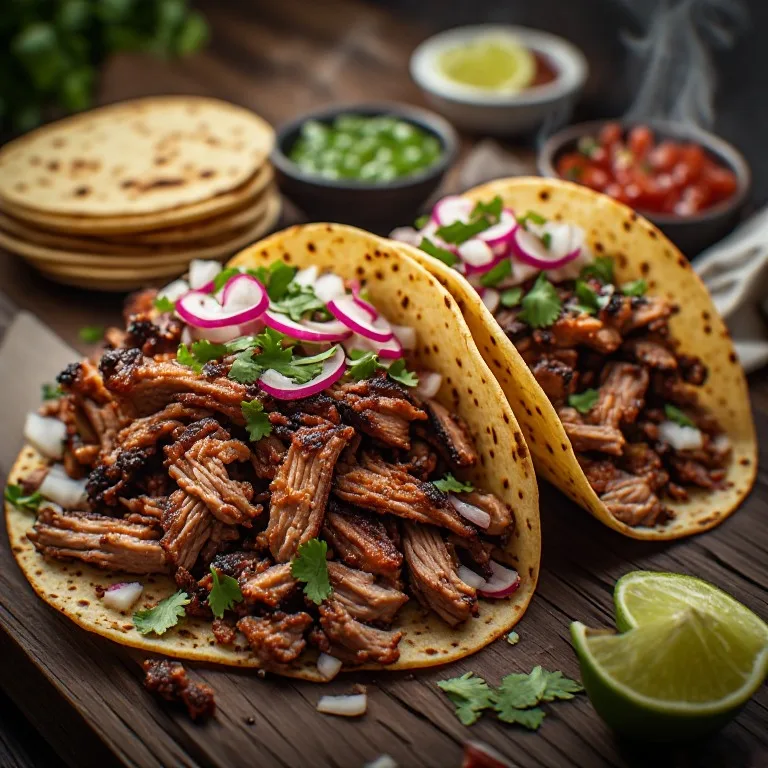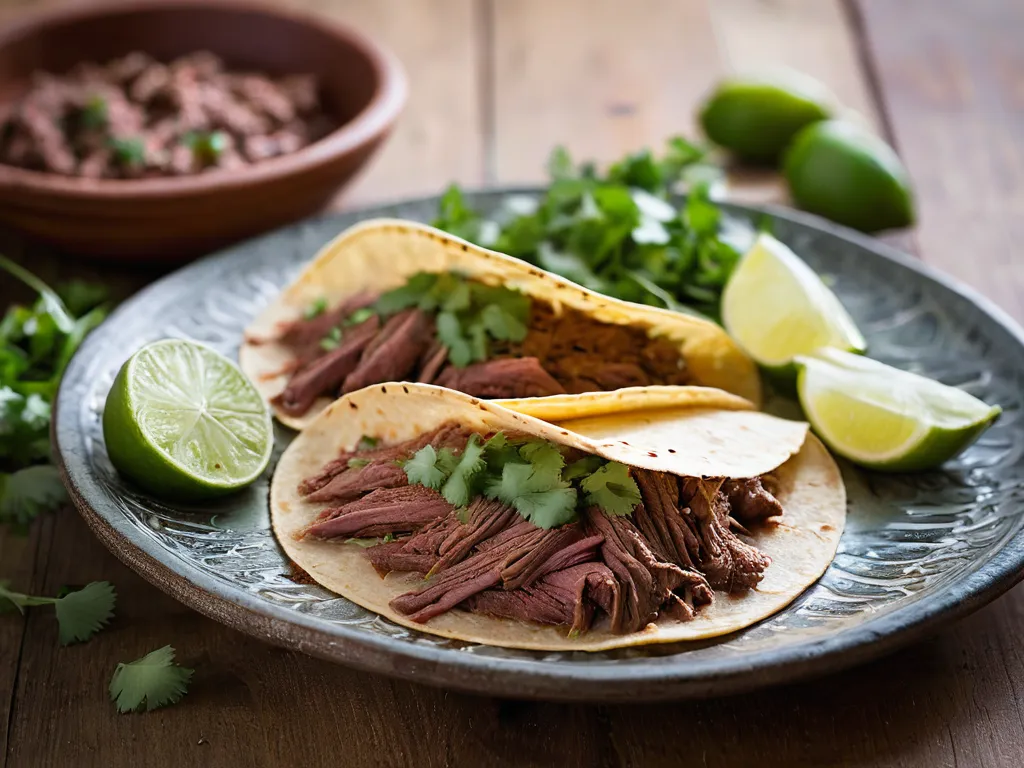


Frontera Grill Cochinita Pibil (Rick Bayless’s Yucatecan Achiote-Braised Pork)
Prep time: 20 min (plus 8–24 hr marinade) Cook time: 3 hr 30 min Servings: 6–8
Rick Bayless opened Frontera Grill on March 21, 1987, at 445 N. Clark Street in Chicago’s River North neighborhood — the first restaurant he and his wife Deann launched after spending six years living, traveling, and cooking throughout Mexico. The James Beard Foundation named it Outstanding Restaurant in 2007, the best restaurant in the United States that year. The Topolobampo tasting-menu room — one Michelin star, $185 to $225 per person — shares the same front entrance.
The cochinita pibil on Frontera’s menu is Yucatecan: the regional cooking of Mexico’s Yucatán Peninsula, where Maya cooking traditions survived Spanish colonization largely intact. Pibil is the Mayan word for “buried,” a reference to the traditional pit oven lined with hot stones where the pork slow-cooks for hours inside a banana leaf package. In a Chicago restaurant kitchen, the underground pit becomes a sealed Dutch oven. The defining flavors — brick-red earthiness from achiote paste and sharp sour acid from bitter orange — remain unchanged.
The Achiote Paste — What It Is and Why Nothing Substitutes It
Achiote paste (recado rojo) is the structural element of cochinita pibil. It is made from annatto seeds — the same seeds used to color butter and cheddar cheese — ground and compressed with garlic, cumin, Mexican oregano, black pepper, cinnamon, cloves, and vinegar into a dense, dark-red paste. The flavor it provides is earthy, mildly musky, and faintly peppery, with a complexity that comes from the full blend of spices rather than any single one.
There is no real substitute. Paprika gives color without the earthiness. Ground annatto alone gives color without the spice complexity. The only path to authentic cochinita pibil is achiote paste. Look for it at Latin American grocery stores (any Mexican or Caribbean market will have it), in the Hispanic foods aisle at larger supermarkets, or online. El Yucateco, La Anita, and Goya all make reliable products packaged in 3.5-ounce portions. One package is the correct amount for this recipe.
The Sour Orange Problem — Rick Bayless’s Published Solution
Authentic cochinita pibil is marinated in naranja agria, sour bitter orange (Citrus aurantium). The fruit grows throughout the Yucatán and Caribbean but is rarely sold in US grocery stores. Its juice is sharply acidic with almost no sweetness — similar to lime but with a distinctive bitter, floral edge.
Rick Bayless’s published substitute, stated in his own books, is 1 cup of fresh lime juice combined with 1/2 cup of fresh orange juice. The lime provides the dominant acid; the orange adds the sweetness and aroma that pure lime lacks. This is the ratio this recipe uses. If you find sour oranges at a specialty Latin or Caribbean grocery, replace the entire lime-orange combination with 1.5 cups of sour orange juice.
The lime-orange marinade does more than add flavor — the acid tenderizes the pork muscle fibers during the overnight marinade, contributing to the silky texture of the finished braise.
Banana Leaves — Worth Finding, Easy to Skip, Here’s Why You Shouldn’t
| With Banana Leaves | With Heavy Foil | |
|---|---|---|
| Flavor | Subtle herbal/grassy note | None added |
| Moisture | Excellent — leaves breathe just enough | Good — foil is fully sealed |
| Color | Traditional mottled appearance on pork surface | Even color |
| Finding them | Latin, Asian, Filipino grocers; frozen | Any grocery store |
| Effort | Toast 30 sec per side to make pliable | No prep needed |
The banana leaves are worth the small effort. They contribute a subtle grassy, slightly herbal note — mild enough that you would not name it if you didn’t know it was there, but present in a way that makes the dish taste more complete. Frozen banana leaves are sold at Latin American, Southeast Asian, and Filipino grocery stores in large bags; one bag will cover this recipe several times over and keeps frozen for months.
If banana leaves are unavailable, use two layers of heavy-duty aluminum foil. The pork will still be excellent.
Cost Comparison: Home vs. Restaurant
| Frontera Grill | Homemade (6–8 servings) | |
|---|---|---|
| Per plate | $28–34 | — |
| Full batch | $168–272 (6–8 people) | ~$23–27 |
| Per serving | ~$30 | ~$3–4 |
| Savings per serving | — | ~$26 |
The bone-in pork shoulder is the biggest cost at $12 to $16 for a 4 to 5 lb shoulder. Achiote paste runs about $4 for a package. The citrus, garlic, and habaneros for the cebollas curtidas add another $4 to $7. Banana leaves are about $3 for a frozen bag that will last through multiple batches.
Habanero-Pickled Red Onions — The Essential Accompaniment
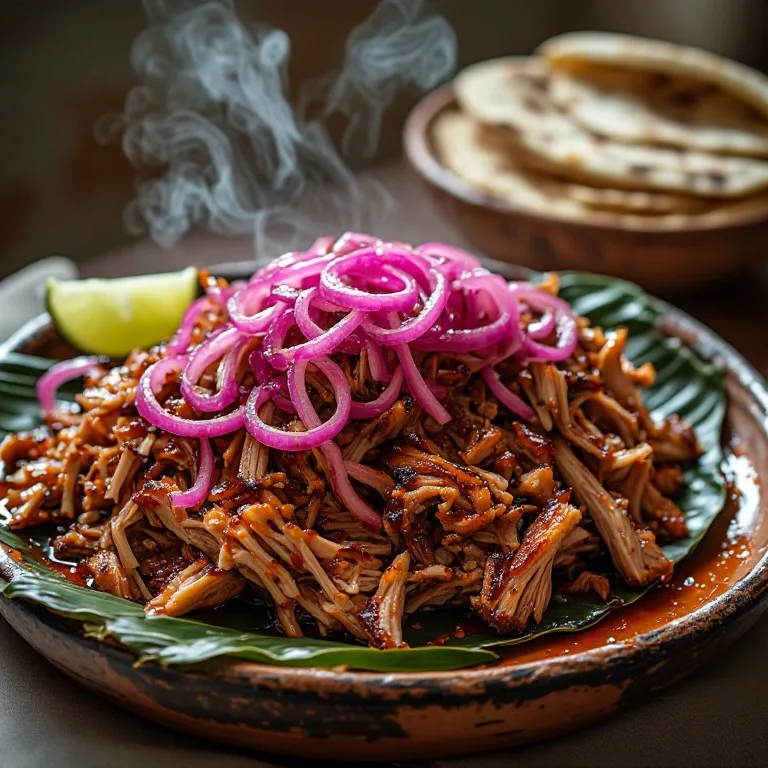
Cebollas curtidas are not optional. Cochinita pibil is rich, fatty pork with deep earthy flavors; without the sharp acid and habanero heat of the curtidas, the dish is delicious but one-dimensional. The lime juice cures the raw onion within 30 minutes — the slices turn vivid pink as the acid reacts with the anthocyanins in the red onion, and their raw harshness mellows into a bright, punchy acidity. The habanero adds a fruity, floral heat that is specific to that variety; jalapeños and serranos do not replicate it.
Make the cebollas curtidas alongside the marinating pork the night before, refrigerate them, and they will be perfectly pickled by the time the pork is done. They keep for up to 5 days in the refrigerator.
Tips & Variations
- Overnight marinade is the single most important variable. A 4-hour minimum marinade produces decent results; a 12 to 24-hour overnight marinade produces a noticeably different dish — the achiote and citrus penetrate the muscle fiber throughout, so every shred tastes seasoned from the inside rather than just coated on the surface.
- The scoring matters. The 1/2-inch-deep slits cut all over the pork shoulder allow the marinade to reach the interior muscle. Without them, a thick shoulder will be well-seasoned on the outside and bland in the center.
- Save every drop of the cooking juices. The braising liquid — red-orange, intensely flavored with achiote, citrus, and pork fat — is not a byproduct; it is part of the dish. Mix it thoroughly into the shredded meat. If there is extra, serve it alongside as a dipping sauce for the tortillas.
- Black bean paste (frijoles colados) is the traditional third component alongside the pork and cebollas. Puree a can of drained black beans with a small amount of the pork cooking juices, a pinch of salt, and a drizzle of olive oil until very smooth and silky. Spread a thin layer on each tortilla before adding the pork. The beans add a creamy, earthy base that connects the flavors.
- Grilling variant: Rick Bayless has also published a version where the banana leaf package is cooked on indirect heat on a charcoal grill for 3 to 4 hours. The pork picks up a faint smoky note. Use the same temperature and timing as the oven method.
- Boneless shoulder saves time. A boneless pork shoulder cooks 20 to 30 minutes faster than bone-in and is slightly easier to shred, though the bone adds flavor to the braising liquid. Either works.
Storage & Reheating
Shredded cochinita pibil stored in its cooking juices keeps refrigerated for up to 5 days and improves by day 2 as the flavors meld. To reheat, place the pork and its juices in a covered saucepan over medium-low heat with 2 to 3 tablespoons of water or orange juice to loosen. Warm gently, stirring, until heated through — do not boil, which toughens the shreds. The pork freezes well: pack tightly in an airtight container with its cooking juices and freeze for up to 3 months. Thaw overnight in the refrigerator before reheating.
The cebollas curtidas keep refrigerated for up to 5 days and are best 1 to 2 hours after making, though they are still excellent on day 3 and 4.
More Slow-Braised Taco Fillings
- Copycat Cosme Duck Carnitas Tacos — Enrique Olvera’s Mexico City-inflected duck carnitas, slow-rendered until the skin crisps in its own fat, from the acclaimed Cosme in New York
- Copycat Chipotle Carnitas — Chipotle’s achiote-adjacent pork shoulder, built for the burrito bowl format rather than the taco
- Copycat Bavel Lamb Neck Shawarma — Ori Menashe’s slow-roasted lamb neck from LA’s Bavel: an overnight cardamom-sumac rub and a 5-hour low roast, the same marinate-then-slow-cook logic applied to a different cuisine
- Viral TikTok Birria Tacos — the TikTok-viral braised beef taco format, with consommé for dipping