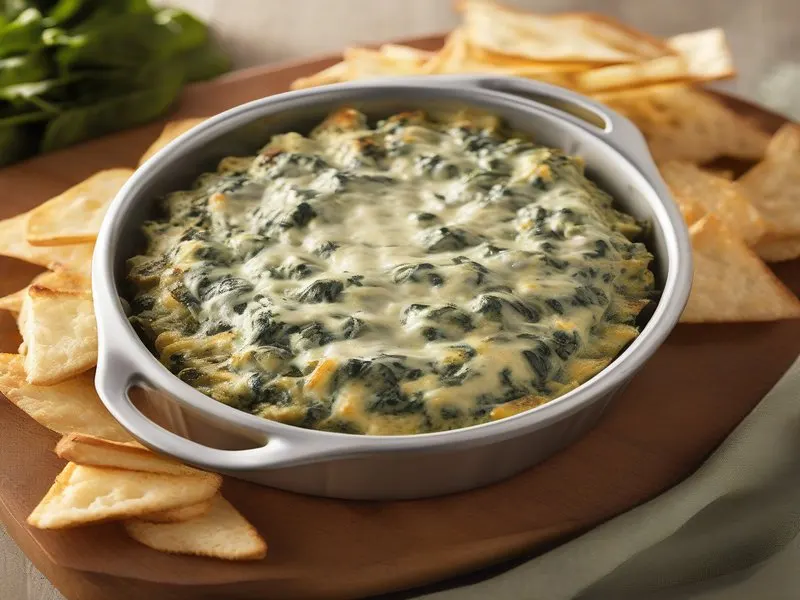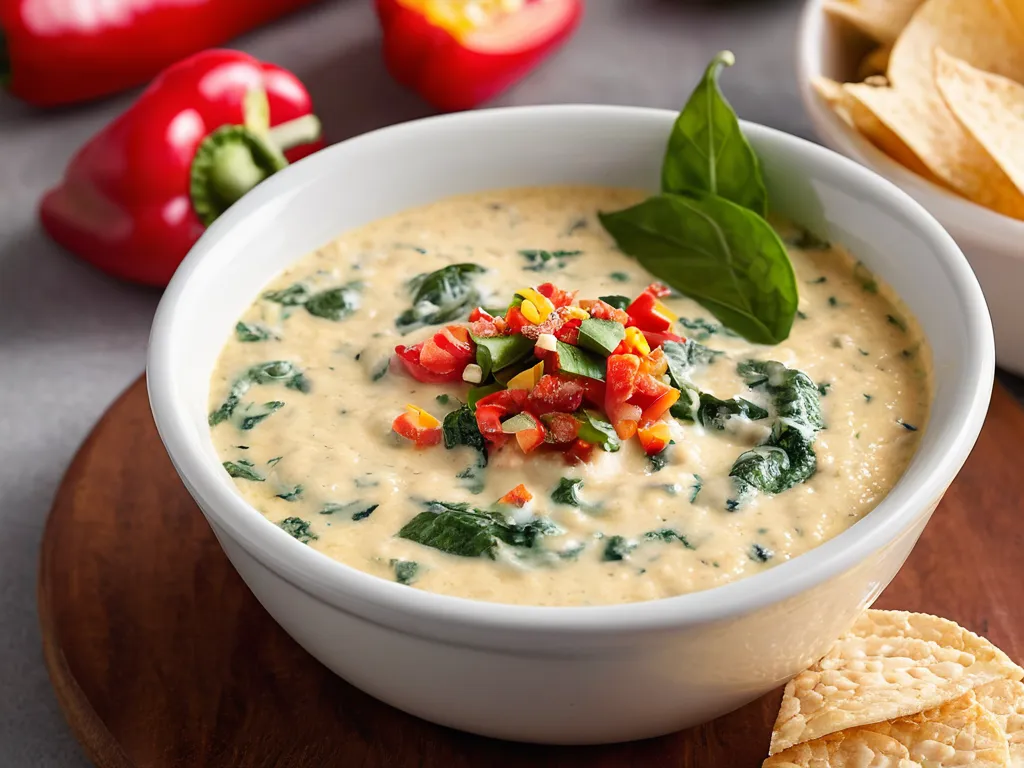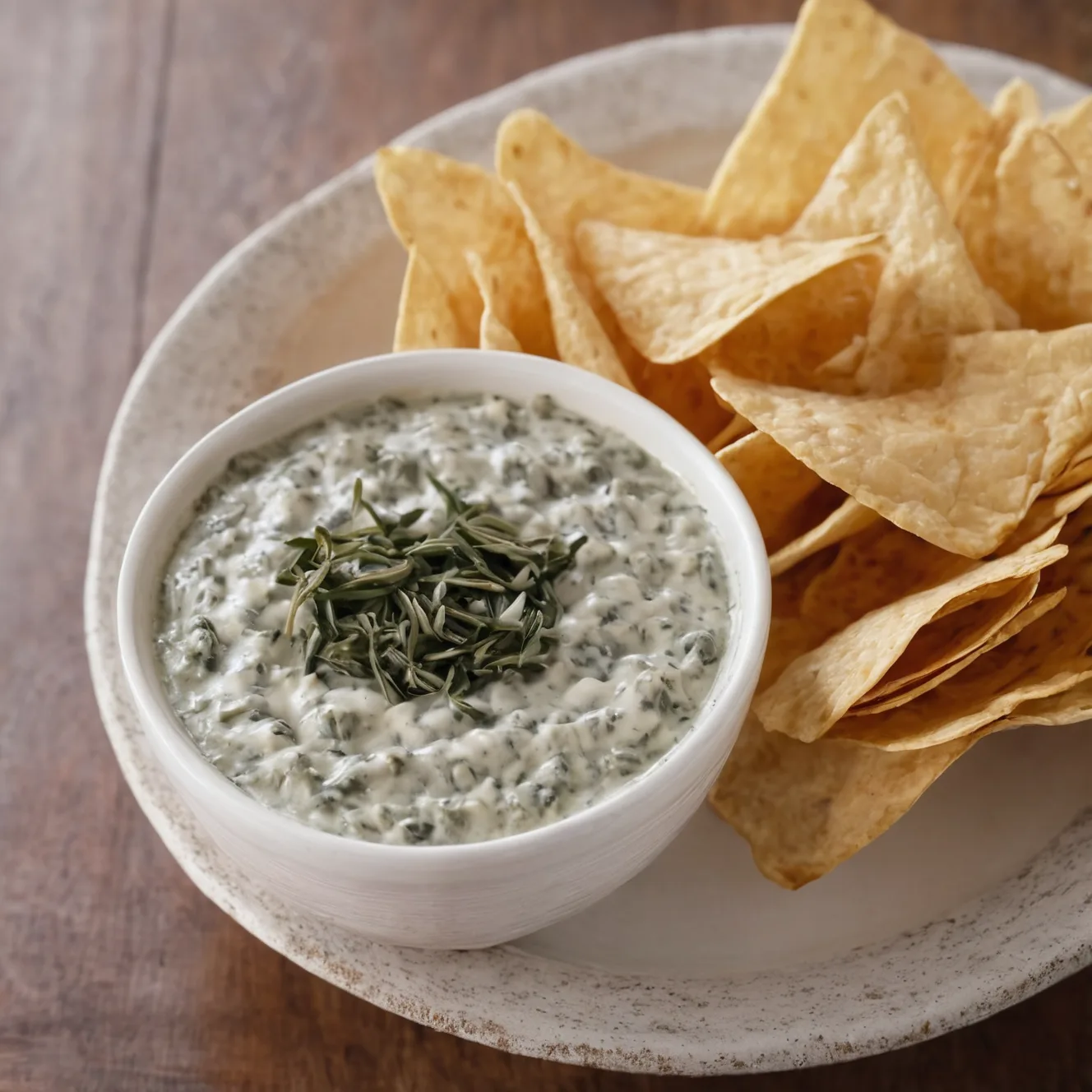
Houston’s spinach dip is the one people remember. Food writers, food-obsessed regulars, and the copycat recipe community have spent years trying to reverse-engineer what makes it different from every other chain’s version. The answer is structural: no cream cheese block, and the leading reconstructions build the body from a flour roux and cream sauce instead.
Every other major chain spinach-artichoke dip — Applebee’s, Uno’s, TGI Friday’s — builds on a block of cream cheese. The result is dense, thick, and baked solid. Houston’s version is smoother and more fluid — closer to a warm cream sauce than a set dip. The most-referenced published clones (including CJ’s widely-shared version) reach that texture by cooking a flour roux, then whisking in cream and broth to form a proper cream sauce before the cheese goes in. It scoops differently, clings to chips differently, and holds less water in the finished dish. It also explains why the restaurant serves it with salsa and sour cream separately: the dip is designed to be combined as you eat, not just dunked into.
The dish started as a spinach side at Houston’s mid-1980s locations. At the Chicago outpost, staff noticed customers ordering it with chips as an improvised appetizer. The kitchen formalized it, added the three-component serving, and named it Chicago-Style Spinach Dip. It has been one of the restaurant’s most-requested items ever since.
TL;DR
Make a roux (butter + flour), whisk in broth and cream, melt in Monterey Jack then Parmigiano Reggiano, stir in sour cream + cayenne + lemon juice. Fold in wrung-dry spinach and chopped artichokes. Bake at 350°F for 20–25 minutes. Serve with warm tortilla chips, salsa, and sour cream as separate components.
What Makes This Different From Other Restaurant Spinach Dips
The base technique. Applebee’s, Uno’s, and TGI Friday’s all lead with 8 ounces of cream cheese as the structural foundation. Beat it until smooth, fold in the rest, bake. That method is fast, reliable, and produces a dense dip. Houston’s approach requires a few more steps but produces something smoother: you cook flour in butter to form a roux, then whisk the roux into cream and broth to build a proper cream sauce before any cheese goes in. The finished sauce has a different viscosity — it flows rather than sitting as a stiff mass.
The cheese combination. Todd Wilbur identified Monterey Jack and Parmigiano Reggiano as Houston’s two primary cheeses in Top Secret Restaurant Recipes 2. That pairing is unusual in casual dining spinach dips: Monterey Jack is mild and melts cleanly without the grainy protein separation that sharper cheeses can develop in a hot cream sauce; Parmigiano Reggiano (properly aged, not the green-can Parmesan) adds salty-umami depth that lifts the whole dish. Neither is mozzarella, which most chain dips rely on.
Serving with three components. At Houston’s, the spinach dip arrives with warm hand-cut tortilla chips, salsa, and sour cream as separate dishes. This three-component presentation is the experience marker: you layer them yourself. The sour cream cools a too-hot bite; the salsa adds brightness and acidity against the rich cream sauce. At home, warming the chips is the step most people skip — don’t.
The Roux: What to Watch For
The roux is the step that separates this from other copycat approaches. Two things to get right:
Cook it long enough. After the flour goes into the butter, keep stirring over medium heat for 1–2 minutes until the mixture turns pale blonde and the raw-flour smell gives way to something faintly nutty. An undercooked roux leaves a starchy, chalky aftertaste in the finished dip. Overcooked roux (darker than pale blonde) will produce a slightly bitter note. The window is short; stay at the pan.
Add liquid slowly. Pour the broth in first, a thin stream while whisking, then add the cream the same way. Rushing the liquid addition or adding it all at once creates lumps that won’t fully dissolve later. Slow, steady, whisking constantly.
The Spinach: Wring Twice
Ten ounces of frozen spinach holds an unexpected amount of water — even after thawing, even after draining, it carries enough moisture to thin and separate the cream sauce during baking. The fix:
After thawing completely, transfer to a clean kitchen towel. Gather it into a tight ball and wring hard over the sink. Open the towel, reposition, and wring again from a different angle. You should extract 3–4 tablespoons of liquid, and the spinach should feel nearly dry between your palms. Paper towels shred under this kind of pressure; use a cloth towel.
The second wring matters as much as the first. This is not optional.
The Serving Setup
Houston’s serves the dip with warm hand-cut tortilla chips, a small bowl of salsa, and a separate small dish of sour cream. The combination is intentional: the salsa adds a tomato-and-herb brightness that cuts through the cream sauce richness; the sour cream cools the temperature and softens a bite that comes up too hot; the chips are warm, not room-temperature.
At home:
- Chips: Spread on a baking sheet, 300°F for 5–7 minutes while the dip finishes baking. Restaurant-style chips with some thickness work best — thin chips crack under the weight of the dip. On the Border, Tostitos Cantina, or Mission strips all hold up.
- Salsa: Any fresh tomato salsa works. A corn and black bean salsa adds sweetness and texture. Houston’s uses a simple fresh tomato salsa; pico de gallo is the closest equivalent.
- Sour cream: Full-fat for the table; reduced-fat loses the richness that makes it function as a temperature buffer.
Make Ahead
The dip can be assembled through Step 6 (after folding in the spinach and artichokes, before baking) and refrigerated covered for up to 24 hours. Bake directly from the fridge — add 10 minutes to the bake time and test that the center is fully heated through before serving. Do not top with extra cheese before refrigerating; it dries and develops a leathery surface. Add any optional cheese topping just before baking.
Storage and Reheating
Refrigerator: Cover and refrigerate for up to 4 days. The dip firms in the fridge.
Reheating: Oven at 325°F for 15–20 minutes is best — it brings the cream sauce back to a velvety consistency. Microwave works for individual portions at 50% power in 30-second intervals. The cream sauce may look slightly broken after refrigerating; stir once it’s warm and it usually comes back together.
Freezing is not recommended. Cream sauces and sour cream separate when frozen; the thawed texture is grainy and the sauce may weep.
Cost vs. the Restaurant
| Houston’s/Hillstone | Homemade | |
|---|---|---|
| Price | ~$21 (West Paces menu, 2026) | ~$10 in ingredients |
| Serving | Full appetizer with chips, salsa, sour cream | 1/8 batch + accompaniments |
| Technique | Roux-based cream sauce | Same |
| Cheeses | Monterey Jack + Parmigiano Reggiano | Same |
| Serving accompaniment | Warm hand-cut chips, salsa, sour cream | Your choice of chips, jarred salsa |
A home batch serves 8 at about $1.25 per serving in dip ingredients — not including chips.
Other Spinach Dips Worth Comparing
If you’ve made this one and want to understand what the other major restaurant versions actually do differently:
- Applebee’s Spinach Artichoke Dip — triple-cream base of cream cheese + sour cream + mayo; mozzarella cheese; served with white corn tortilla chips and chipotle lime salsa on the side
- Uno’s Chicago-Style Spinach & Artichoke Dip — cream cheese base; mozzarella + Parmesan; finished with seasoned diced tomatoes on top; served with garlic baguette slices (not chips)
- TGI Friday’s Tuscan Spinach Dip — cream cheese + sour cream base; Romano + Parmesan; sautéed onions and bell peppers built into the dip; served with bi-color tortilla chips
For other warm dips in the same format: buffalo chicken dip uses a cream cheese base with hot sauce and shredded chicken; jalapeño popper dip runs a chile-forward version with cheddar and diced jalapeños; Chili’s white spinach queso is the stovetop-only version when you want something cheesy without the oven.