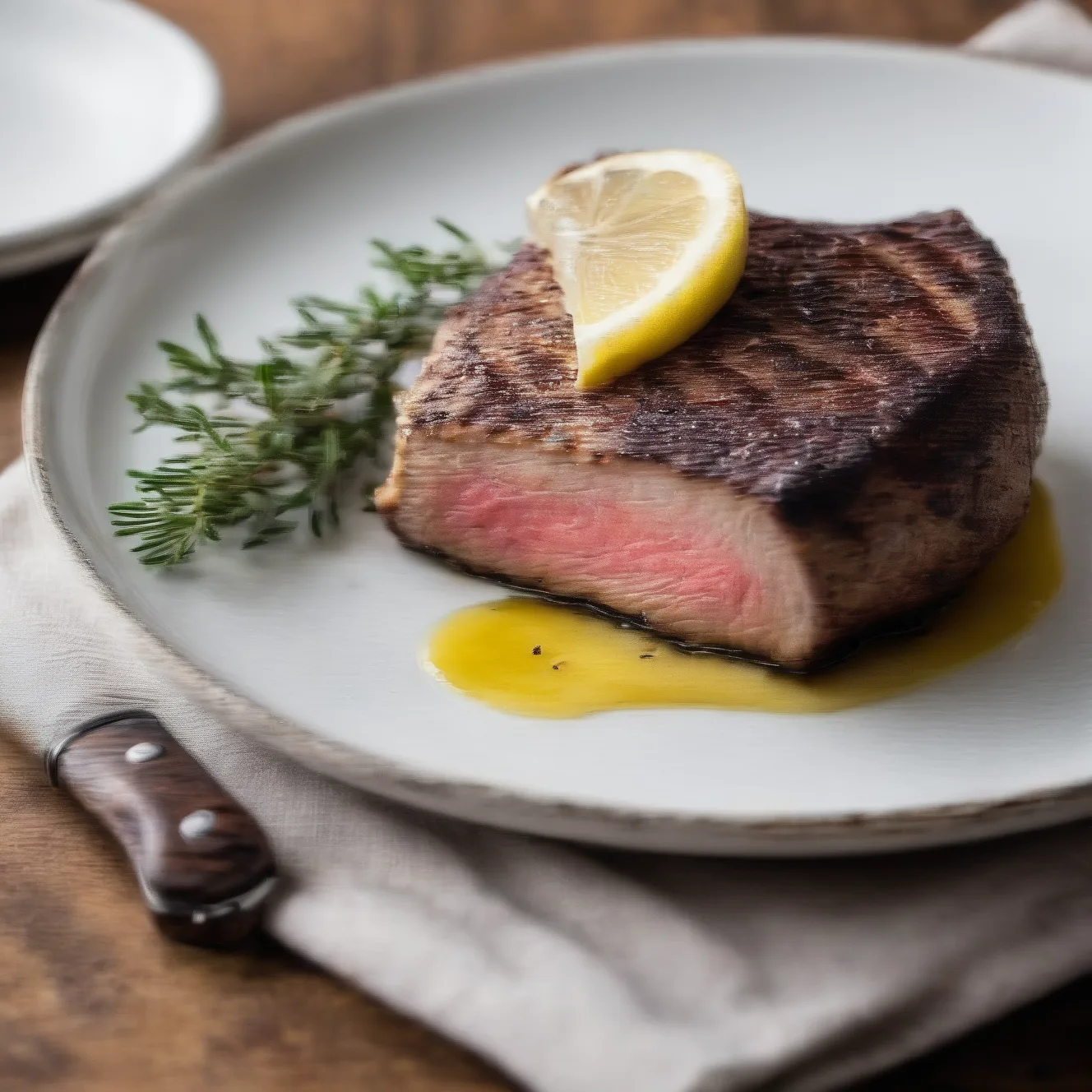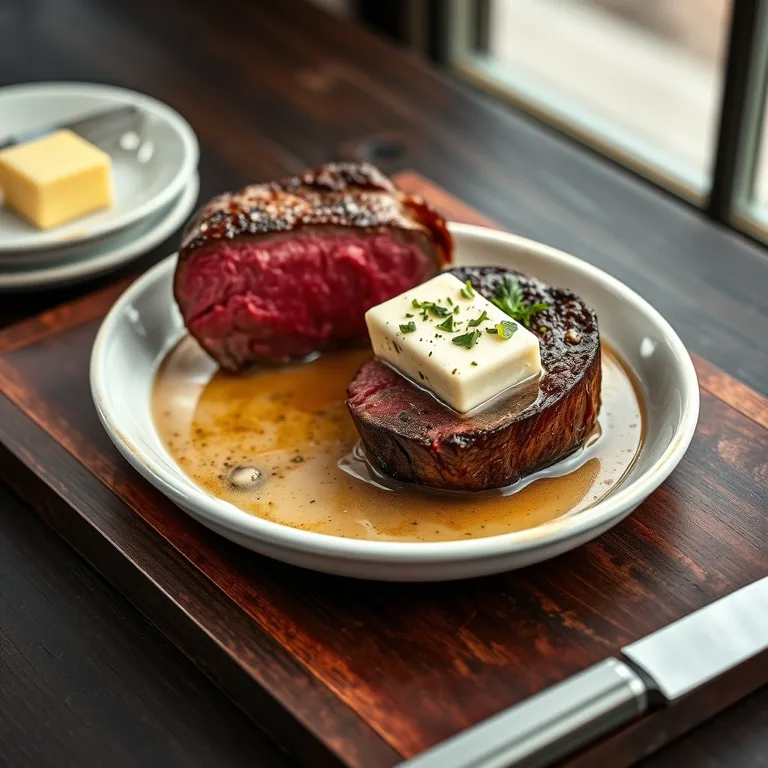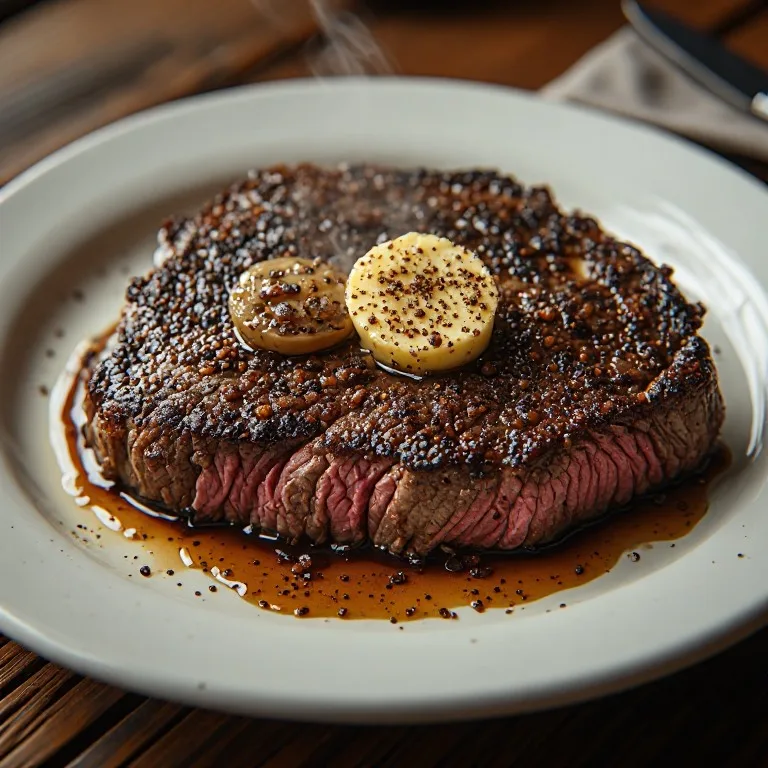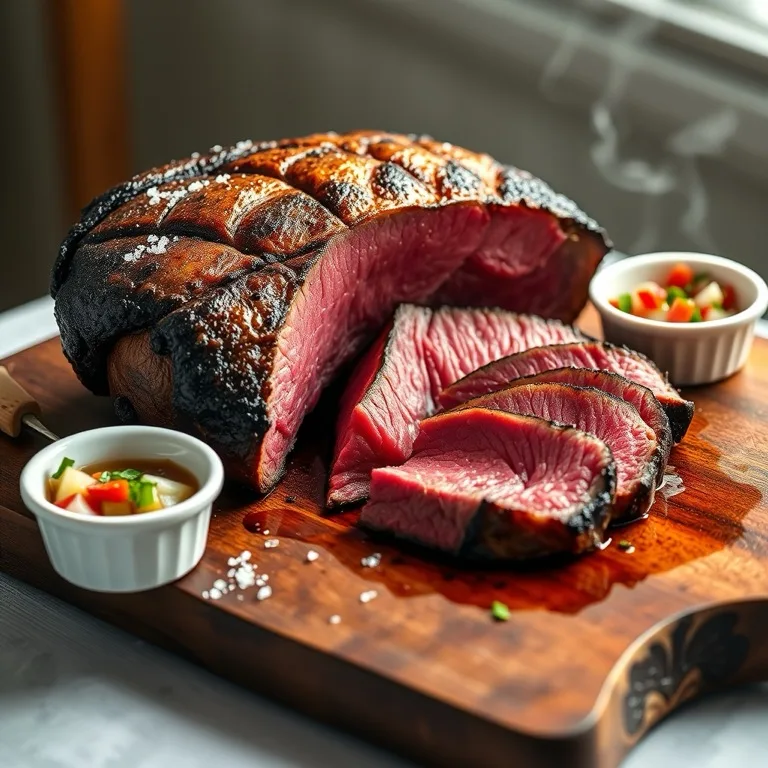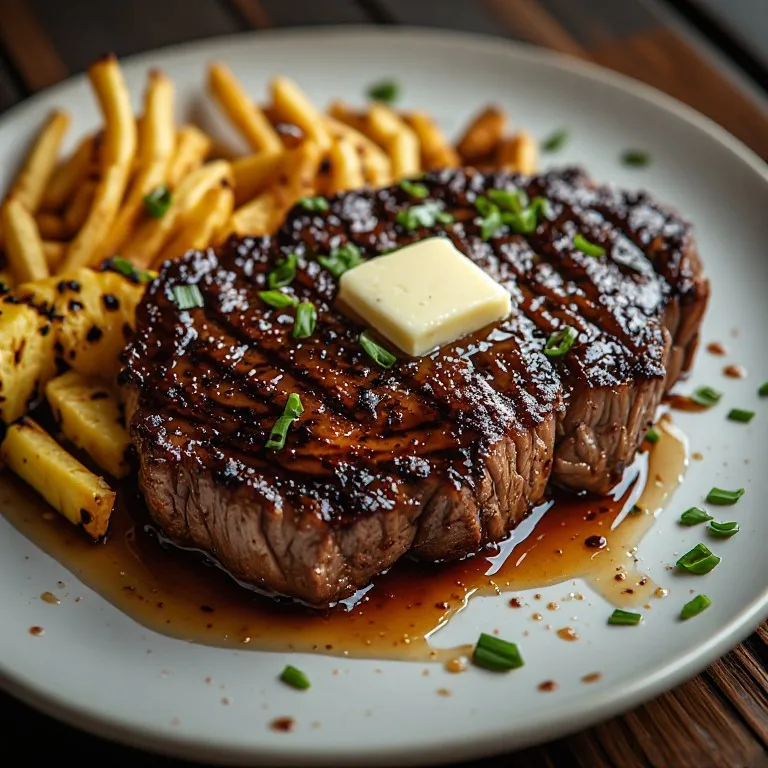



The Hawaiian Ribeye is Houston’s oldest entrée that has never left the menu — the dish regulars name when they explain why they keep coming back. It’s a bone-in ribeye marinated overnight in pineapple, soy, and ginger, then grilled over high heat until the sugars lacquer into a dark, slightly charred crust, and finished with butter. Hillstone (the parent company) published the recipe in conjunction with Epicurious, making this one of the rare cases where a copycat is built from a near-official source.
The full marinade and method are in the recipe card above. What follows is the understanding you need to make it work — not just execute the steps but know what’s happening, and why this recipe fails when the obvious shortcuts are taken.
The Two Things That Make This Recipe
Canned pineapple juice, not fresh. This is the most counterintuitive detail in the recipe — home cooks who swap in fresh-squeezed or fresh-blended pineapple juice (reasoning that fresh is always better) end up with a steak that’s mushy on the outside after a full overnight marinade. Fresh pineapple contains very active bromelain, a proteolytic enzyme that breaks down protein. For a 2-hour marinade, fresh juice is fine and effective. But Houston’s marinates for a full day, and at that timescale, active bromelain turns the outer layer of beef mealy. Canned pineapple juice is heat-pasteurized, which deactivates most bromelain while leaving the pineapple flavor intact. Use canned — this is not a compromise, it is the correct ingredient for this recipe’s timing.
A genuinely hot grill. The marinade contains 1/2 cup sugar. On a medium grill, that sugar gums, sticks, and eventually burns without caramelizing — you get blackened char without the lacquer. On a very hot grill (600°F+), the surface caramelizes quickly and lifts: the steak releases cleanly from the grates with that glossy dark crust the restaurant is known for. Preheat at full blast for at least 15 minutes. Don’t reduce the heat when the steak goes on.
Marinade Notes
Reserve before you marinate. The 1/2 cup of reserved marinade — set aside before raw steak touches anything — is the basting sauce for the final minute of cooking. Never use marinade that has been in contact with raw meat as a finishing brush or sauce without boiling it first. This step is food safety, not a technique refinement.
The sugar dissolves slowly. Whisk the pineapple juice, soy sauce, sugar, vinegar, and sesame oil for a full minute before adding the onion and ginger. Undissolved sugar clumps and then burns unevenly on the grill.
Sesame oil is toasted. Toasted sesame oil (the dark brown kind) and untoasted sesame oil (pale, light) are different products. Toasted sesame oil carries the nutty aromatic depth the dish needs; untoasted has almost none of that character.
Marinating Time
| Marinade Duration | Effect |
|---|---|
| Under 4 hours | Surface flavor only; minimal penetration |
| 8 hours | Flavor through the first 1/4 inch; noticeable improvement over shorter marination |
| 12–16 hours (overnight) | Full penetration; recommended; what the restaurant uses |
| 24 hours (maximum for canned juice) | Maximum flavor; surface is starting to change slightly in texture |
| Beyond 24 hours (canned) | Surface texture degrades; interior is fine but outer layer softens |
| Any duration with fresh juice | Maximum 6–8 hours; beyond that, bromelain makes the surface mushy |
Grilling
Pat dry. Dripping-wet steak creates steam and flare-ups rather than a hard sear. Use paper towels to remove the excess marinade pooling on the surface. You should see a thin, slightly sticky coating — not a dripping wet steak. Don’t rinse; don’t scrub.
Season lightly. The soy sauce in the marinade provides substantial sodium. Taste the thin coating on the steak surface before adding any salt. A light pinch of kosher salt on each side is usually all that’s needed; more is often too much.
Timing for medium-rare (1-inch bone-in ribeye, 600°F+): 4–5 minutes per side. Use an instant-read thermometer — pull at 128–130°F because it carries over to 135°F during resting. The caramelized exterior looks done before the interior is, so color alone will mislead you.
The last-minute baste. In the final 60–90 seconds, brush the reserved marinade (the 1/2 cup that never touched raw meat) on the top surface. The thin glaze of fresh marinade hits a nearly-cooked steak, seizes quickly, and adds the final sticky-lacquer layer without creating flare-up from dripping sugar onto active flames.
The Butter Finish
Four tablespoons of room-temperature butter — two per steak — goes directly onto each steak as it rests, not in the pan, not as a baste during cooking. Room temperature is specific: cold butter melts in puddles and doesn’t coat evenly; hot pan-butter burns against the already-caramelized crust. Room-temperature butter melts slowly and evenly into the crust while the steak rests, enriching the surface without pooling on the plate.
The resting itself is not optional either: cutting into the steak immediately sends the interior juices running. Five to seven minutes under loose foil is sufficient for a 1-inch steak.
The Houston’s vs. Hillstone Name
Hillstone Restaurant Group founded the first Houston’s in Nashville, Tennessee in 1977. George Biel, Vic Branstetter, and Joe Ledbetter opened additional locations across the Southeast through the 1980s, building a reputation for consistent quality in casual-upscale American dining. The Hawaiian Ribeye — along with the Chicago-Style Spinach Dip — emerged as signature menu items in this period and have never rotated off.
Starting around 2008–2010, the company began rebranding select Houston’s locations to “Hillstone” in major urban markets — Manhattan, Chicago, Dallas, San Francisco, Boston. The rebrand positioned the chain slightly upmarket. The menu, the Hawaiian Ribeye, and the quality standard are identical under both names. When a location shows up as “Hillstone” on Yelp and “Houston’s” on Google Maps for the same city, it’s usually in transition. The company’s own site uses hillstone.com for everything.
Cost at the Restaurant vs. at Home
| Houston’s/Hillstone | Homemade | |
|---|---|---|
| Price | ~$60 per steak (2026) | ~$40 for 2 steaks |
| Cut | Bone-in ribeye | Same |
| Sides | French fries included | Your choice |
| Marinade | Overnight pineapple-soy | Same |
| Finish | Butter | Same |
A 1.5-lb bone-in ribeye runs $20–$25 at a good butcher or grocery in most markets. The marinade ingredients cost about $3 for two steaks. Two steaks, butter, and the marinade come out around $40 total — more than a cheap dinner but a genuine 33% savings on a cut this size at a restaurant that charges this much.
Other Steakhouse Entrées Worth Comparing
If you want to understand where Houston’s Hawaiian Ribeye sits among famous-restaurant steak recipes:
- Peter Luger Steak Sauce — the sauce that defines the Brooklyn steakhouse experience: Worcestershire, ketchup, horseradish, and several vinegars; what you put next to a dry-aged porterhouse
- Ruth’s Chris Filet Mignon — the 500°F-broiled, butter-finished filet that Ruth’s is known for; a completely different heat and cut approach than the grilled ribeye at Houston’s
- Capital Grille Kona-Crusted Sirloin — the other marinade-forward Famous-restaurant steak; espresso rub instead of pineapple-soy; USDA Prime dry-aged beef