


Pin It

Momofuku Milk Bar Compost Cookie (The Kitchen-Sink Cookie That Started It All)

Momofuku Milk Bar Compost Cookie (The Kitchen-Sink Cookie That Started It All)
Jump to Recipe
Prep 30 min (plus 1 hr chill) Cook 16 min Serves 16–20 cookies
Quick answer: Make the graham crust first: whisk together 190g (1½ cups) graham cracker crumbs, 25g (3 tbsp) milk powder, 25g (2 tbsp) sugar, and a pinch of salt. Drizzle in 55g (4 tbsp) melted butter and 15g (1 tbsp) heavy cream; mix with your hands until sandy clusters form. Set aside 85g (about ½ cup packed) for the cookies. Now the dough: in a stand mixer with the paddle, cream 225g (2 sticks) room-temperature butter with 200g (1 cup) granulated sugar, 150g (¾ cup packed) light brown sugar, and 50g (scant 3 tbsp) liquid glucose — or 18g (1 tbsp) Karo light corn syrup — on medium-high for 2 to 3 minutes. Scrape the bowl. Add 1 large egg and ½ tsp vanilla extract. Beat on medium-high for a FULL 7 to 8 minutes — this is 3× longer than a standard cookie and is the most important step in the recipe. The mixture should look pale, fluffy, and almost mousse-like. Reduce to low speed and add 225g (1¾ cups) all-purpose flour, ½ tsp baking powder, ¼ tsp baking soda, and ¾ tsp kosher salt all at once. Mix 30 seconds until just combined. Add 150g (1 cup) mini chocolate chips, 100g (⅔ cup) mini butterscotch chips, the 85g graham crust, 40g (½ cup) rolled oats, and 5g (1 tsp) ground coffee (not instant). Mix 30 seconds on low. Add 50g (about 2 cups) kettle-style potato chips (Cape Cod or Kettle Brand — not Lay's) and 50g (1 cup) mini pretzels. Paddle on low just until distributed; stop before the chips and pretzels pulverize. Using a 3-tablespoon cookie scoop (or 75g each), portion dough onto parchment-lined baking sheets, 6 cookies per half sheet pan. Refrigerate at least 1 hour — overnight is better and the dough keeps chilled for up to 1 week. Bake at 375°F for 15 to 16 minutes: edges should be faintly golden brown while centers still look underdone and bright. Do not wait for the centers to look set — they firm dramatically as they cool. Cool on the pan for at least 10 minutes before eating. A single Milk Bar Compost Cookie weighs 75g and costs about $5 at the bakery; the home batch below makes 16 to 20 cookies for about $14 in ingredients — roughly 70 cents each.

Shop the tools

Gear matched to this recipe. These are Amazon affiliate links — we may earn a small commission if you buy, at no extra cost to you.

As an Amazon Associate, Copycat Spices earns from qualifying purchases. Product images are generic illustrations, not the exact item listed.

Momofuku Milk Bar Compost Cookie (The Kitchen-Sink Cookie That Started It All)

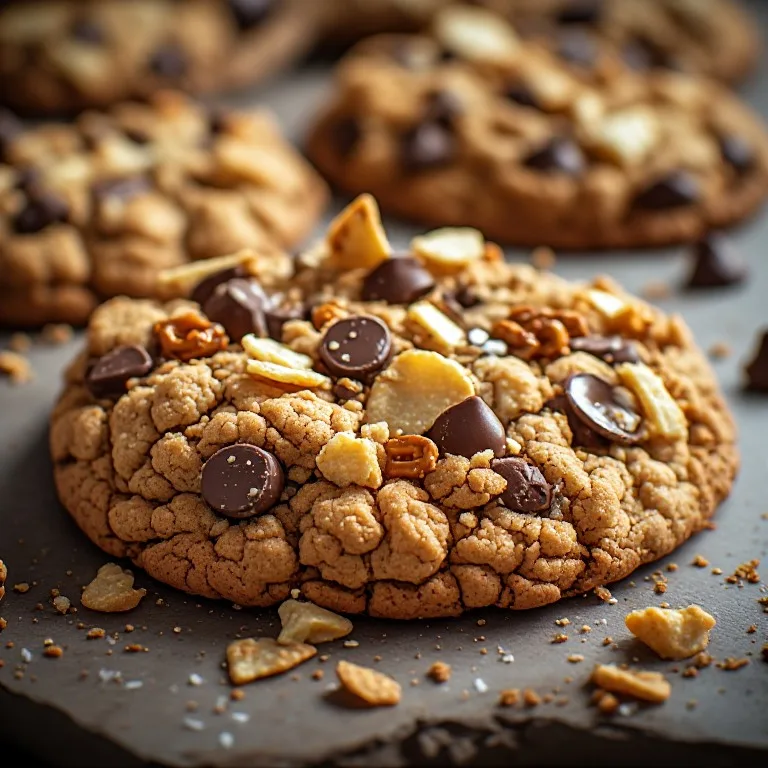
Christina Tosi's Compost Cookie made at home: buttery dough packed with mini chocolate chips, butterscotch chips, salty potato chips, pretzels, rolled oats, and ground coffee. The cookie that launched the entire 'trash dessert' genre — decoded, with the two technique secrets most recipes miss.

Medium Prep: 30 min (plus 1 hr chill) Cook: 16 min Total: 1h 46m16–20 cookies servings ~$4.50/serving
Prep30 min (plus 1 hr chill)
Cook16 min
Total1h 46m
Servings
16
At home~$4.50/serving
vs
Restaurant~$20.25/serving
You save ~78%

The Story Behind the Recipe

Christina Tosi's Compost Cookie made at home: buttery dough packed with mini chocolate chips, butterscotch chips, salty potato chips, pretzels, rolled oats, and ground coffee. The cookie that launched the entire 'trash dessert' genre — decoded, with the two technique secrets most recipes miss.

Ingredients

  • Graham Crust (make first)
  • Cookie Dough

Instructions

💡
Pro tip: This recipe tastes even better the next day. The flavors need time to meld together in the fridge.
❄️
Storage: Keeps in an airtight container in the fridge for up to 2 weeks. Freezer-friendly for up to 3 months.
~350-550 cal/serving · Rich & Indulgent🔥
🎃 Free Halloween cookbook — download now The Copycat Halloween Cookbook A ready-made, photo-illustrated PDF of our best halloween copycat recipes — free to download, no building required. Pay what you want to support if you love it.

Free PDF — instant download. We'll also send new seasonal copycat recipes now and then; unsubscribe anytime. Or just download it →

Christina Tosi invented the Compost Cookie® at Milk Bar in 2008 with a kitchen-scrap logic: use whatever was sitting around — coffee grounds, pretzels, the partial bag of butterscotch chips, the bowl of potato chips from last night. The cookie became Milk Bar’s signature item, was trademarked, and spawned an entire genre of deliberately chaotic baked goods. It is also considerably harder to reproduce at home than it looks.

The reason most copycat versions fall short comes down to two steps that recipes routinely undersell: the 7-to-8-minute egg creaming (which is not a typo and cannot be abbreviated), and the overnight refrigeration (which determines whether you get a tall, chewy cookie or a flat, crispy one). Get both right and the cookie is straightforward. Get either wrong and no quantity of potato chips will save you.

What goes into a Compost Cookie and why

The dough is a standard butter-sugar base with one addition: liquid glucose, the professional pastry kitchen’s anti-crystallization agent. Glucose keeps the center chewy well past the day of baking. Karo light corn syrup is a direct substitute at the same weight.

The mix-ins split into two categories. The first — chocolate chips, butterscotch chips, graham crust, oats, ground coffee — go in early, during the mix-in stage, and can tolerate being paddled for 30 seconds. The second — potato chips and pretzels — go in last and get only 10 to 15 seconds of paddling, just enough to distribute without shattering. The structural divide matters: if you add the chips and pretzels with the first group, they turn to powder.

The ground coffee (5g, or 1 teaspoon) is the stealth ingredient. It is below the threshold of tasting distinctly like coffee. At this quantity, it amplifies the chocolate flavor the same way a small amount of espresso deepens a brownie — you will not identify it, but it is what makes the chocolate taste more complex. Do not substitute instant espresso powder; it dissolves and can impart a bitter off-note. Ground coffee stays in particles.

The graham crust is a prepared ingredient, not a shortcut. Equal parts crumbs, milk powder, and sugar bound with melted butter and heavy cream: the butter coats the crumb particles before they ever enter the dough, so they resist absorbing moisture and remain slightly crunchy in the finished cookie. Straight graham cracker crumbs soften and disappear. Make the full recipe and keep the extra in the freezer.

The two techniques that separate Milk Bar from everyone else

The extended egg beat. Standard chocolate chip cookie recipes cream butter and sugar for 2 to 3 minutes. The Compost Cookie creams for 2 to 3 minutes, then adds the egg and beats for 7 to 8 more minutes. During that extended beat, the egg white proteins begin to set around microscopic air bubbles and the fat-sugar emulsion becomes genuinely fluffy — pale, light, and mousse-like. That emulsification produces the finished cookie’s signature texture: thin lacey caramelized edges, a center that pulls slightly when you break it apart, and a fine crumb that reads as rich and chewy without being dense or cakey. Set a timer. Do not stop at 3 minutes because it looks done.

The overnight chill. Compost Cookie dough is slack — high butter content, added glucose, a full egg. Baked warm, the cookies spread within the first 2 minutes of oven time and go flat. Cold dough (near 38°F) flows slowly enough that the exterior crusts before the interior melts, producing a cookie that’s 50% taller and dramatically chewier at the center. One hour is the minimum. Overnight is better: the flour fully hydrates, the brown sugar and coffee flavors deepen, and the dough tightens enough to hold a dome. The shaped dough keeps refrigerated up to 1 week, or frozen up to 2 months.

Baking notes

Use kettle-style potato chips — Cape Cod, Kettle Brand, or similar. Thin chips (Lay’s, Pringles) disintegrate in the mixer and bake to mush. Kettle chips hold as distinct pieces.

Bake at 375°F for 15 to 16 minutes, not 18. Pull the pan when the edges are faintly golden and the centers look underdone — still puffed, still pale. This is correct. A Milk Bar cookie’s center should look like it needs another 2 minutes when you pull it. Those 2 minutes happen on the cooling pan. Wait for 10 minutes before touching them.

Six cookies per half-sheet pan — they spread. At 75g each, a Compost Cookie is a full bakery portion, not a snack. Smaller cookies are possible but change the edge-to-center ratio and produce a crunchier, less chewy result.
Frequently Asked Questions

Why is the Compost Cookie called a 'Compost' cookie? Is it actually made from scraps?

Largely yes — at least conceptually. Christina Tosi developed the Compost Cookie while working at Craft restaurant in New York, where she improvised cookies using whatever was around: leftover pretzels, coffee grounds, chips, oats, butterscotch chips that weren't going into anything else. The name is literal: it uses the 'compost' of the kitchen — the odds and ends, the dregs, the things that individually seem like too little to do much with but collectively produce something better than any single ingredient could. When Tosi opened Milk Bar in 2008, the Compost Cookie became the store's signature item and was trademarked (Compost Cookie® is officially registered). She is widely credited with popularizing the 'kitchen-sink dessert' genre — the category of baked goods that deliberately jam together sweet, salty, fatty, and crunchy elements in a single item. Dozens of subsequent cookies, bars, and confections by other bakers trace their lineage directly back to this one.

What is the 7-to-8-minute egg beating step doing, and why do most copycat recipes skip it?

The extended creaming — 7 to 8 minutes on medium-high after adding the egg — is the single most unusual and most important technique in the recipe. A standard chocolate chip cookie creams butter and sugar for 2 to 3 minutes and then adds eggs for maybe 30 seconds more. Tosi's method is different by design. After the initial 2 to 3 minutes of creaming butter, sugars, and glucose, the egg and vanilla go in and the mixer runs for a full 7 to 8 additional minutes. During that time, the egg white proteins begin to partially set around tiny air bubbles, and the fat-and-sugar mixture emulsifies more completely than it would in a shorter beat. The result is a dough that is noticeably lighter, paler, and fluffier than standard cookie dough — almost mousse-like in the bowl. This extended emulsification produces the specific Milk Bar cookie texture: slightly crispy, almost lacey edges from the caramelized sugars, a chewy center that remains extensible rather than cakey, and a characteristic fine crumb that holds together without being dense. Copycat recipes skip it because it seems optional. It is not. Cookies made with 1-minute creaming spread thinner, taste denser, and lack the distinct edge-crisp that makes Milk Bar cookies identifiable.

What does the glucose (or corn syrup) actually do in this recipe?

Glucose is an invert sugar — a sugar that does not crystallize the way sucrose (table sugar) does when exposed to air or temperature changes. In cookie dough, its role is twofold. First, it contributes to a chewier, more extensible crumb: sucrose crystallizes as it cools, making cookies firmer and crunchier over time, while glucose stays amorphous and soft, keeping the cookie's center chewy even after it's fully cooled and rested. Second, glucose is hygroscopic — it attracts and holds moisture — which means cookies made with glucose stay soft for longer than cookies made with sucrose alone. The practical result: a Milk Bar Compost Cookie on day two is still chewy and soft in the center, while a standard chocolate chip cookie on day two is noticeably stiffer. Liquid glucose (available at baking supply stores and on Amazon) is the professional version. Karo light corn syrup is a direct, identical-performing substitute at the same weight (18g / 1 tablespoon). Do not use dark corn syrup, molasses, or honey — they contribute flavor. You want the structural benefit of invert sugar without extra flavor.

Why do you need to use ground coffee, not instant espresso?

The 5g (1 teaspoon) of ground coffee in this recipe is present below the perception threshold of 'this tastes like coffee.' At that quantity, it is not a flavoring — it is a flavor amplifier, specifically for the chocolate. Coffee and chocolate share dozens of the same aromatic compounds (pyrazines, furaneols, certain esters), and a small amount of coffee in a chocolate-based recipe intensifies the chocolate's complexity without adding a distinct coffee taste. The recipe specifically calls for ground coffee — beans that have been roasted and milled but not dissolved. Instant espresso powder, by contrast, is water-soluble: it dissolves in the small amount of moisture in the dough, concentrates into pockets of intense flavor, and can impart a bitter, slightly metallic off-note. Ground coffee does not fully dissolve; it stays in particles that contribute aroma and a subtle bitterness at the edge of each bite without overwhelming the dough. Use any decent medium-roast ground coffee. Finely ground is better than coarse — you want consistent distribution, not chunks.

What potato chip brand should I use, and does it matter?

It matters. The recipe calls for 50g of potato chips added at the end of mixing, and those chips need to survive: first, the gentle paddling that distributes them through the dough, and then 16 minutes in a 375°F oven. Thin chips — Lay's Classic, Pringles, or most regular supermarket chips — are fragile under either stress. They pulverize in the mixer and disintegrate during baking, contributing a vague potato starchiness rather than actual crunchy chip pieces. What you want is kettle-cooked chips, which are noticeably stiffer and drier: Cape Cod Original, Kettle Brand Sea Salt, or similar. Their lower moisture content and firmer structure survive the mixing paddle and bake into identifiable crunchy bits that survive in the finished cookie. The salt and fat from the chip also pull a different flavor profile than the pretzels — the chip is a slower, fuller salt hit, while the pretzel is sharper and more alkaline. Both are structural. Use thick kettle chips.

Do I really have to chill the dough for an hour? What happens if I bake it right away?

Yes, the chill is required, and baking without it produces a fundamentally different cookie. At room temperature, the Compost Cookie dough is quite slack — it has high butter content (225g, or 2 full sticks), added fat from the glucose, and a significant quantity of liquid from the egg. Warm dough spreads rapidly in the oven before the structure has time to set, producing thin, crispy cookies with flat profiles and less chew. Cold dough (38 to 40°F) flows much more slowly: the exterior has time to crust and set from the oven's heat before the interior melts into the pan. This produces a taller, chubbier cookie with a distinct transition between the set edge and the soft center. The minimum is 1 hour; overnight is noticeably better because the flour has more time to fully hydrate (producing a more cohesive dough), and the flavors — especially the coffee, butterscotch, and molasses from the brown sugar — have time to develop and merge. The dough keeps refrigerated up to 1 week, or shaped and frozen for up to 2 months. Bake frozen portions straight from the freezer at 375°F for 18 to 20 minutes.

Why only 6 cookies per half-sheet pan?

These are bakery-sized cookies — 75g each, roughly the size of a racquetball. Milk Bar sells them individually; each one is a full dessert serving, not a bite. At that size, they need 4 to 5 inches of clearance in every direction to spread without cookies merging into each other. On a standard 18×13-inch half-sheet pan, that works out to 6 cookies: two columns of three, evenly spaced. Crowding causes uneven browning (the edges facing other cookies don't get direct oven heat) and merged cookies that pull apart when you try to remove them. If you're baking a full batch of 16 to 20 cookies, plan on 3 to 4 sheet pans — or bake in rounds, letting the pan cool fully before loading the next batch.

What is the graham crust and can I just use graham cracker crumbs instead?

The graham crust is a prepared mixture — crumbs, milk powder, sugar, and salt bound together with melted butter and heavy cream into sandy, fat-coated clusters. It is not simply crushed graham crackers. The difference is significant: dry crumbs distributed through cookie dough absorb moisture from the dough, soften, and contribute mostly a faint honey-wheat flavor. The pre-coated graham crust clusters resist moisture absorption because the butter has already hydrated the surfaces; they contribute that flavor AND a distinct sandy, slightly crunchy texture in the finished cookie — a texture that disappears entirely if you substitute plain crumbs. The milk powder in the crust is the other variable: it contributes a subtle dairy-caramel flavor (the Maillard reaction browns milk proteins in the oven) that plain crumbs don't have. Make the full crust recipe but only use 85g (about ½ cup packed) for this batch of cookies. The remaining 225g keeps airtight at room temperature for 2 weeks or in the freezer for 3 months — it's excellent crumbled over vanilla ice cream, stirred into yogurt, or used as a base for a cheesecake crust.

Love this recipe? Share it!

Free PDF: our 12 most-wanted copycat recipes — instant download.

Made it? Buy us a coffee

Every recipe here is free, with no paywalls. If this one was a hit at your table, a small tip keeps new copycats coming.

$

Milk Bar is a trademark of its owner, used here only to describe the dish this recipe recreates. This is an independent copycat written in our own words — Copycat Spices is not affiliated with, endorsed by or sponsored by Milk Bar.

Ratings & Reviews

—
No ratings yet

Rate this recipe

Click a star to rate

Leave a Review

0/500

CS

Copycat Spices Editorial

Researched + fact-checked. Every recipe on Copycat Spices is built from published sources — official ingredient lists, brand-published recipes, interviews and food-science references — and fact-checked before it goes live, then written as clear, step-by-step instructions for home cooks of all skill levels.

Learn more about our mission →