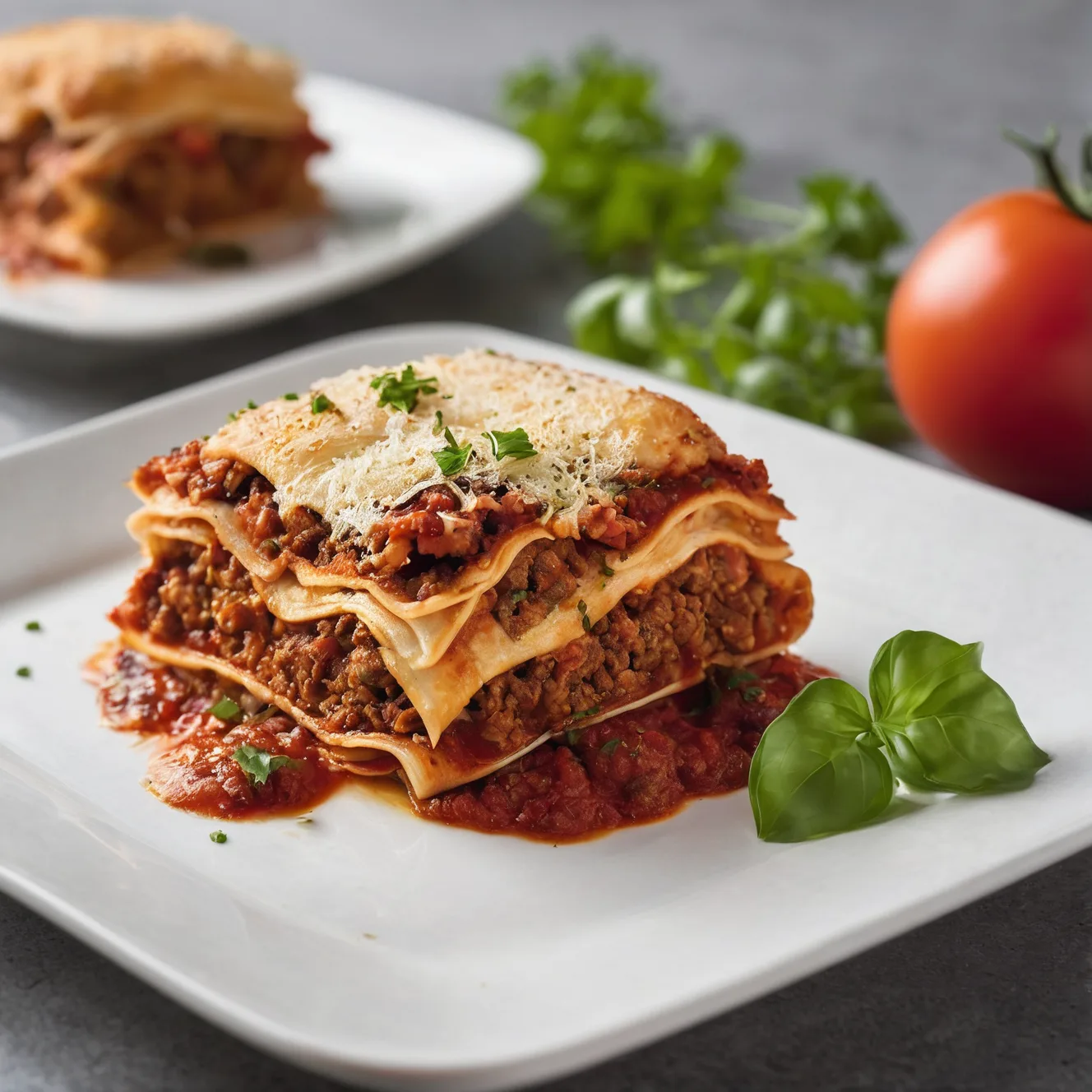
Copycat Olive Garden Lasagna Classico
Olive Garden’s Lasagna Classico is the restaurant’s signature red-sauce lasagna — layers of pasta, a rich two-meat tomato sauce, and a thick ricotta-mozzarella-Parmesan filling baked until golden and bubbling. This copycat nails the version currently on their menu, including the detail most home cooks miss: both ground beef and Italian sausage, browned separately to develop their own crust before the sauce comes together.
What Makes It an Olive Garden Lasagna
There are two things that pull this away from generic meat lasagna and toward the restaurant version:
The dual-meat sauce. Ground beef handles body and beefiness; Italian sausage handles the fennel, herb, and garlic complexity that makes a sauce interesting. Most home lasagna recipes use only beef. The result is a one-dimensional sauce that tastes fine but doesn’t have that layered savory depth you expect from the restaurant. Use both, and brown them separately at high heat so each develops a real sear — not a gray steam.
Pan-searing the meat, not just browning. The instruction to add meat to a hot pan and leave it alone for 2 minutes before breaking it up sounds counterintuitive, but it’s where flavor comes from. The Maillard reaction requires sustained contact with a hot surface, not continuous stirring. The browned bits that stick to the bottom of the pot are scraped up when the onions and tomatoes go in — that’s the flavor foundation of the sauce.
The lasagna itself is a red-sauce construction, not a white sauce. Olive Garden’s Classico has no béchamel.
Five Cheese vs. Classico
Olive Garden has offered both versions over the years. The Lasagna Classico is the current dine-in menu item: meat sauce, red tomato base, and a four-cheese blend — ricotta, mozzarella, Parmesan, and Romano.
The Five Cheese Lasagna was a meatless variant, now discontinued, built on a cream-enriched sauce with sun-dried tomatoes. It used the same four cheeses plus fontina, for five total. If you want the Five Cheese version, follow the variation below.
The Cheese Layer: Why the Egg Matters
The ricotta layer is held together by the eggs. Without them, it’s spreadable when raw but slides apart when cut — you get a pile of hot ricotta instead of a clean slice. Two eggs per 32-ounce container is the ratio that binds the layer without making it taste eggy. Mix them in with the Parmesan, Romano, parsley, salt, and pepper until fully smooth.
Use whole-milk ricotta, not part-skim. Part-skim works (see the Healthier Tips section), but whole-milk ricotta has a creamier texture that doesn’t turn grainy when heated. Fat-free ricotta should be avoided entirely — it releases too much water and makes the lasagna soggy.
The 15-Minute Rest
Every lasagna recipe says “let it rest,” and nearly every home cook skips it. The lasagna falls apart on the first cut, then looks like a mess on the plate, and they wonder what went wrong.
The rest is structural. At 375°F, the cheese and sauce are liquid. As they cool to serving temperature, they re-solidify into layers that hold together when sliced. Fifteen minutes is enough. Twenty is better if you can wait. Cut it before then and you’re cutting into hot soup, not a layered slice.
Variations
Five Cheese vegetarian version: Omit the meat. For the sauce: melt 3 tbsp butter, whisk in 3 tbsp flour, then whisk in 2 cups whole milk + 1 cup heavy cream over medium heat until thickened (~4 minutes). Season with garlic powder, salt, pepper, and a pinch of nutmeg. Stir in ½ cup sun-dried tomatoes (drained, roughly chopped). Use the same cheese layer (which already has ricotta, mozzarella, Parmesan, and Romano) and add ½ cup fontina, making it five cheeses total.
Make-ahead (refrigerate overnight): Assemble fully, cover tightly with plastic wrap, refrigerate up to 24 hours. Remove from fridge 30 minutes before baking. Bake covered for 50 minutes (longer than fresh because it starts cold), then uncovered for 20 minutes.
Freeze unbaked: Assemble in a freezer-safe baking dish, cover tightly with plastic wrap and then foil, freeze up to 3 months. Thaw overnight in the fridge, then bake as above (50 min covered from cold, 20 min uncovered).
Freeze baked: Cool completely, cover tightly, freeze up to 3 months. Reheat covered at 350°F for 30–40 minutes from frozen, or 20 minutes from thawed.
Cost Comparison
| Olive Garden | Homemade | |
|---|---|---|
| Per serving (dine-in) | ~$18–20 | — |
| Full batch (8 servings) | ~$144–160 | ~$32–38 |
| Per serving | ~$19 | ~$4–5 |
The home batch runs roughly 4× cheaper per serving. Olive Garden’s Family-Style Lasagna Bundle (serves 4–6) runs about $60–67 depending on location, but that price also includes a family salad and a dozen breadsticks — so it’s not a straight lasagna-to-lasagna comparison. Even so, this recipe makes 8 servings of lasagna for roughly the cost of the bundle, with full control over the meat and cheese.
Portion size matters when comparing nutrition, too: Olive Garden’s dine-in dinner entrée is about 930–940 calories (with roughly 2,260 mg sodium). This home recipe cuts to 8 slices from a 9x13 pan — a slightly smaller, leaner portion at around 780 calories, and you control the salt.
Storage
Fridge: 4–5 days, covered. Reheats well — cover with a damp paper towel and microwave in 90-second intervals, or reheat covered in a 350°F oven for 20 minutes.
Freeze baked portions: Wrap individual slices in plastic wrap, then foil. Freeze up to 3 months. Thaw in the fridge overnight before reheating.
See all Olive Garden copycat recipes →