



Pin It

Olive Garden Parmesan Crusted Chicken Fritta

Olive Garden Parmesan Crusted Chicken Fritta
Jump to Recipe
Prep 20 min Cook 30 min Serves 4
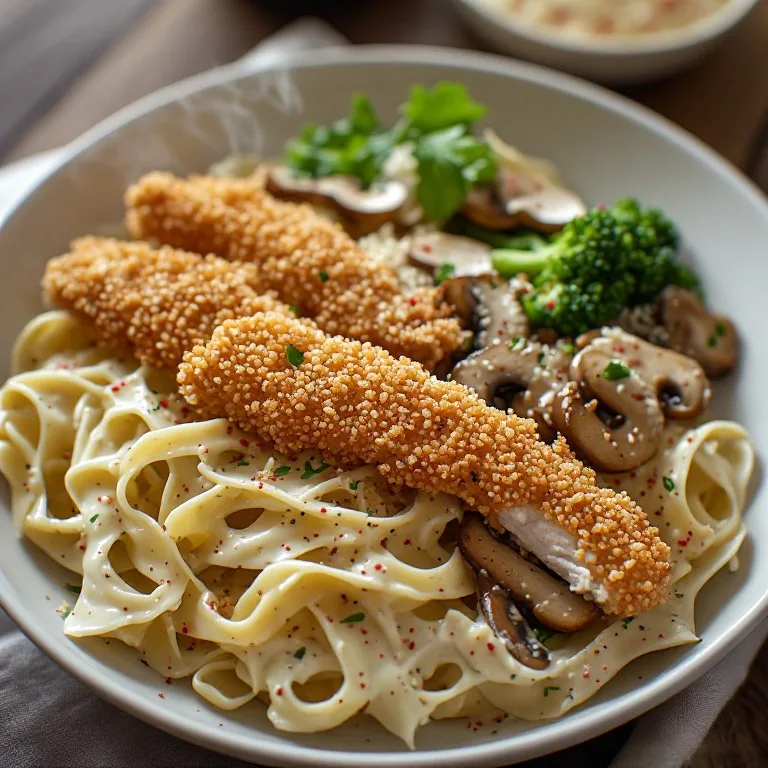
Quick answer: Olive Garden's Parmesan Crusted Chicken Fritta is fried chicken strips — not cutlets, strips — in a Parmesan-Asiago breadcrumb crust, served over farfalle pasta with an Asiago cream sauce (not Alfredo). The Asiago is the key ingredient in both the crust and the sauce: it has a sharper, nuttier flavor than Parmesan alone and is why this dish tastes different from every other breaded chicken pasta recipe. To make it: cut chicken breasts into strips, bread in flour → egg wash → Parmesan-Asiago breadcrumbs, fry at 350°F until golden (3–4 minutes per side), then build an Asiago cream sauce from butter, garlic, white wine, chicken broth, heavy cream, and two cups of freshly grated Asiago. Serve over bow-tie pasta with sautéed mushrooms and blanched broccoli alongside.

Olive Garden Parmesan Crusted Chicken Fritta

Olive Garden's Parmesan Crusted Chicken Fritta at home: golden-fried chicken strips in a Parmesan-Asiago breadcrumb crust, served over farfalle pasta with a rich Asiago cream sauce. This is not chicken parm — no marinara, no mozzarella. The Asiago is the entire point. OG price: approximately $18–20.

Medium Prep: 20 min Cook: 30 min Total: 50 min4 servings ~$4.50/serving
Prep20 min
Cook30 min
Total50 min
Servings
4
At home~$4.50/serving
vs
Restaurant~$20.25/serving
You save ~78%

The Story Behind the Recipe

Olive Garden has run the Chicken Parmigiana on its menu without interruption for decades — it is the benchmark Italian-American chicken dish at casual dining chains. But the Parmesan Crusted Chicken Fritta is a different creature entirely. Where the Parm goes marinara-mozzarella and Italian-American, the Fritta goes cream-asiago and Northern Italian. The crust is a Parmesan-Asiago breadcrumb blend that fries to a dense, audibly crispy shell. The sauce is a white cream sauce built on Asiago, not Parmesan, which gives it a noticeably sharper, almost nutty edge that cuts the richness of the cream.

At Olive Garden, the dish runs approximately $18–20 and arrives as six golden strips over a mound of farfalle with the cream sauce ladled over and broccoli and mushrooms on the side. At home, the ingredient cost comes to roughly $6–8 per serving — a third of the price. The hardest part is not the frying; it is correctly identifying that the Asiago goes into both the crust and the sauce, not just one or the other. Miss that and you have a very good parmesan chicken pasta. Nail it and you have the restaurant dish.

Nutrition Facts

Per serving (4 servings)
Calories1090
Total Fat59g
Total Carbs77g
Dietary Fiber4g
Sugars5g
Protein54g
Sodium1,620mg

* Estimated values based on standard recipe preparation. Actual values may vary.

Ingredients

  • For the chicken
  • For the Asiago cream sauce
  • For pasta and vegetables

Instructions

💡
Pro tip: This recipe tastes even better the next day. The flavors need time to meld together in the fridge.
❄️
Storage: Keeps in an airtight container in the fridge for up to 2 weeks. Freezer-friendly for up to 3 months.
🎃 Free Halloween cookbook — download now The Copycat Halloween Cookbook A ready-made, photo-illustrated PDF of our best halloween copycat recipes — free to download, no building required. Pay what you want to support if you love it.

Free PDF — instant download. We'll also send new seasonal copycat recipes now and then; unsubscribe anytime. Or just download it →

Olive Garden Parmesan Crusted Chicken Fritta

Olive Garden’s Parmesan Crusted Chicken Fritta is one of those dishes that sounds like it should be obvious to recreate — breaded chicken, cream sauce, pasta — but most home attempts miss the mark in the same exact way.

The miss is always the cheese. People reach for Parmesan because the name says “Parmesan Crusted,” make a perfectly good Parmesan breadcrumb crust, toss the chicken with something approximating Alfredo, and wonder why it tastes like a nice homemade dish but not like Olive Garden’s.

The answer is Asiago. Aged Asiago — not the milder young version, but the sharp, nutty, pungent stagionato — goes into both the crust and the sauce. It is the cheese with the most distinctive flavor in the dish, and it is the one that most copycat recipes skip entirely or replace with more Parmesan.

Fix that and everything else follows.

What Most Copycat Recipes Get Wrong

The Asiago disappears from the recipe. The crust sounds like a Parmesan job (“Parmesan Crusted”), so copycats load it with Parmesan and call it done. But the Asiago in the crust is what gives the breading a sharper, nuttier bite than a Parmesan-only crust, which tastes milder and more familiar. Both cheeses have to be there for the crust to taste like the restaurant version, not just like a good parmesan chicken.

The sauce becomes a generic Alfredo. Standard Alfredo is butter, cream, and Parmesan — a mild, rich, soft-tasting sauce. OG’s Asiago cream sauce uses Asiago as the primary cheese in the sauce, plus a splash of white wine before the cream goes in. The Asiago brings edge and tang that cuts through the cream. Make it with only Parmesan and you get a fine sauce. Make it with Asiago and you get the restaurant dish.

Whole cutlets instead of strips. Olive Garden portions the Fritta as strips — essentially elongated chicken tenders rather than whole butterflied cutlets. The difference matters because strips have a dramatically higher ratio of crispy crust to meat per bite. A thick breast cutlet gives you a substantial center bite that is mostly chicken; a strip is as much crust as it is chicken. This is intentional: the crust is the best part, and the strip format maximizes it.

The Breading

The crust is a 3:1 breadcrumb-to-cheese ratio by volume — one cup breadcrumbs to a combined half cup of Parmesan and Asiago (about 50/50 each). Mix them completely before dipping. The Asiago needs to be distributed throughout the breading, not sitting in one pocket.

The double-press technique matters more than most recipes say. After rolling the strip in the breadcrumb mix, press it. Not a gentle pat — an actual firm press, working around the edges. Breadcrumbs that are lightly tossed onto the surface will fall off the moment the strip hits 350°F oil. Breadcrumbs that have been pressed into the egg wash surface stay put and form a solid shell.

Let the breaded strips sit on a wire rack for 5 minutes before frying. This rest lets the egg bind the crumbs into a cohesive layer. Frying too soon after breading is the most common reason for breadcrumbs that shed in the oil.

The Asiago Cream Sauce

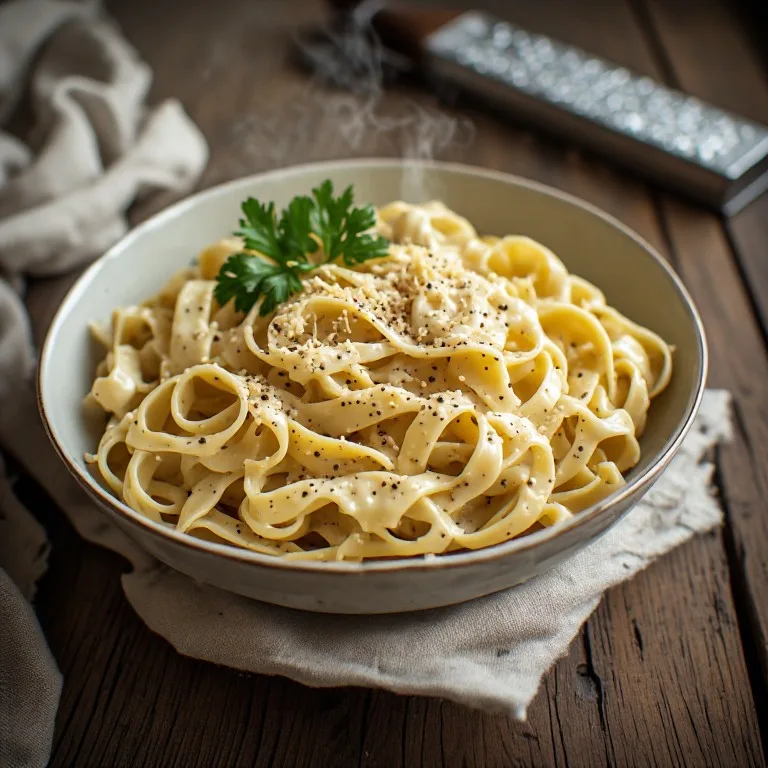
The sauce construction goes: garlic in butter → white wine reduction → chicken broth → heavy cream → Asiago and Parmesan off the heat.

The white wine step is the one most recipes skip, and it changes the flavor noticeably. A 2-minute reduction with dry white wine (Pinot Grigio works well) adds a faint tartness that cuts through the cream. Without it, the sauce reads sweet and flat. With it, there is a slight back-of-the-palate brightness.

Add the cheese off the heat, not while the sauce is at a full simmer. Cheese proteins seize and turn grainy when they hit temperatures above 180°F suddenly. Remove the pan from the burner, let it sit 30 seconds, then whisk in the Asiago and Parmesan in two stages. The residual heat melts the cheese without breaking the sauce.

Sauce consistency check: the finished sauce should coat the back of a spoon and leave a clean line when you run your finger through it. If it slides off the spoon immediately, simmer 2 more minutes. If it is too thick, pasta water (not more cream — cream makes it richer; pasta water loosens without changing the flavor) brings it back.

Frying Temperature Matters

350°F is the right oil temperature for these strips. Below 325°F, the chicken absorbs oil before a crust can form — the strips come out pale and greasy. Above 375°F, the Asiago-Parmesan breadcrumbs (which have more protein than plain breadcrumbs) can go from golden to burnt before the chicken reaches 165°F.

If you do not have a thermometer, drop a single breadcrumb into the oil. At 350°F, it will sizzle steadily but not violently within 2 seconds. If it sizzles immediately on contact and the oil is moving actively, it is too hot.

Fry in batches with clear space around each strip. Crowding drops the oil temperature and causes uneven cooking.

Internal Links

For the companion dish, see the Zuni Café Roast Chicken for a different take on the crispy skin–bread pairing. For more Olive Garden copycats, the Chicken Parmigiana uses the same breading station in a completely different direction (marinara, mozzarella, no cream sauce). For more Asiago cream sauce applications, Chicken Bellagio from The Cheesecake Factory uses a pine nut cream over a similar fried chicken base.
🥗

Make It Healthier

Love Olive Garden Parmesan Crusted Chicken Fritta but want a lighter version? Try these simple swaps:

  • ✓Bake instead of fry: spray breaded strips generously with cooking oil spray and bake at 425°F on a wire rack over a sheet pan, 18–20 minutes, flipping halfway. You lose some crust density but cut the frying oil entirely.
  • ✓Lighten the cream sauce: replace 1 cup of the heavy cream with whole milk and thicken with 2 teaspoons of cornstarch stirred in at the end. The sauce is thinner but still rich, saving roughly 150 calories per serving.
  • ✓Use less pasta or swap for roasted cauliflower: the farfalle accounts for about 300 calories per serving. Serving the chicken strips over roasted cauliflower or steamed broccolini with a lighter drizzle of sauce brings the plate under 600 calories.
  • ✓Skip the broccoli blanching step and use the stalks: the thick broccoli stalks, cut into coins and roasted at 425°F, absorb the cream sauce beautifully and have more bite than florets.

Frequently Asked Questions

What is the difference between Olive Garden Parmesan Crusted Chicken Fritta and their Chicken Parmigiana?

They are completely different dishes that happen to both involve breaded chicken. Chicken Parmigiana (Parm) is an Italian-American dish: breaded cutlets pan-fried and then baked under marinara sauce with mozzarella and Parmesan on top. The sauce is tomato-based, the cheese on top is mozzarella, and the preparation style is classic red-sauce Italian-American. Parmesan Crusted Chicken Fritta is a white-sauce dish: fried chicken strips (not cutlets) in a Parmesan-Asiago crust, served over farfalle pasta with an Asiago cream sauce — no marinara, no mozzarella. The flavor profile is entirely different. The Parm is acidic and tomato-bright; the Fritta is rich, creamy, and nutty. If you order the wrong one expecting the other, you will be surprised.

Is Olive Garden's Parmesan Crusted Chicken Fritta still on the menu?

Olive Garden rotates its menu seasonally, and the Parmesan Crusted Chicken Fritta appears and disappears. It has had strong staying power as a returning item because of consistent customer demand. As of recent visits it has appeared as a regular or rotational entrée, but Olive Garden's current menu changes by region and season. Check olivegarden.com or your local menu before assuming it is available. This recipe lets you make the dish whether or not OG currently lists it — and the home version is cheaper regardless.

What is Asiago cheese, and can I substitute Parmesan?

Asiago is an Italian cow's milk cheese from the Veneto region that is aged longer than Parmesan and develops a sharper, nuttier, more pungent flavor than most Parmesan. Fresh (young) Asiago is softer and mild; aged Asiago (stagionato) — the kind you grate — has a distinctive tang that Parmesan does not. You can substitute more Parmesan if you cannot find Asiago, and the dish will still be good, but it will not taste like the Olive Garden version. The Asiago is where the flavor identity of both the crust and the sauce lives. Look for aged Asiago in a wedge at most grocery stores (Boar's Head makes a widely available version). Buy a block and grate it yourself — pre-grated Asiago is usually blended with other cheeses or has anti-caking agents that prevent clean melting in the sauce.

Can I bake the chicken strips instead of frying them?

Yes, with a tradeoff. Breaded chicken strips baked at 425°F on a greased wire rack, sprayed with cooking oil, for 18–20 minutes (flipping halfway) will cook through and develop a crust, but the crust will be drier and less audibly crispy than the fried version. Frying at 350°F produces a crust that is denser and crunchier because the breadcrumbs toast in hot fat at the same time the chicken cooks from the heat. For the best result, bake if you prefer to avoid frying; shallow-fry in 1 inch of oil for a compromise between deep frying and baking.

Why farfalle (bow-tie) pasta specifically?

Olive Garden serves the Fritta over farfalle, and the shape is actually well-suited to the dish. The folds and ruffled edges on bow-ties catch and hold the cream sauce better than smooth shapes like spaghetti or plain penne. The flat center of each piece gives the sauce a landing surface. That said, if you have rigatoni, penne, or cavatappi in the pantry, those all work similarly. The specific shape is a minor preference, not a recipe-breaking decision.

How many calories are in Olive Garden's Parmesan Crusted Chicken Fritta?

Olive Garden does not always list exact nutrition for rotating items, but estimates from nutritional databases and similar Olive Garden chicken-pasta dishes put the dish at approximately 1,000–1,200 calories per serving, with roughly 55–65g of fat from the frying oil and cream sauce, and 50–60g of protein. Sodium tends to be high, around 1,500–1,800mg, primarily from the cheese. The home version here runs approximately 1,090 calories with similar macros. If you eat a half portion (3 strips) over less pasta, the plate lands closer to 600–700 calories.

Can I make the Asiago cream sauce ahead of time?

Yes, with a caveat. Make the sauce through the Asiago addition, cool completely, and refrigerate up to 2 days. When reheating, add 2–4 tablespoons of heavy cream or pasta water as you warm it over medium-low heat — cream sauces with cheese can break if reheated too aggressively (high heat causes the protein in the cheese to seize and separate). Stir constantly and keep the heat gentle. The sauce will not be as silky as freshly made, but it holds well enough for a make-ahead weeknight dinner. The chicken strips are best made day-of, as fried breaded chicken does not reheat with the same crust. If making ahead, reheat the strips in a 400°F oven on a wire rack for 8–10 minutes to re-crisp.

Love this recipe? Share it!

Free PDF: our 12 most-wanted copycat recipes — instant download.

Made it? Buy us a coffee

Every recipe here is free, with no paywalls. If this one was a hit at your table, a small tip keeps new copycats coming.

$

Olive Garden is a trademark of its owner, used here only to describe the dish this recipe recreates. This is an independent copycat written in our own words — Copycat Spices is not affiliated with, endorsed by or sponsored by Olive Garden.

Ratings & Reviews

—
No ratings yet

Rate this recipe

Click a star to rate

Leave a Review

0/500

CS

Copycat Spices Editorial

Researched + fact-checked. Every recipe on Copycat Spices is built from published sources — official ingredient lists, brand-published recipes, interviews and food-science references — and fact-checked before it goes live, then written as clear, step-by-step instructions for home cooks of all skill levels.

Learn more about our mission →