


Pin It

Cauliflower, Pomegranate, and Pistachio Salad (Ottolenghi)

Cauliflower, Pomegranate, and Pistachio Salad (Ottolenghi)
Jump to Recipe
Prep 10 min Cook 25 min Serves 4
Quick answer: Preheat your oven to 425°F (220°C). Coarsely grate about one-third of the cauliflower on the large holes of a box grater and set aside. Break the rest into florets, roughly 1.5-inch wide, keeping any small inner leaves. Toss the florets, leaves, and 1 roughly chopped medium onion with 3 tablespoons olive oil and ¼ teaspoon salt, spread on a parchment-lined baking sheet without crowding, and roast 20 to 25 minutes until golden brown in spots — move them once at 15 minutes. Remove from oven and cool completely to room temperature, at least 20 minutes. In a large bowl, combine the cooled roasted florets and onion, the raw grated cauliflower, 1 cup roughly chopped flat-leaf parsley, ¼ cup mint leaves, 2 tablespoons tarragon leaves, seeds from half a pomegranate (about ½ cup), and ⅓ cup lightly toasted and roughly chopped pistachios. In a small bowl whisk together the remaining 2 tablespoons olive oil, 1½ tablespoons lemon juice, 1 teaspoon ground cumin, ½ teaspoon salt, and black pepper to taste. Pour over the salad and toss gently. Taste and adjust salt and lemon. Serve at room temperature.

Shop the tools

Gear matched to this recipe. These are Amazon affiliate links — we may earn a small commission if you buy, at no extra cost to you.

As an Amazon Associate, Copycat Spices earns from qualifying purchases. Product images are generic illustrations, not the exact item listed.

Cauliflower, Pomegranate, and Pistachio Salad (Ottolenghi)

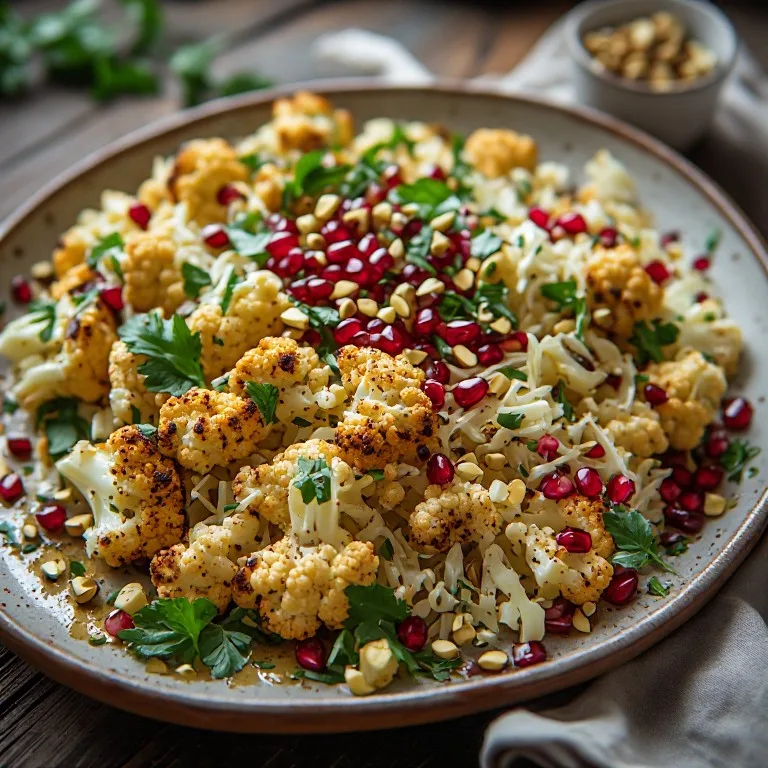
The famous Ottolenghi cauliflower salad with pomegranate and pistachio, made at home: roasted florets combined with raw grated cauliflower, toasted pistachios, pomegranate seeds, and a trio of herbs. The raw-and-roasted technique is the key, and it takes 30 minutes.

Easy Prep: 10 min Cook: 25 min Total: 35 min4 servings ~$4.50/serving
Prep10 min
Cook25 min
Total35 min
Servings
4
At home~$4.50/serving
vs
Restaurant~$20.25/serving
You save ~78%

The Story Behind the Recipe

Yotam Ottolenghi and his business partner Sami Tamimi opened the first Ottolenghi deli in Notting Hill, London, in 2002. The two had grown up on opposite sides of the same city — Ottolenghi in West Jerusalem, Tamimi in East Jerusalem — and their cooking merged Israeli, Palestinian, Lebanese, and broadly Mediterranean influences in ways British diners had never encountered at a neighborhood deli counter. Ingredients like za'atar, pomegranate molasses, sumac, and preserved lemons, once confined to Middle Eastern grocery stores, became fixtures of the British home kitchen because of their cookbooks and restaurants. The Islington location, which opened shortly after, became the flagship. Prepared dishes at the deli today cost £8–12 per portion; the entire four-serving batch at home runs about £5.

This cauliflower, pomegranate, and pistachio salad has been a signature of the Ottolenghi repertoire since it appeared in the cookbook "Ottolenghi Simple" in 2018. Ottolenghi described the dish's central technique — one third of the cauliflower raw-grated and the rest roasted, combined into the same salad — as "a little moment of revelation." The textures are genuinely different: roasted cauliflower is yielding and nutty, raw grated cauliflower is cool and slightly crunchy, and the contrast in a single forkful is what makes this feel like more than the sum of its parts. The one ingredient most home cooks underestimate is tarragon — its anise-floral note is what separates this from a hundred other roasted-vegetable salads with pomegranate seeds.

Nutrition Facts

Per serving (4 servings)
Calories285
Total Fat22g
Total Carbs18g
Dietary Fiber5g
Sugars8g
Protein7g
Sodium310mg

* Estimated values based on standard recipe preparation. Actual values may vary.

Ingredients

  • Salad and dressing

Instructions

💡
Pro tip: This recipe tastes even better the next day. The flavors need time to meld together in the fridge.
❄️
Storage: Keeps in an airtight container in the fridge for up to 2 weeks. Freezer-friendly for up to 3 months.
🎃 Free Halloween cookbook — download now The Copycat Halloween Cookbook A ready-made, photo-illustrated PDF of our best halloween copycat recipes — free to download, no building required. Pay what you want to support if you love it.

Free PDF — instant download. We'll also send new seasonal copycat recipes now and then; unsubscribe anytime. Or just download it →

Copycat Ottolenghi Cauliflower, Pomegranate, and Pistachio Salad (Made at Home)

Prep time: 10 min Cook time: 25 min Servings: 4

Yotam Ottolenghi and Sami Tamimi opened their first deli in Notting Hill, London in 2002. The setup was a small counter with trays of prepared food — the kind of food neither of them had grown up seeing in London, combining the herb-abundant, vegetable-centered cooking of the Middle East with the produce culture of Britain. Pomegranate seeds on top of roasted vegetables, za’atar in salad dressings, tahini as a condiment rather than a specialty ingredient. These were not unusual choices in the cuisines Ottolenghi and Tamimi had grown up eating; they were unusual in a London neighborhood lunch spot.

The Islington location, which followed shortly after and became the better-known flagship, seated a small number of diners alongside the deli counter. The food at both locations was technically shareable — bought by weight or as individual portions — but the dishes became so popular that cookbooks were the only way to meet demand. The first “Ottolenghi” cookbook, published in 2008, introduced the restaurant’s aesthetic to a much broader audience. By the time “Ottolenghi Simple” appeared in 2018, the cauliflower salad with pomegranate and pistachio had become one of the most recognized dishes in the restaurant’s history.

The Technique: Why Raw and Roasted Cauliflower in the Same Bowl

Most vegetable salads treat a single vegetable in a single way. This one uses the same cauliflower twice — one portion roasted until it caramelizes, another portion raw and coarsely grated — and combines both into one dish. Ottolenghi called the discovery of this technique “a little moment of revelation.”

The physics of the two treatments are genuinely different. Roasting at 425°F drives off moisture, browns the surface sugars, and softens the cellular structure — producing florets that are tender, nutty, and yielding. Raw grated cauliflower retains all its moisture and crunch, with a slightly sulfurous raw-vegetable bite. When you combine them and dress them together, the contrast between hot (or room-temperature-after-cooling) roasted and cool raw, between soft and crunchy, between caramelized and fresh — happens in a single forkful. The salad becomes more interesting than either component alone.

This technique is simple enough to be described in one sentence. But it’s also the reason most copycat versions of this salad don’t quite land: they roast all the cauliflower, or skip the raw component, or use it but add it as an afterthought rather than a structural part of the dish.

The Herb Question: Why Tarragon

Most Middle Eastern-influenced salads with pomegranate use parsley and mint — that combination is so common it has almost become a flavor cliché. This recipe uses those two herbs but adds tarragon, which is unusual in the context of this cuisine and unusual enough that some home cook versions skip it as an anomaly.

Tarragon’s flavor is anise-forward and faintly floral — closer to fennel or chervil than to mint. In the context of this salad, it creates a bridge between the sweet, tart pomegranate seeds and the rich, oily pistachios, linking flavors that would otherwise sit in parallel rather than interacting. Parsley and mint provide brightness and freshness. Tarragon provides something that neither does: an aromatic warmth that ties the whole bowl together. It is not the loudest note in the dish, but its absence is noticeable.

If tarragon is genuinely unavailable, fennel fronds are the closest substitution. Fresh basil, used in smaller quantity, can approximate the aromatic quality but will shift the profile toward an Italian rather than Middle Eastern character.

Toasting Pistachios: The Step Worth Doing

Raw pistachio kernels (the shelled, unsalted kind sold in bulk or in bags) have a starchy, flat flavor that adds color and crunch to a salad but not much else. Toasting transforms them. Five to seven minutes in a dry pan over medium-low heat — just long enough for the kitchen to smell nutty and the surfaces to deepen in color — activates the natural oils in the nut and creates the caramelized, almost buttery flavor that makes this salad’s nut component worth eating on its own.

Pistachios have a relatively high oil content, which means they can go from perfectly toasted to burned in under a minute at the wrong heat. The solution is low-and-slow: medium-low heat, constant attention, a wide pan so they’re in a single layer. Transfer them to a cutting board the moment they smell right — residual heat in the pan continues cooking them even after you turn off the burner.

Cost at Ottolenghi vs. at Home

The Ottolenghi delis in London sell prepared dishes by portion. A side serving of a salad like this runs approximately £8 to £12 depending on the location and portion size.

Ottolenghi DeliHomemade (4 servings)
Per portion£8–12 (~$10–15)—
Full batch (4 servings)£32–48 (~$40–60)~$10–14
Per serving~$10–15~$2.50–3.50

The main cost drivers at home are olive oil (use a decent but not precious bottle — the cauliflower and pistachios carry the dish) and pomegranate seeds. In autumn, fresh pomegranates are available at most grocery stores for $2–4. Out of season, refrigerated pomegranate arils in sealed cups work and cost about $4–6 per cup.

Three Details That Make the Difference

Cool the cauliflower completely before assembling. Warm roasted cauliflower will wilt the herbs, soften the grated raw cauliflower prematurely, and prevent the dressing from coating the ingredients properly. Give the roasted florets at least 20 minutes on the pan at room temperature. The salad is meant to be served at room temperature, not hot.

Keep the raw grated cauliflower coarse. The large holes of a box grater produce the right texture — irregular shreds with enough body to hold their crunch. Fine grater holes produce a snow of cauliflower that turns mushy quickly and disappears into the salad rather than adding contrasting texture.

Dress just before serving. The salad holds for about an hour after dressing without significant deterioration, but the herbs discolor and the grated cauliflower softens over time. All the components can be prepped hours in advance; the assembly takes under five minutes and is best done close to the moment you plan to serve.

🥗

Make It Healthier

Love Cauliflower, Pomegranate, and Pistachio Salad (Ottolenghi) but want a lighter version? Try these simple swaps:

  • ✓The dish is already vegan, gluten-free, and has no added sugar — it's naturally nutrient-dense. To reduce fat, cut the olive oil from 5 to 3 tablespoons total (2 for roasting, 1 for dressing). The cauliflower won't caramelize quite as deeply, but the salad still works.
  • ✓Add 1 cup of cooked chickpeas or ½ cup of cooked quinoa to make it a complete protein main course — the cumin and herbs integrate both naturally.
  • ✓Substitute pumpkin seeds (pepitas) for pistachios if you need a lower-cost or nut-free version — they have a similar toasty crunch after dry-roasting. The flavor profile shifts slightly toward earthier rather than rich-buttery, but it works.
  • ✓Pomegranate seeds are naturally high in antioxidants — don't skimp on them. They also add a bright acidity that reduces how much lemon juice you need in the dressing.

Frequently Asked Questions

What exactly is the Ottolenghi raw-and-roasted cauliflower technique, and why does it matter?

The recipe uses two preparations of the same cauliflower in one dish: about one-third is coarsely grated raw on a box grater, and the remaining two-thirds are broken into florets and roasted at 425°F until golden. The roasted florets are soft, nutty, and caramelized; the raw grated cauliflower is cool, slightly crunchy, and has a fresh, slightly sulfurous bite. When you toss both together, the textures don't cancel out — they contrast in every forkful. Ottolenghi himself described the moment he first thought to combine them as 'a little moment of revelation.' Most vegetable salads use a single treatment; this one layers two different versions of the same ingredient the way a good risotto layers parmesan in two stages: one cooked in, one finished on top.

Can I use frozen cauliflower?

For the roasted portion, yes — with caveats. Frozen cauliflower contains more moisture than fresh, and excess moisture steams rather than roasts. Spread it directly from frozen in a single layer on the baking sheet, don't thaw first, and expect the roasting time to be 5 to 8 minutes longer. The result will be slightly less caramelized than fresh. For the raw-grated portion, frozen cauliflower is not appropriate — it needs to be crisp and raw to contrast with the roasted texture. Use fresh cauliflower for the grated third at minimum.

Why does this recipe use tarragon? That seems unusual in a Middle Eastern dish.

Tarragon is the unexpected herb here — and it's deliberate. Parsley provides green freshness, mint adds brightness and cooling, but tarragon adds an anise-floral note that is unusual in Middle Eastern cooking and creates a flavor bridge between the sweet pomegranate and the nutty pistachio. Without tarragon, the salad is still good; with it, it becomes distinctive. If you genuinely cannot find tarragon or dislike the anise flavor, fennel fronds are the closest substitute — milder and less assertive, but in the same flavor family. Fresh basil is a more distant substitute.

How far in advance can I make this?

The salad is best assembled within an hour of serving. You can prep all the components ahead: roast the florets and grate the raw cauliflower up to 4 hours in advance (store roasted florets at room temp covered, grated raw cauliflower in the fridge), toast the pistachios up to a week ahead, and mix the dressing up to 2 days ahead. Once dressed, the salad holds for about 2 hours — after that the grated cauliflower softens and the herbs discolor. It is not a make-ahead dish in the same way a grain salad is; think of it more like a composed salad that needs to be assembled close to serving.

How do I seed a pomegranate without making a mess?

Cut the pomegranate in half through the equator (not through the stem). Hold one half cut-side down over a bowl and firmly smack the rounded top with a wooden spoon. The seeds fall out cleanly with minimal pith attached. Work over a bowl of cold water if any pith comes with them — pith floats, seeds sink, making it easy to separate. This method takes about 90 seconds and produces clean seeds without the usual red-splattered cutting board. Do not cut through the pomegranate lengthwise — that method cuts through seeds and is messy.

Love this recipe? Share it!

Free PDF: our 12 most-wanted copycat recipes — instant download.

Made it? Buy us a coffee

Every recipe here is free, with no paywalls. If this one was a hit at your table, a small tip keeps new copycats coming.

$

Ottolenghi is a trademark of its owner, used here only to describe the dish this recipe recreates. This is an independent copycat written in our own words — Copycat Spices is not affiliated with, endorsed by or sponsored by Ottolenghi.

Ratings & Reviews

—
No ratings yet

Rate this recipe

Click a star to rate

Leave a Review

0/500

CS

Copycat Spices Editorial

Researched + fact-checked. Every recipe on Copycat Spices is built from published sources — official ingredient lists, brand-published recipes, interviews and food-science references — and fact-checked before it goes live, then written as clear, step-by-step instructions for home cooks of all skill levels.

Learn more about our mission →