

Pin It

Zahav Lamb Shoulder (Michael Solomonov's Pomegranate-Braised Recipe, Made at Home)

Zahav Lamb Shoulder (Michael Solomonov's Pomegranate-Braised Recipe, Made at Home)
Jump to Recipe
Prep 30 min (plus 48-hr brine + overnight chickpea soak) Cook 5 hr 30 min Serves 6
Quick answer: Brine a 5-lb bone-in lamb shoulder overnight (up to 48 hours) in a solution of 1/4 cup sea salt, 2 tbsp sugar, 1 tsp each fennel seeds, black peppercorns, and allspice berries, plus half a head of garlic and 2 quarts of water. Simultaneously, soak 1 cup dried chickpeas overnight in cold water with 1 tsp baking soda. When ready to cook, remove the lamb from the brine, pat dry, and place it fat-side-up in a large roasting pan. Drain the soaked chickpeas and scatter them around the lamb. Whisk 1/2 cup pomegranate molasses into 8 cups water and pour over and around the lamb. Cover the pan tightly with foil and braise at 300°F for 5 hours, basting the lamb with the braising liquid every hour. After 5 hours, the meat should shred easily with a fork. Remove the foil, raise the oven to 475°F, and roast uncovered for 30 minutes, basting every 10 minutes, until the lamb is dark, lacquered, and caramelized. Rest 15 minutes, then pull the meat off the bone in large pieces. Serve in the braising pan with the chickpeas and braising juices, with warm tehina sauce alongside.

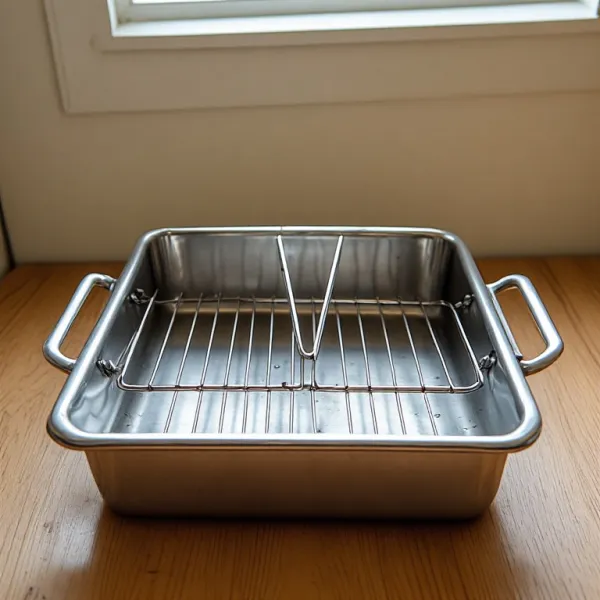
Shop the tools

Gear matched to this recipe. These are Amazon affiliate links — we may earn a small commission if you buy, at no extra cost to you.

As an Amazon Associate, Copycat Spices earns from qualifying purchases. Product images are generic illustrations, not the exact item listed.

Zahav Lamb Shoulder (Michael Solomonov's Pomegranate-Braised Recipe, Made at Home)

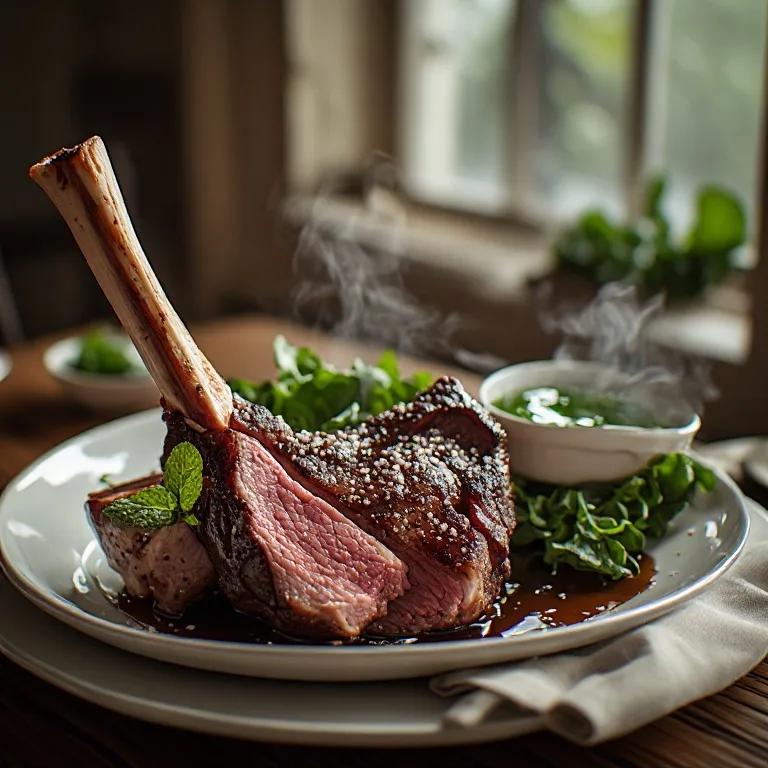
Michael Solomonov's Zahav in Philadelphia is the most acclaimed Israeli restaurant in America. Their bone-in lamb shoulder — brined 48 hours, braised 5 hours in pomegranate molasses with chickpeas, then blasted at 475°F for a lacquered crust — is the centerpiece of the whole meal. Here's the full home version, straight from the cookbook.

Medium Prep: 30 min (plus 48-hr brine + overnight chickpea soak) Cook: 5 hr 30 min Total: 6h 0m6 servings ~$4.50/serving
Prep30 min (plus 48-hr brine + overnight chickpea soak)
Cook5 hr 30 min
Total6h 0m
Servings
6
At home~$4.50/serving
vs
Restaurant~$20.25/serving
You save ~78%

The Story Behind the Recipe

Michael Solomonov's Zahav in Philadelphia is the most acclaimed Israeli restaurant in America. Their bone-in lamb shoulder — brined 48 hours, braised 5 hours in pomegranate molasses with chickpeas, then blasted at 475°F for a lacquered crust — is the centerpiece of the whole meal. Here's the full home version, straight from the cookbook.

Nutrition Facts

Per serving (6 servings)
Calories680
Total Fat32g
Total Carbs32g
Dietary Fiber7g
Sugars11g
Protein58g
Sodium590mg

* Estimated values based on standard recipe preparation. Actual values may vary.

Ingredients

  • For the brine
  • For the lamb and braise
  • For the tehina sauce (makes about 2 cups)
  • For serving

Instructions

💡
Pro tip: This recipe tastes even better the next day. The flavors need time to meld together in the fridge.
❄️
Storage: Keeps in an airtight container in the fridge for up to 2 weeks. Freezer-friendly for up to 3 months.
🎃 Free Halloween cookbook — download now The Copycat Halloween Cookbook A ready-made, photo-illustrated PDF of our best halloween copycat recipes — free to download, no building required. Pay what you want to support if you love it.

Free PDF — instant download. We'll also send new seasonal copycat recipes now and then; unsubscribe anytime. Or just download it →

Michael Solomonov opened Zahav in Philadelphia in 2008 with his business partner Steven Cook, and the restaurant took about a decade to become what it is now: the most decorated Israeli restaurant in America, winner of the James Beard Outstanding Restaurant award, with a reservation queue that reliably fills within the first hour it opens each month. Two dishes are responsible for most of that reputation. The hummus you have already read about. This is the other one.

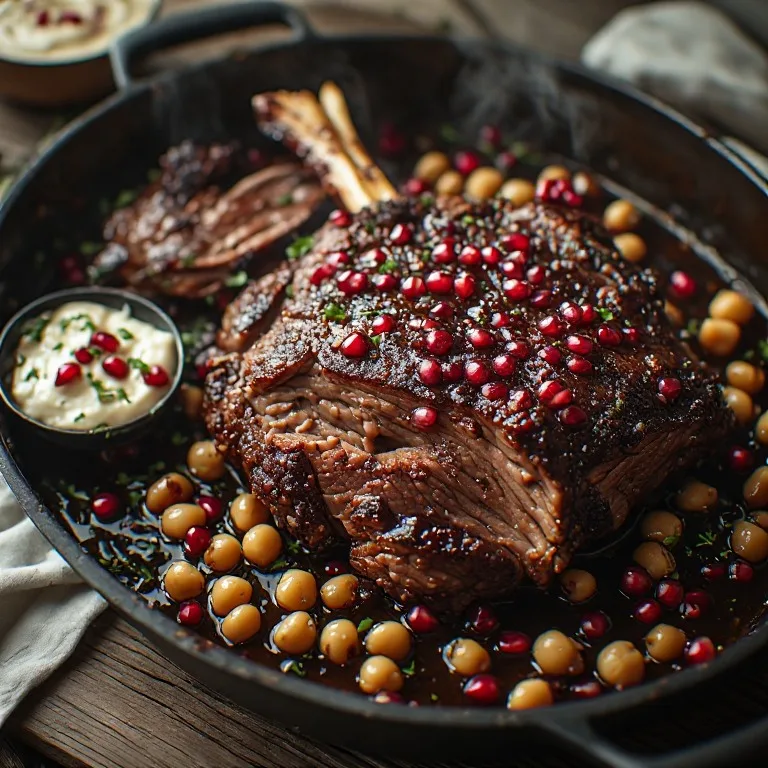
The lamb shoulder runs on the menu every day, consumes roughly two full days of advance preparation per batch, and sells about 170 orders a week according to the restaurant (Philadelphia Magazine, 2025). It is ordered by almost every table that comes in for the full experience, and it arrives looking unlike most braised lamb you have seen: dark, glossy, pulled partly from the bone, surrounded by chickpeas that have spent five hours absorbing pomegranate and lamb fat, in a pan glossy with reduced braising juices. There is a bright bowl of tehina alongside for dipping.

The recipe appeared in the 2015 cookbook Zahav: A World of Israeli Cooking (Chronicle Books), which Solomonov and Cook wrote together. The home version differs from the restaurant in one significant way: the restaurant smokes the shoulder before braising. The cookbook version skips smoking and compensates with the longer brine — 48 hours versus overnight — which drives the brine aromatics deeper into the meat and produces enough complexity that the result stands on its own without smoke.

What you’re actually making

This is a two-day recipe. Day one: make the brine, start the lamb soaking, soak the chickpeas. Day two: pull the lamb, set up the pan, braise for 5 hours at 300°F, then blast at 475°F for 30 minutes to build the crust. Total hands-on time is under an hour across both days.

The braise itself is extremely low-maintenance: you open the oven every 60 minutes to baste and that is all. The 475°F finish requires attention — you are building a lacquered crust, and the margin between caramelized and burnt is about 5 minutes at that temperature.

The three things that make it

The pomegranate molasses. Not as a marinade or a glaze applied at the end, but as the braising liquid itself — diluted into 8 cups of water, so the lamb braises in it for 5 hours. By the time the foil comes off, the liquid has reduced and concentrated; what gets basted back onto the lamb in the 475°F oven is dense with pomegranate tannins and sugar, which caramelize almost immediately. The pomegranate connection is deliberately Persian: pomegranate has been a primary ingredient in Iranian cooking for several thousand years, and the dish traces that lineage directly. Solomonov grew up eating the flavors of his Israeli grandmother’s cooking, which was itself shaped by Persian and North African Jewish traditions.

The chickpeas braising in the same liquid. They go into the pan raw (soaked overnight, but uncooked), and spend the full 5-hour braise absorbing rendered lamb fat and pomegranate braising liquid simultaneously. By the end, they are soft, deeply savory, stained a rich reddish-brown, and taste entirely unlike plain chickpeas. They are not a side dish. They are part of the dish.

The brine. The combination of fennel seeds, allspice, peppercorns, and garlic does not produce a strongly spiced lamb — you do not taste fennel or allspice specifically. What you taste is lamb that is evenly seasoned through its entire depth and that has a complexity of background flavor that you cannot achieve by simply salting the surface before cooking. The 48-hour window is the most important single variable in the recipe.

Serving

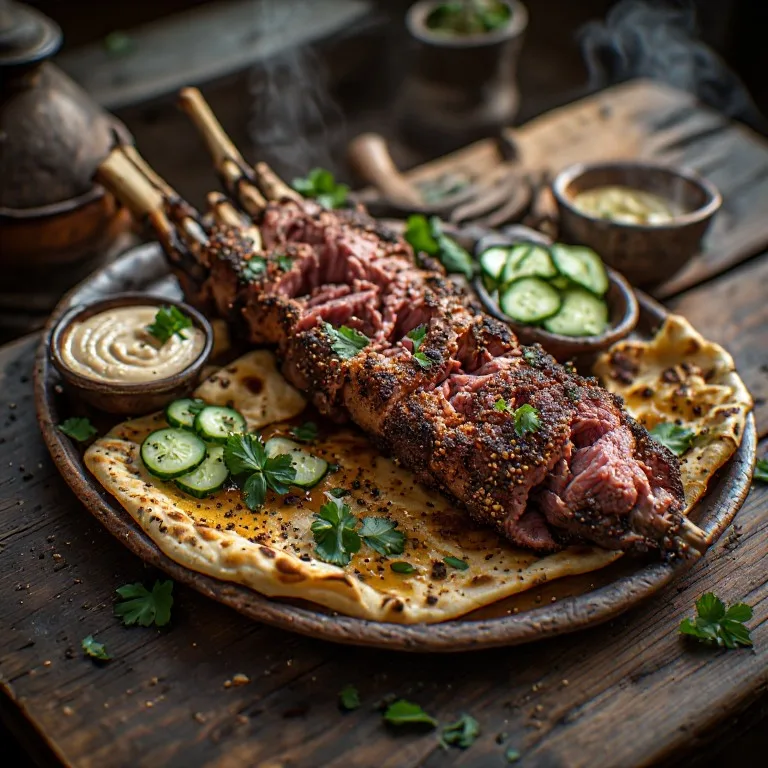
Zahav serves the lamb shoulder directly in the roasting pan — no plating, no garnish beyond flat-leaf parsley. The lamb is already pulled partly from the bone; you finish pulling it at the table with two forks. The chickpeas and braising juices stay in the pan and get scooped alongside the meat. The tehina sauce is in a small separate bowl, for dipping and drizzling as you eat. Warm laffa (the large, chewy flatbread used throughout the meal) is passed for scooping.

If you are serving this for a dinner party, this is the right approach: bring the pan to the table, set the tehina alongside, put out a basket of warm flatbread. It looks and feels like the restaurant.

A note on the chickpeas

If your chickpeas come out under-tender after 5 hours, it is almost always because they were not soaked long enough or the water was too hard for the baking soda to do its work. Longer-soaked chickpeas (12 hours in soft baking-soda water) consistently braise to tenderness in 4.5 to 5 hours. Chickpeas that were soaked in unsoftened very hard water can take 6 hours or more. If you are in an area with extremely hard tap water, use filtered water for the chickpea soak.
🥗

Make It Healthier

Love Zahav Lamb Shoulder (Michael Solomonov's Pomegranate-Braised Recipe, Made at Home) but want a lighter version? Try these simple swaps:

  • ✓After the braise and before the 475°F caramelization step, refrigerate the lamb overnight and skim the solidified fat from the surface. You'll remove roughly 80 to 100 calories per serving in rendered fat, and the braising liquid will be richer without being greasy.
  • ✓Stretch the recipe to 8 servings by serving smaller pulled portions over a bowl of the braised chickpeas with a generous pour of tehina sauce — the chickpeas are rich enough that a smaller lamb portion feels complete.
  • ✓Pomegranate molasses varies significantly by brand in sugar content. Cortas (Lebanese) and Al Wadi run about 16g sugar per tablespoon; the recipe uses 1/2 cup total across 6 servings, contributing about 10 to 12g sugar per serving. Lower-sugar cooking pomegranate molasses (available at Middle Eastern stores) can reduce this by 30%.

Frequently Asked Questions

Why does the lamb need to brine for 48 hours — is overnight enough?

Overnight (8 to 12 hours) is the minimum, and the results are good. Forty-eight hours is noticeably better for two reasons. First, salt migration: kosher or sea salt dissolves into the muscle at a rate of roughly 1/4 inch per day at refrigerator temperature. After 12 hours, only the outermost layer has been fully seasoned; after 48 hours, the salt has reached the deepest part of a thick lamb shoulder, meaning the meat is evenly seasoned all the way through rather than highly seasoned on the surface and bland in the middle. Second, the aromatic brine (fennel, allspice, peppercorns) takes the full 48 hours to move meaningfully into the interior. The restaurant brines for the full two days; if your schedule allows it, the extra time is worth it.

What cut of lamb is a 'square-cut shoulder,' and what can I substitute?

A square-cut shoulder is a bone-in lamb shoulder that includes the blade and arm bones, trimmed squarely — the standard bone-in lamb shoulder you'll find at most butchers and Middle Eastern grocery stores. It typically weighs 4.5 to 6 pounds with the bone. If your butcher has whole shoulders only, ask them to trim it square. Boneless lamb shoulder rolled and tied works but produces a different result — you lose the braising contribution of the marrow from the shoulder and blade bones, which enriches the braising liquid significantly. If you can only find boneless shoulder, reduce the braise time by about 45 minutes and check for tenderness earlier. Bone-in lamb leg is not a good substitute — it is much leaner and will dry out before becoming fall-apart tender.

What does pomegranate molasses do to the lamb — can I substitute?

Pomegranate molasses is pomegranate juice reduced with sugar until it is thick, syrupy, sweet-tart, and deeply flavored with the astringent tannins of the fruit. Diluted into 8 cups of water for the braise, it does three things: it adds a bright, fruit-forward acidity that cuts through the richness of the lamb fat; it contributes a subtle sweetness that helps the surface caramelize in the final 475°F blast; and it turns the braising liquid into a rich, complex jus that the chickpeas absorb entirely. Solomonov notes the use is deliberately Persian — pomegranate is a central ingredient across Iranian cuisine, and the dish traces that lineage directly. Substitutes are imperfect. Tamarind paste thinned with water gives acidity without the fruit character. Balsamic vinegar diluted with water gives sweetness and acidity without the depth. Pomegranate molasses is widely available at Middle Eastern grocery stores and on Amazon; it keeps indefinitely in the refrigerator.

What happens to the chickpeas during the braise?

The soaked (but uncooked) chickpeas go into the pan raw and braise alongside the lamb for the full 5 hours. They absorb the pomegranate braising liquid — which has also picked up rendered lamb fat and lamb drippings — as they cook, becoming tender, richly flavored, and stained a deep reddish-brown. By the end of the braise, the chickpeas are soft throughout with a creamy interior and a slightly firm skin, and they taste of pomegranate, lamb, and the aromatic brine. They are not a side dish; they are integral to the presentation — the lamb is served right in the pan, surrounded by the chickpeas and the reduced braising juices. The baking soda soak is important: chickpeas soaked without baking soda can remain slightly grainy after 5 hours of braising at a low oven temperature. The soda-soaked chickpeas cook evenly to a fully tender texture.

Why raise the oven to 475°F at the end?

The 5-hour covered braise produces fall-apart-tender meat, but the surface is pale and soft — braising doesn't produce caramelization. The final 30 minutes uncovered at 475°F accomplishes the Maillard reaction and caramelization that create the dark, lacquered, slightly sticky crust that is the visual and textural signature of the dish. The pomegranate molasses in the braising liquid — diluted across 8 cups of water during the braise — has been concentrating and reducing. When basted back onto the lamb at high heat, the concentrated sugars caramelize within minutes. Basting every 10 minutes builds layers of glaze. The final result looks and tastes very different from simply braised lamb; the dark, glossy exterior is what makes the dish look like it came out of a professional kitchen.

What's the tehina sauce, and is it the same as the Zahav hummus base?

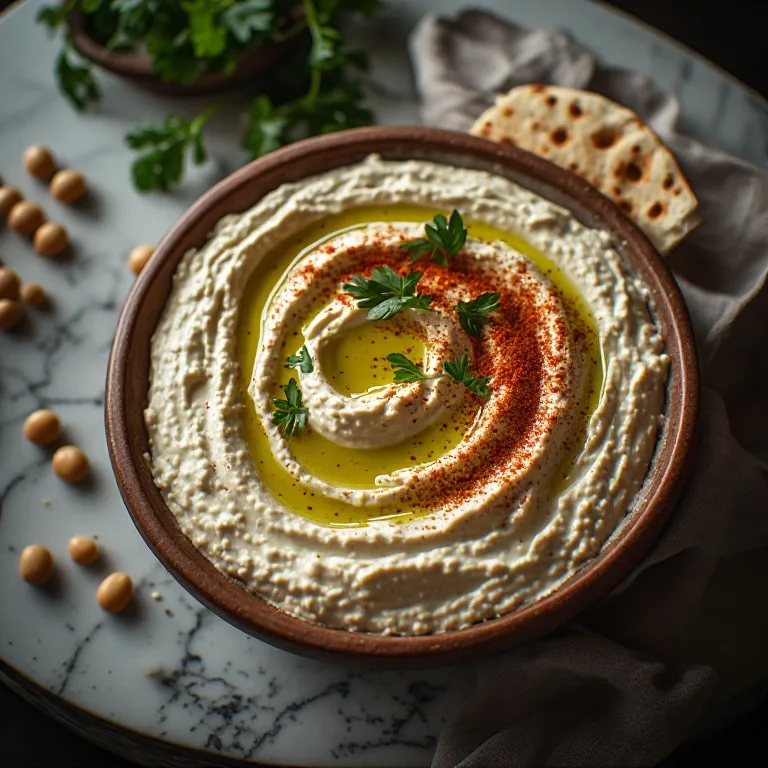
It is essentially the same preparation — the tehina sauce served with the lamb shoulder is the same golden, slightly pourable tahini sauce built from strained garlic-lemon juice and 2 cups of premium tahini loosened with ice water. Make it the same way described in the Zahav hummus recipe: blend garlic cloves and lemon juice, rest 10 minutes, strain out the solids, whisk in tahini, thin with ice water. For the lamb, you want the sauce slightly more pourable than for hummus — add a bit more ice water until it runs off a spoon in a thin, steady stream. Serve it in a small bowl alongside the lamb for dipping and drizzling. The contrast of the rich, fatty lamb and the bright, sesame sauce is the core textural and flavor balance of the dish.

Can I make this ahead?

Yes, and the lamb is arguably better the second day. After the initial braise, let the lamb cool in its braising liquid, cover the pan, and refrigerate overnight. The fat from the lamb will rise to the surface and solidify — skim it off before reheating. Reheat covered at 300°F until the internal temperature reaches 160°F (about 45 minutes), then run the 475°F caramelization step again before serving. The chickpeas will have absorbed more of the braising liquid overnight and become even richer in flavor. The braising liquid, concentrated by a day in the fridge, will be thicker and more intensely flavored — add 1 cup of water if it looks too thick before reheating.

What does the full Zahav meal look like — is the lamb shoulder the main event?

The lamb shoulder is the centerpiece of the large plates course, the third of four courses in Zahav's format. The meal begins with salatim — six rotating Israeli vegetable salads (beets with tehina, twice-cooked eggplant, Moroccan-spiced carrots, pickled napa cabbage, matbucha) served with warm laffa bread and the famous hummus. Mezze follows: fried cauliflower with labneh, grilled haloumi, salmon crudo, duck kofta, coffee-braised sweet potatoes. Then the lamb shoulder arrives, already pulled partly off the bone, surrounded by the braised chickpeas in their pomegranate-stained liquid. Dessert closes with kadaif pastries or Israeli cheese with honey. The tasting menu runs about $90 per person. Reservations open 8 weeks out and often fill within hours of release — partly because the restaurant runs only about 170 lamb orders a week, and the dish genuinely takes two days to prepare.

Love this recipe? Share it!

Free PDF: our 12 most-wanted copycat recipes — instant download.

Made it? Buy us a coffee

Every recipe here is free, with no paywalls. If this one was a hit at your table, a small tip keeps new copycats coming.

$

Zahav is a trademark of its owner, used here only to describe the dish this recipe recreates. This is an independent copycat written in our own words — Copycat Spices is not affiliated with, endorsed by or sponsored by Zahav.

Ratings & Reviews

—
No ratings yet

Rate this recipe

Click a star to rate

Leave a Review

0/500

CS

Copycat Spices Editorial

Researched + fact-checked. Every recipe on Copycat Spices is built from published sources — official ingredient lists, brand-published recipes, interviews and food-science references — and fact-checked before it goes live, then written as clear, step-by-step instructions for home cooks of all skill levels.

Learn more about our mission →