Laser Wolf Pomegranate Salmon Shishlik
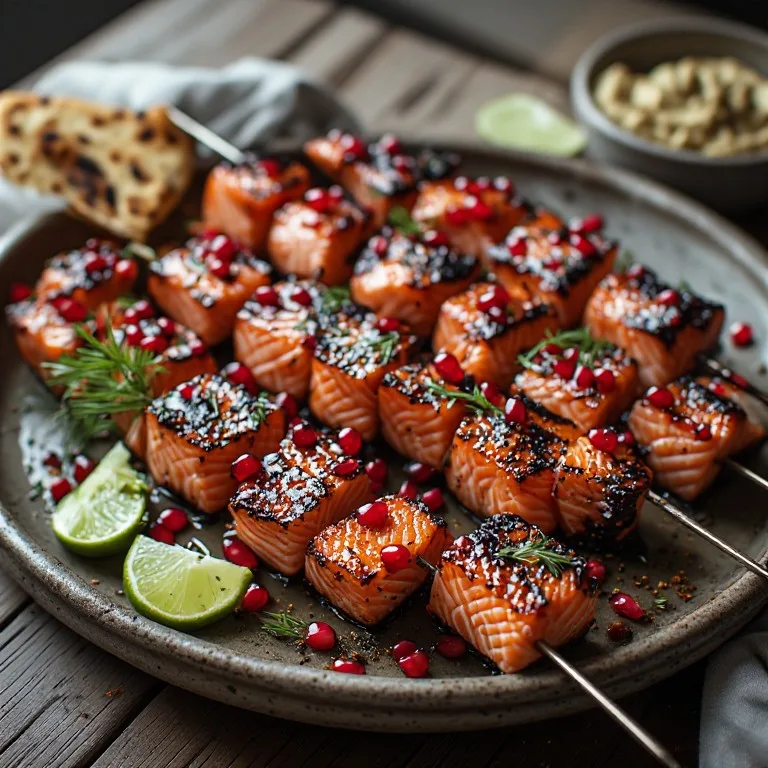
Quick answer: Laser Wolf's pomegranate salmon shishlik uses a blended marinade — pomegranate molasses, garlic, onion, and ginger pureed smooth with canola oil and four spices: white pepper, black pepper, toasted cardamom, and toasted coriander. Blend 1/2 cup pomegranate molasses with 4 garlic cloves, half a Spanish onion, 1 inch ginger, 1.5 cups canola oil, 1 tsp each of all four spices, and 1 tsp salt until completely smooth. This yields about 2 cups; use 1/3 cup to coat 2 pounds of salmon cut into 1-inch cubes. Marinate 30 to 60 minutes in the refrigerator — not longer. Thread 4 to 5 cubes per metal skewer with small gaps between pieces. Grill over charcoal or a 600°F+ gas grill for 2 to 3 minutes per side: the pomegranate sugars caramelize into dark spots and the interior should be just barely cooked through, still medium-rare. Serve immediately with pomegranate seeds, a dusting of sumac, fresh dill, and lime wedges alongside warm pita or laffa, hummus, and an Israeli salad.
Shop the tools
Gear matched to this recipe. These are Amazon affiliate links — we may earn a small commission if you buy, at no extra cost to you.
 Illustrative imageNinja Kitchen System BlenderRestaurant-smooth sauces, shakes, and dressingsCheck price on Amazon →
 Illustrative imageLodge 10.25" Cast Iron SkilletThe restaurant-grade sear most copycats depend onCheck price on Amazon →
 Illustrative imageInstant-Read Digital ThermometerNail fry-oil and doneness temps every timeCheck price on Amazon →
As an Amazon Associate, Copycat Spices earns from qualifying purchases. Product images are generic illustrations, not the exact item listed.
Laser Wolf Pomegranate Salmon Shishlik
Laser Wolf's charcoal-grilled pomegranate salmon shishlik made at home — the same blended marinade (pomegranate molasses, cardamom, coriander, canola oil) published by the CookNSolo team, threaded onto skewers and grilled over high heat so the sugars lacquer into dark caramelized spots. Whole meal runs $50+ at the restaurant; at home for 4 it costs about $30 in salmon.
Intermediate
Prep: 20 min (plus 30–60 min marinating)
Cook: 6 min
Total: 26 min4 servings
~$4.50/serving
At home~$4.50/serving
vs
Restaurant~$20.25/serving
You save ~78%
The Story Behind the Recipe
Laser Wolf is CookNSolo's Israeli charcoal grill restaurant — the same team behind Zahav, Michael Solomonov and Steve Cook's James Beard–winning Philadelphia restaurant. The name comes from Lazar Wolf, the village butcher in Fiddler on the Roof who negotiates with Tevye for his daughter's hand. The Philadelphia location opened in 2020 in the Kensington neighborhood; the Brooklyn location followed, perched on the rooftop of The Hoxton Hotel in Williamsburg with views across the East River. Condé Nast Traveler named it among the best new restaurants in the world. The format is semi-prix-fixe at roughly $48 to $58 per person: every table receives unlimited salatim (ten or more rotating Israeli vegetable salads), house-baked pita, hummus-tehina, and soft-serve ice cream for dessert. The only choice you make is one shishlik — the charcoal-grilled skewer that anchors the meal.
The salmon shishlik is built on a marinade published by Laser Wolf's chef de cuisine through a community cookbook project: pomegranate molasses, Spanish onion, garlic, ginger, and canola oil blended completely smooth, then seasoned with white pepper, black pepper, and two spices that are unusual in an American fish preparation — toasted cardamom and toasted coriander. The spice combination is rooted in Persian and Levantine grilling traditions, where cardamom appears in savory applications and coriander adds a citrusy, floral undertone that bridges the tart molasses and the rich salmon. The marinade is made in a large batch and applied sparingly — about a third of a cup per two pounds of fish. On the charcoal grill, the pomegranate sugars caramelize into dark lacquer on each cube's edges while the interior stays medium-rare.
Nutrition Facts
Per serving (4 servings)Calories480
Total Fat30g
Total Carbs6g
Dietary Fiber1g
Sugars4g
Protein40g
Sodium290mg
* Estimated values based on standard recipe preparation. Actual values may vary.
Ingredients
- Pomegranate-spice marinade (makes about 2 cups; use 1/3 cup for this recipe, refrigerate the rest up to 2 weeks)
- Shishlik
- For serving
Instructions
Pro tip: This recipe tastes even better the next day. The flavors need time to meld together in the fridge.
Storage: Keeps in an airtight container in the fridge for up to 2 weeks. Freezer-friendly for up to 3 months.
Free PDF — instant download. We'll also send new seasonal copycat recipes now and then; unsubscribe anytime. Or just download it →
🎉 Your Halloween Cookbook is ready!
It's free — but if it's worth something to you, you can pay what you want. It keeps the recipes coming.
$
✓ Downloading your free Halloween Cookbook — check your downloads folder. Happy cooking!
Make It Healthier
Love Laser Wolf Pomegranate Salmon Shishlik but want a lighter version? Try these simple swaps:
- ✓Reduce the oil in the marinade from 1.5 cups to 1 cup — the salmon still gets an even coating but the total fat absorbed per serving drops by roughly 5g.
- ✓Wild salmon (coho or sockeye) is leaner than Atlantic by about 40 to 50 calories per 8-oz serving; it has a slightly firmer texture and more pronounced flavor that stands up well to the pomegranate-spice marinade.
- ✓Serve the shishlik over fattoush (a crispy pita chip salad with tomato, cucumber, radish, and sumac dressing) instead of plain laffa to bulk up the meal with vegetables and reduce the starchy carbs from bread.
- ✓The marinade keeps refrigerated for 2 weeks — use the remaining portion on chicken thighs, eggplant, or zucchini as a weeknight shortcut without any additional prep.
Frequently Asked Questions
What is shishlik and how is it different from a kebab?
Shishlik (also spelled shashlik) is the word used across the Caucasus, Eastern Europe, and the Levant for skewered, fire-grilled pieces of whole meat or fish; it traces back through Russian and Crimean Tatar to the Turkic root 'şiş,' meaning skewer. In modern Israeli grill cooking — the tradition Laser Wolf draws on — shishlik specifically means cubes of whole meat or fish on a skewer. The key distinction from a kebab is texture: shishlik uses cubed whole pieces of protein threaded onto a skewer so each cube gets direct char on multiple sides; kebab in the Levantine and Turkish tradition often means ground meat worked onto a flat skewer (kofte/koobideh) and grilled as a sausage-like shape. At Laser Wolf, you can order both styles — the salmon shishlik (whole cubes), the chicken shishlik (cubes of thigh), and a koobideh (ground lamb and beef). The difference matters for cooking: cubed pieces develop a charred exterior and a moist interior; ground-meat kebab needs to be worked and seasoned to bind properly and develops a different texture entirely.
Why does the marinade need to be blended completely smooth?
The blending step creates an emulsified coating rather than a loose liquid — the garlic, onion, and ginger are fully homogenized into the oil and molasses, which means every surface of each salmon cube gets a uniform film of seasoning rather than having chunks of aromatics that char at different rates or stick to the grill. Blending also disperses the aromatic compounds from the garlic and ginger throughout the oil, which then acts as a carrier: when the oiled salmon surface hits a hot grill, those fat-soluble flavor compounds transfer evenly across the caramelizing crust. A chunky marinade where garlic pieces have direct grill contact tends to burn and turn bitter, which is why high-quality Israeli grill recipes almost universally use blended or strained bases rather than minced aromatics.
Why cardamom and coriander in a salmon marinade?
Both spices are deeply embedded in Persian and Levantine grilling tradition, which underpins Laser Wolf's cooking approach. Cardamom — the dominant flavor in many Middle Eastern spice blends — has an unusual dual quality: it is simultaneously floral and slightly eucalyptus-adjacent, with a sweet, camphor-like quality that lifts fatty fish the way a citrus squeeze does. It balances the richness of salmon without competing with the pomegranate's tartness. Coriander (ground, not fresh cilantro) has a lemony, floral-spicy note that bridges the pomegranate molasses and the cardamom while adding depth to the caramelized surface. The combination appears throughout Persian rice dishes, Turkish kebab marinades, and Israeli spice mixes (baharat). For a salmon with this much fat and pomegranate sugar, both spices prevent the sweetness from reading as one-dimensional; the coriander in particular keeps the marinade tasting complex after the grill chars it.
How long should I marinate the salmon?
30 to 60 minutes in the refrigerator — and not much longer. Pomegranate molasses contains citric and malic acids, which are weak but present enough to begin denaturing salmon's proteins at the surface. At 30 minutes the salmon picks up good surface coating and flavor. At 60 minutes you're at the outer edge of where the texture is still firm. Beyond 90 minutes, the surface of the cubes starts to go soft and slightly mealy — they look fine but lose the clean, firm bite that makes shishlik cubes work on the grill. This is very different from a chicken or lamb shishlik, which can marinate overnight. Salmon's comparatively delicate protein structure limits the window. If you are prepping ahead, you can make the marinade up to two weeks in advance and marinate the salmon right before grilling.
Can I make this without a charcoal grill?
Yes, with some tradeoffs. A charcoal grill is the ideal: the high, dry, direct heat caramelizes the pomegranate sugar into dark spots quickly while the smoke adds a subtle wood-and-carbon note that is part of the appeal at Laser Wolf. A gas grill at its maximum output (600°F or higher) is a close second — preheat it for 10 to 15 minutes with the lid closed, then grill directly over the burners with the lid open. A broiler can work: position the oven rack so the skewers are about 3 inches below the broiler element, and broil on high for 3 to 4 minutes per side, watching closely because broilers vary. A cast-iron grill pan over a very high burner produces the char marks but not the open-flame caramelization — you'll lose the smokiness and the exterior chars are more localized. Whatever method you use, the critical factor is high, dry heat: you need the surface to caramelize fast before the center overcooks, which is why low or medium heat is the wrong approach and will produce steamed-tasting fish.
What does the full Laser Wolf meal look like?
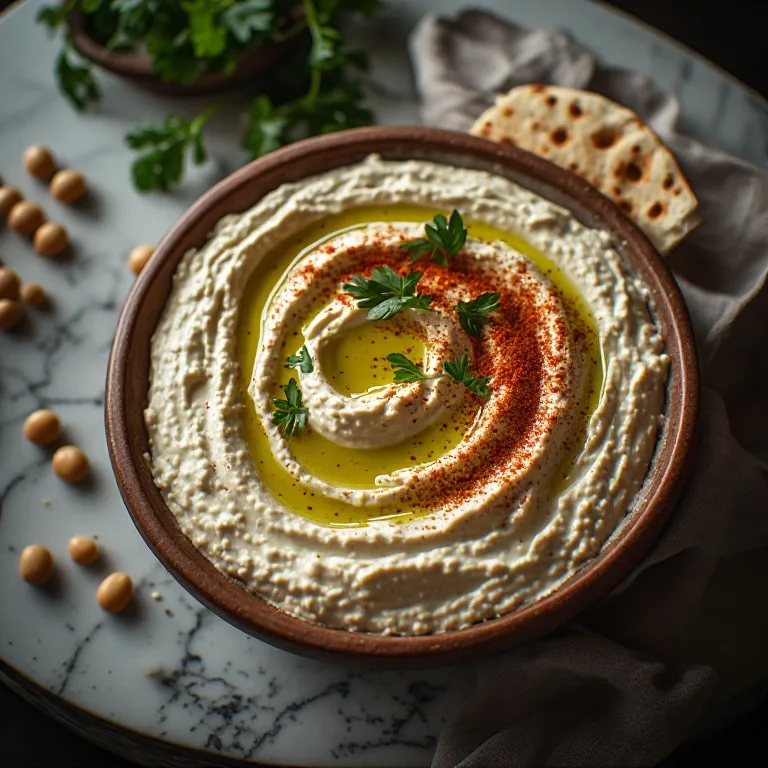
Every table — every table — receives the same opening spread regardless of what shishlik they order. The salatim arrive first: ten or more small plates of rotating Israeli vegetable preparations, which at different visits might include dill-lentil tabbouleh, kale baba ghanouj, Turkish celery root salad, green beans with matbucha (a Moroccan-style tomato-pepper sauce), gigantes beans with harissa, pickled root vegetables, and roasted cauliflower with tehina. This is served with house-baked pita and a bowl of hummus-tehina. Then the shishlik arrives on the skewer — salmon, chicken with guava, beef-lamb koobideh, lamb ribs, or steak. The meal ends with soft-serve ice cream, which rotates flavors seasonally. The whole format runs about $48 to $58 per person before drinks, which makes it one of the stronger value propositions for a dining experience at this level in either Philadelphia or Brooklyn. At home, the equivalent setup is the salmon shishlik served with a batch of Zahav-style hummus, a classic Israeli salad (fine-diced tomato and cucumber, olive oil, salt), and warm pita.
What other proteins work with this marinade?
The marinade was designed for salmon but works well on a range of other proteins. Chicken thighs (boneless, skinless) cut into 1.5-inch pieces marinate well for 2 to 4 hours and grill similarly, coming off the heat at 165°F with a caramelized pomegranate crust. Lamb shoulder or leg cut into 1.5-inch cubes can marinate overnight — the acid in the pomegranate molasses helps tenderize the tougher muscle fibers, and lamb's affinity for cardamom and coriander is arguably even stronger than salmon's. Eggplant cut into 1-inch rounds and lightly salted works as a vegetarian option; the porous flesh absorbs the oil-based marinade efficiently and the pomegranate glaze chars beautifully on high heat. Halloumi cheese skewers (whole slabs, not cubed) pick up the pomegranate flavor in about 15 minutes and need only 2 minutes per side over direct heat. The marinade refrigerates well for two weeks; making a full batch and using it across several meals is a sensible approach.
Is Laser Wolf worth visiting versus making this at home?
Worth visiting for the salatim format and the charcoal experience specifically. The ten-plus rotating Israeli vegetable salads are a meal within a meal — they arrive unlimited and change with the season and the week, and the act of sitting at a table eating small plates of beets, giant beans, roasted vegetables, and warm bread before the main course is a distinctly Israeli dining experience that's hard to replicate at home without significant prep. The Brooklyn Williamsburg location has a rooftop setting with direct Manhattan views, which adds an additional layer. The food itself — specifically the shishlik — is genuinely reproducible at home because CookNSolo's team published the marinade formula. The at-home version costs roughly $30 for four servings of salmon in ingredients versus $48 to $58 per person at the restaurant. The honest tradeoff: the charcoal and the setting and the unlimited salatim are worth the price at least once; the marinade recipe means you don't have to go back every time you want the salmon.
Love this recipe? Share it!
Made it? Buy us a coffee
Every recipe here is free, with no paywalls. If this one was a hit at your table, a small tip keeps new copycats coming.
$
💛 Support checkout is coming soon — the cookbook stays free either way.
Laser Wolf is a trademark of its owner, used here only to describe the dish this recipe recreates. This is an independent copycat written in our own words — Copycat Spices is not affiliated with, endorsed by or sponsored by Laser Wolf.
Ratings & Reviews
Rate this recipe
Click a star to rate