

Panera Three-Cheese Lasagna Soup (Fall 2026 Copycat)
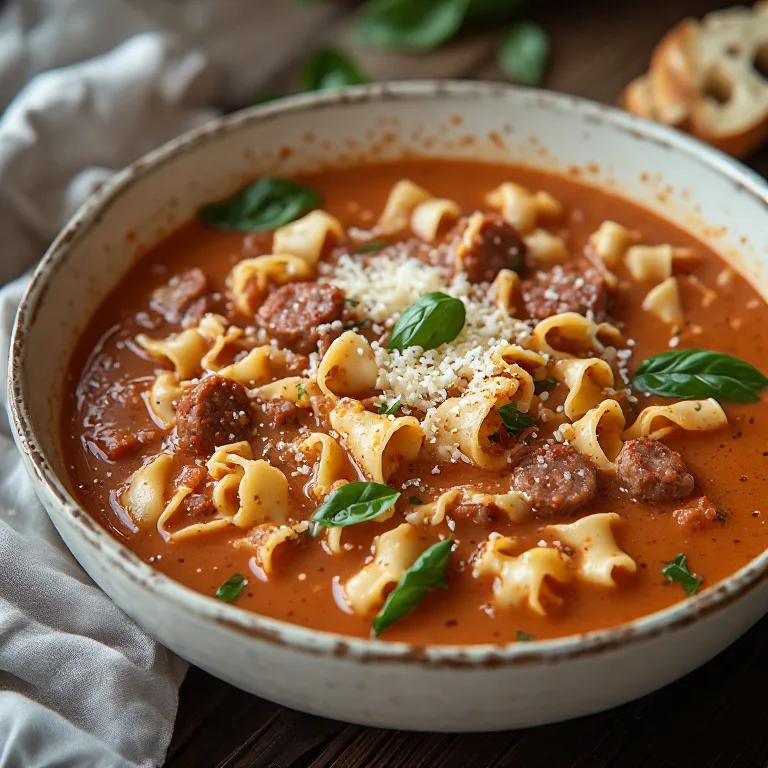
Panera added Three-Cheese Lasagna Soup to its fall 2026 menu, and plenty of people immediately wanted to make it at home. Panera describes it as Italian-style sausage and lasagna ribbons in a ricotta-tomato broth with parmesan, topped with asiago. This copycat captures exactly what makes the original distinctive: not a basic red sausage-pasta soup, but a ricotta-enriched tomato broth that turns silky and rose-hued, with parmesan worked in during cooking and asiago shaved on top. All three cheeses are doing different jobs, and understanding those roles is the difference between a passable lasagna soup and one that tastes like the real thing.
The Three-Cheese System
Most lasagna soups default to a mozzarella finish. Panera made a different call, and it’s the right one. Here’s how each cheese works:
Ricotta (in the broth) — This is the signature move. The ricotta doesn’t sit on top as a dollop; it’s whisked into the simmering tomato broth, transforming the color from red-orange to a softer rose cream and adding a milky, subtly sweet richness that plain broth can’t replicate. The key is tempering it first — ladle hot broth into the ricotta, whisk smooth, then add it back to the pot. Skip this step and the ricotta may break into chalky curds rather than integrating smoothly.
Parmesan (cooked in) — Freshly grated Parmesan melts into the broth during the last few minutes, adding a deeper savory backbone and thickening the soup slightly. Pre-shredded, shelf-stable Parmesan has anti-caking agents that resist melting — buy a wedge and grate it yourself.
Asiago (on top) — Asiago has a sharper, nuttier profile than mozzarella and just enough bite to cut through the rich broth. Shave it with a vegetable peeler for thin ribbons that soften on contact with the hot soup without fully melting into it. This textural contrast — tender noodles, creamy broth, and the slight pull of asiago — is what makes each spoonful interesting.
Why Browning the Sausage in Big Chunks Matters
The instinct is to crumble the sausage fine, but resist it. Browning the sausage in large, undisturbed pieces creates a substantial crust via the Maillard reaction — concentrated flavor that fine-crumbled sausage never develops because it steams in its own moisture rather than searing. Once browned and removed, those fond (browned bits) stay in the pot and dissolve into the tomato broth when you deglaze, adding depth you’d otherwise have to manufacture with extra ingredients. The sausage gets broken into bite-sized chunks after browning, which gives you irregular, hearty pieces rather than a uniform ground-meat texture.
Sweet vs. hot sausage: Panera uses Italian-style sausage without specifying sweet or hot. Sweet sausage lets the ricotta’s dairy character come forward; hot sausage adds a slow background heat that contrasts the soup’s creaminess. Either works. Half-and-half is the easy compromise.
The Pasta Problem — and How to Solve It
Lasagna noodles cooked directly in the soup gradually absorb the broth as the soup cools, turning the leftovers thick and gummy. This is the single biggest frustration with any pasta soup.
If serving immediately: Cook the pasta in the pot. The starch it releases actually thickens the broth slightly, which is a feature.
If storing for later: Cook pasta separately in salted water until very al dente, drain, toss with a drizzle of olive oil to prevent sticking, and store separately. Add it to bowls at serving. The broth keeps refrigerated for 4 days; the pasta keeps separate for 3.
Portion reheating: When reheating, add a splash of broth or water to loosen — the soup thickens considerably as it cools.
Asiago vs. Mozzarella: Why It’s Not a Substitution
If you swap Asiago for mozzarella, you get a completely different soup. Mozzarella melts into long, stretchy pulls and its flavor is mild and milky — it blends rather than finishes. Asiago stays in distinct pieces longer and provides a savory, slightly tangy note that contrasts the broth rather than joining it. Panera specifically chose a hard, aged Italian cheese as the finish here, and the choice is correct. If you cannot find Asiago, Pecorino Romano is the closest substitute; Parmesan in a larger quantity is acceptable but less interesting.
Make It Richer: The Bread Bowl Option
Panera famously serves their soups in sourdough bread bowls. If you want the full experience at home, buy a round sourdough boule, cut a circle in the top at a 45-degree angle, hollow out the interior leaving a 1-inch shell, and brush the inside with olive oil. Toast in a 375°F oven for 8 minutes to create a moisture barrier, then ladle the hot soup directly into the warm bowl. The sausage and ricotta broth seep into the toasted sourdough over the course of the meal — an argument for the bread bowl that’s hard to refute.
Why It Works: Ricotta in the Broth, Not on Top
Classic lasagna soup puts a cold scoop of ricotta on each bowl. Panera’s description says the ricotta is part of the broth itself, and that changes the whole soup. Ricotta is mostly milk protein and fat in small, soft curds. Whisked smooth with hot broth and stirred into the pot, those curds break up and stay suspended. The tomato’s acidity gets softened, the color shifts to a dusty rose, and the broth picks up body without any flour or heavy cream.
Two details make it reliable:
- Tempering. Mixing about 1/2 cup of hot broth into the ricotta first warms it gradually, so it doesn’t seize when it hits the pot.
- Never boiling hard afterward. Once the ricotta is in, keep the pot at a lively simmer, not a rolling boil. High heat pushes the proteins to tighten and turn grainy. The pasta still cooks fine at a steady simmer; it just needs regular stirring.
The Parmesan goes in at the very end for the same reason. Added off a hard boil, it melts into the broth instead of clumping. The Asiago stays out of the pot entirely so it keeps its sharp bite.
Scale It: 6 vs. 12 Servings
The base recipe makes 6 generous bowls. For a crowd, a Friendsgiving potluck, or a week of lunches, it doubles cleanly. You’ll need an 8-quart or larger pot, or two pots.
| Ingredient | 6 servings | 12 servings |
|---|---|---|
| Italian sausage | 1 lb | 2 lb |
| Yellow onion | 1 medium | 2 medium |
| Garlic | 4 cloves | 7-8 cloves |
| Crushed red pepper | 1/4 tsp | 1/2 tsp |
| Crushed tomatoes | 1 can (28 oz) | 2 cans (28 oz) |
| Diced tomatoes | 1 can (14.5 oz) | 2 cans (14.5 oz) |
| Low-sodium chicken broth | 4 cups | 8 cups |
| Whole-milk ricotta | 1 cup | 2 cups |
| Lasagna noodles | 8 oz | 1 lb |
| Parmesan (in the pot) | 1/2 cup | 1 cup |
| Italian seasoning | 1 tsp | 2 tsp |
| Asiago (for serving) | 1/2 cup | 1 cup |
Doubling notes: Brown the sausage in two batches. Crowding the pot steams it instead of searing it. Add the broth gradually, since a wider pot loses less liquid and you may need slightly less. And if you’re feeding a crowd over a couple of hours, cook the noodles separately and set them out beside the pot so the last bowl is as good as the first.
Slow-Cooker and Instant Pot Methods
Slow cooker
- Brown the sausage in large chunks in a skillet, then soften the onion, garlic, and red pepper in the rendered fat (steps 1-2 of the recipe). Don’t skip this; raw sausage in a slow cooker turns out gray and greasy.
- Scrape everything into the slow cooker with the crushed tomatoes, diced tomatoes, chicken broth, and Italian seasoning.
- Cook on LOW for 6 hours or HIGH for 3 hours.
- In the last 30 minutes, temper the ricotta with a ladle of broth and stir it in, then stir in the Parmesan.
- Cook the lasagna noodles separately in salted water and add them to bowls, or stir them in for the final 30-45 minutes on HIGH if you’re serving the whole batch at once.
Instant Pot (6-quart)
- Set to Sauté. Brown the sausage in chunks, remove it, then cook the onion, garlic, and red pepper for 3 minutes.
- Pour in the chicken broth and scrape the bottom completely clean. Any stuck bits are what trigger the burn warning.
- Return the sausage, add the Italian seasoning and the broken lasagna noodles, and press them under the broth.
- Pour the crushed and diced tomatoes on top. Do not stir. Tomatoes on the bottom scorch under pressure.
- Pressure cook on High for 4 minutes, then quick release.
- Switch the pot off. Stir everything together, then stir in the tempered ricotta and the Parmesan. Let it sit 5 minutes to thicken, and top with Asiago.
Storage and Freezing
- Fridge: Up to 4 days in an airtight container. Store pasta separately if you can, because noodles left in the soup keep drinking the broth.
- Freezer: Freeze the broth base (with the ricotta and Parmesan already in) for up to 3 months. Leave the pasta out; frozen noodles thaw soft and mushy.
- Thawing: Overnight in the fridge, or in a pot over low heat from frozen with a splash of water.
- Reheating: Medium-low heat, stirring, with 1/2 to 1 cup of broth or water per 4 servings to loosen. Don’t bring it to a hard boil, which can make the ricotta grainy. Add the pasta for the last 2 minutes.
- Lunch prep: Portion broth into jars, keep a container of cooked noodles beside them, and microwave together with a splash of water.
Common Mistakes
- Crumbling the sausage fine. Small crumbles steam instead of browning. Sear it in big pieces, then break it up.
- Dumping cold ricotta into boiling soup. This is the number one cause of grainy broth. Temper it and lower the heat.
- Using pre-shredded Parmesan. Its anti-caking coating keeps it from melting smoothly. Grate it from a wedge.
- Walking away while the noodles cook. Lasagna pieces stick to the bottom and to each other. Stir every 2-3 minutes.
- Overcooking the pasta. Pull it at just al dente. It keeps softening in the hot broth, and much more in leftovers.
- Salting early. Sausage, Parmesan, and Asiago are all salty. Taste only after the Parmesan goes in.
- Melting the Asiago into the pot. It’s a garnish. Shave it on each bowl so it stays sharp and slightly chewy.
How It Compares to the Restaurant Bowl
Reviews of Panera’s version have been mixed. The Takeout’s reviewer, for one, found it noodle-heavy. The upside of making it at home is that you control the ratio. For a brothier bowl, use 6 oz of noodles instead of 8, or add another cup of broth. For something closer to actual lasagna, keep the full 8 oz and let it sit 10 minutes before serving so it thickens.
Serving Ideas
Serve immediately with crusty bread or inside a sourdough bread bowl. The Asiago and basil go on at the table, not during cooking. A simple green salad with a sharp vinaigrette balances the richness, and garlic bread is the obvious (and correct) indulgence.
More From Panera’s Fall 2026 Lineup
Building a whole Panera-at-home fall menu? These copycats pair well with the lasagna soup:
- Panera Autumn Squash Soup: the returning fall favorite, sweet and velvety
- Panera Harvest Medley Chicken Salad: a lighter half for a soup-and-salad combo
- Panera Caramel Pumpkin Slice: the dessert to finish on
- Panera Tomato Soup and Broccoli Cheddar Soup: the year-round classics
- Olive Garden Lasagna Classico: when you want the full baked lasagna instead