



Pin It

Peter Luger Creamed Spinach

Peter Luger Creamed Spinach
Jump to Recipe
Prep 15 min Cook 20 min Serves 4
Quick answer: Bring a large pot of generously salted water to a boil. Blanch 2 lbs of fresh baby spinach for 60 to 90 seconds — just until wilted and bright green. Immediately transfer with tongs to a large bowl of ice water and cool for 2 minutes. Drain, then squeeze the spinach bone-dry through a clean kitchen towel: gather the corners, twist, and wring hard until no more water comes out. You will be surprised how much liquid you remove — this step is what keeps the sauce from breaking. Rough-chop the squeezed spinach and set aside. In a large skillet, melt 2 tablespoons of butter over medium heat. Add 1 small finely diced onion and cook 5 to 6 minutes until softened. Add 2 minced garlic cloves and cook 1 minute. Pour in 1 cup of heavy cream. Bring to a simmer and reduce over medium heat for 4 to 5 minutes, stirring occasionally, until the cream coats the back of a spoon and has reduced by about a third. Stir in 1/2 cup of freshly grated Parmigiano-Reggiano until melted and smooth. Fold in the chopped squeezed spinach and stir to coat evenly. Season with 1/4 teaspoon freshly grated nutmeg, kosher salt, and freshly cracked black pepper. Serve immediately.

Peter Luger Creamed Spinach

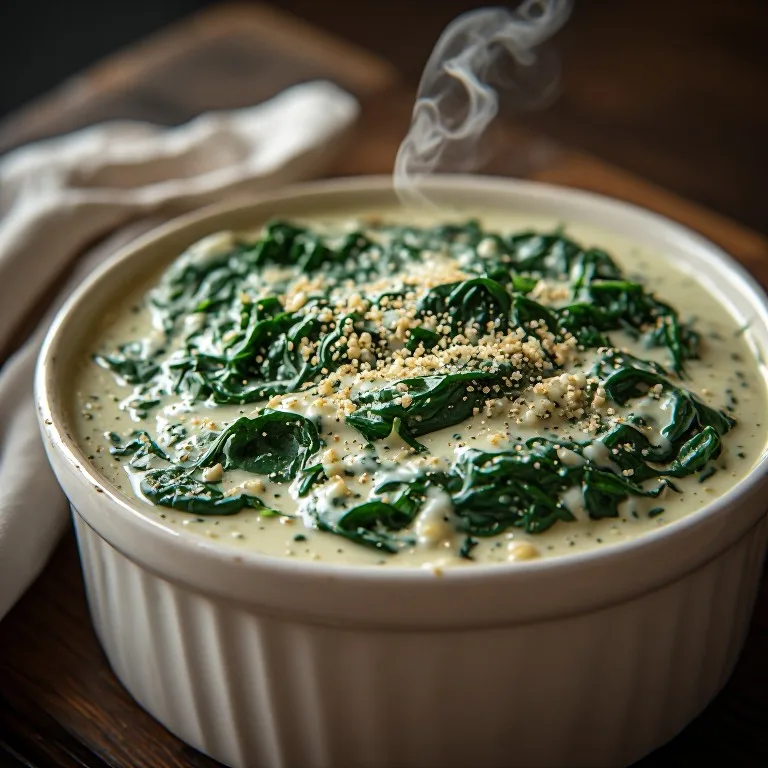
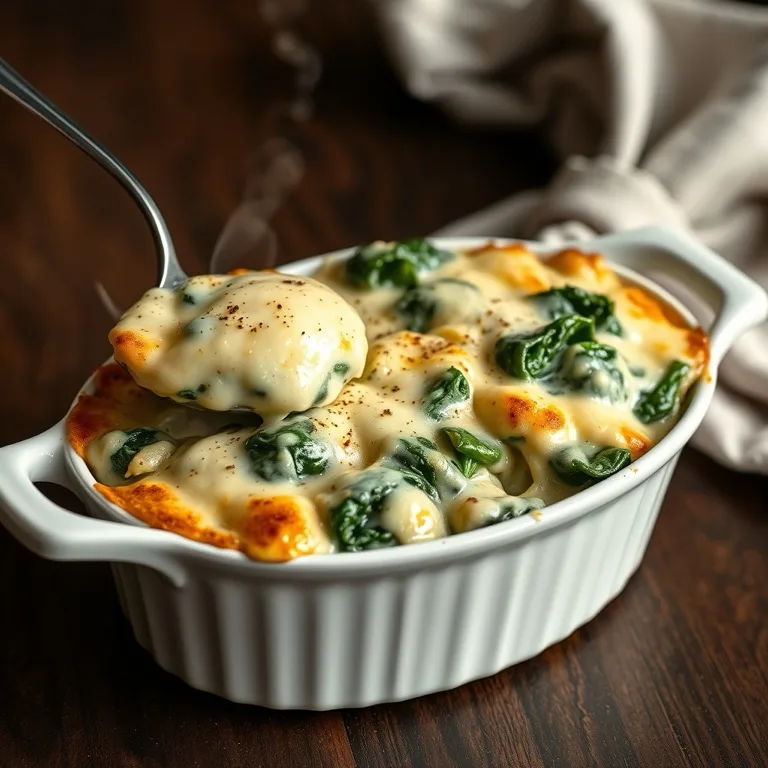
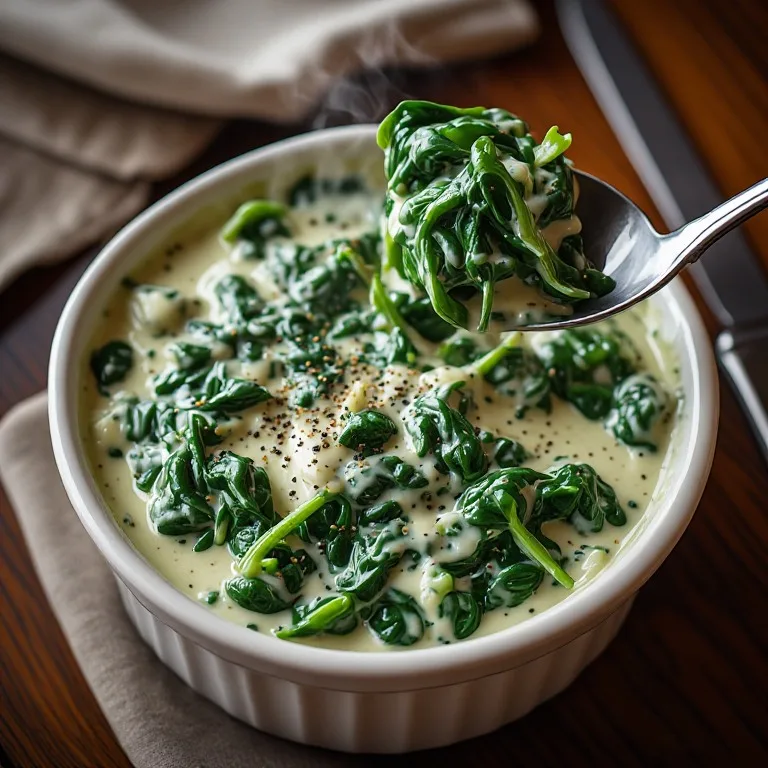
The real Peter Luger Creamed Spinach copycat: blanched-and-squeezed fresh spinach folded into reduced heavy cream with sautéed onion, garlic, Parmigiano-Reggiano, and nutmeg. No flour, no béchamel — the cream reduction is what makes it steakhouse-thick and velvety, not gluey.

Easy Prep: 15 min Cook: 20 min Total: 35 min4 servings ~$4.50/serving
Prep15 min
Cook20 min
Total35 min
Servings
4
At home~$4.50/serving
vs
Restaurant~$20.25/serving
You save ~78%

The Story Behind the Recipe

Peter Luger opened in 1887 as a billiard hall in Williamsburg, Brooklyn — then a German immigrant neighborhood, which explains why the sides are what they are. Sol Forman bought the restaurant in 1950 and rebuilt it around dry-aged prime beef, but he kept the German-style sides intact. The creamed spinach has been on the menu essentially unchanged since then. The restaurant took the dish seriously enough to eventually bottle and sell it: Peter Luger Creamed Spinach is available at ShopRite, Fairway, and Agata & Valentina for $8 to $12 a jar — a testament to how much demand there is for the dish beyond the dining room. The side currently runs $18.95 for two at the Williamsburg location.

The distinction between Luger's version and a generic steakhouse creamed spinach is the base. Most restaurant versions use a béchamel — butter, flour, milk — which is efficient and consistent at scale but produces a slightly starchy, gluey texture. Peter Luger reduces the cream directly, concentrating the proteins and fats until the sauce has enough body to coat a spoon without any flour. Parmigiano-Reggiano adds structure and deep umami. The result is silky rather than paste-like. The other non-optional step is the blanch-and-ice-bath: it locks in the vivid green color that distinguishes this from the army-green spinach at lesser steakhouses. Both steps take a few extra minutes and make a visible, tasteable difference.

Nutrition Facts

Per serving (4 servings)
Calories310
Total Fat27g
Total Carbs10g
Dietary Fiber4g
Sugars3g
Protein10g
Sodium540mg

* Estimated values based on standard recipe preparation. Actual values may vary.

Ingredients

  • Spinach
  • Cream sauce
  • Seasoning

Instructions

💡
Pro tip: This recipe tastes even better the next day. The flavors need time to meld together in the fridge.
❄️
Storage: Keeps in an airtight container in the fridge for up to 2 weeks. Freezer-friendly for up to 3 months.
🦃 Free Thanksgiving cookbook — download now The Copycat Thanksgiving Cookbook A ready-made, photo-illustrated PDF of our best thanksgiving copycat recipes — free to download, no building required. Pay what you want to support if you love it.

Free PDF — instant download. We'll also send new seasonal copycat recipes now and then; unsubscribe anytime. Or just download it →

Peter Luger Creamed Spinach

Prep time: 15 min | Cook time: 20 min | Serves: 4 as a side

Peter Luger’s creamed spinach is the fourth item on their famous table — after the porterhouse, the steak sauce, and the German fried potatoes. It has been on the menu essentially unchanged since Sol Forman’s era. The dish is straightforward, but most home reconstructions get the same two things wrong: they use a béchamel base, and they do not squeeze the spinach dry enough.

The Base: Cream Reduction, Not Béchamel

A béchamel uses flour as the thickener. It works — but flour produces a slightly starchy, gluey texture that is recognizably different from what you get at Luger. The authentic technique reduces the heavy cream directly until it has enough body to coat a spoon, then finishes with freshly grated Parmigiano-Reggiano for depth and additional structure.

The result is a sauce that is silky rather than paste-like, with a clean dairy richness that clings to the spinach leaves instead of pooling beneath them. The Parmesan also adds the kind of rounded, savory depth that makes you keep reaching for more.

The Blanch and the Squeeze

Most home versions wilt spinach in a dry pan and call it done. Peter Luger blanches — briefly into heavily salted boiling water, then immediately into an ice bath. The ice bath is what keeps the spinach vivid and bright green rather than turning gray or army-green on the plate. It takes three extra minutes and makes a visible difference.

After blanching: squeeze the spinach through a clean kitchen towel until bone-dry. Fresh spinach is 91% water. The water trapped in the blanched leaves will bleed directly into your cream sauce the moment the spinach hits the pan — a few tablespoons loosens the sauce, more than that breaks it. Squeeze until no water drips when you press the spinach ball against the sink. This is the single most important step.

The Complete Peter Luger Table

All four Peter Luger sides are on this site. The full experience at home:

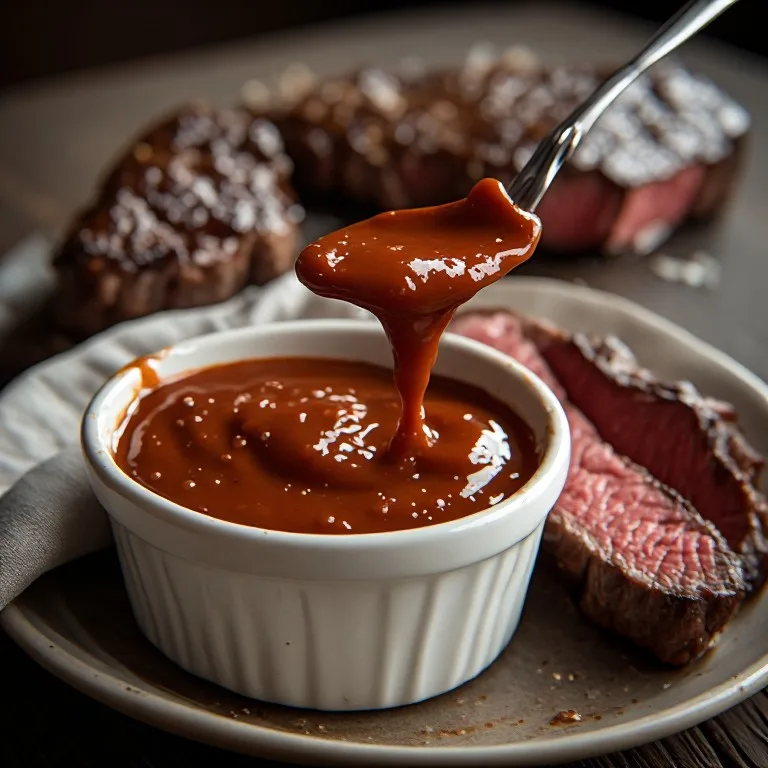
  • Appetizer: thick-sliced beefsteak tomato and raw onion rings, generously drizzled in Peter Luger steak sauce — no cooking
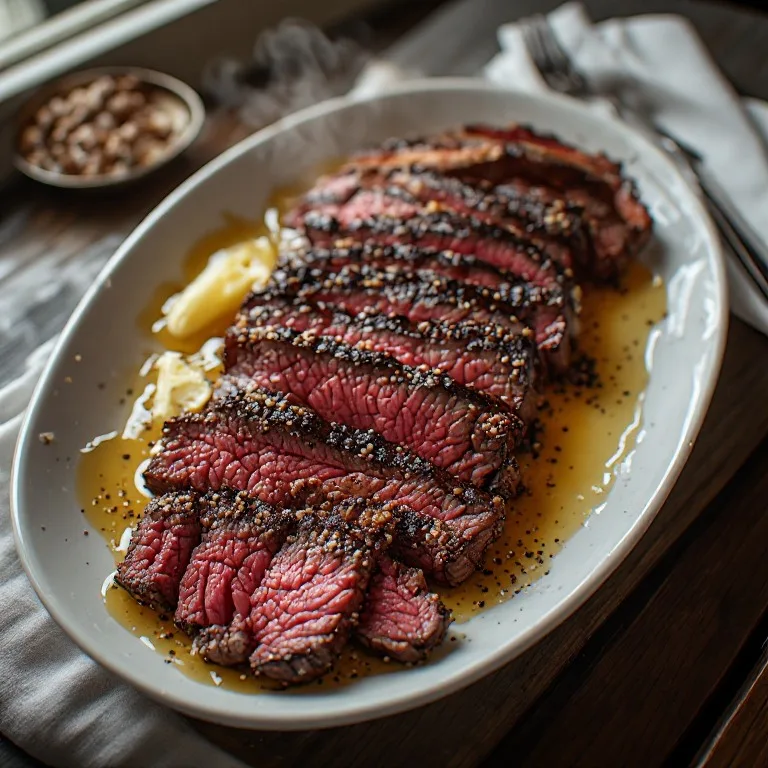
  • Main: the porterhouse, broiler-seared and finished in butter
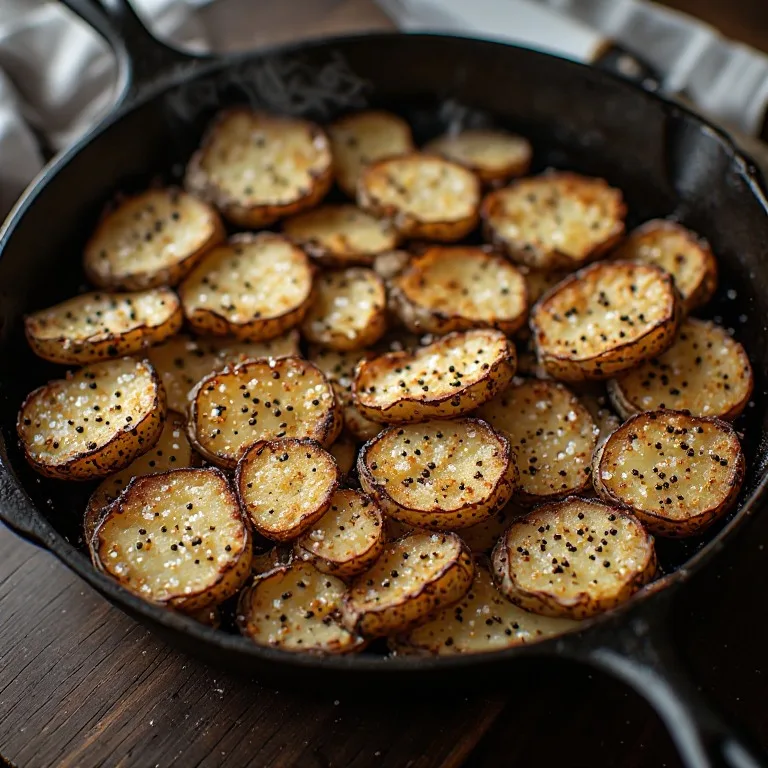
  • Sides: German fried potatoes (cast-iron, beef tallow) and this creamed spinach

The creamed spinach and the German fried potatoes both finish in about 25 minutes and can be started while the steak rests — the timing naturally works.

More Peter Luger Recipes
Other Steakhouse Creamed Spinach, Compared

Creamed spinach is on nearly every steakhouse menu, but the base technique varies — and that’s what makes each one taste different:

  • Ruth’s Chris Creamed Spinach — also a cream reduction (no flour), but built on shallots and garlic and served sizzling in a 500°F ceramic crock
  • Morton’s Creamed Spinach — the flour-béchamel route, loaded with cream cheese and mozzarella and broiled until the top browns; richer and closer to a gratin
🥗

Make It Healthier

Love Peter Luger Creamed Spinach but want a lighter version? Try these simple swaps:

  • ✓Use 3/4 cup of heavy cream instead of 1 cup and extend the reduction time by 2 minutes — you get the same thick coating texture with roughly 15% less saturated fat per serving
  • ✓Swap half the heavy cream for whole milk: combine 1/2 cup heavy cream + 1/2 cup whole milk, reduce the same way — the sauce will be slightly less thick but genuinely flavorful; do not go below 1/2 cup cream or the sauce loses the body to coat the spinach properly
  • ✓Reduce the Parmigiano to 1/4 cup and add a tablespoon of white miso stirred in at the end — the miso delivers the same umami depth with less cheese, while staying completely faithful to the spirit of the dish
  • ✓This is already a vegetable-forward side: two pounds of spinach is an enormous quantity of iron, folate, and vitamins A and K — the fat in the cream sauce actually helps your body absorb the fat-soluble vitamins A and K, which require dietary fat for absorption

Frequently Asked Questions

Why reduce the cream instead of using a béchamel or cream cheese?

Béchamel (butter + flour + milk) is the classic French route to creamed spinach, and it produces a perfectly decent result — but flour gives it a slightly starchy, gluey mouthfeel that is very different from what you experience at Peter Luger. Reducing the cream directly means the sauce's body comes entirely from the cream's own proteins and fats concentrating and emulsifying, which produces a texture that is silky and coating rather than paste-like. The Parmigiano-Reggiano provides additional body and depth without adding flour starch. The resulting sauce clings to each leaf rather than pooling at the bottom of the serving dish. It is also more stable on a hot plate for the duration of a steakhouse dinner.

Why blanch instead of just wilting in a dry pan?

Wilting in a dry pan works, but blanching in heavily salted boiling water followed immediately by an ice bath produces a spinach that is brighter green, more uniformly wilted, and easier to squeeze dry. The ice bath stops the cooking the moment the spinach hits the right consistency and locks in the chlorophyll — this is the technique that keeps Peter Luger's creamed spinach a vivid green rather than turning gray or army-green on the plate. The salt in the blanching water also seasons the spinach from the inside. If you are in a hurry, dry-pan wilting is acceptable, but the color and texture difference is real.

Can I use frozen spinach?

Yes — use two 10-oz packages of frozen chopped spinach, fully thawed. The squeeze step becomes even more critical with frozen: thawed spinach releases an enormous amount of water, and inadequately drained spinach will break the cream sauce. Thaw completely, transfer to a clean kitchen towel, and wring out as hard as you can — two or three times — until the spinach feels nearly dry. Fresh spinach has a cleaner, more vivid flavor and a better texture; frozen is more convenient and produces a very good result once properly squeezed. Skip the blanching step entirely for frozen spinach.

What is the squeeze step and why can't I skip it?

Fresh spinach is approximately 91% water by weight. Blanching removes water from the cells, but the water is still trapped in the leaves and stems — it releases directly into your sauce the moment the spinach hits the cream. A few tablespoons loosens the sauce; more than that and the cream breaks into a separated, curdled mess that cannot be repaired. Squeezing through a towel removes this water before it reaches the pan. The test: press the spinach ball against the sink after squeezing. If water still drips, keep going. This takes 45 seconds and is the most important step in the recipe.

How much does Peter Luger creamed spinach cost at the restaurant?

Currently $18.95 on the menu (served for two, as a shared table side). This recipe costs approximately $8 to $10 at home for four servings — fresh baby spinach, heavy cream, Parmigiano-Reggiano, and pantry staples. Peter Luger even sells a branded grocery store version (14 oz package, available at ShopRite, Fairway, and Agata & Valentina for $8 to $12) — a testament to how much demand there is for the dish beyond the restaurant.

Can I make this ahead?

Partially. The blanching and squeezing of the spinach can be done up to a day ahead — store the pressed, chopped spinach ball in a sealed container in the refrigerator. The cream sauce is best made fresh: a reduced-cream sauce reheats reasonably well if done gently (low heat, stir constantly, add a splash of cream if it tightens too much) but the spinach's color dulls a little on reheating. For a dinner party, the practical approach is to prep the spinach a day ahead and make the 10-minute sauce just before serving.

What Parmigiano-Reggiano should I use, and can I substitute?

Buy a wedge and grate it yourself with a microplane or the fine side of a box grater. Pre-grated Parmesan from a shaker contains anti-caking agents (cellulose) that prevent it from melting smoothly — it makes the sauce gritty and grainy rather than silky. Freshly grated is non-negotiable here. A good substitute is freshly grated Grana Padano (slightly milder, less expensive) or aged Pecorino Romano (saltier, sharper — cut the added salt if using Pecorino). Domestic Parmesan works in a pinch but lacks the crystalline depth of the real thing.

What else from Peter Luger completes the steakhouse dinner?

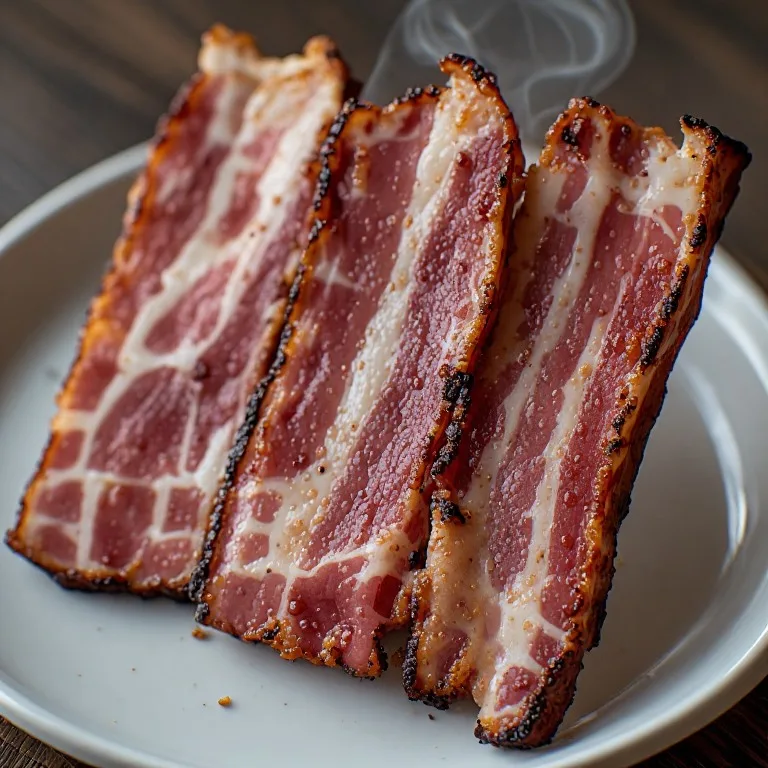
Peter Luger's classic table is four things: the porterhouse, the steak sauce, the German fried potatoes, and this creamed spinach. All four are on this site. Start the meal with thick-sliced beefsteak tomato and raw onion rings drizzled generously in the steak sauce — no cooking required. The German fried potatoes (parboiled, then pan-fried in beef tallow in a cast-iron) and this creamed spinach both finish in about 25 minutes and can be started while the steak rests. The extra thick bacon is optional but very much in the spirit of the table.

Love this recipe? Share it!

Free PDF: our 12 most-wanted copycat recipes — instant download.

Made it? Buy us a coffee

Every recipe here is free, with no paywalls. If this one was a hit at your table, a small tip keeps new copycats coming.

$

Peter Luger is a trademark of its owner, used here only to describe the dish this recipe recreates. This is an independent copycat written in our own words — Copycat Spices is not affiliated with, endorsed by or sponsored by Peter Luger.

Ratings & Reviews

—
No ratings yet

Rate this recipe

Click a star to rate

Leave a Review

0/500

CS

Copycat Spices Editorial

Researched + fact-checked. Every recipe on Copycat Spices is built from published sources — official ingredient lists, brand-published recipes, interviews and food-science references — and fact-checked before it goes live, then written as clear, step-by-step instructions for home cooks of all skill levels.

Learn more about our mission →