


Pin It

Peter Luger Porterhouse (The Famous Williamsburg Steak, Made at Home)

Peter Luger Porterhouse (The Famous Williamsburg Steak, Made at Home)
Jump to Recipe
Prep 20 min Cook 25 min Serves 2
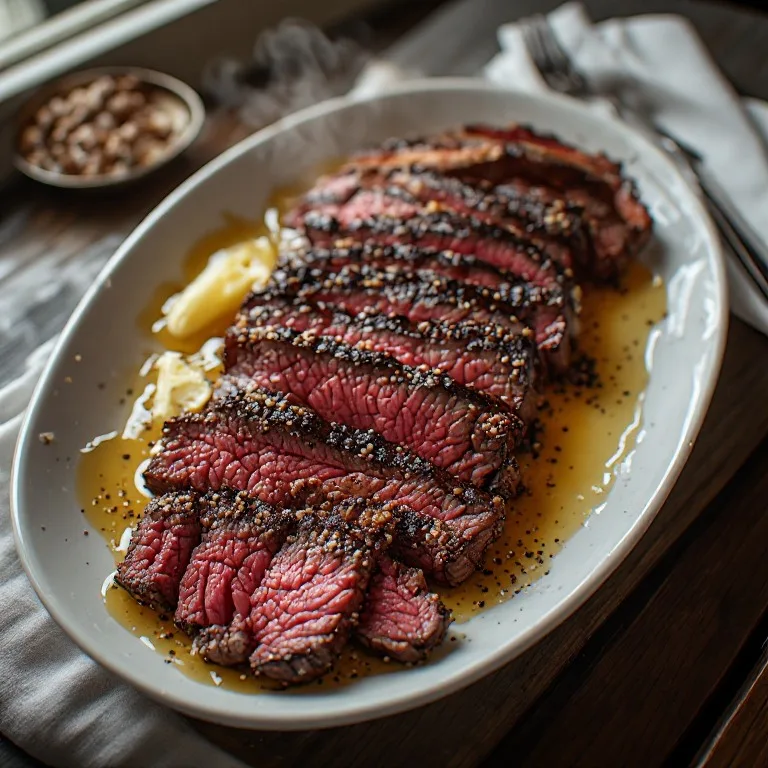
Quick answer: Salt a 2-inch-thick USDA Prime porterhouse (ideally dry-aged 28 days, or dry-brined overnight uncovered in the fridge) with 1/2 teaspoon of Diamond Crystal kosher salt per side at least 45 minutes ahead. Bring to room temperature for 45 minutes. Heat an oven-safe cast-iron skillet over high heat for 4 minutes until smoking, then sear the steak 3 minutes per side to build the crust. Transfer the pan to your oven's highest broil setting (500°F+), position the rack 4 inches from the element, and broil 4 to 5 minutes per side until an instant-read thermometer reads 120°F at the strip side (the strip cooks faster than the filet). Pull the pan out. Working quickly, cut the strip loin off the bone in one piece, cut the filet off the bone in one piece, then slice both perpendicular to the bone into 1/2-inch-thick strips. Place the bone back in the center of the hot cast iron. Fan the sliced strip along one side of the bone and the sliced filet along the other. Drizzle 2 to 3 tablespoons of salted butter over the meat and return the pan under the broiler for 2 to 3 minutes until the butter is sizzling and pooling in the bottom. Drag each slice through the butter pool before eating. Rest is optional — Peter Luger does not rest the steak; they serve it sizzling and immediate.

Peter Luger Porterhouse (The Famous Williamsburg Steak, Made at Home)

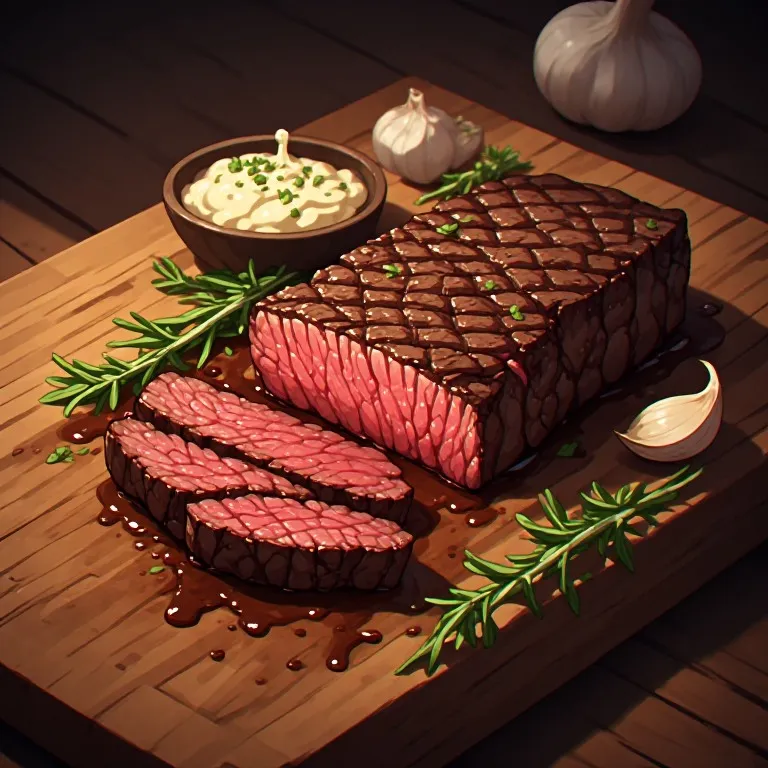
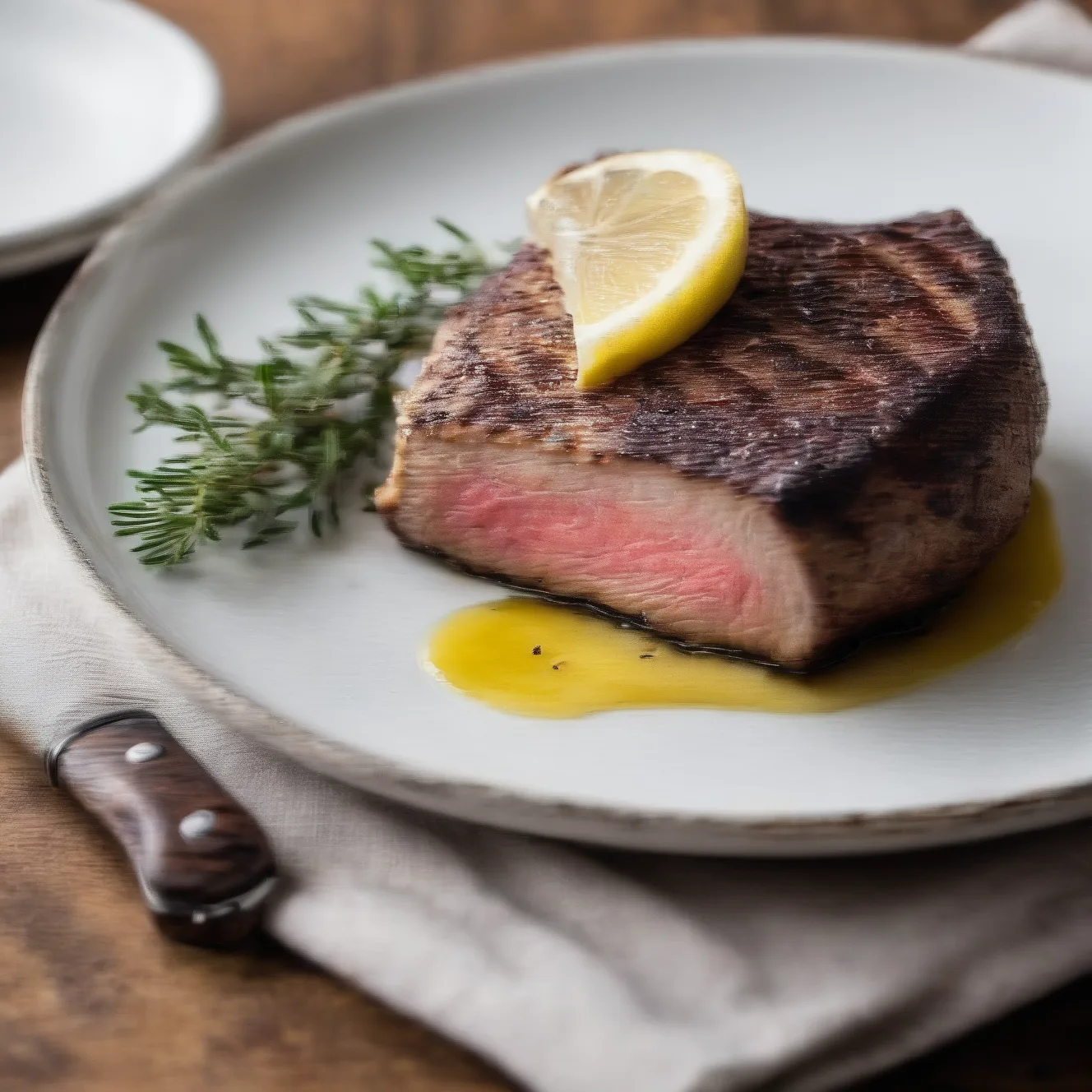
The legendary Peter Luger porterhouse, made at home: USDA Prime, dry-aged or dry-brined, cooked under maximum broiler heat in a screaming cast iron, then sliced off the bone and finished in a butter pool on the sizzling platter. The full Williamsburg technique.

Medium Prep: 20 min Cook: 25 min Total: 45 min2 servings ~$2.80/serving
Prep20 min
Cook25 min
Total45 min
Servings
2
At home~$2.80/serving
vs
Restaurant~$12.60/serving
You save ~78%

The Story Behind the Recipe

The legendary Peter Luger porterhouse, made at home: USDA Prime, dry-aged or dry-brined, cooked under maximum broiler heat in a screaming cast iron, then sliced off the bone and finished in a butter pool on the sizzling platter. The full Williamsburg technique.

Nutrition Facts

Per serving (2 servings)
Calories920
Total Fat68g
Total Carbs0g
Dietary Fiber0g
Sugars0g
Protein72g
Sodium890mg

* Estimated values based on standard recipe preparation. Actual values may vary.

Ingredients

  • The steak
  • For the butter finish
  • At the table

Instructions

💡
Pro tip: This recipe tastes even better the next day. The flavors need time to meld together in the fridge.
❄️
Storage: Keeps in an airtight container in the fridge for up to 2 weeks. Freezer-friendly for up to 3 months.
🎃 Free Halloween cookbook — download now The Copycat Halloween Cookbook A ready-made, photo-illustrated PDF of our best halloween copycat recipes — free to download, no building required. Pay what you want to support if you love it.

Free PDF — instant download. We'll also send new seasonal copycat recipes now and then; unsubscribe anytime. Or just download it →

Copycat Peter Luger Porterhouse (The Famous Williamsburg Steak, Made at Home)

Prep time: 20 min (plus 45 min dry-salt rest, or 1-3 days for dry-brine) Cook time: 25 min Servings: 2

Peter Luger Steak House has been on Broadway in Williamsburg, Brooklyn since 1887. It has operated in essentially the same building, with essentially the same menu, and the same cash-only policy, for over 130 years. There is no music. There is no wine list to speak of. The walls are dark wood and beer signs. The tablecloths are checked. The servers are famously brusque. The New York Times gave it a scorching zero-star review in 2019, and it lost its Michelin star in 2022 — and it remains one of the hardest reservations in New York, because none of that has anything to do with the porterhouse.

The steak is the point. Everything else — the shrimp cocktail, the sliced tomatoes with Luger sauce, the German potatoes — exists in relation to the porterhouse. You order it for two, or three, or four. You specify no doneness other than medium-rare, because no other doneness is expected.

What makes the steak what it is begins on Monday mornings, when the same buyer who has been doing this for decades goes to the meat market and inspects individual sides of beef. He is selecting from USDA Prime beef — the highest grade of American cattle, assigned to the top two percent of beef by marbling — and then selecting the best of that. The porterhouses he chooses are dry-aged for 28 days in Luger’s own aging room in Williamsburg. During that time, enzymatic activity breaks down muscle proteins into peptides, concentrating beefy flavor and softening the texture in a way that no quick-tenderizing method replicates. The exterior loses moisture and develops a dry crust that, when it hits an 800-degree broiler, produces a sear no home kitchen can exactly match.

But you can get close. Not identical — the 28-day dry-aged Prime porterhouse and the commercial broiler at 900 degrees are hard ceilings at home — but close enough that the result is a genuinely great steak by any standard other than Luger’s own, which is the strictest standard in American steakhouse dining.

The Two Decisions That Matter Before You Cook

The cut. Ask your butcher specifically for a porterhouse, not a T-bone. A porterhouse has a filet portion at least 1.25 inches wide (measured from the bone to the outer edge of the tenderloin); a T-bone has less. The porterhouse is cut from the rear short loin, where the tenderloin is thicker. A 2-to-2.5-inch thickness is non-negotiable for this technique — thinner cuts cook through before the broiler can develop the crust without overcooking the interior.

Dry-aged vs. dry-brine. If you can find a dry-aged Prime porterhouse (28 days minimum from a specialty butcher), use it — the mineral, nutty depth of flavor that dry-aging develops has no real substitute. If you cannot, buy the best Prime porterhouse you can find and dry-brine it for 24 to 72 hours uncovered in the refrigerator before cooking. Dry-brining is not the same as dry-aging, but it is the single highest-leverage thing a home cook can do to improve a fresh steak: it concentrates surface flavor, draws out and then reabsorbs moisture with dissolved proteins, and most importantly dries the exterior so it sears rather than steams. A dry-brined Prime porterhouse, cooked correctly, is a very good steak. It is just not Luger.

The Technique: Sear, Broil, Slice on the Iron, Butter

Peter Luger’s broilers run at 800 to 900 degrees Fahrenheit continuously. A home broiler maxes at roughly 500 to 550 degrees on its highest setting — the element itself is hotter, but the ambient air in the oven is not. The workaround is to combine a cast-iron sear with the maximum broiler setting: the cast iron provides the direct-contact high heat that builds the crust from below, and the broiler provides radiant heat from above. It is not eight commercial broilers, but it is legitimately high heat from two directions simultaneously.

The other essential move is what happens after the steak comes out: the Luger cut. Strip off the bone, filet off the bone, both sliced perpendicular to the bone and fanned around it on the same hot cast iron, then cold butter on top and back under the broiler. What this accomplishes is threefold. It makes the steak shareable and manageable — a 2-inch porterhouse, eaten conventionally off the bone, is unwieldy. It exposes four cut surfaces to the broiler for a final sear. And it creates the butter pool at the bottom of the cast iron — the hot beefy drippings plus salted butter — that each slice gets dragged through before eating. That butter pool is what people who have been to Peter Luger describe when they try to explain why it is different.

The Temperature Window

Pull the steak at 120°F measured in the center of the strip side. The strip runs warmer than the filet because it is thicker and more exposed; the filet at 120°F strip will be 115°F, which is fine — the second broil after slicing will bring both up several degrees. Target final eating temperature of 130 to 135°F (medium-rare). If you want medium, pull the unsliced steak at 125°F. If your oven’s broiler is on the weaker side, check at 4 minutes rather than 5 — every broiler is different, and a steak this expensive should not be finished on a timer.

A note on resting: Peter Luger does not rest this steak. It comes from the broiler, gets cut and fanned, gets buttered and briefly broiled again, and arrives at the table sizzling. The conventional rest-the-steak advice exists because cutting too soon allows juices to run before they redistribute; here, the second broil step heats those juices back up and the butter pool provides additional moisture at the plate. Follow the restaurant’s method — serve immediately.
🥗

Make It Healthier

Love Peter Luger Porterhouse (The Famous Williamsburg Steak, Made at Home) but want a lighter version? Try these simple swaps:

  • ✓Use a NY strip steak instead of porterhouse — the filet side of a porterhouse is the leanest cut on a cow, but the NY strip alone (without the filet) is slightly leaner than the combined porterhouse. A 12-oz bone-in NY strip dry-aged and cooked by this same method has roughly 600 to 650 calories per person.
  • ✓Reduce the finishing butter to 1 tablespoon from 2 to 3 — you still get the pool and the drag, just less of it. The flavor of the steak itself is strong enough at this quality level that the reduction is less noticeable than it would be on a lower-quality cut where butter is compensating.
  • ✓Share one steak between two people as a main, adding a large salad and a vegetable — a 2 to 2.5 lb porterhouse is a full meal split two ways (roughly 12 oz of cooked meat each after bone and trim), and the structure of the dish (sliced and fanned, served at the table) is designed for sharing.

Frequently Asked Questions

What is the actual difference between Peter Luger and every other steakhouse?

Selection, dry-aging, and heat. Peter Luger does not buy from a menu of pre-approved suppliers — every Monday morning, the same buyer (historically from the Forman family, who have owned the restaurant since 1950) goes to the meat market and physically inspects each side of beef. He selects a fraction of what is available — the rest goes to other restaurants. The steaks that pass are USDA Prime, but prime is not enough; they are the best of Prime. They are then dry-aged in Luger's own aging room in Williamsburg for a minimum of 28 days. At the restaurant, cooking uses eight commercial broilers running continuously at 800 to 900 degrees Fahrenheit — roughly 300 degrees hotter than a home oven's broiler. The combination of hand-selection, extended dry-aging, and extreme heat creates a result that no shortcut version fully replicates, but a carefully sourced steak cooked on cast iron under maximum home broiler heat gets substantially closer than most people expect.

Where do I find dry-aged USDA Prime porterhouse, and what if I cannot?

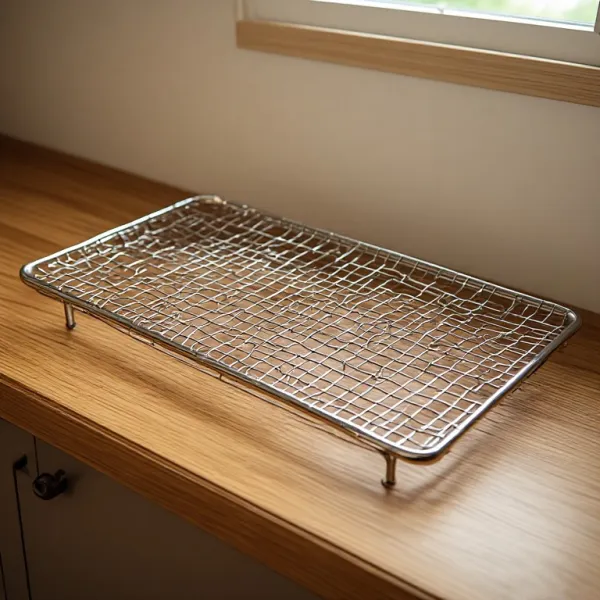
A specialty butcher is your best option — not a supermarket meat counter. In most major cities, there is at least one butcher that stocks dry-aged prime beef; call ahead and ask specifically for USDA Prime porterhouse dry-aged at least 21 days. DeBragga in New York, Allen Brothers, Snake River Farms, and Crowd Cow all ship dry-aged prime porterhouse nationally. Expect to pay $60 to $90 for a 2-inch-thick porterhouse at this quality level — the restaurant charges over $100 per person for the same cut. If you cannot find a dry-aged option, buy the best USDA Prime porterhouse you can find (Costco's beef section is reliably Prime) and dry-brine it yourself. Unwrap the steak, set it on a wire rack over a sheet pan, salt it as described in this recipe, and leave it uncovered in the refrigerator for 24 to 72 hours before cooking. Dry-brining is not dry-aging — it does not develop the same mineral, nutty depth that comes from enzymatic breakdown over 28 days — but it does significantly concentrate the surface flavor, dry out the exterior for better crust formation, and improve texture in a way that is meaningfully better than cooking a fresh-from-package steak. The longer the brine, the more pronounced the effect. Choice-grade prime rib brined for 72 hours still produces an excellent result; dry-aged Prime is just the ceiling of what the technique can do.

Why does Peter Luger cook the steak before slicing, and why slice it on the platter at all?

The sequence is: cook whole on the bone, remove from the broiler, cut the strip and filet off the bone, slice both into serving strips on the hot cast iron, fan around the bone, add butter, return under the broiler. Cooking on the bone first preserves heat at the bone and produces more even cooking through the thick center. The pre-slicing at the table (or in the kitchen) solves a practical problem: a 2-to-3-inch-thick porterhouse is almost impossible to eat elegantly off the bone, and the strip and filet cook at slightly different rates (the filet is more protected). Slicing into serving pieces and fanning them on the hot iron platter both makes the meal shareable and exposes each slice to the pooled butter in the bottom of the platter — so every bite is dragged through hot, beefy, salted butter before it reaches your mouth. This last detail is the actual signature. The steak is good before the butter; it becomes something else entirely after it.

What temperature is Peter Luger's target doneness, and should I order well-done?

Peter Luger targets medium-rare, which the restaurant defines as a deep pink center — roughly 130 to 135 degrees Fahrenheit at the thickest point of the strip. They will cook to medium on request. They have historically refused well-done orders, or served them under protest. At home, pull the steak at 120 to 125 degrees (it will carryover to 130 to 135 while you slice). The reason the restaurant resists well-done is structural: a dry-aged Prime steak at well-done is roughly equivalent to dry-aged prime at medium-rare destroyed — the flavor compounds developed by dry-aging and the intramuscular fat that provides the clean richness both degrade past medium. If you prefer well-done steak, this is not the $80 cut to practice on; a Choice-grade sirloin is a better candidate for that doneness.

Can I substitute a NY strip or ribeye if I cannot find a porterhouse?

Yes, and both are excellent — the technique is identical. A porterhouse is simply a NY strip and a filet attached by a T-shaped bone (it becomes a T-bone when cut slightly further from the short loin, where the filet portion is smaller). For two people, a 2-inch-thick, bone-in ribeye or NY strip cooked by the same method gives you the Luger broiler crust and butter-pool finish, just without the bone-and-fan presentation. The flavor of a dry-aged ribeye is arguably even richer than a porterhouse because the ribeye's spinalis cap (the crescent of deeply marbled meat around the eye) has more intramuscular fat than the strip does. If cooking NY strip or ribeye, adjust the broiler time: a boneless NY strip at 2 inches needs about 4 minutes per side under the broiler after the initial sear; a bone-in ribeye needs 5 to 6 minutes per side. Use the thermometer, not the clock — every broiler runs differently.

What is the butter situation — salted or unsalted, and how much?

Salted. Peter Luger uses salted butter in the finish stage — this is documented and consistent across multiple former employee descriptions and food writer visits. The salt in the butter compounds with the salt on the exterior of the steak and the drippings from the cooking, creating the concentrated, savory pool that people drag slices through. Two to three tablespoons for a 2-inch porterhouse is the right quantity — enough to pool visibly at the bottom of the hot platter but not so much that the meat swims in it. Use a good-quality cultured salted butter if you can find it (Kerrygold, Vermont Creamery) rather than a generic salted butter; the flavor is noticeably cleaner. Slice the butter cold so it sits on top of the meat rather than immediately melting and running off before the broiler return — you want it to melt and pool during the final 2 to 3 minutes under the broiler, not before.

Why return the steak to the broiler after slicing? Doesn't it overcook the meat?

The sliced meat is not being cooked further in any meaningful sense — it is being kept hot and the butter is being melted into the pan drippings. At 2 to 3 minutes under the broiler at 500 degrees, the thin cuts will pick up a few degrees of surface heat. This is why you pull the steak at 120 to 125 degrees before slicing, not at the 130 to 135 that medium-rare registers — the final broiler step pushes you to the target. If your steak was already at 130 when you pulled it, skip the second broiler step and just let the residual heat of the cast iron melt the butter. The second broiler step also sears the newly exposed cut surfaces of each slice, which develops additional flavor and produces the characteristic look of Luger steak — a browned exterior on every surface, not just the two sear sides.

What is the point of Peter Luger's steak sauce at the table?

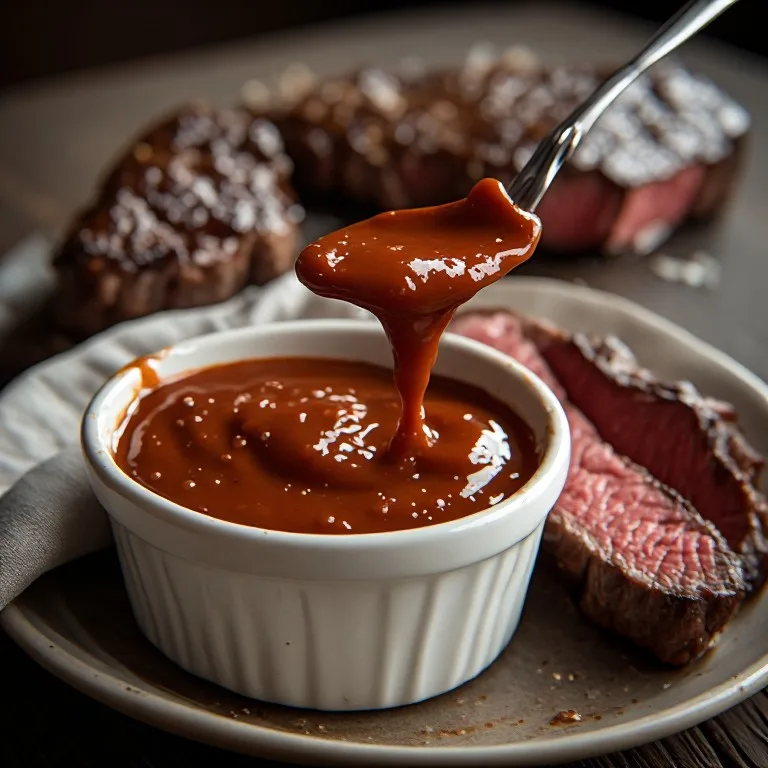
The steak sauce — sold commercially as Peter Luger Extra Thick Sauce for Steak — is served alongside the steak, shrimp cocktail, and sliced tomatoes as table condiments. It is not poured over the steak at the restaurant; it sits on the table for optional dipping, similar to how A.1. might appear at a casual steakhouse. The sauce is a tomato and horseradish base with anchovy paste and tamarind concentrate as the differentiating ingredients (most copycat sauces miss both). At home, making the steak sauce separately is straightforward if you are hosting — it keeps for 2 weeks refrigerated. But the sliced steak dragged through the butter pool in the bottom of the cast iron is the authentic Luger experience; the steak sauce is supplemental.

Love this recipe? Share it!

Free PDF: our 12 most-wanted copycat recipes — instant download.

Made it? Buy us a coffee

Every recipe here is free, with no paywalls. If this one was a hit at your table, a small tip keeps new copycats coming.

$

Peter Luger is a trademark of its owner, used here only to describe the dish this recipe recreates. This is an independent copycat written in our own words — Copycat Spices is not affiliated with, endorsed by or sponsored by Peter Luger.

Ratings & Reviews

—
No ratings yet

Rate this recipe

Click a star to rate

Leave a Review

0/500

CS

Copycat Spices Editorial

Researched + fact-checked. Every recipe on Copycat Spices is built from published sources — official ingredient lists, brand-published recipes, interviews and food-science references — and fact-checked before it goes live, then written as clear, step-by-step instructions for home cooks of all skill levels.

Learn more about our mission →