


Pin It

Rao's Bolognese Sauce

Rao's Bolognese Sauce
Jump to Recipe
Prep 20 min Cook 3 hr Serves 8
Quick answer: In a large Dutch oven, heat 3 tablespoons olive oil and 2 tablespoons unsalted butter over medium-low. Add 1 large finely diced yellow onion, 2 stalks finely diced celery, and 1 large finely diced carrot. Cook, stirring occasionally, for 12 minutes until very soft and lightly golden. Add 4 minced garlic cloves and cook 1 minute. Add 2 tablespoons tomato paste and cook, stirring, for 2 minutes until it darkens. Add 1 pound 80/20 ground beef and ½ pound ground pork, breaking into small pieces; cook 8–10 minutes until no pink remains. Season with 1½ teaspoons kosher salt, ½ teaspoon black pepper, and ¼ teaspoon freshly grated nutmeg. Pour in 1 cup dry white wine. Cook, stirring occasionally, until the wine has almost completely evaporated, about 7 minutes. Pour in 1 cup whole milk. Cook until the milk has mostly absorbed into the meat, about 8 minutes. Add 1 can (28 oz) hand-crushed San Marzano tomatoes with their liquid and 1 cup low-sodium chicken broth. Add 2 bay leaves and 2 fresh thyme sprigs. Bring to a gentle simmer, then reduce heat to low. Cook uncovered for 2½ to 3 hours, stirring every 20–30 minutes, until the sauce is deeply concentrated and the fat has risen to the surface and been stirred back in. Remove and discard bay leaves and thyme. Stir in 1 tablespoon cold unsalted butter. Serve over fresh tagliatelle or pappardelle with Parmigiano-Reggiano. This batch sauces 8 generous portions.

Shop the tools

Gear matched to this recipe. These are Amazon affiliate links — we may earn a small commission if you buy, at no extra cost to you.

As an Amazon Associate, Copycat Spices earns from qualifying purchases. Product images are generic illustrations, not the exact item listed.

Rao's Bolognese Sauce

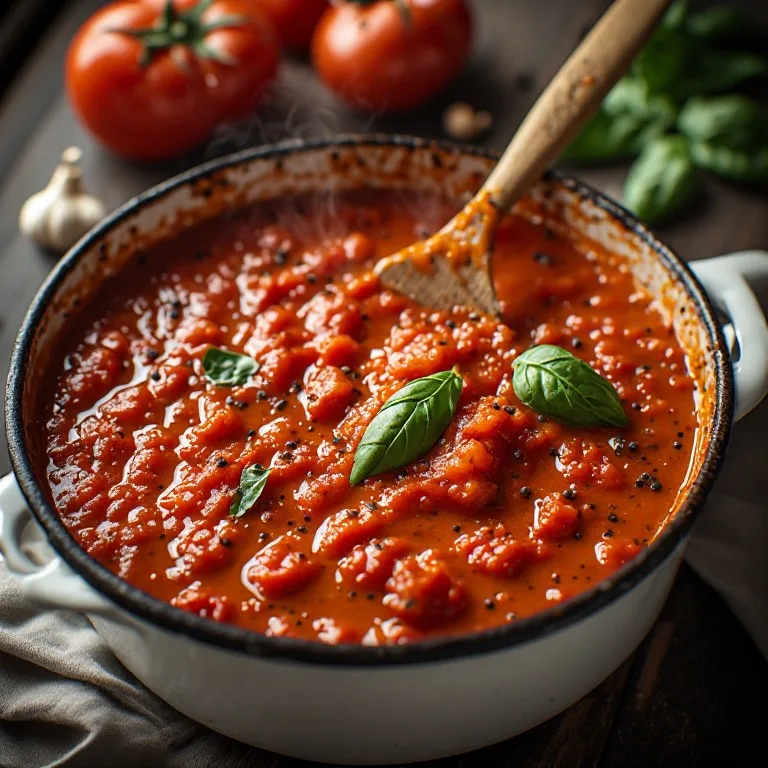
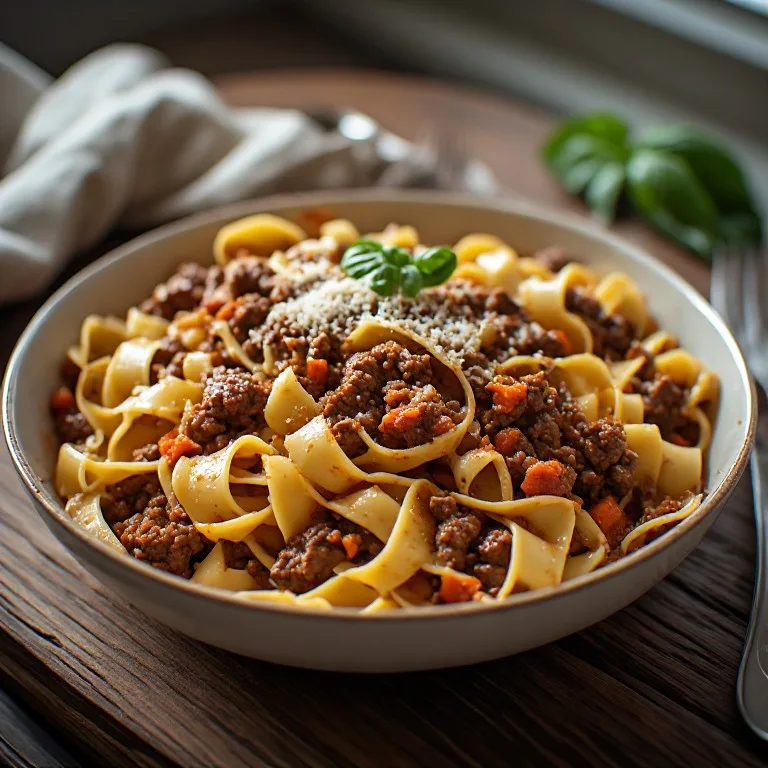
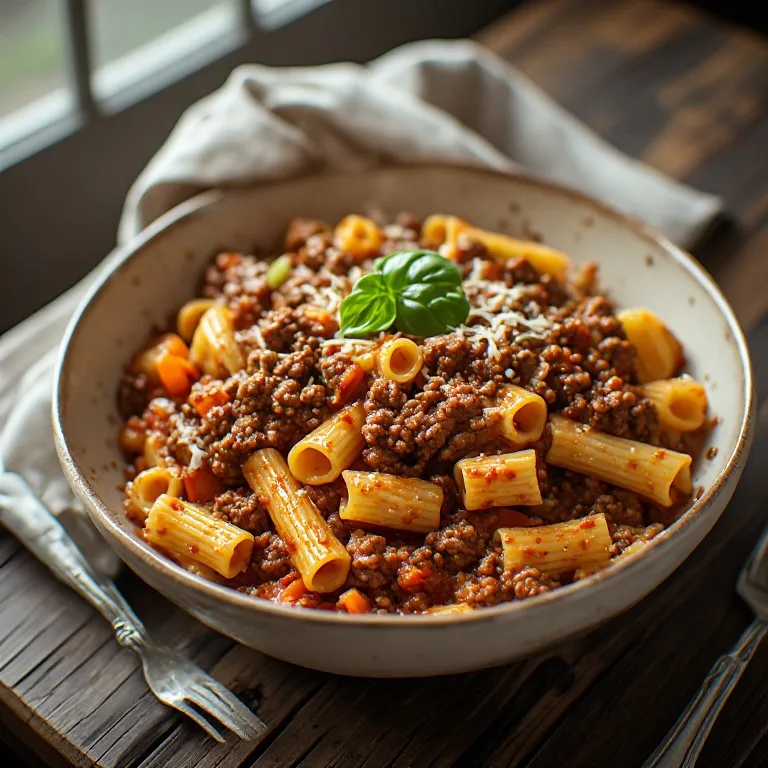
Rao's bolognese recipe, made at home: ground beef and pork simmered 3 hours with a soffritto, dry white wine, whole milk, and San Marzano tomatoes. The technique that sets it apart — milk first, then tomatoes, never reversed — and why the simmer time isn't optional.

Medium Prep: 20 min Cook: 3 hr Total: 3h 20m8 servings ~$4.50/serving
Prep20 min
Cook3 hr
Total3h 20m
Servings
8
At home~$4.50/serving
vs
Restaurant~$20.25/serving
You save ~78%

The Story Behind the Recipe

Rao's has served bolognese since the restaurant opened — or rather, since Charles Rao's corner saloon at 455 East 114th Street in East Harlem became a serious Southern Italian kitchen in the early 20th century. The restaurant has 10 tables. Most of them are held by the same families, week after week, for decades. Frank Pellegrino Sr. — who ran Rao's for most of its modern era and died in 2017 — was nicknamed "Frankie No" because he spent most of his working life turning down reservation requests. The bolognese is not a menu item that rotates or varies; it is one of the permanent constants in a kitchen where the recipes have not meaningfully changed in a generation.

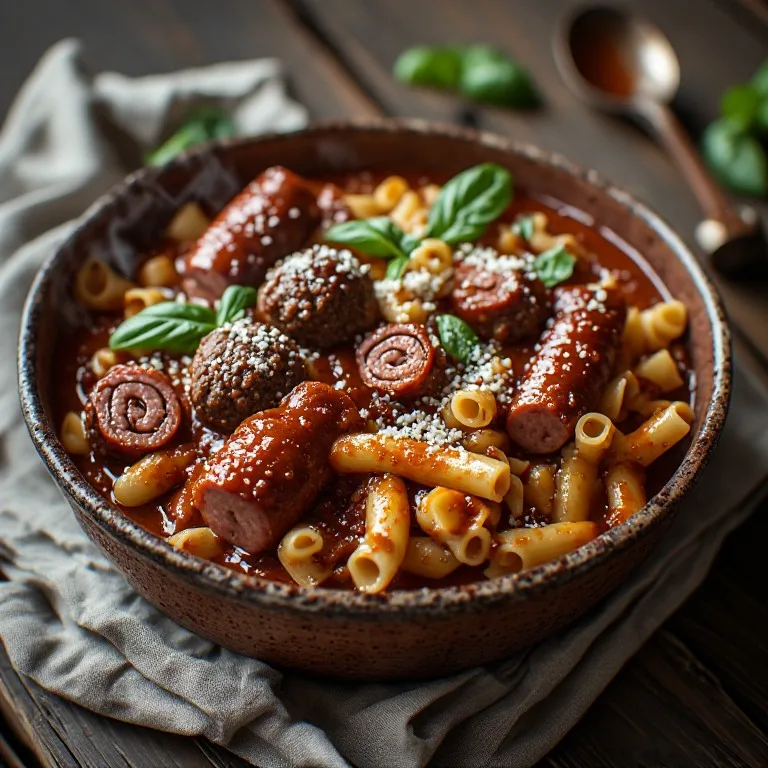
What makes Rao's bolognese distinct from their Sunday gravy — also on the menu, also slow-cooked — is the structure. Sunday gravy is a big-batch meat-and-tomato sauce made with whole cuts (sausage links, pork ribs, meatballs) simmered directly in crushed tomatoes. Bolognese starts differently: it begins with a fine-diced soffritto of onion, celery, and carrot cooked slowly in olive oil and butter, then ground beef and pork added and cooked through before any liquid touches the pan. The sequence that follows — white wine in, fully evaporated; then milk in, mostly absorbed before tomatoes arrive — is Marcella Hazan's technique, the one that separates a true bolognese from a quick meat sauce. The milk tenderizes the protein and rounds the flavor in a way nothing else does. Skip that step and you have a different dish. The 3-hour simmer is what finishes it.

Nutrition Facts

Per serving (8 servings)
Calories420
Total Fat30g
Total Carbs12g
Dietary Fiber2g
Sugars6g
Protein24g
Sodium520mg

* Estimated values based on standard recipe preparation. Actual values may vary.

Ingredients

Instructions

💡
Pro tip: This recipe tastes even better the next day. The flavors need time to meld together in the fridge.
❄️
Storage: Keeps in an airtight container in the fridge for up to 2 weeks. Freezer-friendly for up to 3 months.
🎃 Free Halloween cookbook — download now The Copycat Halloween Cookbook A ready-made, photo-illustrated PDF of our best halloween copycat recipes — free to download, no building required. Pay what you want to support if you love it.

Free PDF — instant download. We'll also send new seasonal copycat recipes now and then; unsubscribe anytime. Or just download it →

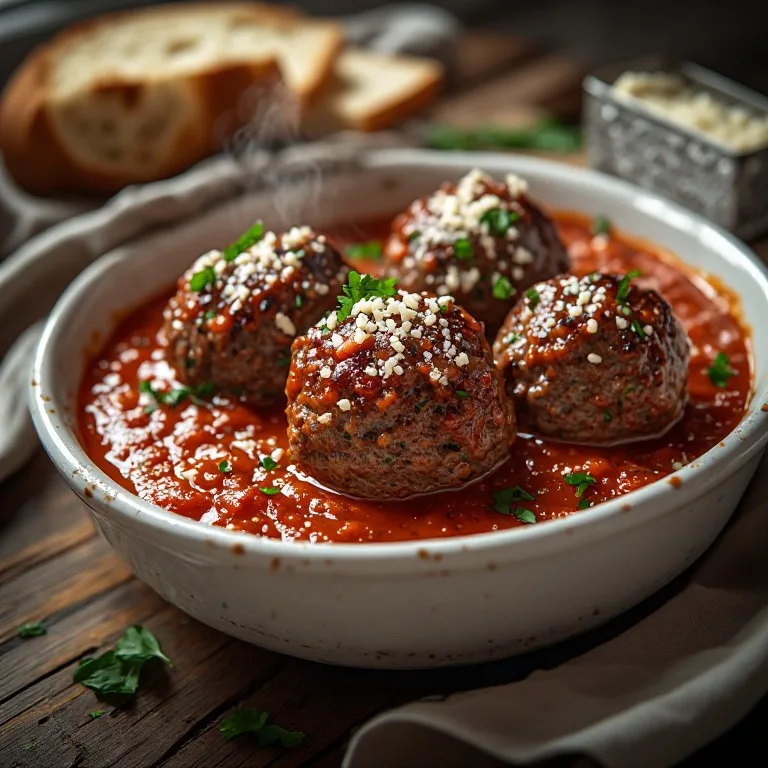
Rao’s bolognese is the long-cooked meat sauce served at the 10-table East Harlem restaurant that has — for nearly 130 years — been one of the hardest reservations in New York City. The sauce starts with a fine-diced soffritto cooked until it nearly dissolves, adds ground beef and pork browned into small pieces, then layers in dry white wine (fully evaporated before anything else), whole milk (mostly absorbed before the tomatoes arrive), and a single can of San Marzano tomatoes. It simmers for 3 hours, uncovered, until the liquid is gone and what remains is a thick, deeply concentrated meat sauce that tastes nothing like a quick weeknight pasta. It is a distinct dish from the tomato-forward Rao’s Sunday gravy and the Rao’s meatballs that share the menu — this is a meat sauce with some tomato, not a tomato sauce with meat.

The technique that separates this from a generic meat sauce: most home recipes skip the milk step or add milk and tomatoes simultaneously. The milk goes in alone — after the wine is gone — and cooks into the meat before the tomatoes arrive. This tenderizes the protein and rounds the flavor in a way that cannot be replicated by adding milk later. The sequence is: wine, evaporate; milk, absorb; then tomatoes.

Why the Soffritto Takes 12 Minutes

A soffritto is onion, celery, and carrot cooked in fat until very soft. The instructions say 12 to 15 minutes — which sounds long if you’re used to cooking aromatics quickly for 3 to 5 minutes. The reason for the extra time is chemical: onion, celery, and carrot cells are held together by pectin and a cellular structure that only breaks down with sustained, low heat. At 3 to 5 minutes over medium heat, you get softened vegetables with some sharpness still present. At 12 to 15 minutes over medium-low heat, the pectin breaks down completely, the cells collapse, the sugars in the onion and carrot concentrate and begin to caramelize lightly, and the vegetables practically dissolve into the fat. The result is a sweet, deeply aromatic foundation that flavors the finished sauce in a way the quick version cannot.

Don’t raise the heat to speed this up. If the onion starts to brown before 10 minutes, the heat is too high.

The Meat: Fine, Not Chunky

Most recipes break ground meat into large pieces while browning — thumb-sized chunks. Bolognese goes finer: you want the meat broken into something closer to a granular, sand-like texture. Use a wooden spoon or firm spatula to keep breaking it down throughout the browning step. A potato masher helps in the first few minutes before the meat has fully cooked through. The fine texture is what allows the sauce to cling to pasta as a cohesive coating rather than sitting in the bowl in clumps.

The ratio of beef to pork matters. Beef (80/20) provides iron, depth, and structure. Pork contributes fat and sweetness. Together they produce a sauce that is richer than all-beef and more savory than all-pork. If you want to add ground veal — the classic Emilian third — replace half the pork with veal for a more delicate result, closer to the three-meat approach in our Babbo pappardelle bolognese.

The Wine Step: Really Let It Evaporate

Pour a full cup of dry white wine into the meat and cook, stirring occasionally, until almost none of it remains — 6 to 8 minutes. The goal is to cook off the alcohol and most of the water content of the wine, leaving behind only the flavor compounds (acids, phenolics, fruity esters) that have been absorbed into the meat. If you add milk while wine is still present, they will compete and the milk will curdle from the wine’s acidity. Let the pan look almost dry before proceeding.

Use a neutral, dry Italian white — Pinot Grigio or Soave works well. Avoid oaky whites (like Chardonnay), which can make the finished sauce taste slightly bitter.

The Three-Hour Simmer

The sauce looks nearly done after an hour. It is not. At the 1-hour mark, the tomatoes have broken down and the sauce has a reasonable flavor, but the fat has not fully integrated, the meat still has some chew, and the flavor lacks depth. At the 2-hour mark, the sauce has improved noticeably. At the 3-hour mark, the individual elements have become something new: the fat is completely emulsified, the meat is silky-soft, the tomato has reduced to a savory background note, and the sauce has the thick, slow-moving quality that signals it is done.

Stir every 20 to 30 minutes. The sauce should maintain a lazy bubble — occasionally, not continuously. If it stops bubbling entirely, raise the heat slightly. If it starts to spatter, lower it. After 2 hours, taste and adjust salt.

Serving

Toss the hot bolognese with fresh tagliatelle or pappardelle — not mixed in the pot before you need it, but added to a small amount of sauce in the pot with a splash of starchy pasta water and tossed quickly over medium heat until the sauce coats every strand. Pappardelle is wider; tagliatelle is more traditional. Both work. The pasta water is not optional — the starch in it emulsifies the sauce and makes it cling.

Grate Parmigiano-Reggiano generously over each bowl. Serve with good bread. Rao’s serves theirs simply, on white plates, in portions large enough that nothing else at the table is necessary.
🥗

Make It Healthier

Love Rao's Bolognese Sauce but want a lighter version? Try these simple swaps:

  • ✓Use 90/10 ground beef and reduce the pork to ¼ lb — the sauce loses some richness but keeps its depth and drops about 80 calories and 10g fat per serving.
  • ✓Swap full-fat whole milk for 2% — the milk step still tenderizes the meat and the textural difference in the finished sauce is minor.
  • ✓Serve over whole-wheat pappardelle (available at most Italian food stores) to add 4–5g fiber per serving without changing the sauce at all.
  • ✓Make the bolognese a day ahead and refrigerate overnight — the fat solidifies on the surface and can be skimmed off, removing most of the saturated fat before reheating.

Frequently Asked Questions

What's the difference between Rao's bolognese and Rao's Sunday gravy?

They are structurally different sauces, though both are slow-cooked Italian-American meat preparations. Sunday gravy is a high-volume, celebratory sauce made by browning whole or large-cut meats — typically pork ribs or braciole, Italian sausage links, and large meatballs — and then simmering them together in crushed tomatoes for several hours. The meat cooks in the tomato sauce, the sauce absorbs drippings from the meat, and the finished dish is part sauce, part braised meat. Bolognese begins from the other direction: finely ground meat cooked with a soffritto until crumbled into very small pieces, then layered with wine, then milk, then a modest amount of tomato — not a tomato sauce with meat, but a meat sauce with some tomato. The ratio is inverted. Sunday gravy runs heavy on tomato and the meat is served alongside; bolognese runs heavy on meat and the tomato provides acidity and body. They taste nothing alike. Sunday gravy is bright and tomato-forward; bolognese is dense, rich, and meaty, with tomato as a background note.

Why add milk to bolognese? What does it actually do?

The milk step is the central technique in a traditional bolognese and it does two specific things. First, the proteins in milk — primarily casein — bond with the proteins in the ground meat at the surface level during cooking, forming a coating that insulates the meat from the acidity of the wine and tomatoes that follow. The finished meat is softer and more tender than it would be in a sauce where acid hits the proteins directly and tightens them. Second, milk contains lactose and fat, both of which round out the flavor: the lactose provides a very mild background sweetness, and the fat coats the tongue in a way that softens sharp or acidic notes. The sequence matters: you add wine, cook until the wine is fully evaporated, then add milk, cook until the milk is mostly absorbed, and only then add tomatoes. If you add milk and tomatoes at the same time, the acidity of the tomatoes curdles the milk into visible white flecks and you lose both the textural benefit and the flavor smoothing. The order is not arbitrary.

What pasta shape is right for bolognese — tagliatelle, pappardelle, or rigatoni?

The Accademia Italiana della Cucina deposited a golden replica of the ideal tagliatella at the Bologna Chamber of Commerce in 1972, fixing its exact width at 8mm when cooked (7mm raw) — the formal standard that pairs tagliatelle with ragù alla bolognese. Tagliatelle is right because the flat, porous surface of an egg noodle clings to and carries a thick, granular meat sauce better than smooth pasta does. Pappardelle is a wider version of the same basic shape and works equally well — some people prefer it for the way the extra width provides more surface per bite of sauce. Both are traditionally made with egg pasta (pasta all'uovo), which is richer and slightly more porous than pasta made only with semolina and water. Rigatoni is not the traditional pairing but it works well at home because the ridged surface and hollow tube trap meat pieces inside each piece, which many people find satisfying. Spaghetti is a poor match — the round, smooth surface sheds thick sauce rather than holding it, and the sauce tends to pool at the bottom of the bowl. Use fresh pasta when possible; the texture difference over dried is most apparent with bolognese.

Can I make Rao's bolognese the day before, and does it reheat well?

Bolognese is one of those preparations that is genuinely better the next day. The overnight rest lets the fat fully integrate, the flavors continue to develop as the sauce cools slowly, and the texture becomes noticeably more cohesive. Refrigerate the cooled sauce in a covered container for up to 4 days, or freeze in portions for up to 3 months. When you take it out of the refrigerator, the fat will have solidified in a white layer on top — you can skim most of this off if you want to reduce the fat content, or stir it back in when you reheat for full richness. Reheat gently over medium-low heat with a splash of broth or pasta water to loosen. The pasta itself should be cooked fresh when you serve — cooked pasta sitting in sauce overnight goes mushy.

Can I use ground veal in Rao's bolognese?

Yes — adding ground veal is the traditional three-meat Emilian formula (beef + pork + veal) and the result has a subtler, more delicate flavor with slightly less richness than the beef-and-pork version. The classic Emilian ratio is equal parts beef, pork, and veal (one third each). Rao's is an Italian-American restaurant, not a Bolognese osteria, and their version likely leans heavier on beef — but if you can find ground veal or have a butcher grind it for you, substituting it for half the pork (¼ lb veal, ¼ lb pork) produces a more refined result. Veal is leaner than pork, so the sauce will be slightly lighter; compensate with a generous pour of Parmigiano-Reggiano when serving.

My bolognese looks too wet after 2 hours of simmering. What do I do?

Continue simmering uncovered with the heat slightly raised. The long, open simmer is what concentrates the sauce. Common reasons bolognese stays loose: the pot is too small and the sauce is deeper than 2 to 3 inches (use a wider pot next time — surface area accelerates evaporation); the heat is too low and very little moisture is escaping; or the tomatoes released more liquid than expected (San Marzano tomatoes vary in water content by brand and harvest). The sauce is done when it coats a spoon heavily, moves slowly when stirred, and has a concentrated, almost jammy quality. Remove the thyme and bay before tasting for salt at the end — fresh thyme becomes bitter if it simmers too long, which can mask the true salt level. A finished bolognese should taste rich, meaty, and deeply savory, with tomato as a background note and nutmeg just detectable.

What's different about Rao's bolognese compared to a generic Italian-American meat sauce?

The main differences are the soffritto technique, the milk step, and the ratio. A generic Italian-American meat sauce (what many home cooks make) typically browns onion and garlic quickly, browns the ground beef, adds a jar of tomato sauce, and simmers for 20 to 30 minutes. The result is tomato-forward and the meat is present as a textural component. Rao's bolognese inverts that: the soffritto cooks for 12 to 15 minutes until it practically dissolves, establishing a sweet, deeply aromatic base. The wine cooks off completely before anything else is added. The milk coats and tenderizes the meat. The tomato — only one 28-ounce can for a full pound and a half of meat — is a supporting actor. And the 3-hour simmer isn't about developing the tomato flavor; it's about concentrating everything, developing the Maillard compounds from the meat browning, and integrating the fat. The finished dish has a texture and depth that a 30-minute sauce cannot produce.

Love this recipe? Share it!

Free PDF: our 12 most-wanted copycat recipes — instant download.

Made it? Buy us a coffee

Every recipe here is free, with no paywalls. If this one was a hit at your table, a small tip keeps new copycats coming.

$

Rao's is a trademark of its owner, used here only to describe the dish this recipe recreates. This is an independent copycat written in our own words — Copycat Spices is not affiliated with, endorsed by or sponsored by Rao's.

Ratings & Reviews

—
No ratings yet

Rate this recipe

Click a star to rate

Leave a Review

0/500

CS

Copycat Spices Editorial

Researched + fact-checked. Every recipe on Copycat Spices is built from published sources — official ingredient lists, brand-published recipes, interviews and food-science references — and fact-checked before it goes live, then written as clear, step-by-step instructions for home cooks of all skill levels.

Learn more about our mission →