


Copycat Rao’s Chicken Cacciatore (The East Harlem Classic, Made at Home)
Prep time: 20 min Cook time: 55 min Servings: 4
Rao’s chicken cacciatore has been on the menu at 455 East 114th Street in East Harlem, without meaningful change, for decades. The original location has ten tables. Seven of them are effectively controlled by regular customers — people who have held the same table for decades, who can lend their night to a friend, donate a seat to charity, pass it down like property. The remaining three tables represent the entirety of what’s available to everyone else.
Mimi Sheraton’s three-star New York Times review in 1977 changed everything. Rao’s was already beloved by the East Harlem neighborhood and the Italian-American community that had patronized it since Charles Rao opened it as a corner saloon in 1896. After the review, the phone rang continuously and never really stopped. Frank Pellegrino Sr., who ran the room for decades and was affectionately called “Frankie No” for how often he had to decline people, turned away Warren Buffett. He turned away celebrities. He kept a waiting list that never really moved.
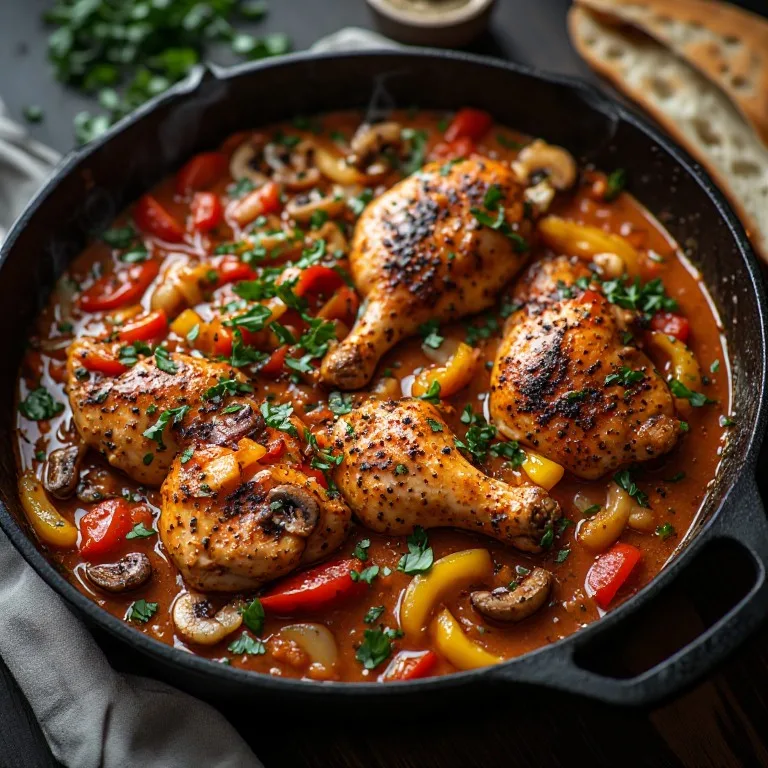
The result is a restaurant whose food is genuinely accessible — roast chicken, meatballs, lemon chicken, braised dishes built from everyday ingredients — but whose tables are not. The cacciatore, hunter’s-style chicken braised in tomatoes and wine with peppers and mushrooms, is exactly the kind of dish you could make at home on a Sunday. The reason people don’t is that most cacciatore recipes give you a competent but forgettable braise. The Rao’s version is different in three specific ways.
The Three Things That Make the Difference
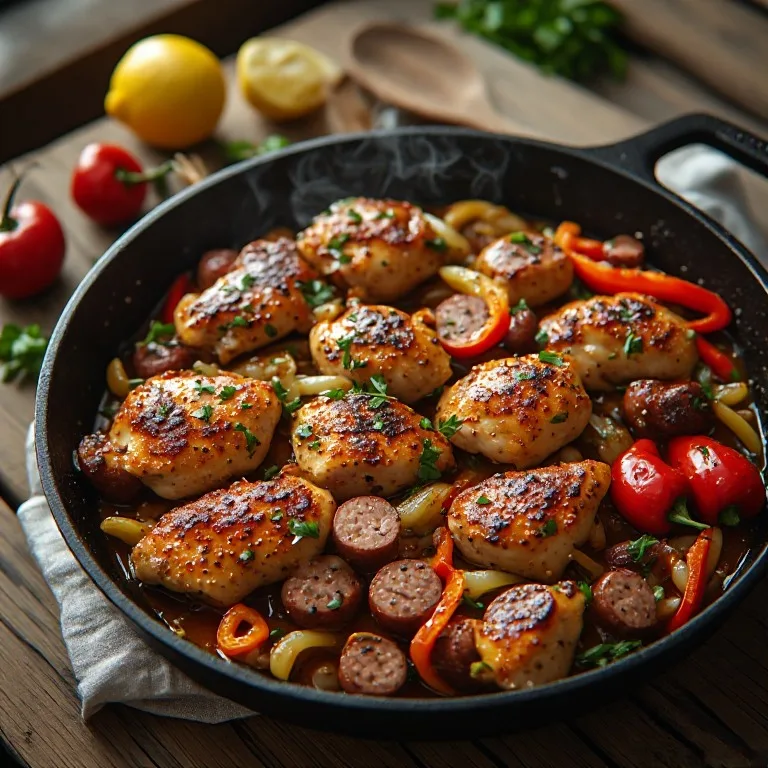
1. The sear has to be real. Most chicken cacciatore recipes tell you to brown the chicken. Ninety percent of home cooks under-brown it — a minute or two per side, pale golden, then into the liquid. That produces chicken with a limp skin that softens completely during braising and contributes nothing. Rao’s style means: skin-side down, medium-high heat, five full minutes without touching it, until the skin is deep golden-brown and nearly crisp and the piece releases from the pan on its own. The fat that renders out and the browned proteins that stick to the bottom of the pot — the fond — are the flavor base for the entire sauce. Weak sear means flat sauce. The skin on bone-in thighs has enough fat to sustain a real sear without burning if the heat is right.
2. Bone-in chicken is not optional. The recipe works specifically because bone-in, skin-on thighs and drumsticks release collagen into the braising liquid during the 45-minute cook. That collagen is what makes the sauce thick and silky and coating rather than thin and watery. Boneless skinless breast is the single most common mistake in home cacciatore — it produces dry, stringy meat and a sauce with no body. If you only have chicken breasts, use bone-in breast halves, not boneless. The breast will finish earlier than the dark meat (check temperature at 35 minutes), but at least the bone contributes to the liquid.
3. The red wine vinegar is not optional. This is the specifically East Harlem Italian-American touch. Just 2 tablespoons, added with the wine when you deglaze. It doesn’t make the sauce taste like vinegar — you won’t identify it as a distinct flavor — but it cuts the sweetness of the San Marzano tomatoes and the richness of the olive oil in a way that makes the entire sauce taste cleaner and more alive. Leave it out and the dish is fine but rounded and soft. Add it and everything sharpens slightly. This is the detail most generic cacciatore recipes miss.
The Mushroom Timing Question
Add the mushrooms after 35 minutes of covered braising, not at the start. Mushrooms are mostly water — typically 90 percent by weight. Add them at the beginning with the peppers and they’ll release that water into the sauce as it’s trying to concentrate, diluting everything and preventing the tomatoes from thickening. They’ll also steam rather than absorb flavor from the braising liquid.
Added in the last 10 to 15 minutes of uncovered simmering, the mushrooms encounter a sauce that’s already reduced and flavorful. They soften without waterlogging anything, and the brief contact with the concentrated tomato-wine liquid means they absorb flavor rather than just sitting in it.
The Rao’s Restaurant Cacciatore vs. The Website Recipe
Rao’s now sells the most popular premium jarred pasta sauce in the United States, and their website features a “chicken cacciatore” recipe that is built around their Roasted Garlic sauce — chicken plus sausage links, potatoes, frozen peas, and their jarred sauce, roasted in the oven. That is a simple, convenient recipe that sells their product and is genuinely good on its own terms.
It is not the dish Rao’s serves as a restaurant. The restaurant dish is a Southern Italian-American stovetop braise: whole-cut chicken, San Marzano tomatoes, dry red wine, red wine vinegar, bell peppers, mushrooms. No sausage, no potatoes, no jarred sauce, not the oven. This recipe replicates the restaurant dish.
Cacciatore vs. Scarpiello
These are both Rao’s signatures, both made with chicken, and they are completely different dishes. Cacciatore (hunter’s style) is slow-braised in a tomato sauce — rich, deep, suited for bread or pasta. Scarpiello (shoemaker’s style) is a faster preparation with Italian sausage, hot cherry peppers, and vinegar as the dominant flavor — tangy, herby, no tomatoes, no mushrooms. If you want the tomato-forward Sunday-dinner version, this is it. If you want the sharper, more aggressive pepper-and-vinegar version, that’s the scarpiello.
A Dish That Improves Overnight
Like most braises, Rao’s chicken cacciatore is better the next day. The sauce thickens further as it sits, the chicken absorbs more of the braising liquid, and the flavors integrate in a way they can’t when the dish is served immediately. If you’re cooking for a dinner party, make it the day before, refrigerate the whole pot, skim the solidified fat from the surface if you prefer, and reheat gently over low heat with the lid on.
The recipe is unassuming — chicken, tomatoes, wine, peppers, a little vinegar — but the sequence and the details matter. Everything about it is straightforward once you’ve done it twice.