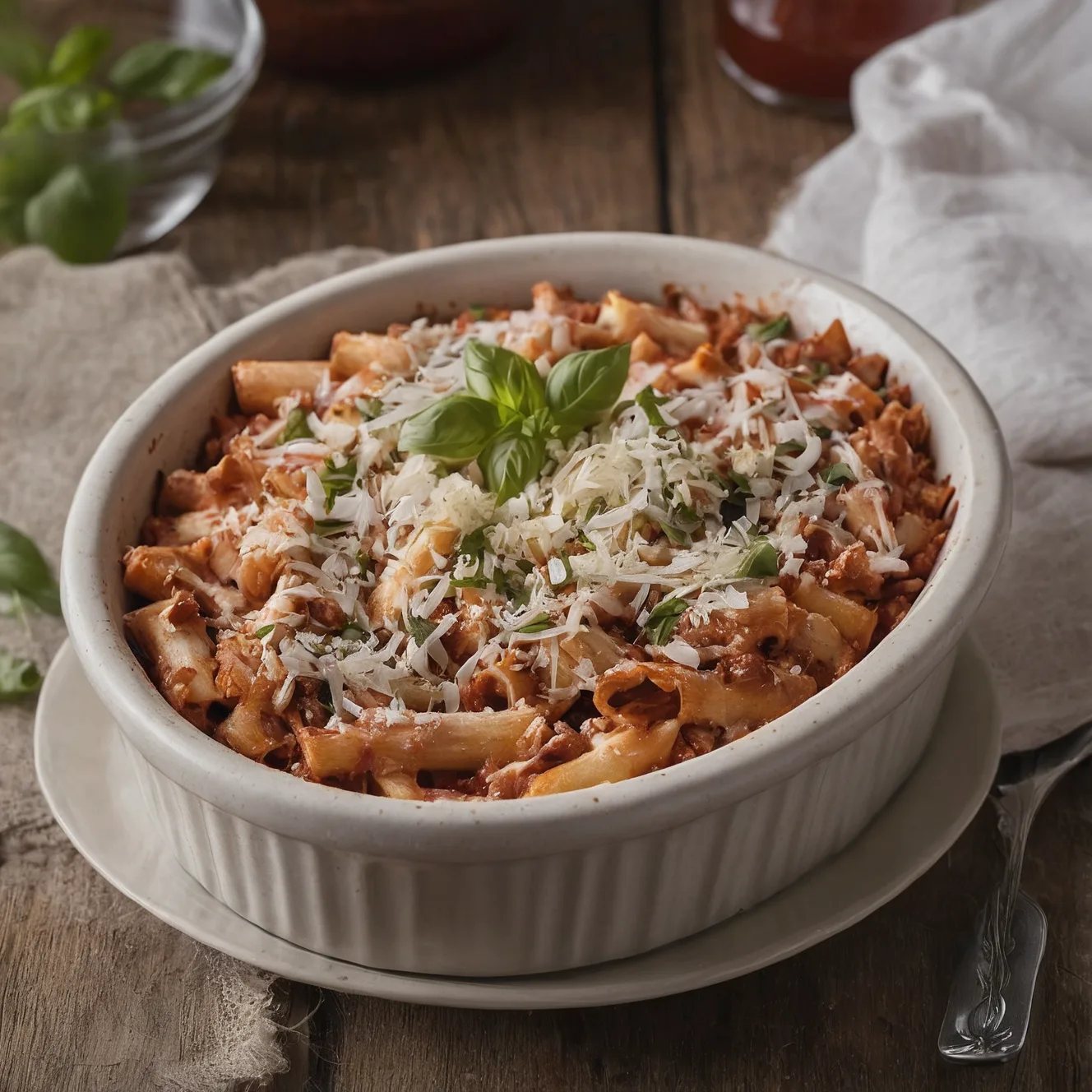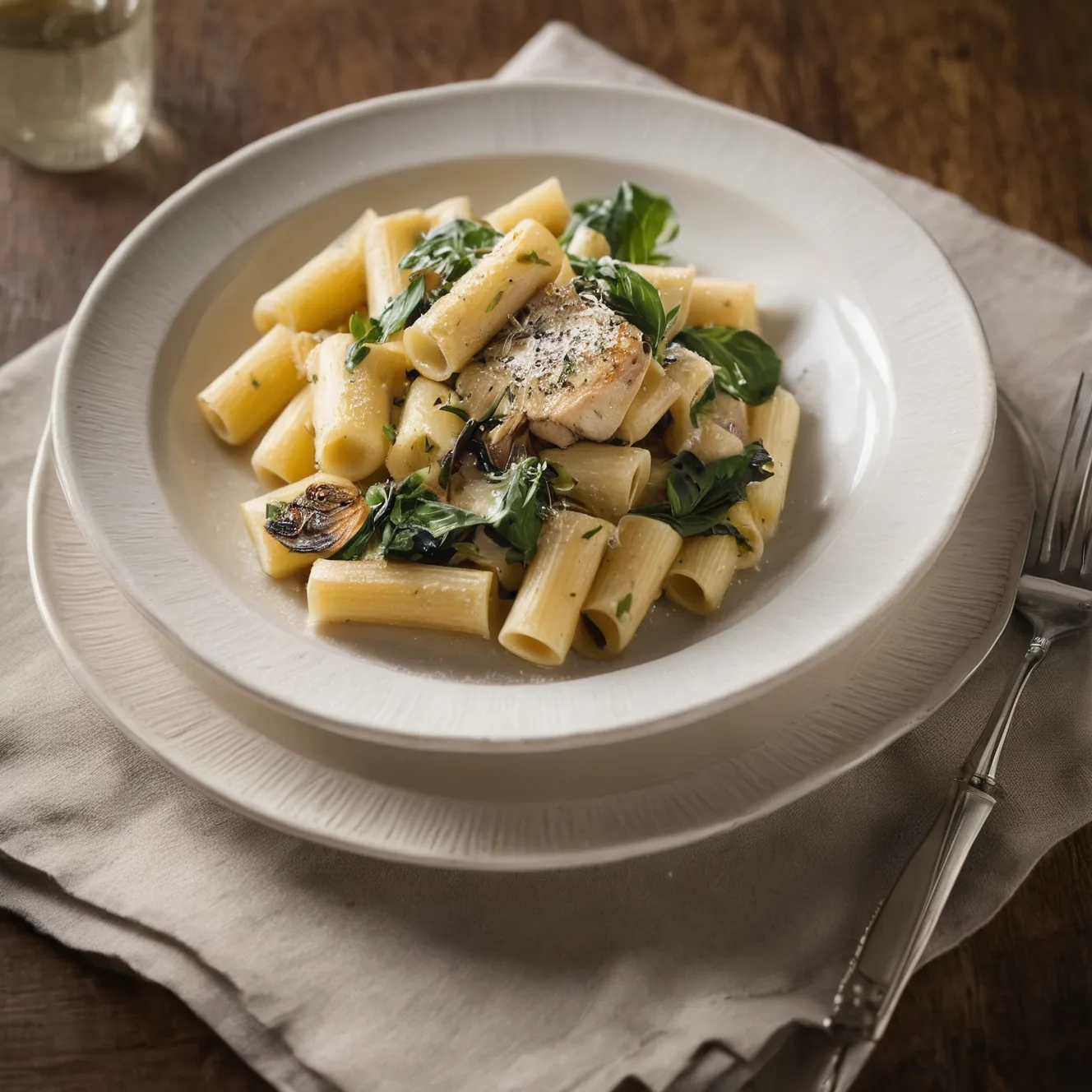
Copycat Maggiano’s Rigatoni D (Our Famous Rigatoni ‘D’)
Prep time: 20 min Cook time: 50 min Servings: 4
One dish has never left Maggiano’s menu since the day the first restaurant opened in Chicago in 1991: Rigatoni D. Named after Executive Chef David Di Gregorio — “Chef D” — who spent three months perfecting the sauce in that original River North kitchen, it is the chain’s best-selling pasta by a margin wide enough that removing it would be unthinkable. Every Maggiano’s that has opened since has served the same dish, the same way.
The recipe is not complicated. What makes it distinctive is technique: balsamic-glazed mushrooms instead of plain sautéed ones, properly caramelized onions that took 30 minutes on a low flame, and dry Marsala wine that was actually reduced, not just poured in. Most copycat versions skip or short-cut at least one of those steps. The result is a pasta that is rich and deep-flavored rather than just creamy.
Why Each Component Works the Way It Does
The Marsala sauce needs time. Dry Marsala wine has a naturally concentrated, almost nutty sweetness from the solera-style production process. That quality becomes the backbone of the sauce — but only if you give it 6 to 8 minutes to reduce and lose its raw wine edge. A sauce made with Marsala that was poured in and barely cooked tastes sharp and boozy. A properly reduced Marsala sauce has a rounded, caramelized depth that makes the cream feel purposeful rather than heavy.
The balsamic mushrooms are the differentiator. Balsamic vinegar hits a hot pan and reduces in under a minute, coating the mushrooms in a sweet-tart glaze with more umami than you’d expect. It does two things: it deepens the mushrooms’ own savory character, and it adds a note of acidity that cuts through the cream sauce in every bite. Many copycat versions simply sauté mushrooms in olive oil. That produces fine mushrooms. The balsamic step produces remarkable ones.
Caramelized onions, not softened. Softened onions take 5 to 7 minutes and taste like cooked onions. Caramelized onions take 30 to 35 minutes and taste almost sweet — their natural sugars have browned and concentrated into something entirely different. In this dish, they dissolve into the sauce as a background sweetness that makes the Marsala feel balanced rather than simply tannic.
Both herbs, not one. The restaurant finishes with fresh basil and flat-leaf parsley together. Basil provides brightness and anise-adjacent sweetness; parsley provides clean, green freshness and a slight bitterness that keeps the dish from reading as dessert-adjacent. Using only one produces a less complete result.
Cost Comparison: Home vs. Restaurant
Maggiano’s prices the Rigatoni D at approximately $26 per dinner portion. The restaurant portion weighs close to 20 ounces of finished pasta and clocks in at about 1,760 calories. The home version here produces four servings at around 760 calories each.
| Maggiano’s | Homemade (4 servings) | |
|---|---|---|
| Per plate | ~$26 | — |
| Full batch (4 plates) | ~$104 | ~$32–36 |
| Per serving | ~$26 | ~$8–9 |
| Savings per plate | — | ~$17 |
The Marsala wine is the main cost — a $10–15 bottle covers this recipe with some left over. Everything else is weeknight grocery territory.
The Three Techniques Most Copycats Skip
1. Balsamic on the mushrooms — do not skip this
The single most common error in home versions of this dish. Balsamic vinegar gives the mushrooms a flavor dimension that plain olive oil cannot replicate. Add it to a very hot pan and let it sizzle and reduce — it takes about 60 seconds to go from liquid to glaze. The mushrooms should look dark and shiny, not pale and wet.
2. Actually reduce the Marsala
The recipe calls for 1.5 cups of Marsala and reduces it down to roughly 3/4 cup before the cream goes in. This step cannot be rushed or skipped. An unreduced Marsala sauce tastes thin, sharp, and overly alcoholic. A reduced one tastes concentrated and almost caramel-like. You will smell the difference — as the wine reduces, the aroma shifts from sharp and boozy to rounded and nutty. That is when you know it is ready.
3. Caramelize, do not just soften, the onions
Set a timer for 30 minutes and trust the process. The onions should be stirred every few minutes, not constantly — they need contact with the pan to develop color. If they start sticking before they are fully caramelized, add a tablespoon of water and keep going. Finished caramelized onions are deep amber, reduced to about a third of their original volume, and smell faintly sweet.
Tips & Variations
- Penne rigate works as a substitute. Maggiano’s offers gluten-free penne as an in-restaurant option. At home, penne rigate or ziti hold the sauce comparably. Avoid smooth pasta shapes — the ridges matter for sauce adhesion.
- Add sun-dried tomatoes for complexity. Two tablespoons of chopped oil-packed sun-dried tomatoes stirred in with the cream adds a concentrated sweetness that complements the Marsala and balsamic without changing the dish’s character significantly.
- Make it the night before. The sauce — mushrooms, onions, Marsala cream — holds in the refrigerator for 2 days. Reheat over medium-low, add a splash of chicken stock to loosen, then toss with freshly cooked rigatoni and sliced chicken. The flavor deepens overnight.
- Use leftover rotisserie chicken. The chicken preparation adds about 15 minutes. Shredded rotisserie chicken works well here — stir it in at the end to warm through. The dish loses the golden sear on the chicken but gains time.
- Vegetarian adaptation. Omit the chicken and substitute vegetable stock. Add an extra 4 ounces of mushrooms to compensate for the protein and bulk. The dish is genuinely satisfying without the chicken because the sauce has enough complexity on its own.
Storage & Reheating
Rigatoni D stores well for 3 days in the refrigerator. The pasta absorbs sauce overnight, so add 2 to 3 tablespoons of chicken stock or water when reheating in a covered skillet over medium-low heat. Do not microwave this dish — the cream sauce breaks and turns greasy. A gentle stovetop reheat maintains the emulsion. Reheat just until warmed through; over-heating causes the Parmesan to go grainy.
More Italian-American Copycat Pastas
- Copycat Cheesecake Factory Chicken Madeira — Madeira wine (Portugal’s answer to Marsala) with cremini mushrooms, asparagus, and melted mozzarella; same creamy-wine technique, different flavor register
- Copycat Carrabba’s Chicken Bryan — goat cheese, sun-dried tomatoes, and lemon butter over grilled chicken at another Italian-American chain
- Copycat Olive Garden Chicken Marsala — a simpler Marsala preparation that shows how OG’s approach differs from Maggiano’s three-component sauce
- Copycat Cheesecake Factory Four Cheese Pasta — a different upscale Italian-American pasta that focuses on the cheese blend rather than the wine sauce
See all Maggiano’s copycat recipes →