


Pin It

Rasika Palak Chaat

Rasika Palak Chaat
Jump to Recipe
Prep 30 min (plus 30 min to dry spinach) Cook 15 min Serves 4
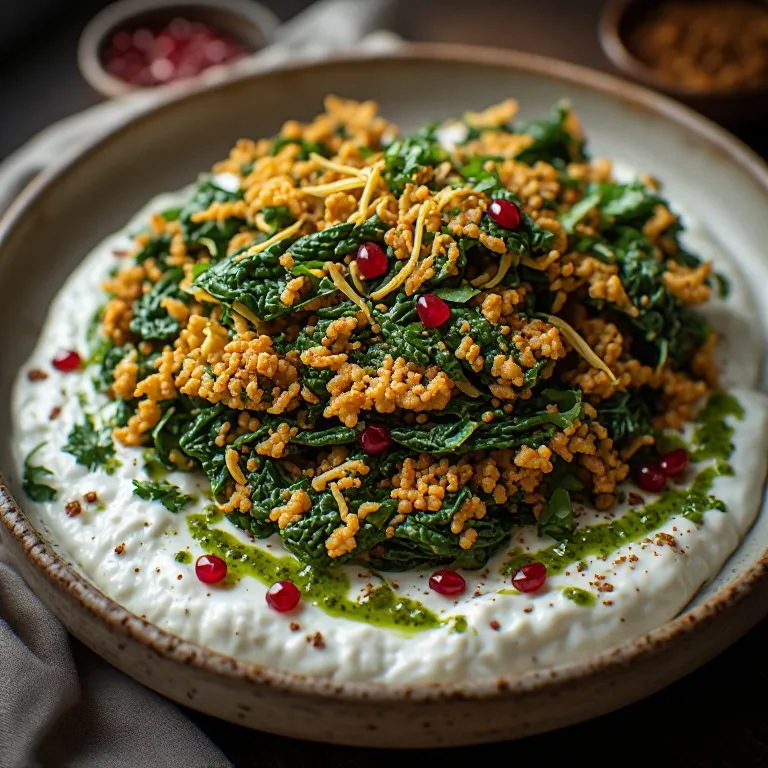
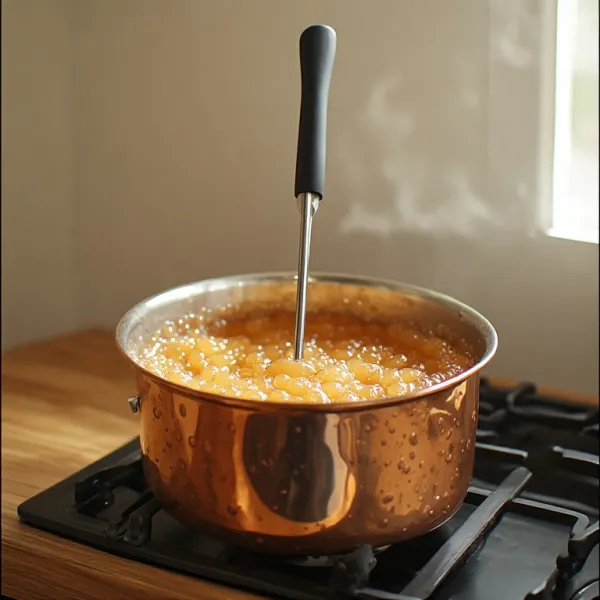
Quick answer: Make the tamarind chutney first: simmer 3 tablespoons tamarind concentrate, 3 tablespoons jaggery (or dark brown sugar), 1 cup water, ½ teaspoon each roasted cumin, red chili powder, and chaat masala, and ¼ teaspoon salt for 8 to 10 minutes until lightly thickened — it thickens more as it cools. Blend the green chutney: 1 cup cilantro, ½ cup mint, 1 serrano chili, 1 small garlic clove, ½ inch peeled ginger, 2 tablespoons lemon juice, ¼ teaspoon salt, and just enough water to blend. Stir the yogurt: combine 1 cup full-fat Greek yogurt with ¼ teaspoon kala namak (black salt) and ½ teaspoon sugar. The most critical step is drying the spinach completely — wash 6 ounces of mature or baby spinach, spin dry, then lay flat on kitchen towels for at least 30 minutes before battering. Any surface moisture makes the batter clump and the leaves steam instead of crisping. Make a thin batter by whisking 1 cup besan (chickpea flour), 2 tablespoons rice flour, ½ teaspoon each chaat masala and red chili powder, ½ teaspoon turmeric, and ½ teaspoon salt into ¾ cup cold sparkling water until it flows like thin pancake batter. Heat 2 inches of neutral oil in a wok or deep pot to 360°F. Dip each dry spinach leaf in the batter, let excess drip off, and fry in batches of 4 to 6 leaves for 2 to 3 minutes until rigid and golden. Drain on a wire rack. To plate: spread the whipped yogurt across a large plate or shallow bowl, pile the hot crispy spinach on top, drizzle tamarind chutney generously, add a thinner line of green chutney, scatter 2 tablespoons of sev and 3 tablespoons of fresh pomegranate arils, and dust with chaat masala. Serve within 5 minutes — the contrast of hot crispy spinach against cool yogurt is the dish.

Rasika Palak Chaat

Rasika's most famous dish — crispy chickpea-battered spinach layered over whipped yogurt, sweet tamarind chutney, bright green chutney, crunchy sev, and pomegranate. The DC restaurant holds a Michelin star and a months-long waitlist; this version takes about 45 minutes at home.

Medium Prep: 30 min (plus 30 min to dry spinach) Cook: 15 min Total: 45 min4 servings ~$4.50/serving
Prep30 min (plus 30 min to dry spinach)
Cook15 min
Total45 min
Servings
4
At home~$4.50/serving
vs
Restaurant~$20.25/serving
You save ~78%

The Story Behind the Recipe

Rasika opened in December 2005 in Penn Quarter, Washington DC, built by restaurateur Ashok Bajaj and led by chef Vikram Sunderam, who spent eight years as executive chef of London's Bombay Brasserie before moving to DC — it was there, in London, that he and Bajaj met. From the first month, the palak chaat was the dish reviewers mentioned first and regulars requested every visit. Sunderam won the James Beard Award for Best Chef: Mid-Atlantic in 2014, and Rasika has been repeatedly ranked among the best restaurants in the city. When Michelin launched its DC guide in 2016, Rasika earned a star, which it has held since. A reservation requires weeks of planning on most nights.

"Palak chaat" translates directly to "spinach street snack" — it belongs to the Indian category of chaat, the roadside snacks defined by the interplay of contrasting elements: sweet, sour, salty, spicy, crispy, and cool, all in one bite. At Rasika, chef Sunderam lifted the format to fine dining without changing its soul: the spinach is dipped in a seasoned besan batter and fried until completely rigid, then dressed table-side with whipped yogurt spiced with kala namak (black salt, for a distinct sulfurous complexity), dark tamarind-jaggery chutney, bright cilantro-mint chutney, sev noodles for crunch, and pomegranate arils for sweetness. The dish costs $18 at the restaurant; the same ingredients at home total about $9 for a full four-serving portion. The technique that matters most is drying the spinach — Sunderam's kitchen dries the leaves for an hour before service. At home, 30 minutes on a towel before frying is the difference between crispy and soggy.

Nutrition Facts

Per serving (4 servings)
Calories245
Total Fat13g
Total Carbs26g
Dietary Fiber4g
Sugars9g
Protein9g
Sodium480mg

* Estimated values based on standard recipe preparation. Actual values may vary.

Ingredients

  • For the crispy spinach
  • For the whipped yogurt
  • For the tamarind chutney
  • For the green chutney
  • For assembly

Instructions

💡
Pro tip: This recipe tastes even better the next day. The flavors need time to meld together in the fridge.
❄️
Storage: Keeps in an airtight container in the fridge for up to 2 weeks. Freezer-friendly for up to 3 months.
🎃 Free Halloween cookbook — download now The Copycat Halloween Cookbook A ready-made, photo-illustrated PDF of our best halloween copycat recipes — free to download, no building required. Pay what you want to support if you love it.

Free PDF — instant download. We'll also send new seasonal copycat recipes now and then; unsubscribe anytime. Or just download it →

Copycat Rasika Palak Chaat

Prep time: 30 min (plus 30 min drying)
Cook time: 15 min
Servings: 4 as an appetizer

The short version: Dry 6 oz spinach leaves on towels for 30 minutes. Make a thin besan batter (besan + rice flour + spices + cold sparkling water), fry the leaves in 360°F oil in small batches until rigid, and plate immediately over cold whipped yogurt (Greek yogurt + kala namak + sugar) with tamarind chutney, green chutney, sev, and pomegranate. The dish lives on temperature contrast and must be served within 5 minutes of plating.

Rasika’s palak chaat is the most famous dish at one of America’s most decorated Indian restaurants — a Michelin-starred Washington DC institution that has kept the same dish on its menu since opening in 2005, because diners won’t let it go. The palak chaat that arrives at the table looks simple: a pile of delicate crispy spinach, three different sauces, and a scattering of crunch. What it delivers in three bites is the full spectrum of Indian chaat — sweet, sour, salty, spicy, hot, cool, soft, and crunchy simultaneously.

The Four Components That Make This Dish

Palak chaat is a layered assembly dish. Each component works individually; together they create something that is more than the sum of its parts.

1. Crispy spinach

The spinach is dipped in a very thin besan (chickpea flour) batter seasoned with chaat masala, chili, and turmeric, then fried at 360°F until each leaf becomes a brittle golden chip. The besan gives the coating a nuttier flavor than a cornstarch batter would, which is why Rasika uses it. Rice flour added to the besan increases crispness without adding flavor.

The frying temperature matters more than any other variable. Below 340°F, the leaves steam in the oil before the batter sets, and they come out limp. Above 375°F, the batter scorches before the leaf structure dries out. 360°F is the specific window where the batter sets almost instantly and the leaf desiccates into a rigid chip.

2. Whipped yogurt

Full-fat Greek yogurt stirred with kala namak (black salt) and a small amount of sugar. The kala namak adds a distinctive sulfurous depth — faint but present — that makes the yogurt taste like something more than seasoned dairy. It is what gives Rasika’s version a complexity that generic yogurt sauces cannot replicate. The yogurt is served cold against the hot fried spinach.

3. Two chutneys

Tamarind chutney provides the sweet-and-sour anchor: tamarind concentrate cooked with jaggery until glossy, seasoned with roasted cumin and chaat masala. Made from scratch, it is thicker and more complex than commercial tamarind sauce.

Green chutney provides heat and brightness: cilantro, mint, serrano chili, ginger, and lemon blended smooth. The two chutneys are applied separately — tamarind first in generous streaks, green chutney in a thinner decorative drizzle.

4. Sev and pomegranate

Sev are ultra-thin chickpea noodles, crispy and neutral, that add a third texture. Pomegranate arils add sweetness and a fresh burst of juice. Neither is optional: removing either one flattens the dish.

The Only Difficult Thing About This Recipe

Assembly is time-sensitive. Crispy fried spinach begins softening the moment it contacts the yogurt and chutneys. The window between “perfect, exactly like Rasika” and “soggy” is about 8 minutes.

The fix: do all the prep ahead of time. The chutneys keep for 5 days in the refrigerator. The yogurt can be made the morning of. The sev and pomegranate can be measured and waiting. Fry the spinach last, in the final 10 minutes before serving, and plate the moment the last batch comes off the rack.

What Goes Wrong (and Why)

Thick, clumped batter: batter is too thick, or the leaves were not fully dry. The batter should barely coat the leaf — dip one leaf as a test before committing to the batch.

Limp leaves: oil temperature too low, or batches were too large (dropping the temperature). Use a thermometer. Fry in batches of 4 to 6 leaves maximum.

Soft after plating: assembled too far ahead. Eat within 5 minutes.

Tamarind chutney too thin: continue simmering; it thickens as it cools. If still thin after cooling, simmer for another 5 minutes.

Serving and Pairing

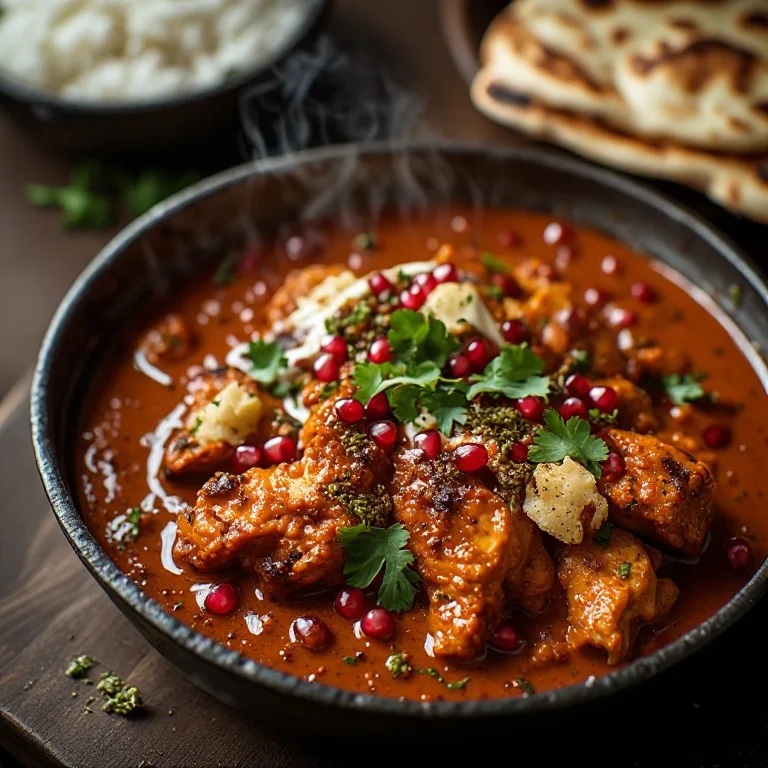
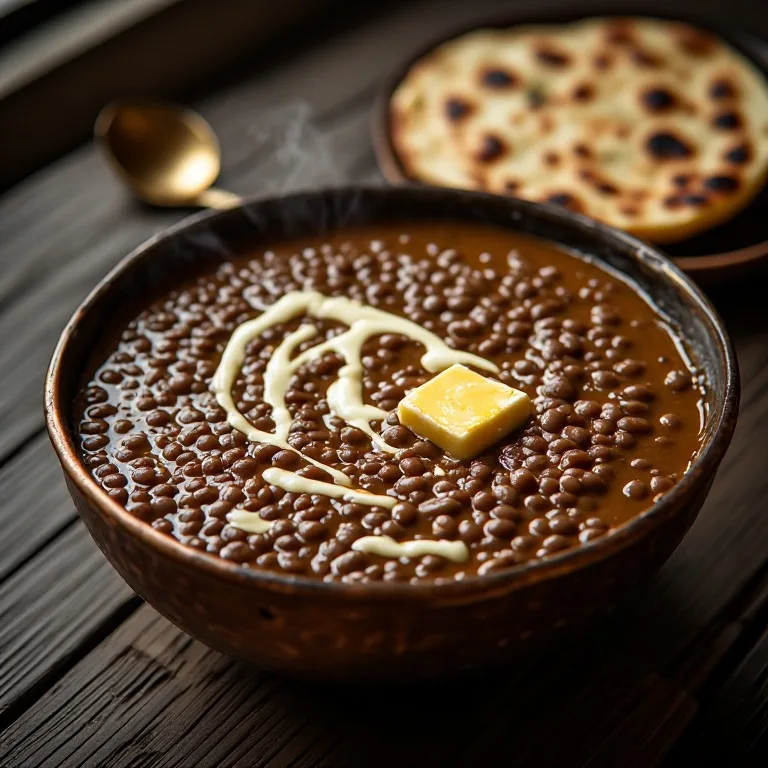
At Rasika, palak chaat is ordered as an appetizer before lamb biryani, dal makhani, or the tandoori selections. At home, it works as a striking appetizer before any Indian meal or as a standalone snack with drinks. Dishoom House Black Dal is the natural main course pairing — same Indian fine-dining register, slower-cooking and rich where the chaat is fast and bright. Dishoom Chicken Ruby (their butter chicken) makes the meal more substantial for a full dinner-party spread.
🥗

Make It Healthier

Love Rasika Palak Chaat but want a lighter version? Try these simple swaps:

  • ✓Air-fry the spinach instead of deep-frying: toss batter-coated leaves with 1 tablespoon of oil and air-fry at 375°F for 8 to 10 minutes, shaking once. The leaves won't be quite as uniformly crispy as deep-fried but save roughly 50 calories per serving.
  • ✓Use non-fat Greek yogurt in place of full-fat — the kala namak, sugar, and chutneys provide enough flavor that the lower-fat version still tastes complete, saving about 30 calories and 4g fat per serving.
  • ✓Make the tamarind chutney with half the jaggery (1½ tablespoons) if you want less sweetness — the chaat masala and acid still carry the chutney without the extra sugar.
  • ✓Skip the sev (saves about 30 calories per serving) and add extra pomegranate arils for sweetness and crunch — the texture contrast is partially replaced, and pomegranate adds fiber and antioxidants.

Frequently Asked Questions

What is palak chaat and why is it Rasika's signature dish?

Palak means spinach in Hindi; chaat is the Indian street-food category defined by the interplay of contrasting tastes — sweet, sour, salty, spicy — in a single dish. At its street-food origin, palak chaat might be a simple fried spinach pakora drizzled with chutneys. Rasika's version takes that blueprint and executes it at the highest level: a controlled batter, oil at exactly the right temperature, whipped yogurt spiced with kala namak, made-from-scratch tamarind-jaggery and cilantro-mint chutneys, and imported sev noodles for textural contrast. What made it a signature is the way it captures Indian street food's spirit — bold, layered, instantly satisfying — while being technically disciplined enough to belong in a Michelin-starred room. Every major review of Rasika from 2005 onward mentions the palak chaat specifically; it has been on the menu continuously since opening day.

What is kala namak (black salt) and can I substitute regular salt?

Kala namak is an unrefined volcanic rock salt used across Indian cooking and especially in chaat. Despite the name, it is pink-violet in color when ground. Its defining characteristic is a subtle sulfurous smell and taste — it adds a faint egg-like depth that regular salt cannot replicate. In the yogurt layer of palak chaat, ¼ teaspoon of kala namak adds a complexity that sits underneath the sweet and sour chutneys. You can substitute regular salt, and the dish will still be excellent — but kala namak is available at nearly any Indian grocery store and online for $3 to $5 per bag, and a single bag lasts months. It is worth having if you plan to make any Indian street food recipes again.

Why does spinach have to be completely dry before frying?

Water and hot oil interact badly in two distinct ways here. First, any surface moisture on a spinach leaf causes the batter to slide off and clump rather than coat evenly — the leaf goes into the oil with bare patches, which then steam and turn limp instead of crisping. Second, water droplets hitting hot oil cause violent popping and spatter. The fix is simple but non-negotiable: after washing, spin the leaves dry in a salad spinner, then lay them in a single layer on clean kitchen towels for at least 30 minutes before battering. The surface should feel completely dry to the touch — no sheen, no damp spots. Rasika's kitchen keeps leaves air-drying on towels for up to an hour before a busy service. The 30-minute minimum at home reliably works.

Can I use baby spinach instead of mature spinach leaves?

Yes, and baby spinach is actually the easier choice for home cooking: the leaves are flat, uniform, and widely available. Mature flat-leaf spinach makes a slightly sturdier 'chip' that is a bit more dramatic on the plate — Rasika uses mature leaves. But baby spinach fried at 360°F becomes crispy just as reliably, fries faster (about 90 seconds), and handles the batter without breaking. Remove any long stems from either type before battering — they stay fibrous even when fried. Avoid curly-leaf spinach; the ruffled texture holds too much batter and creates uneven frying.

My spinach turned soggy even though I dried it — what went wrong?

Three common causes: (1) Oil temperature was too low. If oil drops below 340°F, the spinach steams in its own moisture before the batter can set. Use a thermometer and fry in small batches — each batch you add drops the temperature, and it needs 60 to 90 seconds to recover before the next batch. (2) Batter was too thick. A batter that coats heavily insulates the leaf from the heat — it bakes in its cocoon rather than crisping. The batter should flow and leave only a thin coating; you should almost be able to see the spinach through it. (3) The leaves were assembled too far ahead. Even perfectly fried spinach softens within 10 minutes under the moist yogurt and chutneys. Fry last, plate immediately, serve immediately.

What is sev and where do I find it?

Sev are ultra-thin crispy noodles made from besan (chickpea flour) extruded through a die and fried until crunchy — they resemble very fine, dry, pale gold noodles or fried vermicelli. They provide a delicate additional crunch and a mild savory chickpea flavor that contrasts the soft yogurt and juicy pomegranate. Find sev at any Indian grocery store (usually in the snack aisle, sold in bags labeled 'thin sev' or 'fine sev'); it is also available online. Bhujia (a spiced sev with a stronger chili flavor) is a widely available substitute. If you cannot find either, crushed plain puri crackers or even crushed toasted vermicelli work as a textural stand-in.

Can I make any components ahead of time?

The chutneys and yogurt can all be made 3 to 4 days ahead — the tamarind chutney actually improves after a day in the refrigerator as the flavors deepen. Store each component separately in small jars. The sev can sit out at room temperature indefinitely. The only component that must be made fresh is the fried spinach — it cannot be made ahead, held, or reheated without losing its crispness. A workable plan for a dinner party: make the chutneys and yogurt the day before, keep the sev and pomegranate measured out, and fry the spinach in the last 10 minutes before serving.

Love this recipe? Share it!

Free PDF: our 12 most-wanted copycat recipes — instant download.

Made it? Buy us a coffee

Every recipe here is free, with no paywalls. If this one was a hit at your table, a small tip keeps new copycats coming.

$

Rasika is a trademark of its owner, used here only to describe the dish this recipe recreates. This is an independent copycat written in our own words — Copycat Spices is not affiliated with, endorsed by or sponsored by Rasika.

Ratings & Reviews

—
No ratings yet

Rate this recipe

Click a star to rate

Leave a Review

0/500

CS

Copycat Spices Editorial

Researched + fact-checked. Every recipe on Copycat Spices is built from published sources — official ingredient lists, brand-published recipes, interviews and food-science references — and fact-checked before it goes live, then written as clear, step-by-step instructions for home cooks of all skill levels.

Learn more about our mission →