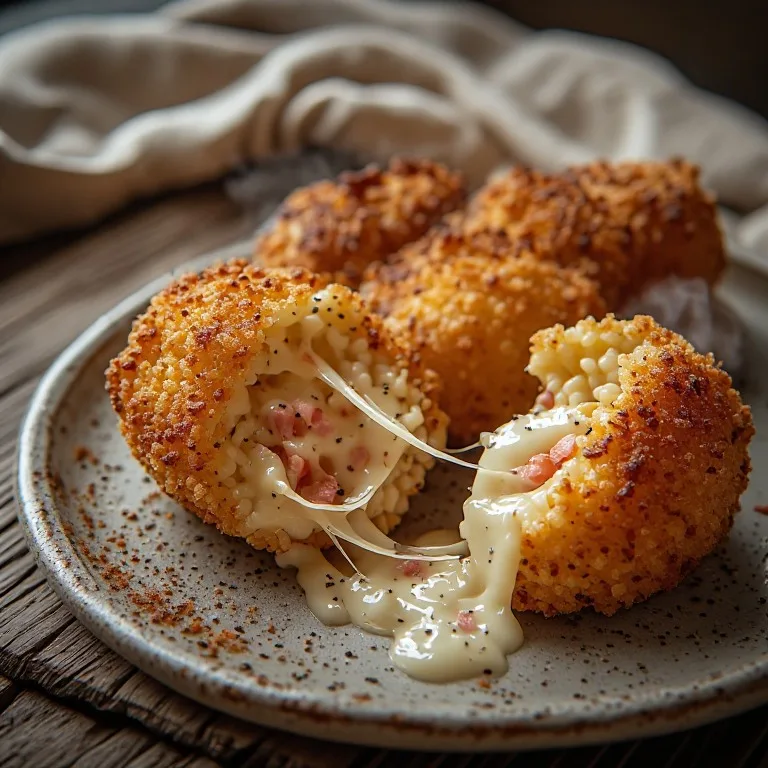



Evan Funke’s supplì al telefono from Mother Wolf in Hollywood — guanciale-and-tomato risotto croquettes with a molten mozzarella di bufala center that stretches into long, white strings when you pull them apart. Rome’s defining street food, one of LA’s most-ordered starters, made at home for about $0.90 per piece.
What Makes Mother Wolf’s Supplì Different
The supplì at Mother Wolf are not the quick shortcut versions you find at Italian-American restaurants — those are often made from leftover plain risotto or par-cooked arborio from a bag. Funke builds the rice base properly: guanciale rendered first, onion sweated in the pork fat, carnaroli rice toasted and cooked risotto-style with wine and then San Marzano tomato worked throughout. The result is rice with a deep, layered flavor — the smokiness of the guanciale, the acidity of the tomato, the sharpness of Pecorino — rather than a neutral base that relies on the mozzarella to carry all the taste.
The mozzarella center is mozzarella di bufala, not block mozzarella. The difference is the stretch: bufala has higher moisture and melts into a looser, silkier pool that produces the telephone-cord pull the dish is named for.
Shaping technique matters too. The rice must be cold — genuinely cold, at least two hours in the refrigerator — and each croquette needs to be pressed firmly for 10 seconds before it goes on the tray. This compression is what holds the supplì together through the breading and the hot oil. Skipping it leads to croquettes that crack open during frying and lose the mozzarella.
The Supplì vs. Arancini Distinction
Supplì are Roman. Arancini are Sicilian. The shapes are different (elongated oval versus round or cone), the sizes are different (supplì are about half the size of a typical arancino), the filling is different (tomato and guanciale incorporated into the rice versus ragù stuffed inside), and the origin stories are different by about a thousand kilometers. Both are extraordinary — but calling a supplì an arancino in Rome is a reliable way to annoy someone.
The “al telefono” name is both description and quality check. When you pull a properly made supplì apart, hot, the mozzarella stretches in long white threads, exactly like the cord of a rotary telephone. If the cheese does not stretch — if it is already set or barely melted — the supplì were not hot enough when served, or the mozzarella was too dry. The stretch is the goal.
The Cooling Step Is Not Optional
The biggest mistake home cooks make with supplì is trying to shape them while the rice is still warm. Warm risotto rice is loose, sticky, and nearly impossible to form into a stable oval around the mozzarella. Cold risotto rice firms up significantly — the starches set, the fat from the guanciale solidifies — and the difference in how easily the shapes hold is dramatic. Make the rice the night before and refrigerate it overnight; morning-of shaping goes faster and the supplì are noticeably sturdier.