


Pin It

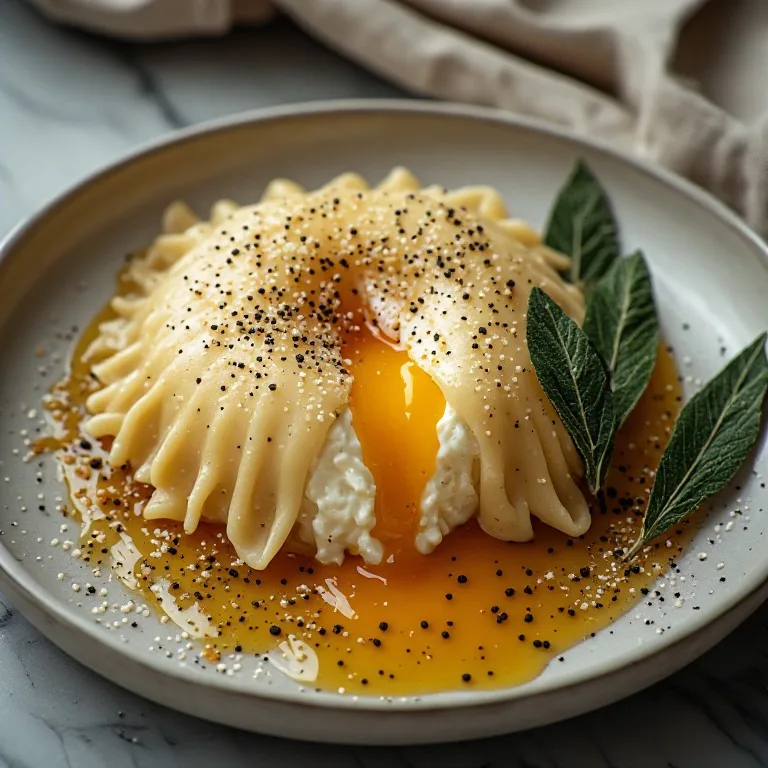
Rezdôra Uovo in Raviolo (Runny Egg Yolk Raviolo with Sage Brown Butter)

Rezdôra Uovo in Raviolo (Runny Egg Yolk Raviolo with Sage Brown Butter)
Jump to Recipe
Prep 60 min Cook 15 min Serves 4 ravioli (serves 4 as a first course or 2 as a main)
Quick answer: For Rezdôra's uovo in raviolo: drain 1 cup whole-milk ricotta overnight in a fine-mesh strainer (this is the step most people skip — wet ricotta collapses and the yolk escapes). Make fresh pasta dough from 200g 00 flour, 2 whole eggs, and 2 extra yolks — knead 8 minutes, rest 30 minutes. Roll to about 1.5mm thick (setting 6 on most 9-roller machines). Cut eight 3½-inch circles. Pipe drained ricotta in a ring on four circles, leaving a 1½-inch open well in the center. Gently lower one refrigerator-cold egg yolk into each well — starting cold buys you extra protection time in the water. Brush egg wash around the outer perimeter, lay a second circle on top, and press from the inside out to push out all air before sealing the rim firmly. Boil in well-salted water for exactly 90 seconds — the pasta cooks through and the yolk stays runny. Brown 6 tablespoons butter in a light-colored pan until nut-colored, add 12 fresh sage leaves for 30 seconds. Plate each raviolo with brown butter, a splash of pasta water, Parmigiano, and cracked pepper. Cut at the table — the yolk runs into the butter.

Shop the tools

Gear matched to this recipe. These are Amazon affiliate links — we may earn a small commission if you buy, at no extra cost to you.

As an Amazon Associate, Copycat Spices earns from qualifying purchases. Product images are generic illustrations, not the exact item listed.

Rezdôra Uovo in Raviolo (Runny Egg Yolk Raviolo with Sage Brown Butter)

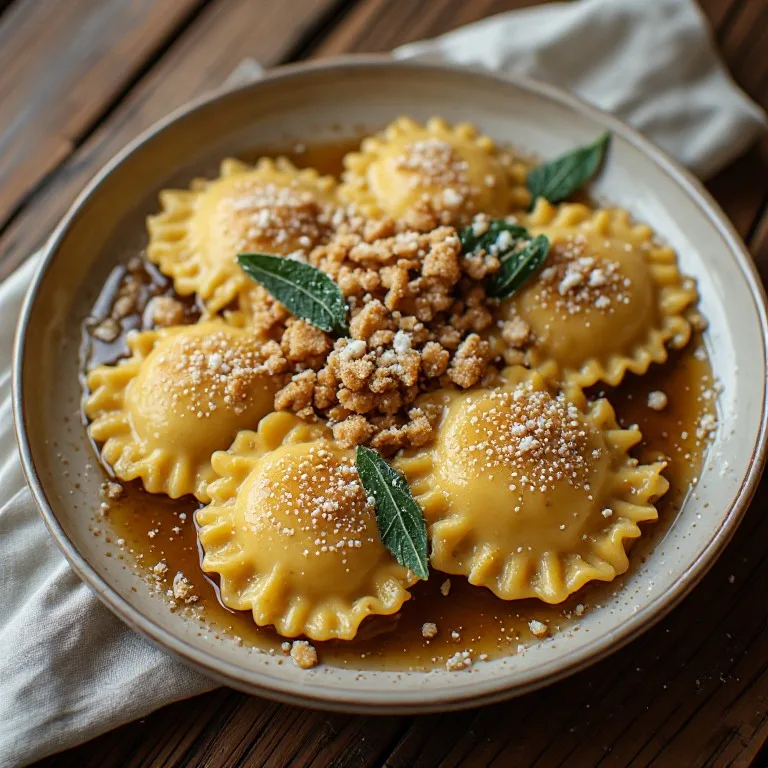
Rezdôra's famous uovo in raviolo at home: one large fresh pasta raviolo stuffed with drained ricotta and a whole raw egg yolk, boiled 90 seconds and finished in sage brown butter. The yolk runs when you cut it. At Rezdôra in NYC's Flatiron, a pasta course runs about $30. At home, four ravioli cost under $10.

Advanced Prep: 60 min Cook: 15 min Total: 1h 15m4 ravioli (serves 4 as a first course or 2 as a main) servings ~$4.50/serving
Prep60 min
Cook15 min
Total1h 15m
Servings
4
At home~$4.50/serving
vs
Restaurant~$20.25/serving
You save ~78%

The Story Behind the Recipe

Rezdôra opened in the Flatiron district in 2019. Chef Stefano Secchi trained at Massimo Bottura's three-Michelin-starred Osteria Francescana in Modena, Italy before returning to New York to open a restaurant dedicated to the pasta traditions of Emilia-Romagna. The name rezdôra is the Emilian dialect word for the woman of the house — the matriarch who made the pasta, ran the kitchen, and passed the techniques down. A table at Rezdôra requires booking weeks ahead and costs around $30 for a pasta course. The uovo in raviolo is one of its most requested dishes: a single large raviolo that reveals a runny egg yolk when cut, the yolk flowing into the sage brown butter on the plate.

The dish is centuries old in Emilia-Romagna. The technique — cradling a whole egg yolk inside a ricotta-filled raviolo so it survives the boil intact — was popularized in the modern era at San Domenico in Imola, one of the most influential Italian restaurants of the late twentieth century, and has appeared on pasta-focused menus ever since. The challenge is not the flavor, which is simple: ricotta, egg yolk, butter, Parmesan. The challenge is timing — the pasta needs to cook through while the yolk stays liquid, a 90-second window that requires very thin pasta, a cold yolk, and a watched clock. At home, four of these cost less than $10. The technique is learnable in one try.

Nutrition Facts

Per serving (4 ravioli (serves 4 as a first course or 2 as a main) servings)
Calories535
Total Fat34g
Total Carbs35g
Dietary Fiber1g
Sugars2g
Protein20g
Sodium520mg

* Estimated values based on standard recipe preparation. Actual values may vary.

Ingredients

  • For the pasta dough
  • For the ricotta filling
  • For assembly
  • For the sage brown butter
  • Optional fall addition

Instructions

💡
Pro tip: This recipe tastes even better the next day. The flavors need time to meld together in the fridge.
❄️
Storage: Keeps in an airtight container in the fridge for up to 2 weeks. Freezer-friendly for up to 3 months.
🎃 Free Halloween cookbook — download now The Copycat Halloween Cookbook A ready-made, photo-illustrated PDF of our best halloween copycat recipes — free to download, no building required. Pay what you want to support if you love it.

Free PDF — instant download. We'll also send new seasonal copycat recipes now and then; unsubscribe anytime. Or just download it →

Rezdôra’s uovo in raviolo is one large fresh pasta raviolo stuffed with drained ricotta and a whole raw egg yolk — boiled for exactly 90 seconds so the pasta cooks through and the yolk inside stays completely liquid. Cut open at the table, the yolk runs into the sage brown butter on the plate. The dish is centuries old in Emilia-Romagna but Rezdôra makes it one of the most searched pasta recipes in New York. At the restaurant it costs around $30. Four of these at home cost under $10, and the technique is learnable in a single afternoon.

What makes it work: The overnight ricotta drain (wet ricotta collapses and lets the yolk escape), the cold egg yolk (buys you time in the hot water), and the 90-second cook (never 2½ minutes). See the seal technique below.

The Seal Is the Whole Game

Everything about this dish depends on the raviolo not bursting in the water. A burst raviolo loses the yolk and the point of the dish. Three things cause it: air pockets, wet ricotta, and weak sealing.

Air pockets are the most common cause. Once you drape the top circle over the filled base, resist the urge to press the rim first. Instead, start pressing from the inner edge — right next to the ricotta ring — and work outward with your fingertips, pushing air ahead of you until it escapes at the unsealed perimeter. Only after the air is out do you press the rim closed. If you can see any raised dome under the top sheet, peel that section back and reseal it. A finished raviolo should feel dense and solid with no give.

Wet ricotta is the second cause. Whole-milk ricotta from a container contains a large amount of liquid. Un-drained, it flows off the spoon and cannot hold a ring shape — the filling collapses inward when you lower the yolk, and the weight of the top pasta sheet pushes the yolk into direct contact with the steam, where it will overcook. Drained overnight, the ricotta should feel close to cream cheese: it holds a clean curl when piped.

Weak sealing happens when the pasta is too dry (the egg wash didn’t adhere) or too wet (the pasta has been sitting out and absorbed humidity). Work quickly: assemble and boil within 15 minutes, or freeze immediately after sealing.

Why the Pasta Thickness Matters

The yolk survival window depends on the pasta being thin enough to cook through in 90 seconds. At 1.5mm (setting 6 on most 9-roller home pasta machines), fresh egg pasta reaches al dente at exactly the moment the yolk is still fully liquid. At 2mm or thicker, the pasta needs closer to 2½ minutes, and the yolk begins to set. At 1mm or thinner, the pasta is cooked in 60 seconds but is prone to tearing at the seal when you pick up the filled raviolo.

The visual test is reliable: at the right thickness, you should be able to see your hand through the pasta sheet but not read text through it. If you can read text through it, it is too thin.

The other factor is egg content. This dough uses two whole eggs plus two extra yolks for the same amount of flour that standard pasta uses two or three whole eggs. The extra yolk fat makes the dough more pliable at thin settings and produces a richer, more golden pasta that holds its shape in the water without becoming gummy.

The Seasonal Variation

Sage brown butter is the year-round base. In fall — when this recipe is timed — torn golden chanterelles sautéed hard in a very hot pan (2 minutes without stirring to build a crust, then 1 minute more) are scattered around the raviolo. The earthy, woodsy chanterelle flavor reinforces the nuttiness of the browned butter and the richness of the egg yolk in a way that feels like the dish was designed for October.

In winter, a few shavings of fresh black truffle or a few drops of truffle oil finish the plate instead of chanterelles. In spring, blanched English peas or fava beans tossed in the brown butter. The base technique does not change.
🥗

Make It Healthier

Love Rezdôra Uovo in Raviolo (Runny Egg Yolk Raviolo with Sage Brown Butter) but want a lighter version? Try these simple swaps:

  • ✓Reduce butter to 1 tablespoon per plate and deglaze with 4 tablespoons reserved pasta water — creates a lighter emulsified pan sauce that still coats the pasta without the full 1.5-tablespoon brown butter dose
  • ✓Drain the ricotta through a double layer of paper towels instead of a fine-mesh strainer — pulls out even more moisture, reduces calories slightly, and produces a firmer filling that is easier to pipe cleanly
  • ✓Add 2 oz torn fresh spinach to the chanterelles or sautéed mushrooms when making the fall variation — wilts into the sauce in under a minute while adding iron, folate, and color
  • ✓Serve one raviolo per person on a bed of lightly dressed arugula with a squeeze of lemon — the peppery greens balance the richness of the yolk and butter and make it a complete lighter course

Frequently Asked Questions

How do you keep the egg yolk runny — isn't 90 seconds not enough to cook pasta?

At 1.5mm thickness (setting 6 on a 9-roller machine), fresh egg pasta cooks in 90 seconds. The yolk is insulated on all sides by the ricotta filling, which heats more slowly than the thin pasta walls, so the pasta shell is al dente while the yolk inside is still warm and fully liquid. At exactly 90 seconds, the yolk is runny. At 2 minutes, it's jammy. At 2½ minutes, it begins to set. Three variables protect the yolk: the pasta must be thin (setting 6, not 5); the yolk must start cold from the refrigerator (this gives you an extra 20–30 seconds of protection before the interior temperature rises); and you must move quickly from water to plate and cut at the table, not in the kitchen. The window is real but narrow — the same reason Rezdôra plates these one or two at a time during service.

What pasta setting and thickness should I use?

Setting 6 on a 9-setting machine (such as the Marcato Atlas 150, which runs 0–9) gives you approximately 1.5mm — thin enough to cook in 90 seconds, thick enough to hold the filling without tearing when you pick up the raviolo. On an 8-setting machine (such as the KitchenAid pasta attachment, which runs 1–8), use setting 5 or 6. The visual test: you should be able to see your hand clearly through the sheet but not read text through it. If the sheet tears when you drape it over your hand, it is too thin. If the pasta still feels doughy after 90 seconds in the water, it is too thick. Most first attempts err too thick — push one setting thinner than you think you need.

Why does the ricotta need to drain overnight — can I skip it?

No. Whole-milk ricotta from a container is about 70% water by weight. Un-drained, it flows off the spoon and cannot hold a ring shape. When you pipe wet ricotta around the egg yolk and seal the raviolo, the moisture turns to steam in the boiling water and ruptures the seal — the yolk escapes and you lose the dish. Drained overnight in a fine-mesh strainer or cheesecloth, the ricotta becomes thick enough to pipe cleanly and hold its shape through the boil. It should resemble cream cheese in texture when you press it. If you are short on time, 3 to 4 hours in the refrigerator over a strainer is the minimum. Same-day ricotta is not stable enough for this application.

How do I seal the raviolo without air bubbles — mine always burst?

Seal from the inside out. Once you lower the top circle of pasta over the filled base, do not press the rim first. Instead, start pressing gently right at the inner edge, next to the ricotta ring, and work your fingertips outward toward the rim — pushing trapped air ahead of you until it escapes at the unsecured perimeter. Once all visible air domes are gone, press the rim firmly all the way around. Run a round cutter over the edge to clean and crimp the seal. Lift the finished raviolo and check: it should feel solid and have no give when squeezed gently. If you can see any raised air pocket under the top sheet, peel that section back and reseal. The other common failure is over-handling — assembling the ravioli 30 minutes or more before cooking softens the pasta and weakens the seal. Assemble and cook within 15 minutes, or freeze immediately after sealing (see make-ahead FAQ below).

Can I use store-bought pasta or wonton wrappers instead?

Round gyoza wrappers are the most practical substitute — available in most Asian grocery stores, about 3½ inches in diameter, and a close match in thickness. Two gyoza wrappers per raviolo: pipe the ricotta ring on one, add the yolk, brush egg wash around the perimeter of the bottom wrapper, press the second firmly on top working from inside out, and seal. Cook in boiling water for 60 to 75 seconds — gyoza wrappers are slightly thinner than rolled fresh pasta and cook faster. The texture is chewier and the flavor blander than egg pasta, but the technique works and the yolk-reveal moment is identical. Square wonton wrappers also work — fold and press around the filling, trim the corners with scissors, and seal. Avoid refrigerated fresh pasta sheets from grocery stores; they are almost always too thick and tear unevenly at the seal.

Can I make these ahead of time?

Yes — freeze them, do not refrigerate. Once assembled and sealed, place the ravioli in a single layer on a parchment-lined baking sheet and freeze until solid, about 1 hour. Transfer to a zip bag and freeze for up to 1 month. Cook directly from frozen without thawing — thawed ravioli absorb water and the seal softens. Add 30 to 45 extra seconds to the cook time: 2 to 2½ minutes from frozen. The yolk will be slightly more set than from a fresh raviolo but still runny at 2 minutes. Refrigerating assembled (unfrozen) ravioli for more than 30 minutes is not recommended — the pasta hydrates and becomes fragile, and the egg white in the egg-wash seal begins to loosen.

What is the fall chanterelle variation and does Rezdôra change the dish seasonally?

The base of the dish — ricotta, egg yolk, sage brown butter, Parmigiano — stays constant, but seasonal garnishes shift with what is available. In fall, golden chanterelle mushrooms sautéed in a separate pan and scattered around the raviolo are the most common addition; October through November is their peak. Tear or break 4 oz of chanterelles into 1-inch pieces, heat 1 tablespoon of olive oil in a skillet over high heat until smoking, add the mushrooms in a single layer without stirring for 2 full minutes to build a crust, then toss and cook 1 more minute. Season with salt and a pinch of thyme. Scatter around the plated raviolo after adding the brown butter. In winter, a few shavings of black truffle or a few drops of truffle oil finish the plate instead. In spring, blanched English peas or fava beans tossed in the brown butter substitute for mushrooms. The fall chanterelle version is the best seasonal pairing for this dish because the earthy, woodsy mushroom flavor reinforces the sage and nuttiness of the browned butter.

Love this recipe? Share it!

Free PDF: our 12 most-wanted copycat recipes — instant download.

Made it? Buy us a coffee

Every recipe here is free, with no paywalls. If this one was a hit at your table, a small tip keeps new copycats coming.

$

Rezdôra is a trademark of its owner, used here only to describe the dish this recipe recreates. This is an independent copycat written in our own words — Copycat Spices is not affiliated with, endorsed by or sponsored by Rezdôra.

Ratings & Reviews

—
No ratings yet

Rate this recipe

Click a star to rate

Leave a Review

0/500

CS

Copycat Spices Editorial

Researched + fact-checked. Every recipe on Copycat Spices is built from published sources — official ingredient lists, brand-published recipes, interviews and food-science references — and fact-checked before it goes live, then written as clear, step-by-step instructions for home cooks of all skill levels.

Learn more about our mission →