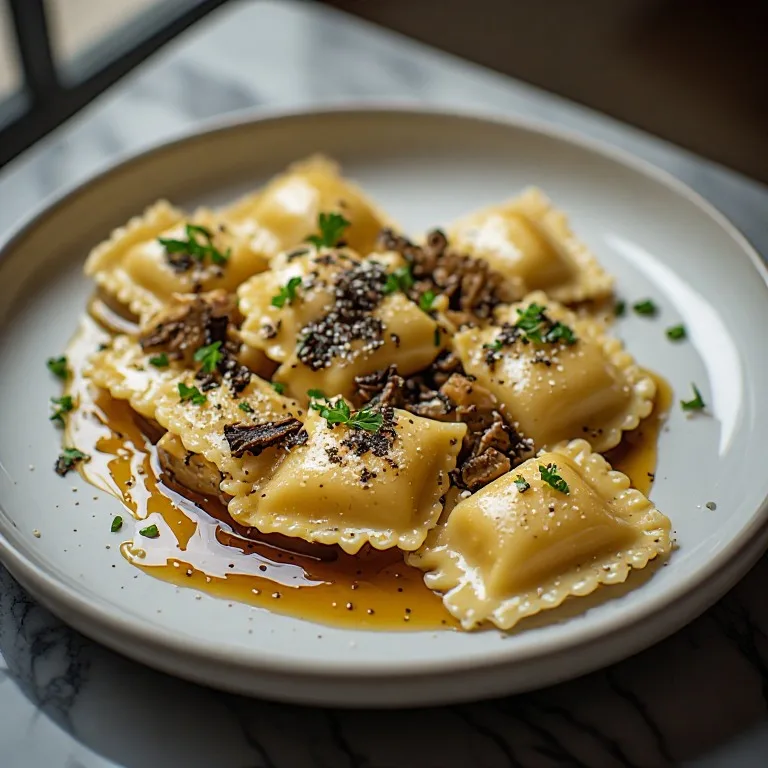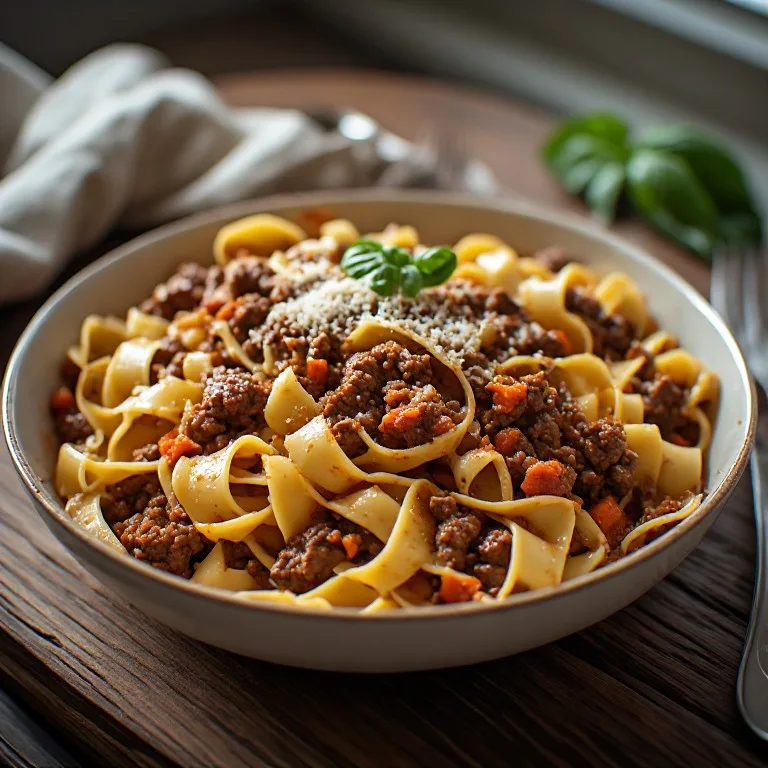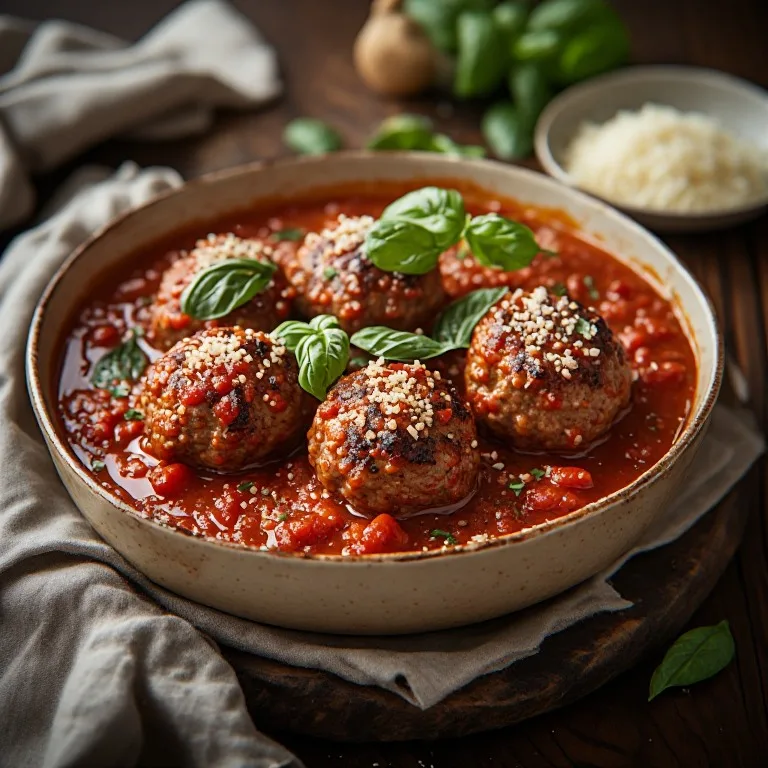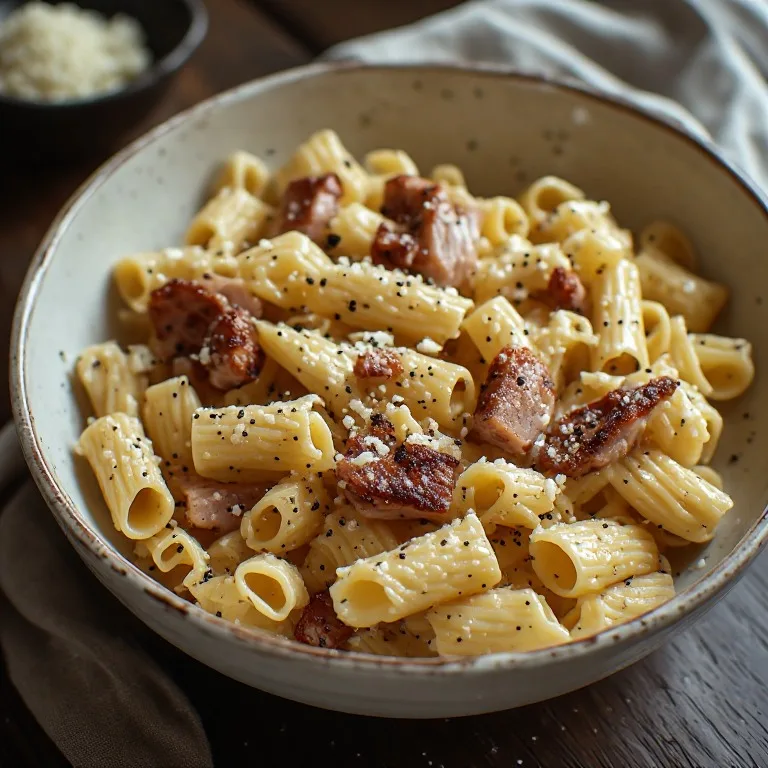



Torrisi Bar & Restaurant does not have a complicated thesis. The restaurant, which Rich Torrisi opened in the Puck Building on Mulberry Street in December 2022, earned a Michelin star in 2023 and landed on multiple best-of-New-York lists doing something that the food-media world found almost confusing: serving Italian-American food with near-fanatical attention to ingredient quality and almost no elaboration of the cooking.
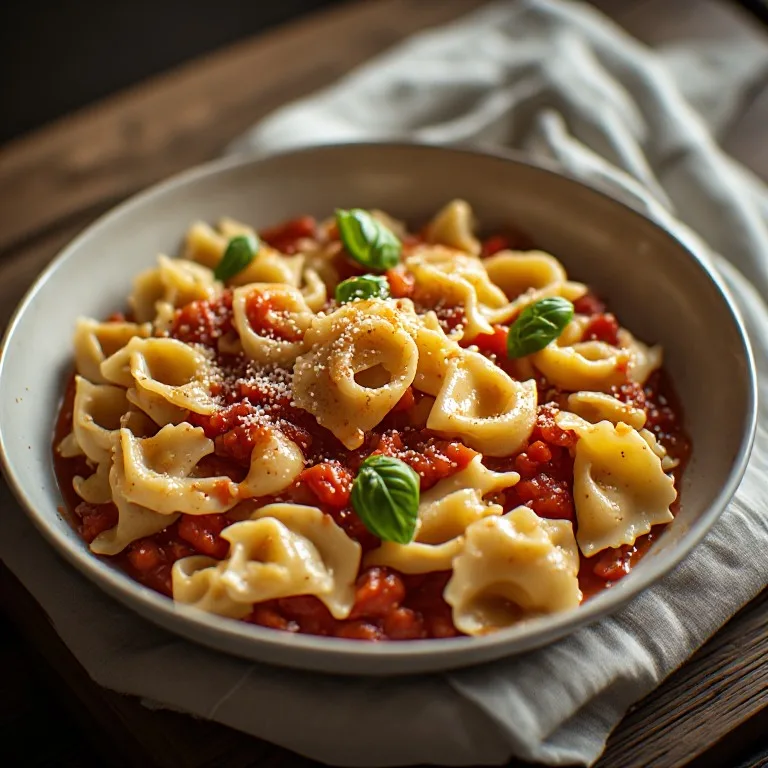
The tortellini pomodoro is the dish that crystallized what that means. Reviewers who had been told to expect something transformative and arrived expecting elaborate presentation found a bowl of small handmade pasta rings in tomato sauce. That was the dish. The tomatoes were the best ones available. The pasta dough was rich with extra egg yolks. The cooking was patient. The plate asked no questions.
The result made multiple critics ask, in print, how tomato sauce had managed to be that good.
This recipe traces the answer. The pasta is not the variable that will make or break the dish at home — the sauce is.
The Pasta Dough
The defining characteristic of Torrisi’s tortellini is color: a deep, almost orange-gold from a higher yolk ratio than standard pasta. The texture is silky and thin, firm enough to hold the filling without softening into mush in the sauce.
Makes enough for 4 servings:
- 200 grams 00 flour, plus more for dusting
- 1 whole egg
- 3 egg yolks
- 1 teaspoon olive oil
- Pinch of fine salt
Heap the flour on a clean work surface and make a well in the center. Crack in the egg and add the yolks, olive oil, and salt. Beat the eggs lightly with a fork, then gradually work in flour from the inner wall of the well until a shaggy dough forms. Knead by hand for 8 to 10 minutes — the dough will be stiff, noticeably stiffer than a standard pasta dough, which is correct. It will become smooth and elastic with time. Wrap tightly in plastic and rest at room temperature for at least 30 minutes.
Working in small sections, roll the dough through a pasta machine from the widest setting down to the thinnest or second-thinnest setting. The finished sheet should be nearly translucent — you should be able to see your hand through it. Lay the sheets flat on a lightly floured surface and cover with a clean towel while you prepare the filling.
The Ricotta Filling
The filling at Torrisi is simpler than most home cooks expect from a Michelin-starred restaurant. That simplicity is a choice: the pasta and the sauce are carrying the dish, and the filling is the quiet note in the middle. Overloading it with herbs, garlic, or too much cheese would fight the pomodoro.
- 250 grams whole-milk ricotta
- 2 tablespoons finely grated Parmigiano Reggiano
- Fine salt to taste
- Optional: a very small grating of nutmeg (traditional, subtle — don’t overdo it)
Press the ricotta through a fine-mesh strainer into a bowl, pushing it through with a rubber spatula. This step is not optional: it removes excess whey that would prevent the tortellini from sealing and make the filling watery. Season with salt and Parmigiano, taste, and adjust. The filling should taste clean and milky, not aggressively cheesy. Cover and refrigerate until needed.
Forming the Tortellini
Use a 2.5-inch round cutter to punch circles from the pasta sheet. Keep the rest of the sheet covered so it does not dry out — dry pasta tears when folded.
Place a scant teaspoon of filling in the center of each circle. Brush the edges lightly with water. Fold the circle in half over the filling, pressing firmly from the center outward to push out any air. Press the flat edge firmly all the way around — run your fingernail along the seam to ensure there are no gaps. Trapped air and weak seams are the two reasons tortellini burst in cooking.
Pick up the half-moon and wrap it around your index finger with the rounded edge facing down and the sealed straight edge facing you. The pasta will cup around your finger naturally. Press the two pointed tips together firmly, slightly overlapping and pinching them shut. Set the finished tortellini on a lightly floured sheet tray. They can rest at room temperature for up to 1 hour, or be refrigerated, covered, for up to 4 hours.
The Cherry Tomato Pomodoro
This is where the dish actually lives. The recipe is almost nothing. The technique is patience.
- 3 tablespoons good extra-virgin olive oil, plus more to finish
- 1 large garlic clove, halved
- 1 can (14 oz / 400g) high-quality cherry tomatoes — Bianco DiNapoli, Mutti cherry, or Cento San Marzano DOP; or 400g very ripe fresh cherry tomatoes, halved
- Fine salt
- 5 or 6 fresh basil leaves, torn
In a wide skillet or saucepan, warm the olive oil over the lowest heat on your stove. Add the garlic halves, cut side down. Cook for 5 to 8 minutes until the garlic has softened and the oil around it smells fragrant and slightly sweet — the garlic should not take any color. Remove and discard the garlic, or leave it in for a slightly stronger flavor and pull it before serving.
Crush the canned cherry tomatoes with your hand directly into the pan, or add the halved fresh tomatoes. Season with a generous pinch of salt. Stir once and leave it. The heat should be low enough that the sauce barely simmers — a slow bubble every 3 to 4 seconds is exactly right. Cook for 35 to 45 minutes, stirring every 10 minutes, until the sauce has reduced by about a third, turned a deeper red-orange, and tastes concentrated and sweet with no rawness. The surface should be glossy with olive oil.
Remove from heat. Add the torn basil and stir once. Taste and adjust salt. The sauce holds well at room temperature for up to 2 hours or can be refrigerated for 3 days.
Cooking and Finishing
Bring a large pot of water to a boil and salt it until it tastes clearly salty — more salt than you think is right. Add the tortellini in batches and cook for 2 to 3 minutes, until they float and the pasta feels tender but still has slight resistance.
While the tortellini cook, warm the pomodoro over medium-low heat and add 2 tablespoons of the pasta cooking water — the starch in the water helps the sauce emulsify and cling to the pasta.
Transfer the cooked tortellini directly into the sauce with a spider or slotted spoon. Toss gently off the heat for 30 to 45 seconds until each piece is evenly coated and the sauce has thickened slightly. Add another small splash of pasta water if it looks too tight.
Plate in warmed bowls. Drizzle with a thread of good olive oil and add a few more torn basil leaves. Parmigiano at the table is traditional but optional — at Torrisi, the dish is sometimes finished tableside with shaved truffle when in season, which is excellent if you have access to it, but the bowl is complete without it.
What This Dish Is Really About
The tortellini pomodoro is not a technically difficult recipe. A patient home cook can make it on a Sunday afternoon. What it is is an argument for ingredient quality in a dish where nothing is hidden.
Every shortcut is visible. An inferior tomato produces a flat, slightly acidic sauce that coats the pasta without illuminating it. A too-thick pasta skin makes the filling feel dense. Under-seasoned filling tastes like nothing. The dish exposes all of it.
The skill the recipe is teaching is restraint and sourcing: use fewer ingredients, use better ones, cook them more slowly. That is the Torrisi thesis applied to a bowl of pasta. It is harder to execute than it sounds, and considerably more rewarding.
Internal Links
For reference:
- Copycat Rao’s Marinara Sauce — the Italian-American red sauce comparison
- Copycat Lilia Mafaldine with Pink Peppercorns — another NYC fine-dining pasta done at home
- Copycat Don Angie Pinwheel Lasagna — the other most-searched Italian-American pasta project
- Copycat Babbo Beef Cheek Ravioli — handmade filled pasta for the same skill level