
Royal Dansk Danish butter cookies come from a recipe with just six ingredients, but the technique — piping cold dough through a star tip and chilling the shapes before baking — is what separates a grocery-store replica from the real thing.
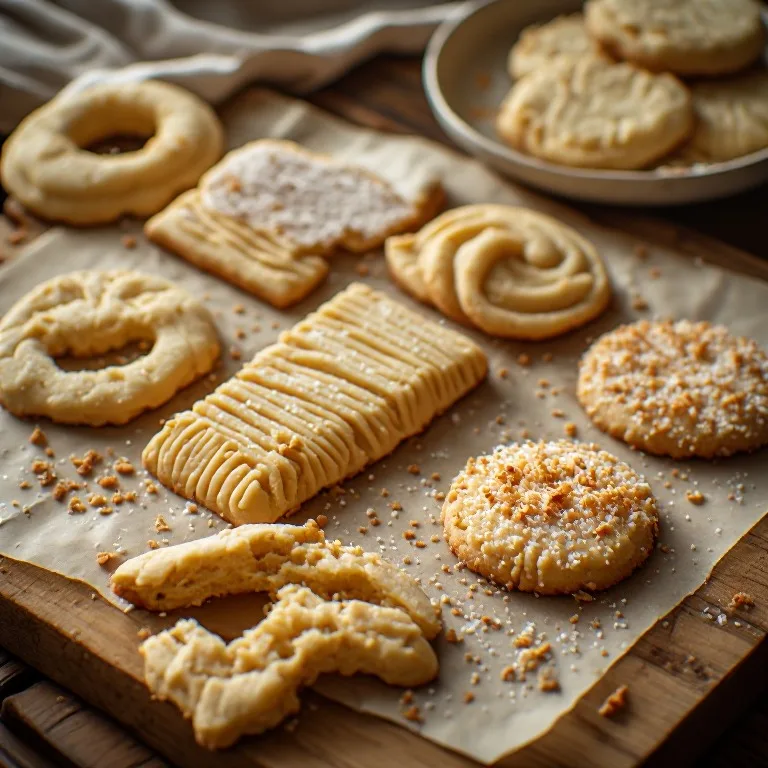
This version makes all five classic shapes from the iconic blue tin: Vanilla Ring, Pretzel Style, Finnish Style, Country Style, and Coconut. One batch of dough, about 48 cookies, and no special skills beyond patience with a piping bag.
What makes these different from shortbread
The recipe most people try first is basically shortbread — butter, sugar, flour — and the results are frustrating: the dough crumbles in the bag, the shapes don’t hold, the cookies taste fine but don’t look right.
The difference is the egg. Royal Dansk’s ingredient list — butter, sugar, flour, eggs, salt, vanilla — includes an egg that gives the dough enough elasticity to pipe cleanly through a star tip and hold its shape. Shortbread is deliberately egg-free for a crumbly texture; this recipe needs the egg to make piping work.
The second difference is the chill. After piping, the shaped dough goes into the refrigerator for 15–20 minutes before baking. Cold fat sets slowly in the oven’s heat, which preserves the ridged shape; warm dough flows before the structure sets and produces flat blobs with faint ridges instead of defined shapes.
The five shapes, from one dough
All five Royal Dansk shapes come from the same base dough. Pipe the shapes onto parchment-lined baking sheets, apply any topping, then chill all sheets together before baking.
Vanilla Ring: Hold the tip ¼ inch above the parchment and pipe a circle about 1¾ inches in diameter, ending with a sharp upward pull to cut the dough cleanly.
Pretzel Style: Pipe two overlapping S-curves that cross in the center; sprinkle with coarse sugar before chilling.
Finnish Style: Pipe short, slightly diagonal logs about 1¾ inches long with a consistent star pattern.
Country Style: Pipe a flat rosette — a tight swirl from the outside in — about 1½ inches across; top generously with granulated or coarse sugar.
Coconut: Pipe a Vanilla Ring, then immediately press the piped ring flat into a plate of shredded coconut. The coconut adheres to the ridges and toasts lightly in the oven.
The bake
325°F is lower than most butter cookie recipes call for, and that is intentional. Higher heat browns the butter flavor into something noticeably toasty — which isn’t wrong, but it’s not what Royal Dansk tastes like. The lower temperature bakes evenly through the whole cookie without darkening the surface, and the result is the mild, straight buttery flavor the original is known for.
Pull the pans when the edges are barely golden and the centers still look slightly underbaked. They firm and crisp completely as they cool on the pan; moving them to a rack too soon while still warm can break the more delicate piped shapes.
How to gift them
Pack cooled cookies in layers separated by parchment inside a metal tin — the actual Royal Dansk blue tin, if you have one, or any airtight metal container. At room temperature in a sealed tin they stay crisp for 2 weeks. They ship well: the cookies are sturdy enough for domestic mailing in a well-padded box, and the visual variety of five shapes makes a genuinely nice gift without additional packaging effort.
See also: Pepperidge Farm Milano Cookies for another famous European-style cookie from a tin, and Whipped Shortbread Cookies for the egg-free shortbread technique these diverge from.