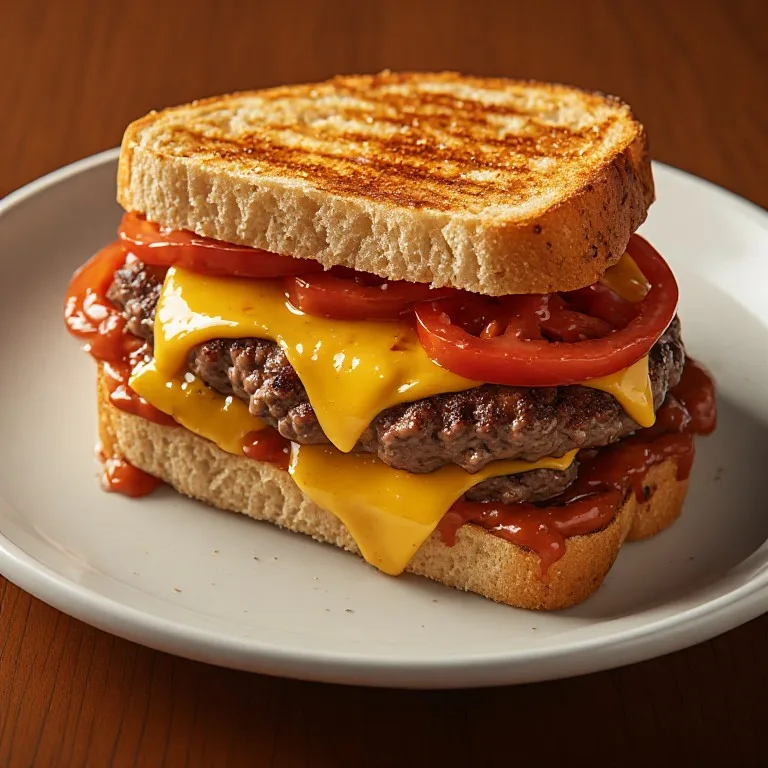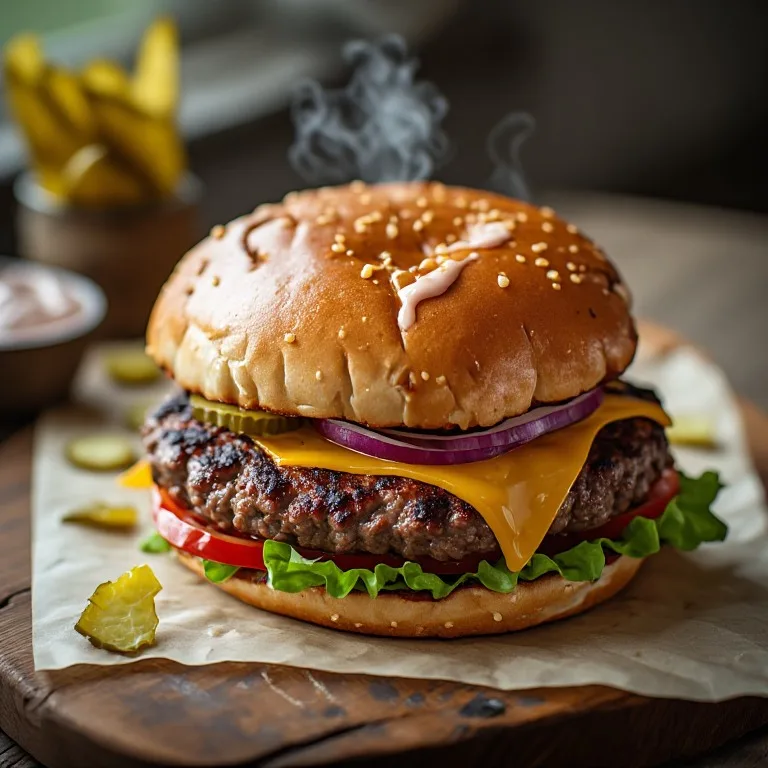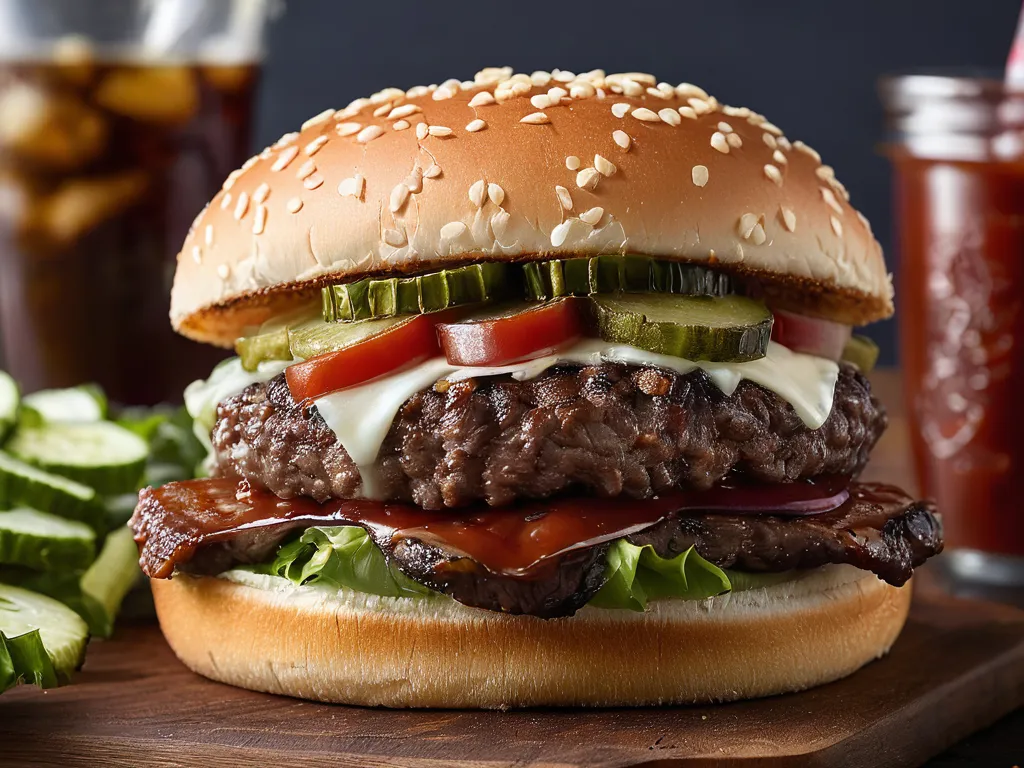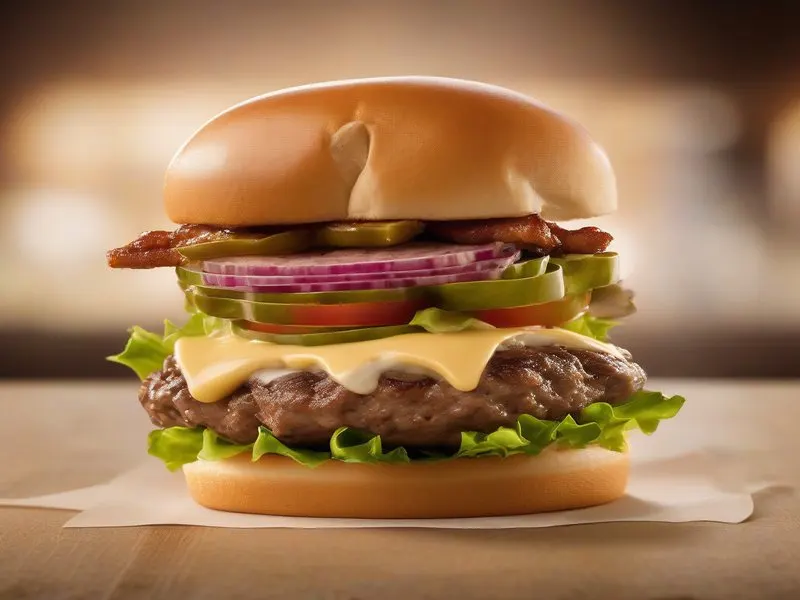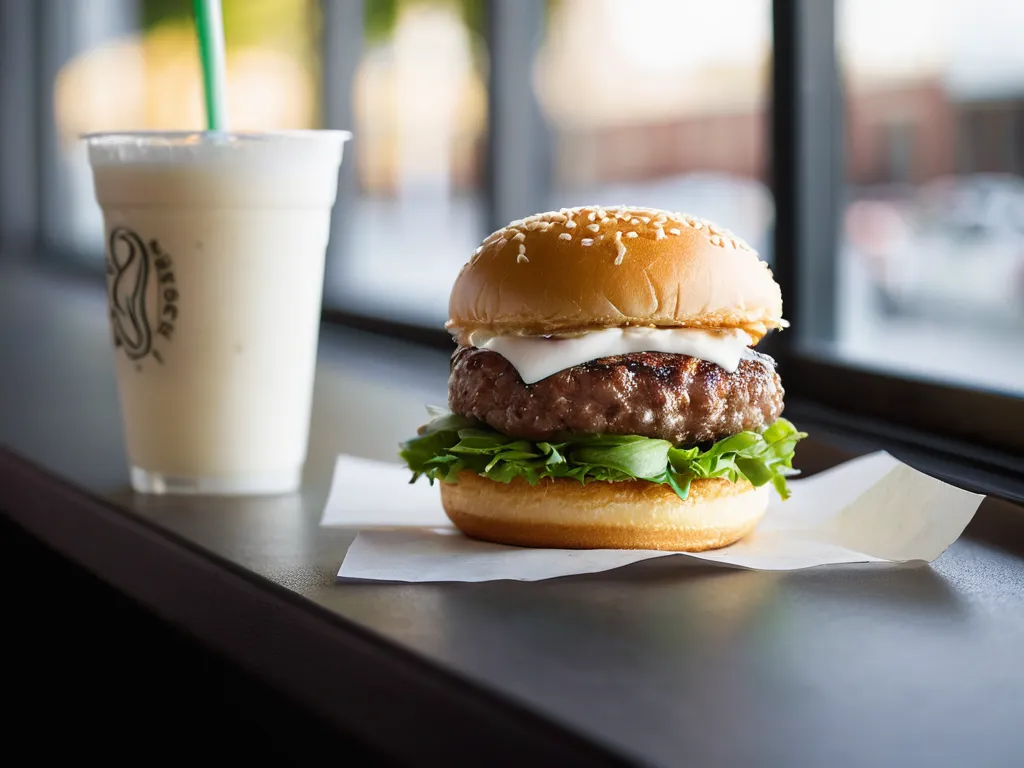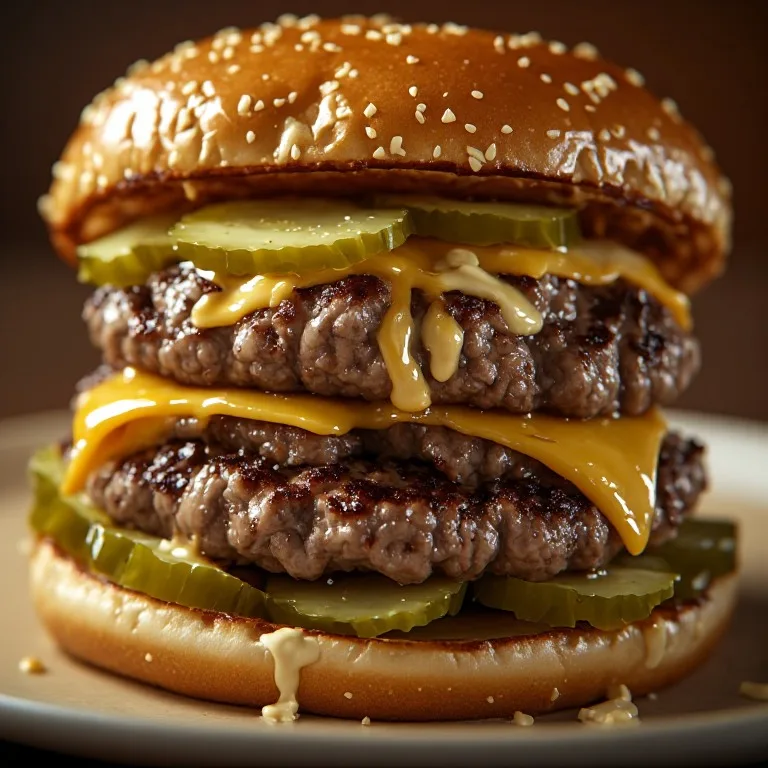


The Steak ‘n Shake Garlic Double Steakburger is not complicated. Two smash-style beef patties, American cheese, and a soft bun — that much is the Original Double Steakburger. What makes this version different is entirely on the bun: fresh garlic infused into butter, brushed onto the cut face, toasted in cast iron until caramelized, then finished with garlic salt. That’s it. The beef and cheese are the same. The bun preparation is the whole recipe.
This is worth paying attention to because it tells you how to cook it. The garlic goes on the bun, not in the beef. Mixing garlic into the ground meat produces a garlic meatball, not a smash burger — the aromatics interfere with crust formation and the garlic flavor reads as muddy rather than clean. Brushing garlic butter onto the bun and toasting it hard means the first thing you taste is a clean hit of toasted garlic, then the beef, then the cheese. That sequencing is deliberate.
The restaurant charges about $6.20 for the sandwich alone (about $9.49 as a combo). At home, the materials run about $4 per sandwich.
What “Steakburger” Actually Means
When Gus Belt opened the first Steak ‘n Shake in 1934 in Normal, Illinois, at the corner of Route 66 and Main Street, he ground three cuts of beef together — round, sirloin, and T-bone — and did it in front of customers. The point was proof: this isn’t hamburger, this is steak. He doubled the going five-cent hamburger price to ten cents and adopted the motto “In Sight It Must Be Right.” The chain got its name from two menu items: the steakburger and the milkshake.
The three-cut blend is what distinguishes a Steak ‘n Shake patty from a standard burger. Ground round is lean with mild beef flavor. Sirloin is more marbled and more flavorful. T-bone is a combination of tenderloin and strip, with the richest flavor of the three — it also makes the final blend expensive enough that most grocery store ground beef is not a direct substitute.
At home, 80/20 ground chuck is the practical answer. It doesn’t replicate the three-cut blend exactly, but the 20% fat content matches what you need for the smash technique: fat renders immediately on contact with a screaming-hot surface and produces the lacy, crisped edge that defines a proper steakburger crust. Lean ground beef (90/10 or 93/7) doesn’t render enough fat and produces a dry, compressed patty rather than a crust.
If you want to approximate the original, buy a small T-bone and a sirloin and ask the butcher to grind them together. The result is noticeably richer than chuck alone. But for a weeknight version of this sandwich, 80/20 chuck is reliable, affordable, and correct in technique even if not in precise provenance.
The Garlic Butter Bun
The single technique error that most home copycat recipes make here: they add garlic butter after the bun is toasted, as a condiment. Steak ‘n Shake brushes the garlic butter onto the raw cut face of the bun, then toasts it garlic-side down. The difference is significant.
When garlic butter goes onto an already-toasted bun, it sits on the surface. The fat doesn’t absorb into the bread, the garlic stays raw and sharp, and the texture is greasy rather than integrated. When garlic butter goes on before toasting, the bread absorbs the fat as it heats, the garlic cooks briefly against the hot pan surface — developing sweetness and losing sharpness — and the resulting bun has garlic flavor woven through it rather than applied on top.
Use low heat for the garlic butter and pull it off heat at 60 seconds, when the garlic is fragrant and just beginning to turn translucent. Garlic that turns brown in the butter becomes bitter quickly — it will overpower everything else in the sandwich and taste burned rather than roasted. Fragrant-but-pale is the target.
The garlic salt sprinkled on the toasted face of the top bun is optional but accurate. It adds a second hit of garlic aroma when you pick up the sandwich, before you take a bite.
The Smash Technique Steak ‘n Shake Invented
The modern smash-burger trend — popularized by Smashburger starting in 2007 and the TikTok smash-burger wave through the 2020s — traces directly to what Gus Belt was doing in 1934. The technique is the same: a ball of fresh, never-frozen ground beef on a screaming-hot surface, smashed immediately and completely flat, left completely undisturbed until a crust forms.
The physics: when you press 80/20 ground beef flat against a surface that’s around 400–450°F, two things happen simultaneously. The fat in the beef renders immediately and pools around the edges of the patty, where it crisps into the lacy, irregular edge characteristic of a smash burger. The entire flat surface of the patty makes contact with the pan at once, maximizing the Maillard reaction — the browning reaction between amino acids and reducing sugars that produces the hundreds of flavor compounds that make cooked beef taste like cooked beef, not steamed meat.
A thick-formed patty doesn’t do this. It makes contact only at the convex peak and gradually spreads as it cooks. The smash patty makes full contact immediately, so the entire bottom face browns at once.
The technique rules are simple:
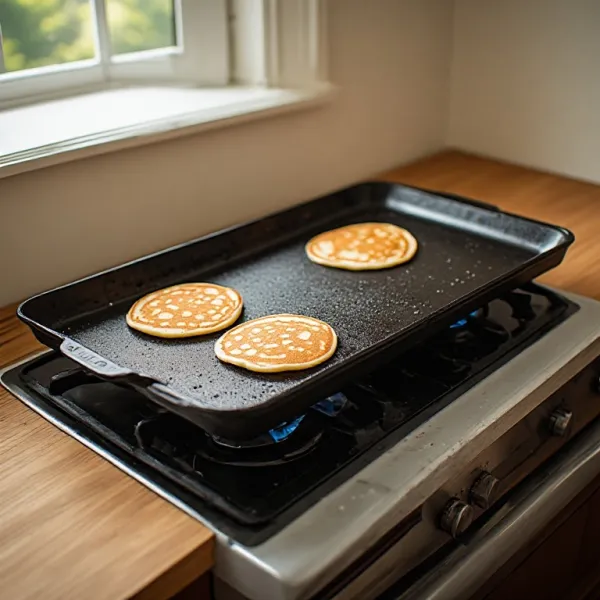
- The pan must be screaming hot before the beef goes in. Let it heat longer than you think you need.
- Smash hard and hold for 10–15 seconds immediately after placing the beef ball. You are not pressing down gently — you are applying sustained force until the patty is completely flat.
- Do not move the patty for 90 seconds. Every time you lift or shift it before the crust has set, you peel the developing crust off the pan and reset the browning process. The sides of the patty will turn gray about halfway up — wait until you can see that, then flip once.
- One flip only. Flip once, place cheese immediately, cook 30–45 seconds, done.
How This Compares to the Frisco Melt
Both sandwiches use two smash-style beef patties and American cheese. That is where the similarity ends.
| Garlic Double Steakburger | Frisco Melt | |
|---|---|---|
| Bun | Soft potato bun, garlic-butter toasted | Sourdough, plain butter-griddled |
| Cheese | American only | American + Swiss |
| Sauce/flavor element | Garlic butter + garlic salt | Frisco sauce (mayo, ketchup, relish, Worcestershire) |
| Flavor direction | Clean, buttery garlic | Tangy, savory, complex |
| Calories | ~730 | ~960 |
| Home cost | ~$4 | ~$4–5 |
The Garlic Double is simpler and more directly beefy — the flavor profile is beef, cheese, garlic. The Frisco Melt is more complex — the sourdough, the dual cheese, and the Frisco sauce create a layered sandwich where the condiment is the main event rather than the bun preparation.
The Smash Burger Technique in Detail
For a deeper look at the science of the smash technique — why room-temperature beef smashes differently than cold beef, what type of pan works best, and why the first 15 seconds of contact determine the entire crust — the Smash Burger guide covers all of it. The same principles apply here.
For other smash-style burgers worth comparing: the Five Guys Burger copycat (hand-formed rather than smashed, different texture profile but similar fresh-beef philosophy) and the In-N-Out Animal Style Burger (smash-style patty with mustard-griddled into the beef before flipping — a technique worth knowing).