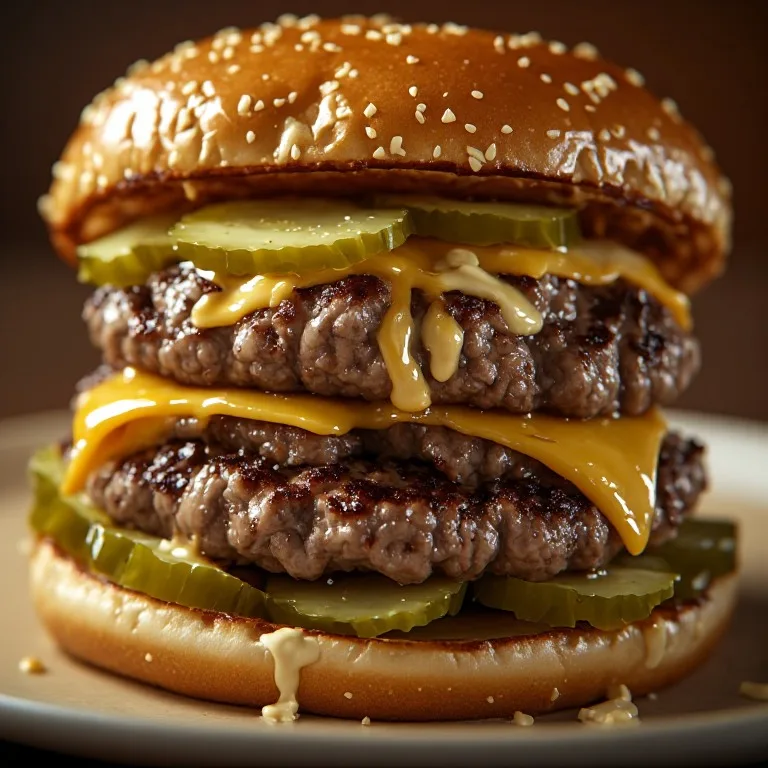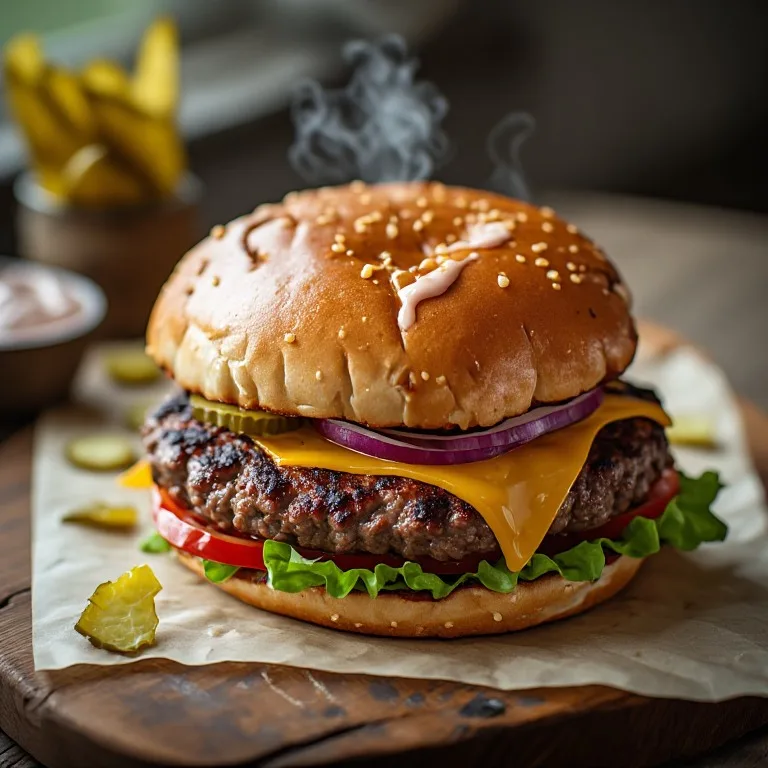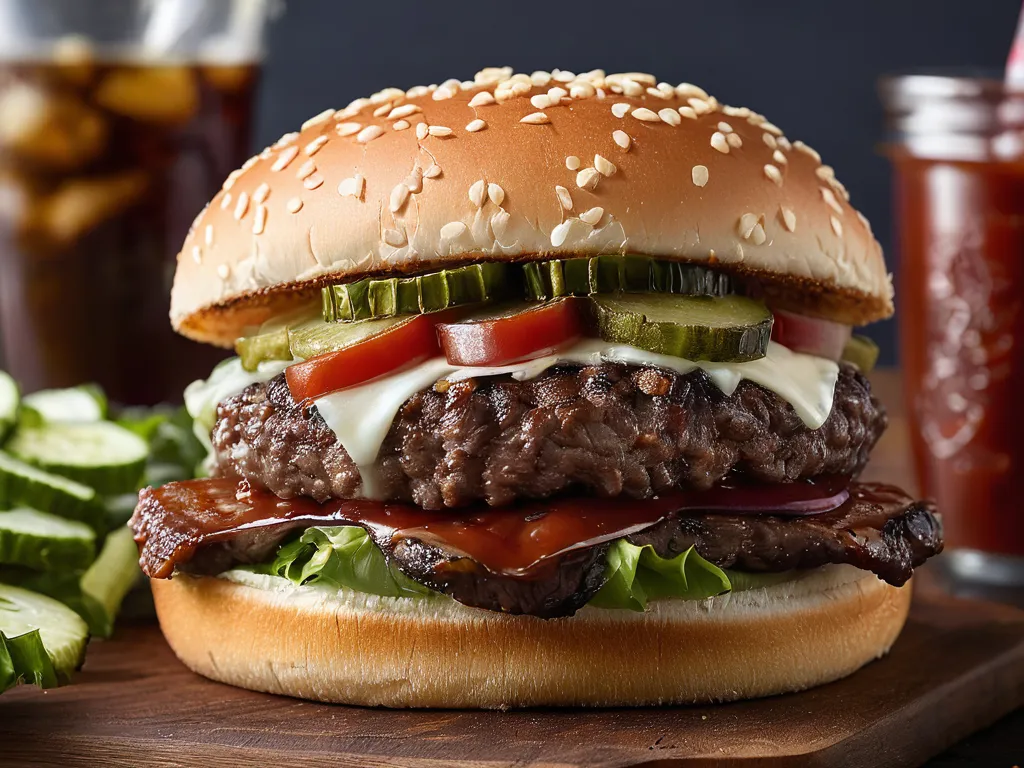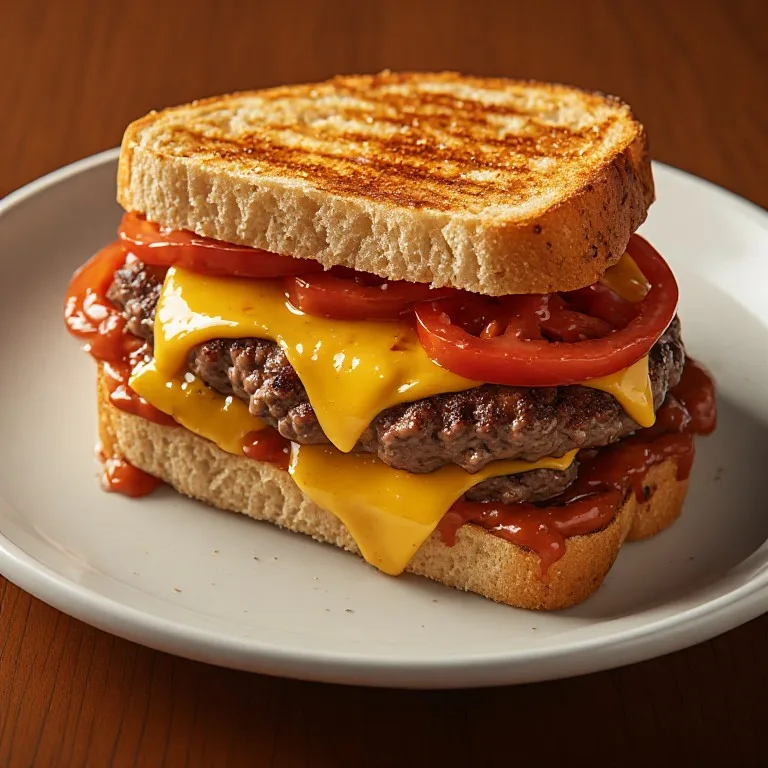


The Steak ‘n Shake Frisco Melt is one of the few fast-food burgers you can identify by its bread alone. Everything else comes on a sesame-seed bun or a brioche. The Frisco Melt comes on butter-griddled sourdough, and that single choice changes the character of the whole sandwich — the tang in the bread, the caramelized crust from the flat-top, and the structural integrity that holds up under two beef patties and two melted cheeses all follow from it.
Then there’s the sauce. The Frisco sauce is not Thousand Island. It’s tangier, closer to a hybrid between Thousand Island and Catalina French dressing, with a small amount of Worcestershire underneath the sweetness of the relish. Most copycat recipes stop at Thousand Island and produce something in the same neighborhood but not quite right. The vinegar and the Worcestershire are the two ingredients that close the gap.
The restaurant charges about $7 for the sandwich on its own (around $9.49 as a combo with fries and a drink). At home it runs about $4–5 per sandwich.
Why “Frisco”?
The name comes from the bread, not from any recipe connection to San Francisco. “Frisco” is informal shorthand for San Francisco, and the sandwich gets its name because sourdough bread originated there — the wild yeast cultures in the San Francisco Bay Area gave the local sourdough its characteristic tang, and that style of bread became so associated with the city that calling it “Frisco bread” was natural shorthand. When Steak ‘n Shake put this combination on their menu, they named it after the bread style.
The choice of sourdough over a standard bun is functional, not just historical. Sourdough has a tighter crumb and denser structure than a soft bun — it doesn’t collapse under two patties and a double load of melted cheese. Its mild acidity also cuts through the richness of the beef, cheese, and sauce rather than adding more richness, the way a brioche does. A standard sesame bun flattens and compresses; sourdough holds its shape through the last bite.
Use a sourdough loaf (not pre-sliced sourdough sandwich bread, which is too thin) and cut it yourself to about 3/4 inch thick. The thickness is structural.
The Frisco Sauce Breakdown
Steak ‘n Shake doesn’t publish the Frisco sauce formula. The most widely cited copycat (CopyKat’s) takes a shortcut you can mix in a minute: equal parts Thousand Island and Catalina-style French dressing, plus ketchup and a dash of Worcestershire. The from-scratch version below rebuilds that same flavor from base ingredients — mayonnaise, ketchup, sweet pickle relish, a splash of red wine vinegar, Worcestershire, and background garlic powder, onion powder, and paprika — so you don’t need two bottled dressings on hand.
What makes Frisco sauce read as different from a plain Thousand Island is the Catalina/French-dressing character — a sharper, sweet-tangy edge — plus the savory depth of Worcestershire. In the scratch version, the red wine vinegar and Worcestershire carry that job. Either way, the sauce lands tangier and more savory than Thousand Island alone, which is what balances the fat of two beef patties and two slices of cheese.
The application method matters as much as the formula. Spread the sauce on both bread slices before you assemble the sandwich — not on top of the finished melt as a garnish. When you griddle the assembled sandwich, the sauce heats against the cheese and absorbs into the toasted sourdough, producing the integrated, cohesive flavor you get at the restaurant. Applied after cooking, it sits on the surface and slides.
If you’d rather not measure out the scratch build, the two-dressing shortcut above — equal parts Thousand Island and Catalina French dressing plus a dash of Worcestershire — gets you within range.
The Two-Cheese Logic
American cheese and Swiss cheese do different jobs on a Frisco Melt, which is why one of each is correct.
American cheese has high moisture content and emulsifying salts — it is engineered for melting. Against a hot patty, it becomes almost liquid, coating the beef surface with a creamy, cohesive layer. It has essentially no structural integrity (it’s soft even at room temperature), but that’s not what it’s here for.
Swiss adds flavor complexity. Its mild nuttiness is different from American’s neutral creaminess, and it has better structure — it melts fully but doesn’t liquefy. On the top patty, Swiss provides the cheese flavor while American provides the melt.
Place the cheese slices directly on the patties while they’re still in the hot pan. The residual heat starts the melt before assembly. When you stack the patties into the sandwich (American-topped patty on the bottom, Swiss-topped patty on top), the American cheese fills the seam between the two patties and the Swiss faces the top bread slice. Griddling the assembled sandwich finishes both cheeses through.
Smash Technique: Why the First 15 Seconds Matter
The smash-burger technique isn’t just a style trend. The physics: when you press a ball of 80/20 ground beef completely flat against a screaming-hot surface in the first 10–15 seconds of contact, the fat renders immediately and the entire flat surface makes contact with the pan. This maximizes the Maillard reaction across the whole patty face, not just the edges. The result is the lacy, irregular-edged crust that gives the Frisco Melt its textural backbone against the soft cheese and yielding sourdough.
This crust is what makes a smash burger a smash burger. A thick-formed patty on sourdough with Frisco sauce tastes in the same direction, but the texture is wrong — you get moist, soft beef with browning only at the contact edges rather than the uniform crust that smashing produces.
Do not move the patty for 90 seconds after smashing. This is the most common technique error. Every time you lift or shift a patty before the crust has set, you peel the developing crust off the pan surface and reset the browning clock. Wait until the sides look cooked about halfway up the patty, then flip once. One flip only.
Make-Ahead and Serving
The Frisco sauce is the only component worth making ahead — mix it up to a week in advance and keep it refrigerated in a sealed jar; the flavor actually improves after a few hours as the garlic and onion powder hydrate. Everything else is a last-minute assembly. The finished melt does not hold or reheat well: the griddled sourdough loses its crisp edge and goes leathery within minutes, so cook the patties and griddle the sandwich only when you’re ready to eat. At the restaurant it comes with thin shoestring fries; a side of those or a plain salad to cut the richness is the closest match to the counter experience.
Related Burgers and Melts
For the closest relative in format — double patty, thick griddled bread, two cheeses, special sauce — the Whataburger Patty Melt is the direct comparison. The key differences: Texas toast instead of sourdough, caramelized onions added to the standard build, and a jalapeño-mayo pepper sauce instead of Frisco sauce. Same smash-then-griddle architecture, different flavor direction.
For the smash technique in detail, the Smash Burger covers exactly why room-temperature beef, a screaming-hot pan, and immediate hard contact produce a different result from any other burger-cooking approach. The same principles apply to the Frisco Melt patties.
For Shake Shack’s version of the format — a single smash patty on a potato bun with Shack Sauce — the Shake Shack Burger copycat covers the technique and the sauce, which is simpler than Frisco sauce but in the same mayo-based family. And for a different take on the mayo-based special sauce, the In-N-Out Animal Style Burger covers their spread — a simpler mayo-relish formula in the same family as Frisco sauce but without the Catalina-style tang or the Worcestershire depth.