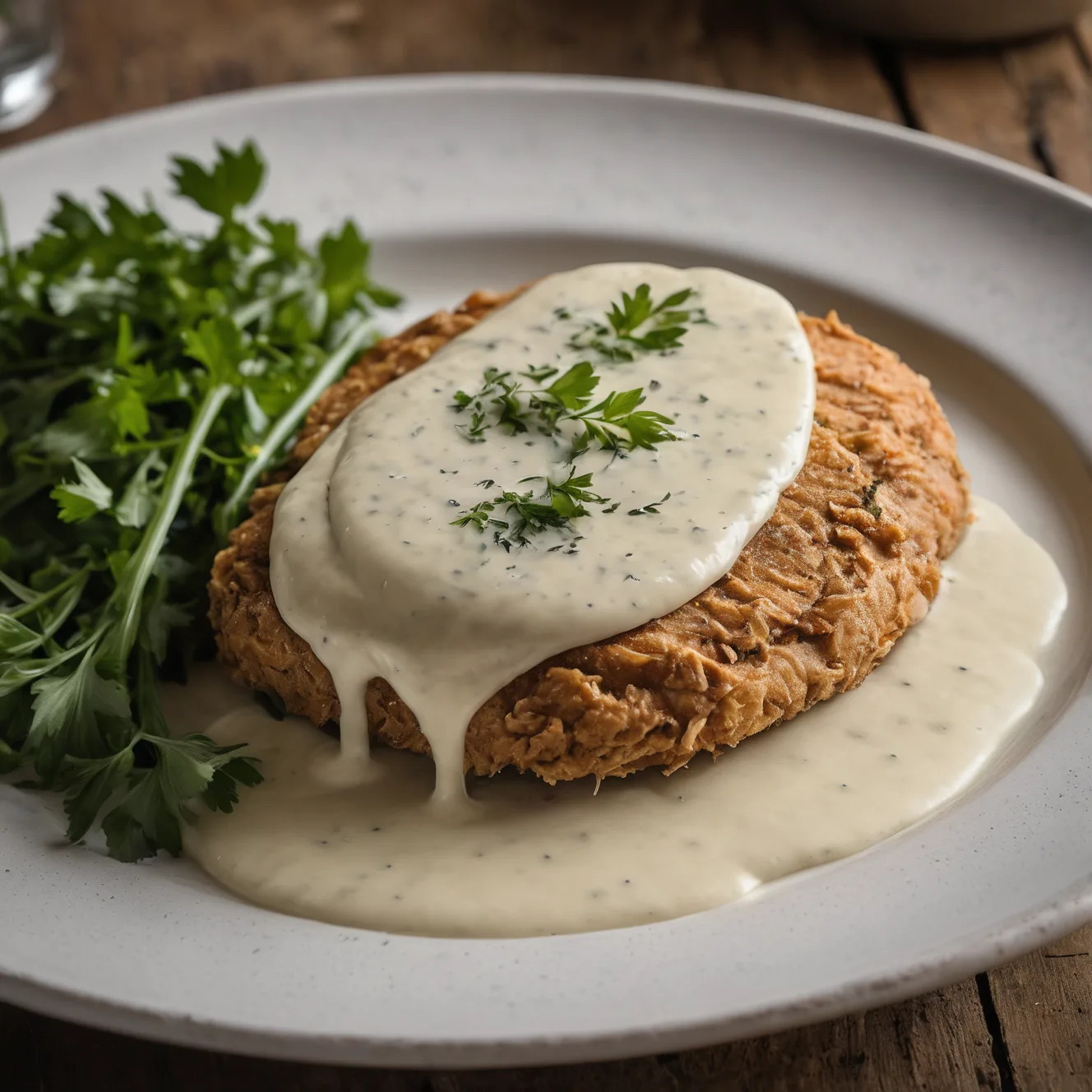
Copycat Texas Roadhouse Country Fried Chicken
Prep time: 15 min + 30 min soak Cook time: 25 min Servings: 4
Texas Roadhouse Country Fried Chicken is the heaviest, most genuinely Southern dish on the menu — a pounded chicken breast battered in seasoned flour, pan-fried until the crust shatters, and smothered in a thick, black-pepper-forward cream gravy. At the restaurant, an order with two sides runs about $16–18 depending on location. Made at home from two chicken breasts, a cup of buttermilk, and pantry flour, the cost drops to about $5 per serving.
This is not the same dish as Chicken Critters. Critters are thin tenderloins marinated in pickle juice and hot sauce, served with dipping sauces. Country Fried Chicken is a whole breast, flattened thin, double-dredged, and arrived under a ladle of cream gravy that soaks into the bottom of the crust while the edges stay crisp. Different technique, different cut, different eating experience.
Cost Comparison: Home vs. Restaurant
| Texas Roadhouse | Homemade (4 servings) | |
|---|---|---|
| Country Fried Chicken dinner (+ 2 sides + bread) | ~$16–18 per person | — |
| Feed 4 people | ~$64–72 | ~$20 total |
| Per serving | ~$16–18 | ~$5 |
The home cost covers two large chicken breasts, the buttermilk, flour, and the milk for gravy. Everything else — the spice blend, the oil, the butter — is pantry overhead. The restaurant price includes two made-from-scratch sides and the free bread basket; add a couple of dollars per person for sides at home and you’re still well under a third of the menu price.
What Makes Texas Roadhouse Country Fried Chicken Different
The butterfly and pound step is not optional. An uncut chicken breast varies from 3/4 inch at the edge to nearly 2 inches at the peak. That uneven thickness means the crust over-browns at the thinner edges before the center reaches temperature, and the batter sits on a rounded surface instead of lying flat, so it bubbles unevenly. Butterflying and pounding creates four thin, uniform 1/2-inch cutlets. The crust covers every inch at the same depth, the chicken cooks in the same time from edge to center, and the finished plate has that restaurant-flat silhouette.
Three-stage seasoning builds layered flavor. The same spice blend — salt, pepper, garlic powder, onion powder, paprika, cayenne — goes into the dry seasoning on the raw chicken, into the buttermilk coat, and into the flour dredge. Most home recipes put all their seasoning in just the flour. Using the blend at every stage means the flavor is inside the meat, inside the wet coat, and on the outside of the crust simultaneously, rather than just sitting on the surface where it can come off with the first bite of gravy.
The double dredge creates a shatter-crust. One pass through seasoned flour produces a thin, delicate crust. Two passes — flour, back into buttermilk briefly, flour again packed on firmly — builds a thicker, sturdier crust with cragged ridges that trap the cream gravy. The second dredge is also what prevents the coating from sliding off in one sheet when you cut into it. Press the flour on; don’t just roll the chicken through it.
The cream gravy is built from the drippings. The browned bits left in the cast iron after frying are not waste — they are flavor. Leave 3 tablespoons of oil and all the drippings in the pan, build the roux right there, and the gravy picks up all the color and Maillard browning from the chicken. A gravy made in a clean saucepan from scratch tastes like cream sauce; a gravy made from chicken drippings tastes like country cooking.
Pepper is the dominant seasoning in the gravy. Texas Roadhouse’s cream gravy is heavily peppery. This is the flavor that makes it taste like a restaurant gravy rather than homemade béchamel. Use at least a full teaspoon of freshly cracked black pepper in the gravy — more if you like it the way it tastes at the table. The pepper bite is the point.
The Double Dredge, Explained
Most copycat recipes do a single dredge: buttermilk → flour → fry. Texas Roadhouse’s crust is thicker and crunchier than that produces. The double dredge builds it:
Stage 1 — Seasoned buttermilk. The buttermilk and egg coat act as glue. The acid in the buttermilk also continues to tenderize the chicken during the soak, so a 30-60 minute marinate time is not flavor-building — it’s structural. The longer soak produces more tender meat.
Stage 2 — First flour coat. The flour has baking powder mixed in — this creates small steam bubbles as it hits hot oil, producing a lighter, craggier crust than plain flour alone. Don’t shake off all the buttermilk before dredging — you want a wet, sticky surface for the flour to grip.
Stage 3 — Back into buttermilk, briefly. A 10-second dip, not another full soak. This moistens the first flour layer so the second flour coat sticks to it rather than falling off.
Stage 4 — Second flour coat, pressed on. Pack the flour on firmly with your hands. The pressure is what transforms the second coat from a loose dusting into a dense, structured crust. Set the finished cutlets on a wire rack and let them rest 5 minutes before frying — this brief rest allows the layers to bond before hitting the hot oil.
The Cream Gravy, Explained
The gravy is where home cooks most often go wrong — either they make it in a separate pan (wrong), or they let the roux go too long and it turns tan before the milk goes in (too dark for white gravy), or they don’t add enough pepper.
Don’t wipe the skillet. The drippings are the whole point. Pour off all but 3 tablespoons of oil, then build the roux right in the same pan.
Cook the roux for exactly 1 minute. Raw flour in gravy tastes pasty and flat. Cook the flour in the fat over medium heat, whisking, for a full 60 seconds — it should smell slightly toasty and look barely golden. Any longer and the gravy turns tan.
Add warm milk in a stream. Cold milk hitting hot roux causes lumps. Warm the milk in the microwave for 90 seconds, then pour it in slowly while whisking constantly. Once all the milk is in, increase the heat and whisk until the gravy thickens and bubbles.
Season aggressively with pepper. Taste the gravy before you serve it. If it doesn’t have a peppery bite, add more. Texas Roadhouse’s version has enough pepper that you can see the black flecks.
Tips & Variations
- Choose the right breasts. Large breasts (8–10 oz) butterfly into two good-sized cutlets. Smaller breasts (6 oz) are thinner before you even start — pound them briefly rather than butterflying, or cut at an angle for a wider surface.
- Let the dredged cutlets rest. 5 minutes on a wire rack after the second flour coat allows the layers to bond. Skip this and the coating sheds in the oil.
- Don’t crowd the pan. Frying more than two cutlets at once drops the oil temperature and the chicken steams instead of fries. Work in batches of one or two, let the oil recover to 350°F between each batch.
- Brown gravy variation. If you prefer brown gravy: use 2 tablespoons of the drippings, cook the roux until it’s a light caramel brown (~2 minutes), then whisk in 1 cup chicken stock instead of milk, plus 1/2 cup milk for creaminess. Season with black pepper, garlic powder, and a splash of Worcestershire.
- Leftover Country Fried Chicken. The crust goes soft in the refrigerator overnight. Best reheating method: wire rack on a sheet pan in a 400°F oven for 10 minutes. Microwave reheating works but produces a soft crust.
Country Fried Chicken vs. Chicken Critters: The Comparison
| Country Fried Chicken | Chicken Critters | |
|---|---|---|
| Cut of meat | Full boneless breast, butterflied | Whole tenderloins (small cut under breast) |
| Marinade | Seasoned buttermilk soak | Citrus + pickle juice + hot sauce + buttermilk |
| Batter | Double dredge (flour → buttermilk → flour) | Single dredge (buttermilk → flour) |
| Gravy | Cream gravy poured over top | Dipping sauce on the side |
| Calories | ~770 restaurant / ~580 home | ~480 restaurant / ~480 home |
| Price | ~$16–18 | ~$13–16 |
| Texture | Thick shatter-crust, gravy-softened bottom | Crunchier, freestanding strips |
| Best for | Comfort food, plate dinner | Casual dipping, shareable appetizer |
More Texas Roadhouse Copycat Recipes
- Texas Roadhouse Chicken Critters — the tenders with the pickle juice–citrus marinade; a completely different dish worth making on a different night
- Texas Roadhouse Rolls with Cinnamon Honey Butter — the legendary bread basket that deserves to be at the table when the chicken arrives
- Texas Roadhouse Mashed Potatoes — the right side for soaking up extra cream gravy
- Texas Roadhouse Rattlesnake Bites — the jalapeño-cheese starter before a fried chicken plate