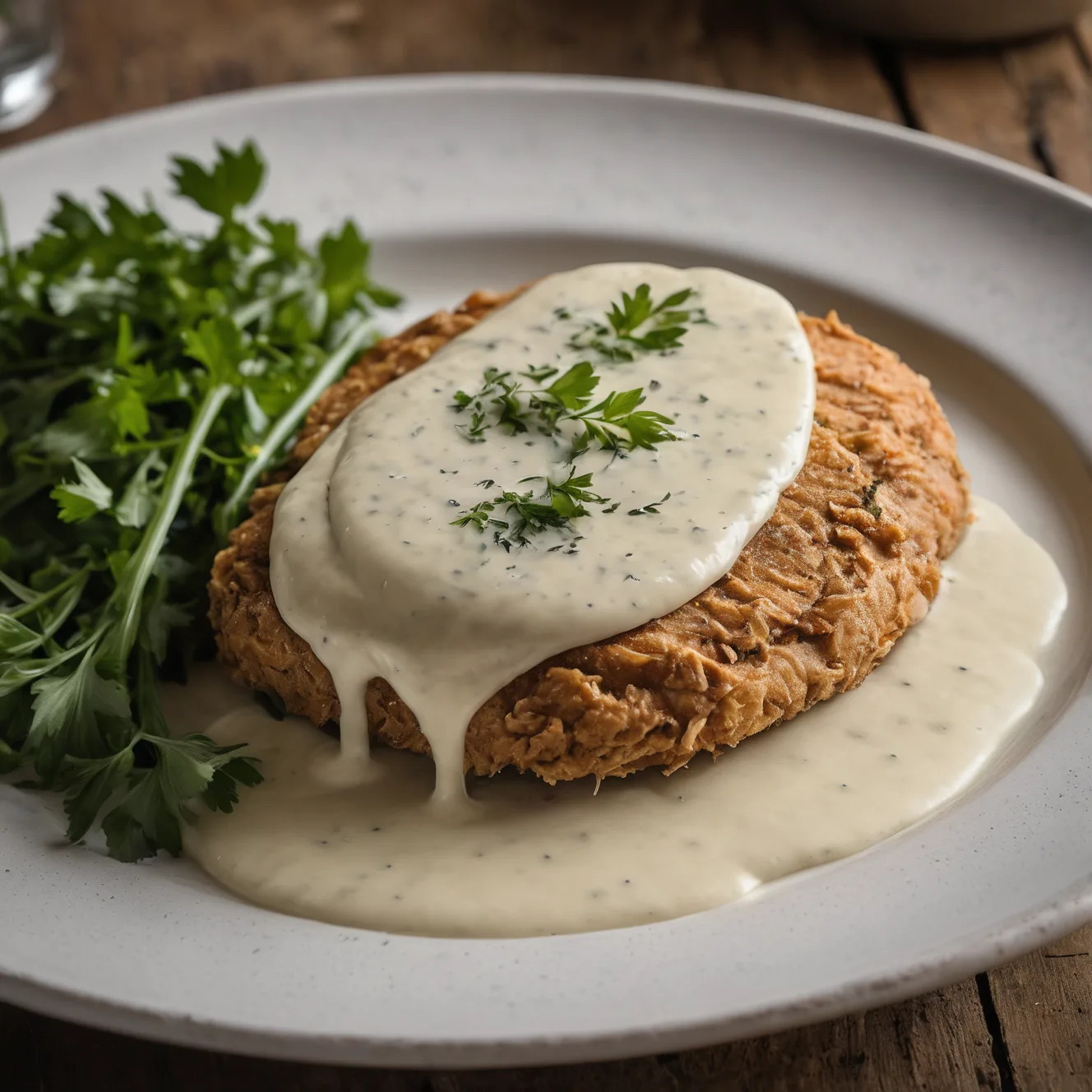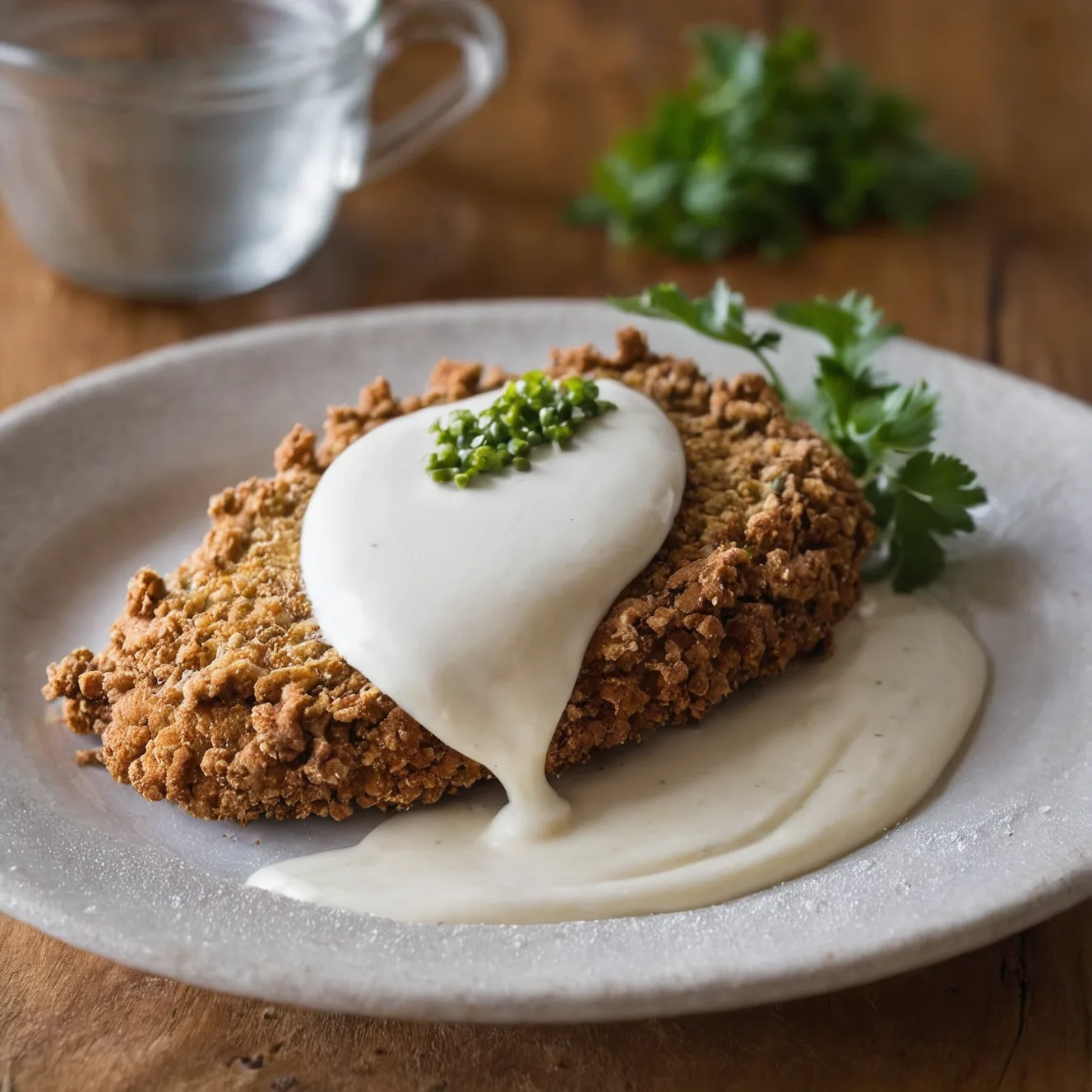
Copycat Texas Roadhouse Country Fried Sirloin
Prep time: 20 min + 30 min soak Cook time: 20 min Servings: 4
Texas Roadhouse Country Fried Sirloin is the best version of country fried steak you’ll get at any major chain — and the reason comes down to the cut. Every other chain and most diners make this dish with cube steak, which is mechanically tenderized top round. Texas Roadhouse uses fresh-cut, hand-pounded sirloin. The result has more natural beefy flavor, better marbling, and a cleaner texture under the crust. The restaurant charges about $18.99 for the plate with two sides and rolls. Made at home with a 1½-pound sirloin, a cup of buttermilk, and pantry flour, you feed four people for about $30 total — under $8 per serving.
The cream gravy is built from the beef drippings in the same cast iron skillet you fried in, and it is aggressively peppered. That pepper bite is what makes it taste like restaurant country gravy rather than a white sauce.
Cost Comparison: Home vs. Restaurant
| Texas Roadhouse | Homemade (4 servings) | |
|---|---|---|
| Country Fried Sirloin dinner (+ 2 sides + rolls) | ~$18.99 per person | — |
| Feed 4 people | ~$76 | ~$30 total |
| Per serving | ~$18.99 | ~$7–8 |
The restaurant price covers the steak, cream gravy, two made-from-scratch sides, and the free bread basket. The home cost is mostly the sirloin ($18–22 for 1½ lbs depending on your market) plus buttermilk, flour, and milk. Oil, spices, and butter are pantry overhead.
The Sirloin vs. Cube Steak Difference
This is the one fact that makes or breaks a copycat recipe. Most recipes — even good ones — default to cube steak because it’s cheaper, easier to find, and already tenderized. Texas Roadhouse explicitly markets its use of fresh-cut sirloin as a quality differentiator, and you can taste why. The chain uses USDA Choice sirloin cut fresh in-house — the same grade as its regular steaks — then pounds it thin for this dish rather than reaching for pre-tenderized cube steak.
Cube steak is top round that has been run through a mechanical tenderizer, which punctures and breaks down the muscle fibers. It has a loose, almost crumbly texture and a pale, lean flavor. It takes breading and frying well because the tenderizer creates plenty of surface for the coating to grip. It’s also slightly watery after cooking because the tenderizing disrupts the cell structure.
Sirloin, pounded thin, has intact muscle fibers with more natural marbling. The flavor is beefier and cleaner. After pounding, the texture is tender but not pre-shredded — there’s a slight chew that you don’t get with cube steak, and the steak holds its own under the cream gravy rather than softening into it. If you’ve had Texas Roadhouse Country Fried Sirloin and a diner’s country fried steak made with cube steak, this is the difference you noticed without knowing why.
The Pounding Step
For sirloin to work in this dish, it needs to be pounded to a true ¼ inch. An unpounded sirloin is 1–1½ inches thick at the center — too thick to cook evenly in the time the crust can survive the oil.
Place each steak portion between two sheets of plastic wrap. Start at the center of the meat and work the mallet outward toward the edges, rather than pounding straight down in the middle. This spreads the meat evenly without tearing. Target ¼ inch across the entire surface. Thinner edges and thicker centers — the most common pounding error — mean the edges are well-done before the center is set. Once pounded, the portions look large and thin. That’s correct.
The Double Dredge
A single dredge — buttermilk, then flour, then fry — produces a thin, brittle crust that slides off under gravy. The double dredge builds a thick, cragged crust that grips the steak surface.
Stage 1 — Seasoned buttermilk soak. The buttermilk and egg act as glue and as a tenderizer. The acid continues to work on the sirloin during the 30–60 minute rest, which matters more with sirloin than with pre-tenderized cube steak. Don’t skip the soak.
Stage 2 — First flour coat. The flour contains baking powder, which creates steam bubbles in the crust as it hits hot oil. This produces a lighter, more textured crust than plain flour. Don’t shake off all the buttermilk before dredging — the sticky wet surface is what the flour grips.
Stage 3 — Brief buttermilk dip. Ten seconds back in the buttermilk. This moistens the first flour layer so the second coat bonds to it.
Stage 4 — Second flour coat, pressed on. Pack it firmly with your hands. The pressure here is what creates the thick, shaggy ridges rather than a smooth, thin layer. Set the coated steaks on a wire rack and rest 5 minutes — the layers bond before the steak goes into hot oil.
The Cream Gravy
The gravy is not made in a separate pan. The beef drippings left in the cast iron after frying are the flavor of the gravy. A gravy made in a clean saucepan from scratch is white sauce; a gravy made from beef drippings in a hot cast iron is country cooking.
Leave 3 tablespoons of oil in the pan with all the browned drippings. Build the roux right there over medium heat. Cook it for a full 60 seconds — it should smell very faintly toasty. Any longer and the gravy turns tan (which is actually the brown gravy variation — see tips below). Add warmed whole milk slowly, whisking constantly. The gravy thickens in 4–5 minutes of whisking. Season it aggressively with black pepper: 1½ teaspoons minimum. You should be able to see black flecks throughout the finished gravy. That pepper is what makes it taste like Texas Roadhouse.
Tips & Variations
- Buy sirloin at the right thickness. Thin-cut sirloin (sold as “sirloin cutlets” or “sirloin sandwich steaks”) saves you the pounding step. If buying regular sirloin steaks, 6–8 oz pieces are ideal — large enough to give you a substantial portion after pounding, small enough to flatten evenly.
- Rest before frying. 5 minutes on a wire rack after the second flour coat. Skip this and the coating sheds in the oil on the first side.
- Don’t crowd the pan. Frying two full steaks at once drops the oil temperature below 325°F and the crust absorbs oil instead of repelling it. Work in batches of one or two and let the oil recover to 350°F before the next batch.
- Brown gravy option. Texas Roadhouse offers brown gravy as an alternative and many regulars prefer it. Build it in the same drippings pan: cook the roux for 3 minutes instead of 1 until it’s a light caramel brown, then whisk in 1 cup beef broth and ½ cup whole milk. Season with black pepper, ½ teaspoon Worcestershire, and a pinch of garlic powder. The result is deeper and richer than the white gravy — less peppery, more savory.
- Leftovers. The crust softens in the refrigerator. Best reheating method: wire rack on a sheet pan at 400°F for 8–10 minutes. The crust partially re-crisps and the steak warms through without drying out. Microwave reheating is fast but produces a limp crust.
- The steak seasoning boost. Texas Roadhouse’s in-house steak seasoning is a blend of salt, pepper, garlic, paprika, and cayenne — essentially the same blend in this recipe. If you want an extra crust depth, season the pounded steak with Texas Roadhouse Steak Seasoning before the buttermilk soak instead of just a plain pinch of the spice blend.
Country Fried Sirloin vs. Country Fried Chicken: The Comparison
Both dishes live under the Country Dinners section at Texas Roadhouse, use the same double-dredge technique, and are served smothered in cream gravy. The differences are what change the eating experience.
| Country Fried Sirloin | Country Fried Chicken | |
|---|---|---|
| Protein | Fresh-cut sirloin, pounded to ¼ inch | Boneless chicken breast, butterflied and pounded to ½ inch |
| Flavor | Beefy, savory, richer drippings | Milder, more neutral — the crust and gravy are the flavor |
| Soak | 30–60 min buttermilk (acid-tenderizes sirloin) | 30–60 min buttermilk (structural for chicken) |
| Fry time | 3–4 min per side | 5–6 min per side (thicker, larger) |
| Gravy | Cream (default) or brown gravy option | Cream gravy (standard) |
| Calories (restaurant) | ~1,170 / ~560 home | ~770 / ~580 home |
| Price | ~$18.99 | ~$16–18 |
| Best for | Steak flavor with country comfort | Lighter protein, same comfort-food feel |
More Texas Roadhouse Copycat Recipes
- Texas Roadhouse Country Fried Chicken — the chicken version of the Country Dinners menu; same double-dredge, same cream gravy, different protein; slightly lower calorie count
- Texas Roadhouse Mashed Potatoes — the right side for pooling extra cream gravy; make them while the steak fries
- Texas Roadhouse Green Beans — the classic second side on a Country Fried Sirloin plate
- Texas Roadhouse Rolls with Cinnamon Honey Butter — the bread basket that belongs at this table
- Texas Roadhouse Steak Seasoning — the same spice blend used in the dredge; keep a jar of it made up