


TGI Friday’s Jack Daniel’s Chicken has been on the menu since the 1990s and has survived every menu update and trend cycle since — because it’s good in a specific, reliable way. Sticky, glossy, sweet-savory, with enough whiskey character to be interesting and enough pineapple-teriyaki backbone to be approachable.
The reason most copycat attempts fall short isn’t the glaze recipe — it’s the application. The restaurant uses a two-coat technique: glaze brushed on mid-grill so it caramelizes into the surface, then a second coat applied off the heat so it sets into a lacquer. One coat gives you glazed chicken. Two coats gives you the mirror-glossy, mahogany-lacquered finish that makes the restaurant version look and taste different from everything else on the table.
The brine is the other gap. A 30-minute simple brine keeps the breast moist through high-heat grilling and the long glaze-application window. Skip it and you’ll get dry edges by the time the center hits 165°F.
The Two-Coat Glaze Technique
The Jack Daniel’s glaze has a high sugar content — primarily brown sugar plus the natural sugars from pineapple juice and teriyaki. High-sugar glazes caramelize at around 300°F, which means they go from “perfect” to “burnt” in about 60 seconds over direct heat. The two-coat approach manages this:
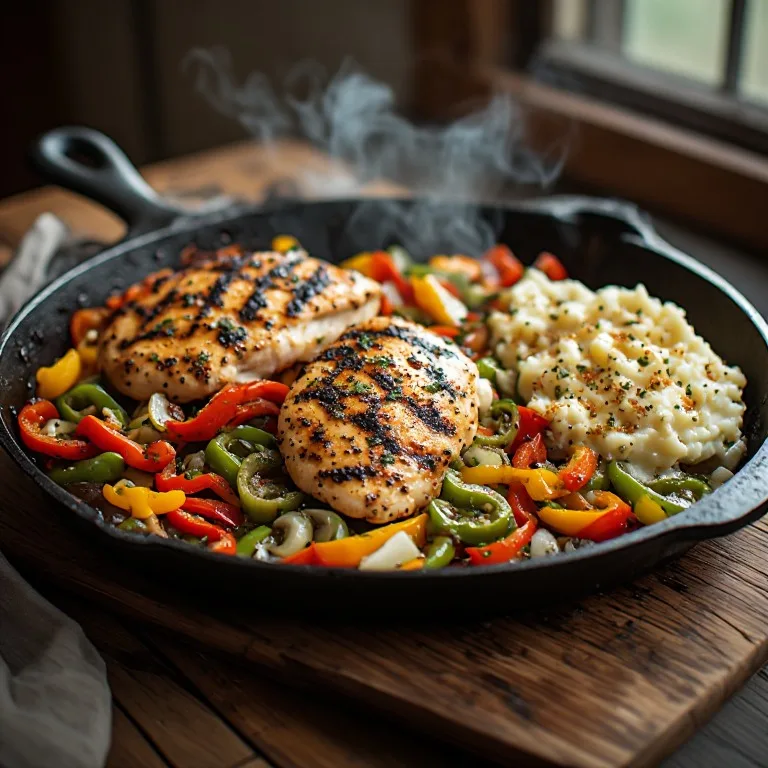
First coat (on the heat, 155°F): The glaze hits the hot surface and starts caramelizing, building a slightly sticky, lightly charred layer that bonds to the chicken. This is the flavor layer — the caramelization creates depth you don’t get from a sauce applied after cooking.
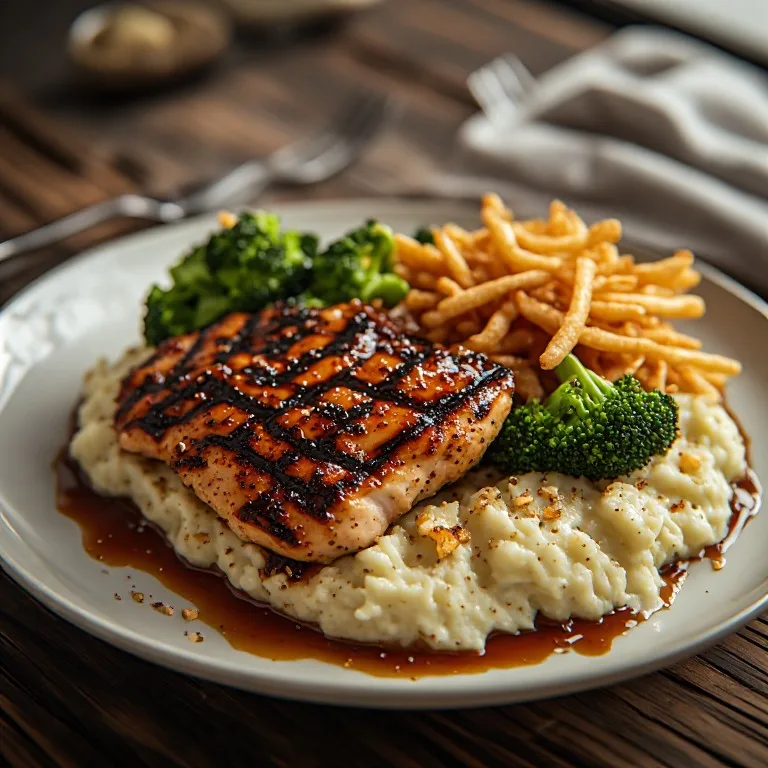
Second coat (off the heat, immediately): The residual heat from the chicken warms the fresh glaze without burning it. It stays glossy, thick, and bright — the visual layer that makes the plating look professional. Let it rest 3 minutes undisturbed and it sets into a lacquer.
Most home recipes skip the first coat to avoid burning and apply only a finishing coat. That’s why they look sauced, not glazed.
Why the Garlic Mashed Potatoes Matter
A plain cream-and-butter mash works fine under a strong glaze — the potatoes are background. But the sautéed garlic in this version connects the potato component to the rest of the plate. The glaze has roasted garlic in it; the potatoes have sautéed garlic in them. That repetition is what makes the dish taste like a unified whole rather than a chicken entrée with generic sides.
Yukon Gold potatoes over russets: Yukons have a naturally buttery, creamy texture from their lower starch and higher moisture content. They mash smoother with less butter and don’t go gluey if you work them a little. For a restaurant-style result with no gluey texture risk, use Yukons.
The Crispy Onion Straws
These take 10 minutes and are worth it. The textural contrast — brittle, lightly spiced onion straw against sticky, yielding glazed chicken — is a core part of why the restaurant presentation works. Without them, it’s a good glazed chicken. With them, it’s the dish.
The one rule: drain on a wire rack. Paper towels look like the right move but trap steam underneath the fried coating and make them go limp in two minutes. A rack keeps them suspended and air-circulating. Fry them last, keep them uncovered, and serve within 20 minutes.
Putting It Together
If you want to build this without spending 90 minutes in the kitchen in one shot, the glaze keeps for 3 weeks in the refrigerator and is the most time-intensive part. Make the Jack Daniel’s Glaze a day or two ahead, and the actual assembly — brine, grill, fry the straws, mash the potatoes — takes about 45 minutes.
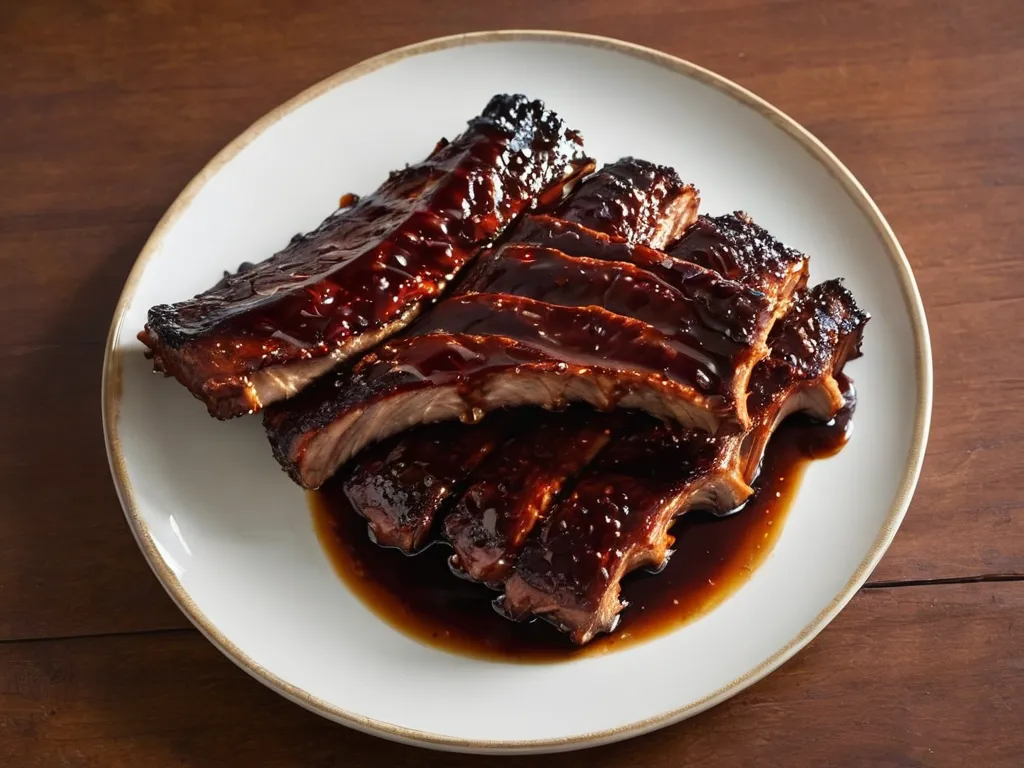
The same glaze runs across TGI Friday’s Jack Daniel’s salmon, ribs, and shrimp — see the full TGI Friday’s copycat collection. The chicken is just the most-ordered application, and the best demonstration of the double-glaze technique, since the protein doesn’t compete with the sauce the way salmon’s stronger flavor does.
Other sticky-sweet glazed chicken options worth knowing: Applebee’s Honey Pepper Chicken follows the same end-of-cook glaze logic but with a honey-and-black-pepper profile; Applebee’s Fiesta Lime Chicken goes a different direction entirely — citrus-marinated and topped with cheese — for when you want the full casual-dining feel without the sweetness of the whiskey glaze.