


Pin It

TGI Friday's Parmesan-Crusted Chicken

TGI Friday's Parmesan-Crusted Chicken
Jump to Recipe
Prep 20 min Cook 30 min Serves 4
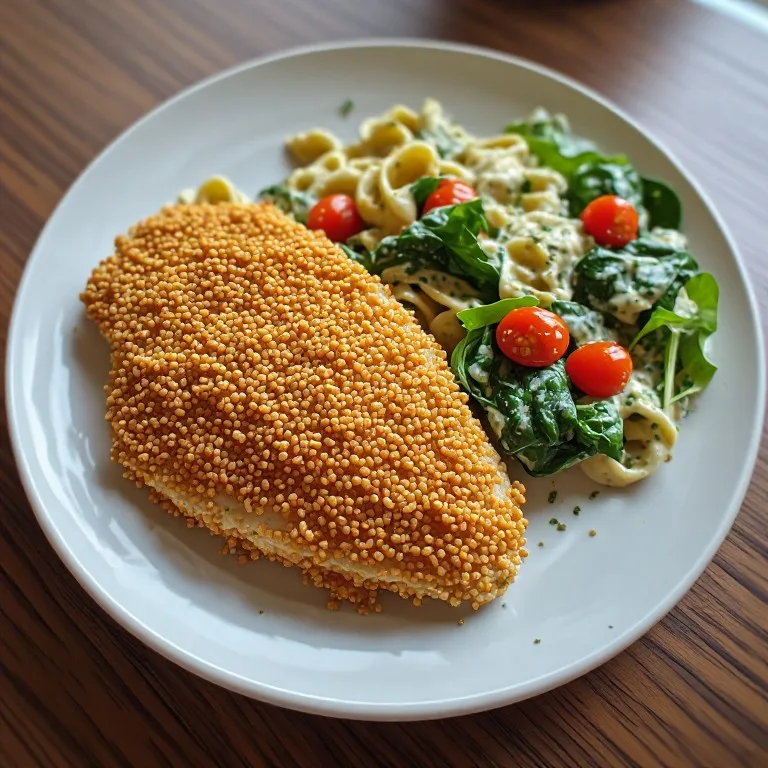
Quick answer: TGI Friday's Parmesan-Crusted Chicken is a chicken breast basted in caesar vinaigrette — not plain oil, not seasoning alone — so the Parmesan breadcrumb crust sticks and the dressing flavors the meat from the surface in. It's served with three-cheese tortelloni tossed in a spinach alfredo sauce and a fresh tomato mozzarella salad. The caesar baste is the one thing every copycat recipe forgets, and it's why restaurant-made versions taste different from plain Parmesan chicken at home. The restaurant plate runs approximately 1,000–1,100 calories; the homemade version is roughly 750 per serving. Total time: about 50 minutes.

Shop the tools

Gear matched to this recipe. These are Amazon affiliate links — we may earn a small commission if you buy, at no extra cost to you.

As an Amazon Associate, Copycat Spices earns from qualifying purchases. Product images are generic illustrations, not the exact item listed.

TGI Friday's Parmesan-Crusted Chicken

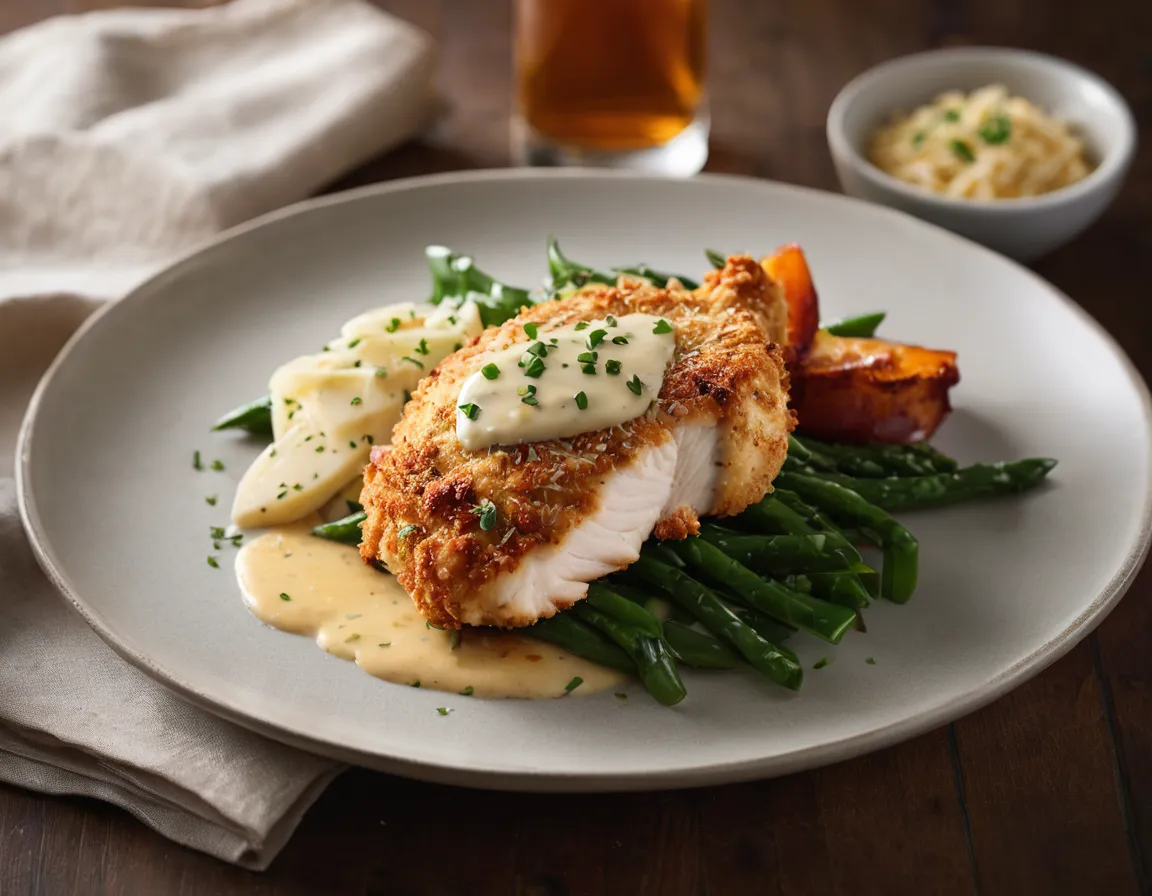
TGI Friday's Parmesan-Crusted Chicken made right: chicken breast basted in caesar dressing so the Parmesan crust adheres and flavors every bite, served with three-cheese tortelloni in spinach alfredo and a tomato mozzarella salad. The caesar baste is the step most home versions miss.

Medium Prep: 20 min Cook: 30 min Total: 50 min4 servings ~$4.50/serving
Prep20 min
Cook30 min
Total50 min
Servings
4
At home~$4.50/serving
vs
Restaurant~$20.25/serving
You save ~78%

The Story Behind the Recipe

TGI Friday's Parmesan-Crusted Chicken made right: chicken breast basted in caesar dressing so the Parmesan crust adheres and flavors every bite, served with three-cheese tortelloni in spinach alfredo and a tomato mozzarella salad. The caesar baste is the step most home versions miss.

Nutrition Facts

Per serving (4 servings)
Calories750
Total Fat34g
Total Carbs52g
Dietary Fiber3g
Sugars4g
Protein52g
Sodium1180mg

* Estimated values based on standard recipe preparation. Actual values may vary.

Ingredients

  • For the Parmesan-crusted chicken
  • For the spinach alfredo tortelloni
  • For the tomato mozzarella salad

Instructions

💡
Pro tip: This recipe tastes even better the next day. The flavors need time to meld together in the fridge.
❄️
Storage: Keeps in an airtight container in the fridge for up to 2 weeks. Freezer-friendly for up to 3 months.
🎃 Free Halloween cookbook — download now The Copycat Halloween Cookbook A ready-made, photo-illustrated PDF of our best halloween copycat recipes — free to download, no building required. Pay what you want to support if you love it.

Free PDF — instant download. We'll also send new seasonal copycat recipes now and then; unsubscribe anytime. Or just download it →

TGI Friday’s Parmesan-Crusted Chicken sits on the opposite end of the menu from the Jack Daniel’s line. Where the JD chicken is sweet, sticky, and barbecue-adjacent, this dish is firmly in Italian-American territory: clean savory, sharp Parmesan, garlic heat, and a cream pasta alongside. The two dishes do not share a technique or a flavor direction.

What they share is the thing Friday’s does well across their chicken lineup: a specific, restaurant-developed technique that home versions usually flatten into a generic approximation. With the JD chicken, that technique is the glaze reduction. Here, it’s the caesar vinaigrette baste.

The Caesar Baste: What Every Copycat Recipe Misses

Most Parmesan chicken recipes at home start with an egg wash or a plain oil coat to help breadcrumbs stick. TGI Friday’s uses caesar dressing.

This is not interchangeable. Caesar dressing contains oil, garlic, anchovy paste, lemon juice, Worcestershire sauce, and Parmesan — all of which absorb into the chicken surface during a 1–4 hour marinade. When you sear the crusted chicken, those flavors set into the surface rather than cooking off. The result is chicken that tastes seasoned from the outside in rather than tasting like a plain chicken breast that happens to have a cheesy coating.

The second function of the caesar baste is adhesion. Caesar dressing is stickier than plain olive oil and binds the Parmesan and panko crust to the chicken surface more aggressively. A chicken breast basted in caesar and crusted in Parmesan holds its crust intact through a hot skillet sear and a 400°F oven finish. A chicken breast coated in plain oil drops the crust into the pan.

Marinate for at least 1 hour. Four hours is better. Overnight doesn’t improve much past 4 hours — the surface is fully penetrated by then.

The Crust: Pure Parmesan, Not a Blend

Friday’s Parmesan crust is not a cheese blend. It’s Parmesan, panko breadcrumbs, and dried parsley — that’s it. The panko provides the structural crunch; the Parmesan provides the flavor and the golden color. There’s no Monterey Jack, no mozzarella, no cheddar.

Use freshly grated Parmesan from a block, not pre-grated Parmesan from a shaker can. Pre-grated contains cellulose powder (an anti-caking agent) that prevents the Parmesan from melting into a cohesive crust. Instead of forming a thin, fused layer, it stays granular and falls off. Freshly grated Parmesan fuses into the panko as the fat releases during searing, forming a lacquered crust that holds its shape from skillet to plate.

Press the crust on firmly. Don’t pat lightly and hope. Use the heel of your hand and press the entire surface contact area — the pressing is what distinguishes a crust from a coating.

The Tortelloni: It’s Part of the Dish, Not an Afterthought

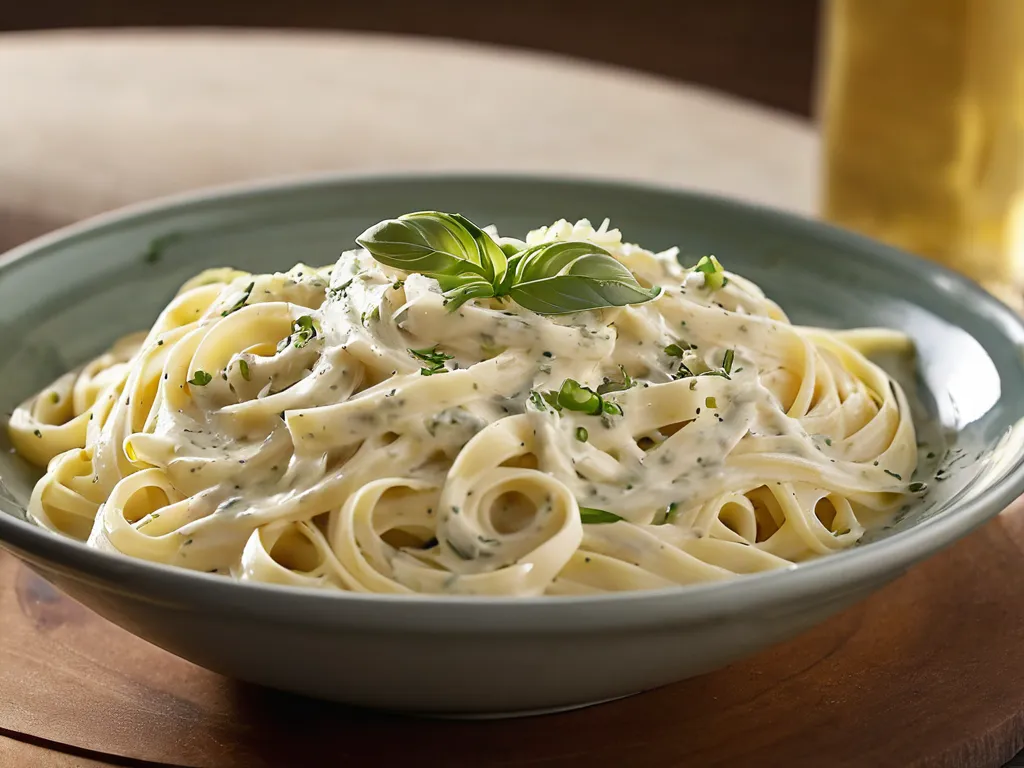
The current restaurant plating pairs the chicken with three-cheese tortelloni in a spinach alfredo. This is not a generic pasta side. The spinach alfredo is part of the dish’s flavor logic — the mild cream sauce, the wilted spinach, and the cheese-filled pasta create a backdrop that lets the sharp, garlicky Parmesan crust of the chicken read clearly rather than competing with another strong flavor.

Don’t substitute penne or rigatoni here. Filled pasta (tortelloni, tortellini) distributes the alfredo differently than hollow pasta — more coating, less pooling — which is why the texture reads the way it does in the restaurant.

For the alfredo: make it loose. Spinach alfredo should coat the tortelloni, not clump around it. The pasta cooking water is essential — add it a tablespoon at a time until the sauce just barely flows. It will tighten as it cools on the plate.

The Tomato Mozzarella Salad

Fresh tomato mozzarella is the third component of the plate and the only cold element. Its function is textural and temperature contrast — after warm, rich pasta and a hot, crispy chicken crust, cool tomato and fresh mozzarella reset the palate.

Make this first. It benefits from 30–45 minutes at room temperature for the tomatoes to soften slightly and the oil and balsamic to meld. Refrigerating it loses that benefit — the tomatoes get cold and the mozzarella firms up.

Searing the Crust

Get the skillet genuinely hot before the chicken goes in. A cold skillet steams the crust instead of searing it. The oil should be shimmering and close to smoking when the chicken hits the pan, crust-side down.

Three minutes, no touching. The crust will look translucent and slightly loose for the first 90 seconds. Resist the urge to peek by lifting it — this breaks the crust off. At the 3-minute mark, the crust will have released naturally from the pan. If it resists when you try to flip, give it another 30–45 seconds.

After flipping, the oven does the rest. The high heat (400°F) continues to develop the crust’s top without further risking it on the stovetop.

How It Compares to Longhorn’s Version

Longhorn’s Parmesan-Crusted Chicken is a legitimately different dish — not an overlapping recipe. The differences:

TGI Friday’sLonghorn
BinderCaesar vinaigrette basteRanch dressing paste
Crust compositionPure Parmesan + pankoParmesan + panko, provolone slice on top
When the crust goes onBefore cookingAfter the chicken is fully cooked
Cooking methodSear then oven-finishBroil the topping only
Starch/sideThree-cheese tortelloni, spinach alfredoMashed potatoes
Flavor profileGarlic-forward, savory, sharpTangier, creamier, ranch-influenced

Longhorn’s is the creamier, tangier version — ranch and melted provolone. Friday’s is the sharper, more savory, Italian-leaning version, driven by the garlic-anchovy caesar. They’re worth making both to understand the difference — they share a name but not a flavor.

More TGI Friday’s at Home
🥗

Make It Healthier

Love TGI Friday's Parmesan-Crusted Chicken but want a lighter version? Try these simple swaps:

  • ✓Pound the chicken breasts to an even 3/4-inch thickness before marinating — it reduces cook time and means every bite of the finished chicken is equally moist, without the thin ends drying out before the thick center reaches 165°F.
  • ✓Swap heavy cream for half-and-half in the alfredo and simmer 2–3 minutes longer to compensate. Saves roughly 80 calories per serving.
  • ✓Use reduced-fat fresh mozzarella in the salad — the texture is nearly identical and it cuts about 40 calories per serving.
  • ✓Serve over 2 oz of fresh pasta instead of a full package divided four ways — the alfredo sauce is rich enough that a smaller pasta portion with extra spinach still reads as a complete plate.

Frequently Asked Questions

What makes TGI Friday's Parmesan-Crusted Chicken taste different from regular Parmesan chicken?

The caesar vinaigrette baste applied to the chicken before crusting. Most home recipes coat chicken in egg wash or plain olive oil to help breading stick — Friday's uses caesar dressing, which does two things at once: it acts as a physical adhesive that holds the Parmesan crust to the chicken surface, and it flavors the meat from the outside in with the garlic, anchovy, lemon, and Worcestershire that make caesar dressing what it is. The result is chicken that tastes seasoned all the way to the surface, not just on the crust. Marinating for at least 1 hour (up to 4) deepens this effect significantly.

What is the full TGI Friday's Parmesan-Crusted Chicken plate?

As of 2025–2026, the dish is a Parmesan-crusted chicken breast served with three-cheese tortelloni tossed in spinach alfredo sauce, and a fresh tomato mozzarella salad on the side. The tortelloni is integral to the plate — it's not a swappable side, and the spinach alfredo that sauces it is part of the dish's flavor profile. Earlier versions of the menu paired the chicken with mashed potatoes and lemon-butter broccoli; the tortelloni plating is the current restaurant version.

How is TGI Friday's Parmesan-Crusted Chicken different from Longhorn's version?

Several differences, starting with when the crust goes on. Longhorn's Parmesan-Crusted Chicken uses ranch dressing as the binder, mixed with Parmesan and panko into a paste that's spread on top of the chicken after it's fully cooked, topped with a slice of provolone, and broiled until the cheese bubbles; it's served with mashed potatoes. Friday's uses caesar vinaigrette as a baste applied before cooking, so the crust cooks onto the chicken through a sear and oven finish, and the crust is pure Parmesan and panko with no melting cheese slice on top. Friday's plates it with three-cheese tortelloni in spinach alfredo rather than potatoes. The flavor profile of the two dishes is genuinely different — Longhorn's is creamier and tangier (ranch plus melted provolone); Friday's is sharper and more savory, with the garlic-anchovy caesar flavor driving the chicken.

How do I get the Parmesan crust to stay on the chicken?

Two things. First, use the caesar dressing baste — it's stickier than plain oil, and the proteins in the dressing help the Parmesan adhere. Second, press the crust mixture firmly onto the chicken with the heel of your hand rather than just patting lightly. After pressing, let the crusted chicken rest at room temperature for 10 minutes before searing — this helps the crust bond to the baste before it hits the heat. When you sear crust-side down, don't move the chicken for the first 3 minutes; moving it before the crust sets tears it off. Let it release naturally when it's ready.

Can I use bottled caesar dressing instead of homemade?

Yes, and it's what the restaurant uses. Brighter-tasting, garlicky bottled caesar works well — Cardini's, Ken's, or Wishbone are common benchmarks. Avoid the very mild or sweet versions; you want one with a pronounced anchovy-garlic-lemon character, since that's the flavor the chicken absorbs during marinating. Avoid light or fat-free caesar for the baste — the fat in the dressing is part of what helps the crust adhere and the chicken stay moist during the high-heat finish.

What pasta works if I can't find three-cheese tortelloni?

Fresh three-cheese tortellini (the smaller version) is the most direct substitute and widely available refrigerated at most grocery stores (Buitoni or DeLallo brands). Dry tortellini works but takes longer to cook and has less filling flavor. If you can't find any tortellini or tortelloni, pappardelle or fettuccine in a spinach alfredo sauce is the best-tasting fallback — flat pasta coats in alfredo more evenly than penne or rigatoni.

How many calories are in TGI Friday's Parmesan-Crusted Chicken?

The full restaurant plate — chicken, tortelloni, and tomato mozzarella salad — runs approximately 1,000–1,100 calories per nutrition trackers (CalorieKing, MyFoodDiary; exact current figures should be confirmed at tgifridays.com/nutritional). The chicken alone is roughly 400 calories; the spinach alfredo tortelloni accounts for most of the remainder. The homemade version in this recipe runs approximately 750 calories per plate with measured ingredients and one serving of pasta.

Can I bake instead of sear the chicken?

You can bake the full chicken at 425°F for 22–26 minutes — the crust browns well in a hot oven. What you lose is the quick high-heat sear that sets the crust's bottom layer before the oven time. If baking only: press the crust on top, place crust-side up on a wire rack set over a sheet pan, drizzle the top with a small amount of olive oil, and bake at 425°F for 22–26 minutes until the internal temperature reaches 165°F. For maximum browning, switch the oven to broil for the last 3–4 minutes — watch it closely, Parmesan goes from golden to burnt fast.

What can I use instead of heavy cream for the spinach alfredo?

Half-and-half makes a lighter alfredo that still coats the tortelloni — use the same volume but simmer it a few minutes longer to concentrate. Whole milk requires a roux (butter + flour paste) to thicken, which changes the sauce character. Cream cheese thinned with pasta cooking water is a pantry-friendly hack: 3 oz cream cheese + 1/2 cup pasta water whisked together makes a smooth, clingy sauce. Avoid low-fat alternatives for the alfredo — they tend to break (the fat separates) when the cheese is added to hot liquid.

Love this recipe? Share it!

Free PDF: our 12 most-wanted copycat recipes — instant download.

Made it? Buy us a coffee

Every recipe here is free, with no paywalls. If this one was a hit at your table, a small tip keeps new copycats coming.

$

TGI Friday's is a trademark of its owner, used here only to describe the dish this recipe recreates. This is an independent copycat written in our own words — Copycat Spices is not affiliated with, endorsed by or sponsored by TGI Friday's.

Ratings & Reviews

—
No ratings yet

Rate this recipe

Click a star to rate

Leave a Review

0/500

CS

Copycat Spices Editorial

Researched + fact-checked. Every recipe on Copycat Spices is built from published sources — official ingredient lists, brand-published recipes, interviews and food-science references — and fact-checked before it goes live, then written as clear, step-by-step instructions for home cooks of all skill levels.

Learn more about our mission →