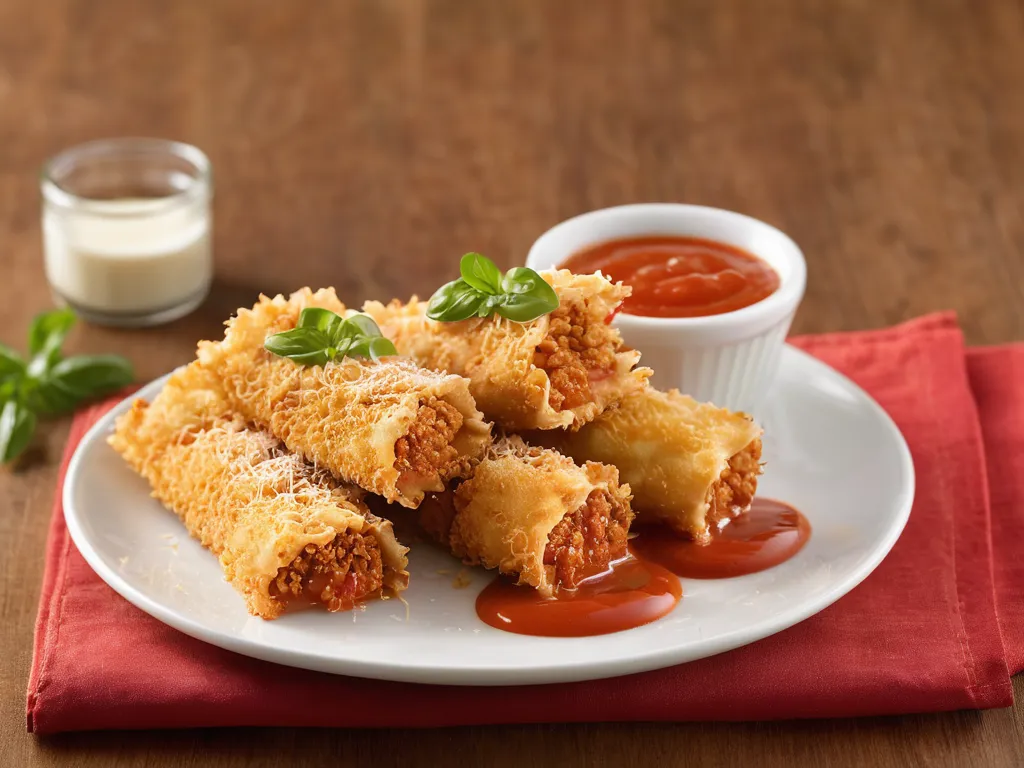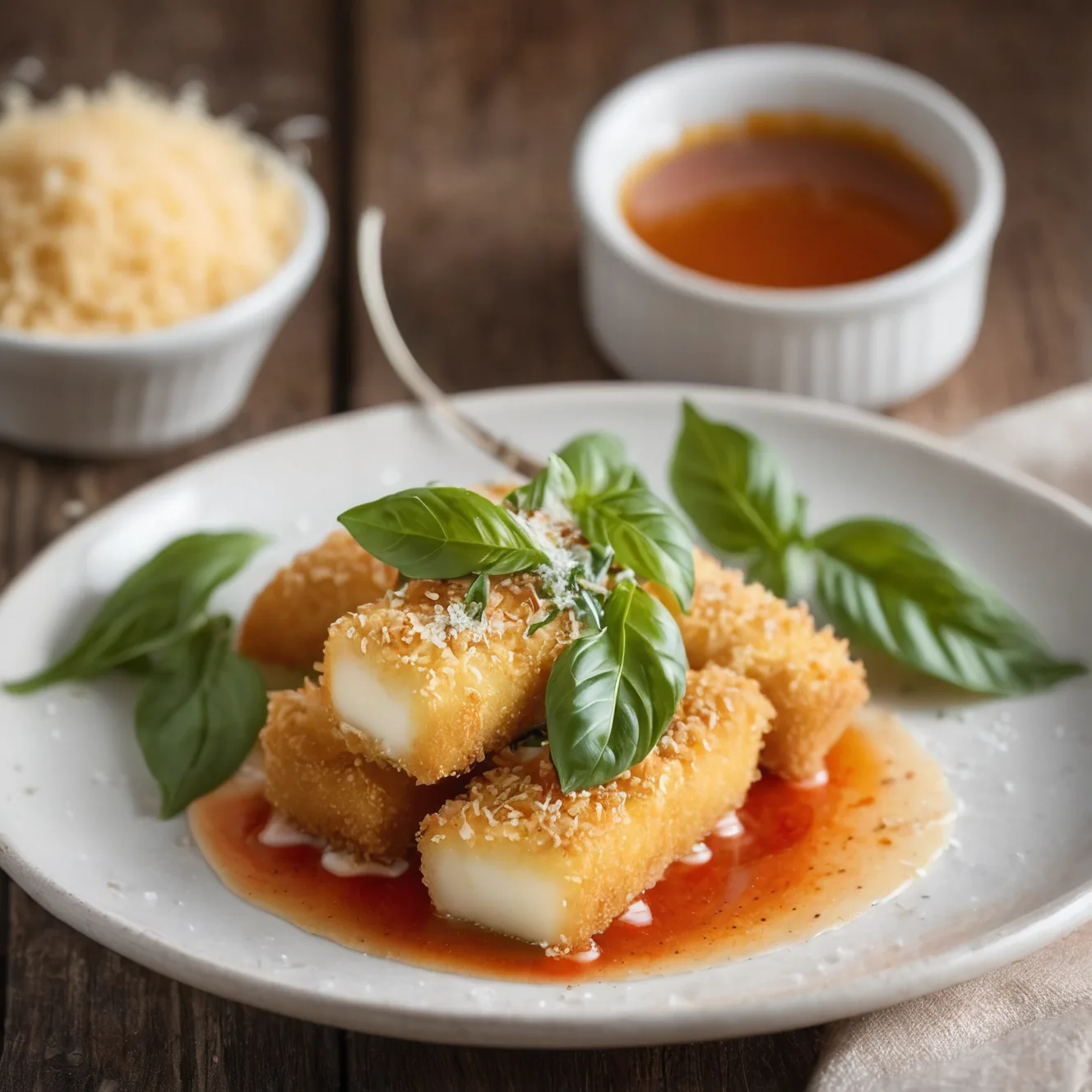
The copycat TGI Fridays mozzarella stick comes down to three things most recipes get wrong: whole-milk low-moisture block mozzarella (never fresh, string, or pre-shredded), a double coat of Parmesan-seasoned panko, and a mandatory 2-hour freeze before frying at 350°F for 45–60 seconds. Get those right and the cheese stays inside the crust instead of leaking into the oil.
TGI Fridays popularized the American mozzarella stick in the 1970s when they added it to their menu as one of the first bar-and-grill appetizers of the era. Fifty years later, it’s still the most recognizable item on their menu — and one of the most consistently failed copycat recipes online, because most versions skip the step that actually makes them work.
The Cheese Choice Is the Foundation
Most mozzarella stick recipes fail before the oil even heats up because they use the wrong mozzarella.
Fresh mozzarella: Too much moisture. It melts at a lower temperature and releases steam that punches through the coating from the inside out. You get cheese on the sheet pan, not inside the stick.
String cheese: Doesn’t melt correctly. The heat-processing used to make string cheese pull in strings changes its protein structure — it softens and stretches but won’t achieve the gooey molten interior that TGI Fridays is known for.
Pre-shredded mozzarella: Coated in anti-caking agents that inhibit melting. Not workable.
The right choice: a block of whole-milk, low-moisture mozzarella. Polly-O, Sargento Whole Milk Block, and store-brand blocks at any grocery store all work. Cut it yourself into sticks. This is the same format the restaurant uses.
Why Freezing for 2 Hours Is Non-Negotiable
This is the step that separates a mozzarella stick that holds together from one that becomes a flat disc of cheese in the bottom of the pot.
When mozzarella hits 130°F, it starts to melt. When it hits 160°F, it goes fully liquid. Vegetable oil at 350°F reaches those temperatures fast — in under 30 seconds if the cheese starts at room temperature.
When the cheese is frozen, it starts at 0°F (or lower) rather than 40°F. The oil still needs to crisp the coating, but the cheese now takes 45–60 seconds to reach melting temperature instead of 20–25 seconds. That 20-second difference is exactly the window the coating needs.
A single coating is rarely enough. The double-coat creates a crust thick enough to survive the time it takes for the cheese to heat through. Thin coating + warm cheese = blowout. Thick coating + frozen cheese = the TGI Fridays result.
The Double-Coat in Practice
The coating station has three components: flour-cornstarch, egg-milk, and seasoned panko-Parmesan.
Why cornstarch in the flour? Pure flour absorbs egg evenly but doesn’t add texture. Cornstarch mixed into the flour creates a slightly sturdier, crispier adhesion base — the same principle behind a tempura batter or Korean-style fried chicken coating. A 4:1 flour-to-cornstarch ratio (1/2 cup flour + 2 tablespoons cornstarch) is the balance that works here.
Why Parmesan in the panko? Parmesan has very low moisture and concentrated fat, which means it promotes browning efficiently at 350°F. It also adds a savory, slightly nutty note to the crust that balances the mild mozzarella inside. Grate it finely — coarse grated Parmesan falls off during the second coat.
The double-coat sequence: flour → egg → panko → egg → panko. Press the panko firmly each time. The second coat needs to adhere to the first coat’s egg layer, not slide off. Press and roll rather than just dipping.
The Marinara: Simple and Correct
TGI Fridays calls theirs the “original marinara sauce.” It’s a classic Italian-American tomato sauce — not a complex bolognese, not a vodka sauce, not jarred pizza sauce. San Marzano tomatoes, garlic, basil, olive oil, and a pinch of sugar.
The sugar is the functional detail. San Marzano tomatoes are less acidic than standard canned tomatoes, but any canned tomato carries some sharpness that reads as harsh without adjustment. One teaspoon of granulated sugar rounds the sauce without making it detectable as sweet — it just removes the sharp edge.
Simmer uncovered for 15–20 minutes. The goal is a sauce that’s slightly thickened and reduced in rawness, not cooked down to paste. Keep it pourable.
Cost Comparison
| Home (8 sticks + marinara) | TGI Fridays (8 sticks) | |
|---|---|---|
| Mozzarella (1 lb block) | ~$3.50 | — |
| Panko, flour, egg, oil | ~$1.00 | — |
| Parmesan | ~$0.50 | — |
| Marinara (San Marzano can) | ~$0.50 | — |
| Total | ~$5.50 | ~$13–15 |
| Per stick | ~$0.69 | ~$1.56–1.88 |
Scaling and Make-Ahead
The breaded, frozen sticks hold well in the freezer for up to 3 weeks in a zip-lock bag. Make a double batch, freeze in a single layer on a sheet pan, then transfer to a bag once solid. Fry from frozen — no thawing, same 45–60 second time. This makes them a genuine freezer appetizer for last-minute use.
The marinara keeps refrigerated for up to 5 days or frozen for 3 months. Reheat over low heat before serving.
Pairing with the Full Fridays Appetizer Spread
TGI Fridays built its identity on the bar-food appetizer format — the combination plate of mozzarella sticks, potato skins, and wings. The copycat TGI Fridays Jack Daniel’s glaze covers the signature sauce that runs across chicken, salmon, and ribs on their menu. The copycat loaded potato skins complete the classic app spread — thick skins, sharp cheddar, crispy bacon, sour cream.
For a party appetizer run, make the mozzarella sticks first and freeze them (they can sit for weeks), make the potato skins day-of, and prep the Jack Daniel’s glaze with chicken strips an hour before serving. Everything holds or reheats without the mozzarella sticks sogging — they go from freezer to fryer to table.