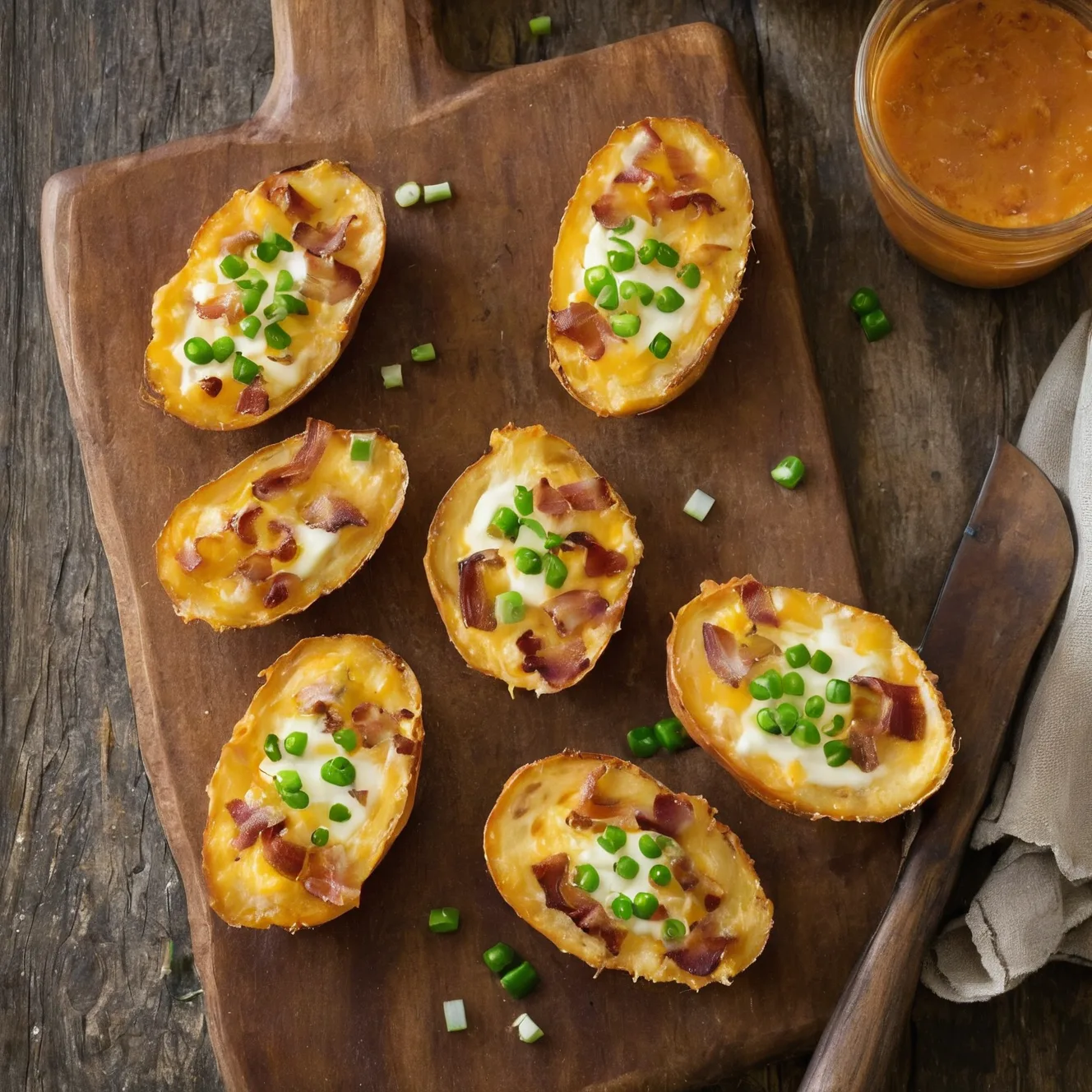
TGI Friday’s Loaded Potato Skins
TGI Friday’s is widely credited with turning the humble potato skin — once kitchen waste, the peel discarded after scooping potatoes for mashed — into one of the defining appetizers of American casual dining. The chain’s own account credits a cook in 1974 who fried the leftover shells, seasoned them with Fridays’ fry seasoning, and topped them with cheddar and bacon. (The invention story is contested: Chicago’s R.J. Grunts, which opened in 1971, is credited by some food writers with putting potato skins on a menu first. Whoever got there first, it was Fridays’ fried-and-loaded version — crackling bacon, shredded cheddar, sour cream, chives — that became the template nearly every casual chain copied.) Within a decade the loaded potato skin was a staple from coast to coast, and it remains one of Fridays’ signature starters.
The home version falls short for one consistent reason: it’s treated like a one-step recipe. Bake a potato, scoop it, dump cheese on top, microwave. The result is soft, gummy, and nothing like the restaurant.
The restaurant version is a three-step process, and two of those steps happen before any toppings touch the potato.
TL;DR
Bake russet potatoes at 400°F for 60 min. Halve, scoop to ¼-inch shell. Brush melted butter on inside AND outside. Broil skin-side-up 3–4 min, then flip and broil cut-side-up 3–4 min. Fill with shredded block cheddar and crumbled bacon. Broil 2–3 min to melt. Serve with cold sour cream and green onions. Serves 2–4 as an appetizer, ~210 cal per skin.
The Three Steps Most Home Recipes Collapse Into One
Step 1: Bake the potato properly. The potato has to go directly on the oven rack, not on a sheet pan. The pan traps moisture and steams the bottom of the potato, leaving the skin soft on one side. Direct rack contact — all four sides open to circulating hot air — makes the skin dry and firm all the way around. 400°F for 55–65 minutes. Done when a fork slides in without resistance and the skin feels papery.
Step 2: Crisp the shells before any toppings. After scooping, the shell wall has residual starch and moisture from the potato flesh that was against it. If you add cheese now and bake, that moisture steams out under the cheese and makes the inside soggy. The fix is a butter-and-broil step on both surfaces: brush the inside cavity, brush the outside skin, broil skin-side-up first, then flip and broil cut-side-up. Both surfaces need heat. The shells should feel firm — not flexible — before anything goes on top of them. Note: some accounts describe TGI Fridays cutting each potato into thirds lengthwise and discarding the middle piece, which produces two narrower, cradle-shaped skins per potato. Halves (this recipe) and thirds both work; thirds give you a slightly deeper, more cupped shell that holds the filling. Either cut produces a great result.
Step 3: Toppings, then a short final broil. Once the shells are properly crisped, cheese and bacon go in and the pan goes back under the broiler just long enough to melt the cheese. Two to three minutes. The cheese shouldn’t bake for 15 minutes — it just needs to melt.
The Potato and the Scoop
Medium russets, about 8 oz each. Anything smaller gives thin shells that tear. Larger potatoes take longer to bake and produce oversized skins that are unwieldy to eat. Scrub them clean — the skin is part of what you’re eating.
Scoop to exactly ¼ inch of potato flesh remaining on the shell wall. Use a small spoon or melon baller and go slowly — a little patience here prevents tears. Too much flesh left means the inside won’t crisp. Too little and the shell becomes fragile and tears.
The Butter Setup
Melt 3 tablespoons of butter with 1 tablespoon of neutral oil (oil raises the smoke point), a pinch of kosher salt, garlic powder, and smoked paprika. Brush this on the inside cavity of every shell. Then flip and brush the skin side. Both sides, thoroughly. This is the step that gets skipped.
The Crisp
Broiler, shells skin-side-up first. Three to four minutes — watch them, don’t time them on auto. You want to see sizzling and some color developing on the exterior. Then flip, cut-side-up. Another three to four minutes until the inside walls are golden and the shell feels firm when pressed.
If you want the full restaurant-style crunch, the deep-fry version is worth doing: 375°F oil, two to three minutes per side. The result is a rigid, uniformly crispy shell that’s noticeably closer to what you get at the restaurant. The broil method in these steps gets you close but not all the way there.
The Cheese
Sharp cheddar, shredded yourself from a block. Not a bag. Bagged shredded cheddar has anti-caking agents (cellulose, potato starch) that coat the shreds and prevent clean melting — you get a grainy or oily result instead of smooth and glossy. Buy a 6-ounce block of sharp cheddar and use a box grater. The difference is visible.
Two to three tablespoons per skin. Don’t be stingy, but don’t stack it so high it slides off before the broiler can melt it.
The Bacon
Six strips of thick-cut bacon, cooked until genuinely crispy in a skillet or the oven, then crumbled. Not chewy. Not partly soft. Crispy — so it holds its texture under the heat of the final broil. Thick-cut bacon has more fat and renders into better crumbles than thin-cut, which can go too hard or too flat.
The bacon goes on over the cheese before the final broil — this way it gets a little extra warmth without overcooking, and the fat renders slightly into the cheese below.
The Sour Cream
Cold. Not baked on. Served alongside or as a direct dollop after the skins come out. Cold sour cream against a hot, molten cheese-and-bacon skin is the contrast that makes the whole thing work. If you add it before baking it becomes warm, thin, and tangy-sour rather than rich and cool.
Serving
These are best eaten within 3–4 minutes of coming out of the oven — the shells stay crisp for a few minutes before they start softening from the steam of the cheese. Make sure the dip, green onions, and plates are ready before the final broil.
A full appetizer order (8 skins, 4 potatoes) serves 2–4 depending on whether it’s the only appetizer or part of a spread. For a game-day setup, two batches is the right call.
Variations
Extra cheese, loaded style: Double the cheddar and add a tablespoon of cream cheese mixed into the bottom of each skin before the cheddar goes on. The cream cheese creates a slightly richer, denser cheese layer that doesn’t slide.
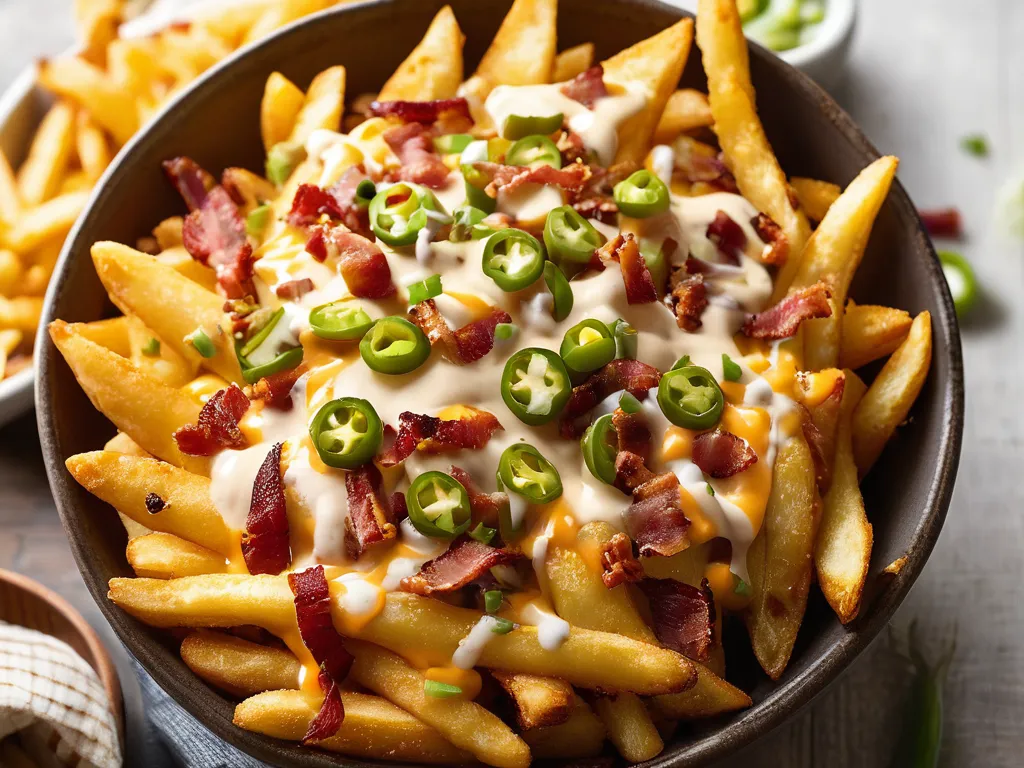
Jalapeño loaded: Add jarred pickled jalapeño slices over the bacon before the final broil. The Chili’s Texas Cheese Fries approach — pickled (not raw) jalapeños are more flavor-consistent and don’t add raw heat that overpowers the cheese.
Buffalo style: Skip the bacon. Toss shredded cooked chicken with buffalo sauce, spoon it into the shells, top with cheddar, and broil. Finish with blue cheese crumbles, sliced celery, and a drizzle of Frank’s RedHot across the plate.
Broccoli cheddar: Sub out the bacon for chopped steamed broccoli florets and use extra cheddar. Essentially a Panera broccoli cheddar soup stuffed into a potato skin.
Storage and Reheating
Leftover baked, topped skins keep in the fridge up to 3 days (but the shells will soften). Reheat in a 375°F oven for 8–10 minutes — not the microwave. The oven dries out some of the moisture that’s crept in and firms the shells back up somewhat. The first day is significantly better than the third.
Untopped, crisped shells (before adding cheese and bacon) can be stored at room temperature for 24 hours or refrigerated for up to 3 days, then reheated and topped when ready. This is the best do-ahead approach for parties.
More Loaded Appetizers and Potato Recipes
- Chili’s Texas Cheese Fries — same casual dining loaded format, fries instead of skins; includes the real poured nacho cheese sauce
- Copycat TGI Friday’s Jack Daniel’s Glaze — the other Friday’s staple; use it on chicken or shrimp alongside these skins for a full Friday’s spread
- Copycat Texas Roadhouse Loaded Baked Potato — the fully loaded whole potato version for a main course
- Viral TGI Friday’s Loaded Potato Skins — Soup Version — the whole loaded potato skin experience turned into a soup; uses the same flavor profile
See all TGI Friday’s copycat recipes →