



The Impossible-to-Book SoHo Appetizer, Made at Home
The Corner Store opened in SoHo in September 2024 and became the hardest reservation in New York by October — which is not usually how it works for a new restaurant. Most places earn their reputation over months or years. The Corner Store compressed that timeline because two things happened almost simultaneously: the kitchen opened with food that was actually good, and Taylor Swift walked in within the first few weeks.
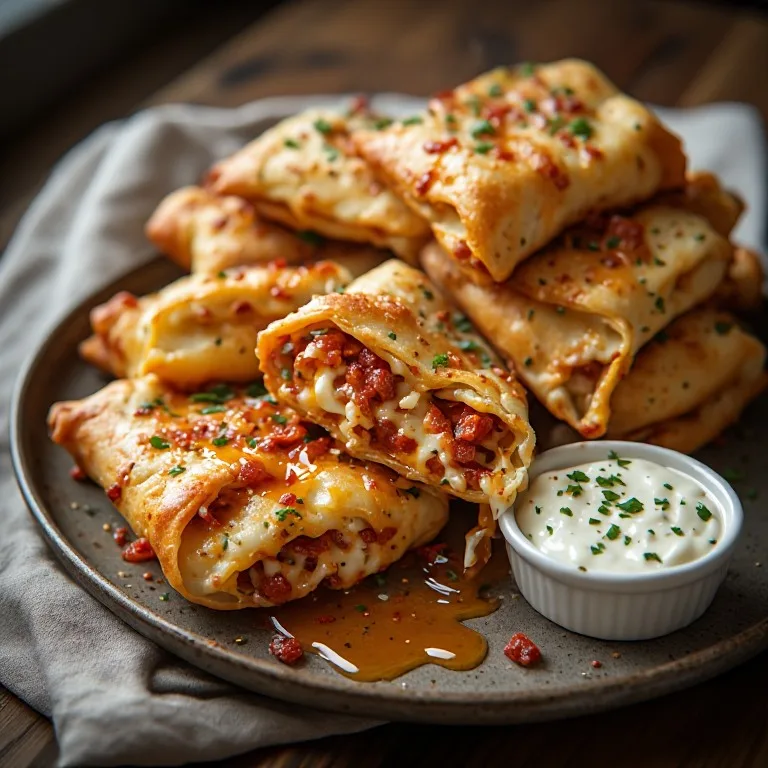
The five cheese pizza rolls — listed on the menu as “The Works” — are the dish everyone orders first and most people post about. They arrive golden and tight, smelling of garlic and hot dough, with a Calabrian chili hot honey drizzle and a side of ranch. You pull one apart and get the pull: five cheeses going soft and stringy, shot through with pepperoni, melted ‘nduja, and jalapeño. The concept is explicit: this is an upscale version of Totino’s pizza rolls, the frozen kind that came out of the microwave semi-molten in the 1990s. The Corner Store version asks what that snack would taste like if someone made it properly — and then loads it.
The answer: mozzarella for pull, raclette for the big Alpine melt, taleggio for a savory washed-rind funk, Parmigiano-Reggiano for depth, and drained ricotta as the creamy base that binds the rest — plus Esposito pepperoni, spreadable ‘nduja, and fresh jalapeño for heat and cured-pork savoriness. The Calabrian chili hot honey is the finishing note that makes it unmistakable: fruity, spicy-sweet, and slightly funky in the way chili oil on pizza is. Ranch, not marinara, is the dip.
Making the Dough vs. Using Store-Bought
| Scratch dough | Store-bought | |
|---|---|---|
| Time | +1 hr 15 min (including rest) | 0 extra time |
| Flavor | Slightly more complex, milky yeast character | Nearly identical |
| Control | Full control over thickness | Same |
| Cost | ~$0.75 for the batch | ~$1.29 per ball |
Store-bought pizza dough is a genuine shortcut here, not a compromise. The filling is the flavor story; the dough is the vehicle. Use store-bought if you’re time-constrained. Make scratch dough if you enjoy the process or want to make a larger batch.
The Filling — Why Each Component Is There
| Component | Role |
|---|---|
| Low-moisture mozzarella | Pull and stretch — the visual signature |
| Raclette | The big, buttery Alpine melt; the dominant melting cheese |
| Taleggio | Savory, pungent washed-rind funk — the “beefy” note |
| Parmigiano-Reggiano | Savory depth, the seasoning element |
| Drained whole-milk ricotta | Creamy base that binds the others and keeps the filling from going greasy |
| Esposito pepperoni (diced) | Cured-pork savoriness distributed through the filling |
| ’Nduja | Spreadable Calabrian sausage — melts in and carries most of the heat |
| Jalapeño | Fresh, grassy heat that cuts the richness |
Substitutions that work: Gruyère or fontina for raclette (same melt, milder flavor); brie with the rind removed for taleggio (softer, less pungent); Pecorino Romano for Parmesan (sharper, saltier); cottage cheese for ricotta (drain it equally well); soppressata or soft chorizo plus extra Calabrian chili paste for ‘nduja.
Why 450°F and Not Lower
Pizza dough needs high heat to set the crust before the interior fully steams through. At 375°F, the interior heats too slowly relative to the surface, and you get a cooked but pale exterior with a slightly gummy crumb. At 450°F, the surface sets golden and blistered in 16–18 minutes while the filling inside reaches full melt. The rolls should look noticeably brown — not just pale gold — when you pull them. If they come out pale, they went in cold or the oven wasn’t fully preheated. An oven thermometer is worth $12 if you’re unsure about your oven’s calibration.
Scaling
This recipe makes 12 rolls (serves 4 as an appetizer, 2–3 as a light meal). To double it, make two separate batches of dough rather than one large batch — big doughs are harder to knead properly by hand and take longer to rise evenly. The filling doubles without issue; just scale the pepperoni and ‘nduja in proportion so the heat stays balanced.