
Pin It

Uncle Julio's Salsa

Uncle Julio's Salsa
Jump to Recipe
Prep 5 min Cook 10 min Serves 8 (about 3 cups)
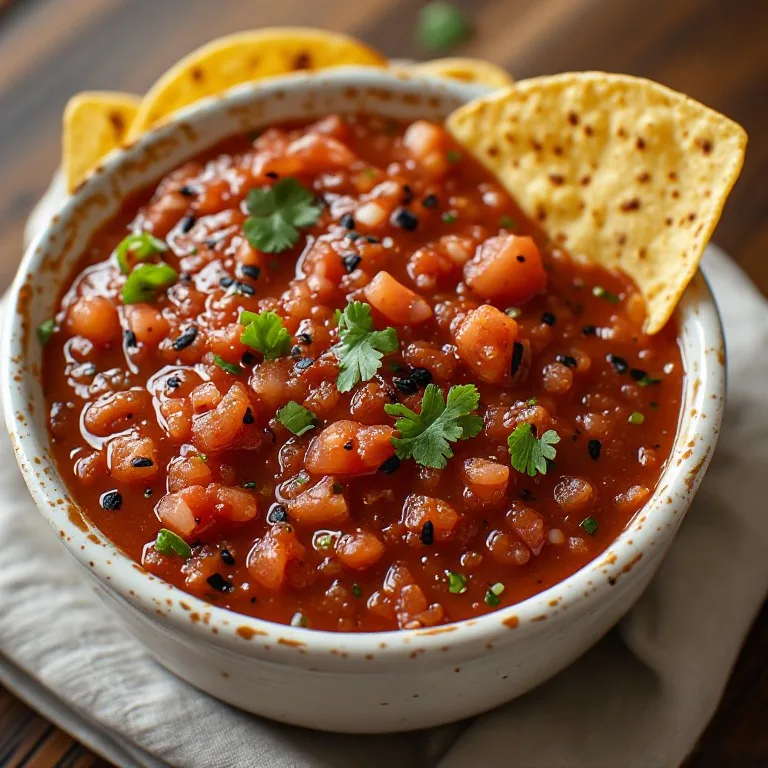
Quick answer: Uncle Julio's salsa is a fire-roasted restaurant salsa — Roma tomatoes and jalapeños charred directly on a gas burner (or under the broiler) until blackened, then pulsed in a blender with white onion, garlic, cilantro, lime juice, cumin, and salt to a semi-chunky consistency. The char is everything: it creates a smoky depth that separates this from a raw pico de gallo or a cooked canned-tomato salsa. You can make a full 3-cup batch in 15 minutes for about $4, and it keeps in the refrigerator for up to a week.

Shop the tools

Gear matched to this recipe. These are Amazon affiliate links — we may earn a small commission if you buy, at no extra cost to you.

As an Amazon Associate, Copycat Spices earns from qualifying purchases. Product images are generic illustrations, not the exact item listed.

Uncle Julio's Salsa

Make Uncle Julio's famous tableside salsa at home — the smoky, semi-chunky fire-roasted salsa served complimentary at the Dallas Tex-Mex chain, made by charring Roma tomatoes and jalapeños directly on the stove before blending. Ready in 15 minutes.

Easy Prep: 5 min Cook: 10 min Total: 15 min8 (about 3 cups) servings ~$3.15/serving
Prep5 min
Cook10 min
Total15 min
Servings
8
At home~$3.15/serving
vs
Restaurant~$14.17/serving
You save ~78%

The Story Behind the Recipe

Uncle Julio's was founded in 1986 by Brooke Smith in Dallas, Texas — the same city that gave us On the Border and El Fenix — as an upscale-casual alternative to the fast-food Tex-Mex chains that dominated at the time. The restaurant built its identity around cooking done properly: mesquite-grilled fajitas, hand-shaken margaritas made with fresh lime juice, tableside guacamole prepared to order, and a kitchen that makes fresh salsas, corn tortillas, and tamales in-house daily. It now operates 40+ locations across 11 states and remains one of the top-rated sit-down Tex-Mex chains in the country. A basket of chips with this salsa arrives complimentary at every table — the cost of that same basket ordered as an appetizer at a comparable restaurant runs $8–$12 elsewhere.

The technique that makes Uncle Julio's salsa distinct is fire-roasting: the tomatoes and jalapeños are charred on a hot surface until blistered and blackened before they go into the blender. The char creates Maillard-reaction compounds on the tomato skin that translate, once blended, into a smoky-sweet complexity that no amount of added spice or canned chipotle can replicate exactly. A raw salsa tastes bright but thin; a fully cooked (simmered) salsa tastes flat; fire-roasted sits in between — fresh and vibrant with a deep smoky undertone. On a gas stove, the tomatoes sit directly on the grate over a high flame; on electric, a screaming-hot cast iron pan or a broiler set to high does the same job in about the same time.

Nutrition Facts

Per serving (8 (about 3 cups) servings)
Calories25
Total Fat0g
Total Carbs5g
Dietary Fiber1g
Sugars3g
Protein1g
Sodium290mg

* Estimated values based on standard recipe preparation. Actual values may vary.

Ingredients

Instructions

💡
Pro tip: This recipe tastes even better the next day. The flavors need time to meld together in the fridge.
❄️
Storage: Keeps in an airtight container in the fridge for up to 2 weeks. Freezer-friendly for up to 3 months.
🎃 Free Halloween cookbook — download now The Copycat Halloween Cookbook A ready-made, photo-illustrated PDF of our best halloween copycat recipes — free to download, no building required. Pay what you want to support if you love it.

Free PDF — instant download. We'll also send new seasonal copycat recipes now and then; unsubscribe anytime. Or just download it →

Uncle Julio’s Salsa (Copycat)

Prep time: 5 min Cook time: 10 min Yield: About 3 cups (serves 8)

Uncle Julio’s salsa is the complimentary basket that arrives at every table before you’ve even ordered — a semi-chunky, fire-roasted salsa with a smoky depth that distinguishes it from both a fresh pico de gallo and a cooked restaurant-can salsa. The chain, founded in Dallas in 1986, makes their salsa fresh in-house daily. A 3-cup batch at home costs about $4 and takes 15 minutes. The only equipment required is a blender and a stove or broiler.

The complete recipe is in the recipe card above. What follows explains the techniques that matter.

Why Charring Makes the Salsa

There are three styles of salsa roja: raw (fresh tomatoes, never cooked), cooked (simmered tomatoes, Mexican-restaurant canned-base style), and roasted (tomatoes charred over flame or in a dry pan before blending). Uncle Julio’s falls firmly in the third category.

Charring transforms the tomato at the surface through the Maillard reaction — the same chemistry that browns a steak or toasts bread. The blackened exterior creates hundreds of new aromatic compounds that read as “smoky,” “savory,” and “slightly sweet” once blended in. The interior stays soft and juicy but the exterior chars fully, and when the whole tomato goes into the blender, the char disperses evenly through the finished salsa.

A raw salsa tastes bright and fresh but thin. A simmered salsa can taste flat and one-dimensional. Fire-roasted sits in the middle: it has the freshness of a raw salsa (the interior tomato was never cooked through) combined with a savory depth the raw version lacks.

The Char: Gas Stove vs. Broiler vs. Cast Iron

Gas stove is the fastest and produces the deepest char — the direct open flame hits the tomato skin in seconds. Place whole tomatoes directly on the metal grate over a high flame. The gas flame chars the skin in a pattern that follows the flame, so turning is important. Expect some mess — charred tomato juice drips. Clean the grate once it’s cooled.

Broiler is more hands-off and produces a more even char — the radiant heat from above works the entire visible surface at once without hot spots. Set it to its highest setting and get the rack 3 to 4 inches from the element. Flip once at the halfway mark. Slightly less dramatic char than open flame, but fully effective.

Cast iron pan is the best option for electric stoves. Heat the pan for 5 full minutes over the highest setting before adding anything — cast iron needs time to heat evenly and hold heat after the cool tomatoes land on it. A properly pre-heated cast iron chars tomatoes nearly as effectively as an open flame. A thin non-stick pan won’t reach the necessary temperature and will steam the tomatoes rather than char them.

Texture Control

The difference between Uncle Julio’s salsa and a smooth blended salsa roja is all in the pulse count.

Run the blender continuously for 15 seconds and you get a smooth, pourable red sauce — delicious on enchiladas, wrong for chip-dipping. Pull back to 6 to 8 one-second pulses and you get a restaurant-style semi-chunky salsa with visible tomato pieces and distinct pieces of onion and cilantro.

Start with 6 pulses and check. You can always pulse more — you cannot un-blend a smooth salsa. The charred tomato skins break down quickly once the blender blade contacts them; the onion and cilantro hold their shape slightly longer. After 6 pulses the texture is typically already right.

Why the 30-Minute Chill Matters

Fresh-made salsa is always better the next day. The 30-minute minimum chill is not about safety — it’s about flavor integration. The sharp, high-note acidity of fresh lime juice mellows as it reacts with the sugars in the charred tomato. The smokiness from the char deepens as it blends with the cumin and cilantro. The garlic’s harsh raw bite softens. An immediate-serve salsa tastes somewhat choppy — each ingredient announces itself separately. A chilled-for-30-minutes salsa tastes like a unified sauce.

For best results, make it the evening before and refrigerate overnight. Uncle Julio’s makes their salsa fresh daily, meaning any given batch was made at least a few hours before it reaches your table.
🥗

Make It Healthier

Love Uncle Julio's Salsa but want a lighter version? Try these simple swaps:

  • ✓Use only 1 jalapeño and keep the seeds for heat without adding more capsaicin-laden peppers — the calorie and sodium count doesn't change, just the heat
  • ✓Double the garlic (6 cloves) for added allicin and a more savory profile without any extra calories or sodium
  • ✓Add 1/2 cup of diced fresh tomato after blending to boost fiber and lycopene (lycopene is more bioavailable from cooked tomatoes, so the charred base already helps)
  • ✓Swap tortilla chips for sliced cucumber rounds or jicama sticks — same salsa, roughly 80% fewer calories per dipping session

Frequently Asked Questions

What is the copycat Uncle Julio's salsa recipe?

Char 1.5 lbs of Roma tomatoes and 2 jalapeños directly on a gas burner or under the broiler until blistered and blackened on all sides — about 8 to 10 minutes total, turning occasionally. Let them cool for 5 minutes. Remove the jalapeño stems (and seeds for less heat). Add the charred tomatoes and jalapeños to a blender with half a white onion, 3 garlic cloves, half a cup of cilantro, 2 tablespoons of lime juice, 1 teaspoon of cumin, 1 teaspoon of kosher salt, and half a teaspoon of sugar. Pulse 6 to 8 times until semi-chunky — not smooth. Taste and adjust salt and lime. Refrigerate for 30 minutes before serving so the flavors meld.

How do I char tomatoes without a gas stove?

Two options work well. The first is a cast iron skillet: heat the pan over the highest burner setting for 4 to 5 minutes until it is smoking hot, then add the whole tomatoes and jalapeños directly to the dry pan. Press them against the surface to char, turning with tongs every 2 to 3 minutes until blistered and blackened on all sides — about 10 to 12 minutes total. The second is the broiler: set it to its highest setting and place the tomatoes and jalapeños on a foil-lined sheet pan 3 to 4 inches from the heating element. Broil for 5 to 6 minutes, flip everything, and broil for another 4 to 5 minutes. The broiler produces a slightly milder char than direct flame, but is effective and requires no attention.

How chunky should Uncle Julio's copycat salsa be?

Semi-chunky — closer to a restaurant pico de gallo than a smooth blended salsa, but with no large whole pieces of tomato. The target is what food writers call a 'salsa roja asada': you can see distinct small pieces of tomato and onion, but the salsa flows off a chip rather than sitting on it in a pile. Achieve this by pulsing the blender in short bursts (6 to 8 pulses, each about 1 second) rather than running it continuously. If you over-blend it into a smooth sauce, it still tastes right — it just loses the texture character. You cannot un-blend a smooth salsa, so pulse conservatively and check between each burst.

How long does homemade Uncle Julio's salsa keep in the refrigerator?

Up to 7 days stored in an airtight container in the refrigerator. The char on the tomatoes actually acts as a mild preservative (the caramelized surface is less hospitable to bacteria than raw tomato juice). The salsa also improves over the first 24 to 48 hours as the charred, smoky compounds meld with the lime and cilantro — day-two salsa often tastes better than fresh. For longer storage, freeze in an ice cube tray (each cube is a convenient single-serving portion) and transfer the frozen cubes to a zip-lock bag for up to 3 months. Thaw overnight in the refrigerator; the texture softens slightly after freezing but the flavor is unchanged.

Can I make Uncle Julio's salsa without a blender?

Yes, with a food processor or a large molcajete (volcanic stone mortar and pestle). A food processor works identically to a blender — pulse in short bursts and check the texture after each one. A molcajete produces a slightly more rustic texture with small irregular pieces and a slightly different flavor (grinding develops essential oils in the ingredients differently than blade cutting), which is arguably more authentic to how restaurant salsas were made in Mexico before commercial blenders. If you have neither, finely dice the charred tomatoes and jalapeños by hand and mince the onion, garlic, and cilantro — the result is more of a pico de gallo style but still very good.

How do I control the heat level in this salsa?

Three controls: (1) Seed the jalapeños — scraping out the seeds and white pith before blending reduces the heat by 30 to 50%. The seeds carry most of the capsaicin. (2) Use one jalapeño instead of two. (3) Swap the second jalapeño for half a poblano pepper (charred the same way) — poblanos add a roasted pepper flavor with very little heat. For a spicier salsa, add one serrano pepper alongside the two jalapeños; serranos are 3 to 4 times hotter than jalapeños and add a sharper, more piercing heat compared to the rounded warmth of jalapeño. Always char the additional peppers the same way — raw serrano in an otherwise roasted salsa tastes harsh and unintegrated.

Can I use canned fire-roasted tomatoes instead of charring fresh ones?

Yes, and it works reasonably well — canned fire-roasted tomatoes (Muir Glen is the best-known brand) are pre-roasted over an open flame and packed immediately, so they carry genuine char flavor. Drain the liquid before adding to the blender, and reduce the salt by about 1/4 teaspoon since canned tomatoes are already salted. The flavor is less intense than fresh-charred but still noticeably smokier than a raw salsa. A 14.5-oz can equals roughly 1.5 lbs of fresh tomatoes. One limitation: canned tomatoes are softer and more broken down than freshly charred ones, so the blended texture will be slightly smoother even with conservative pulsing — not a problem if you prefer a thinner salsa.

Love this recipe? Share it!

Free PDF: our 12 most-wanted copycat recipes — instant download.

Made it? Buy us a coffee

Every recipe here is free, with no paywalls. If this one was a hit at your table, a small tip keeps new copycats coming.

$

Uncle Julio's is a trademark of its owner, used here only to describe the dish this recipe recreates. This is an independent copycat written in our own words — Copycat Spices is not affiliated with, endorsed by or sponsored by Uncle Julio's.

Ratings & Reviews

—
No ratings yet

Rate this recipe

Click a star to rate

Leave a Review

0/500

CS

Copycat Spices Editorial

Researched + fact-checked. Every recipe on Copycat Spices is built from published sources — official ingredient lists, brand-published recipes, interviews and food-science references — and fact-checked before it goes live, then written as clear, step-by-step instructions for home cooks of all skill levels.

Learn more about our mission →