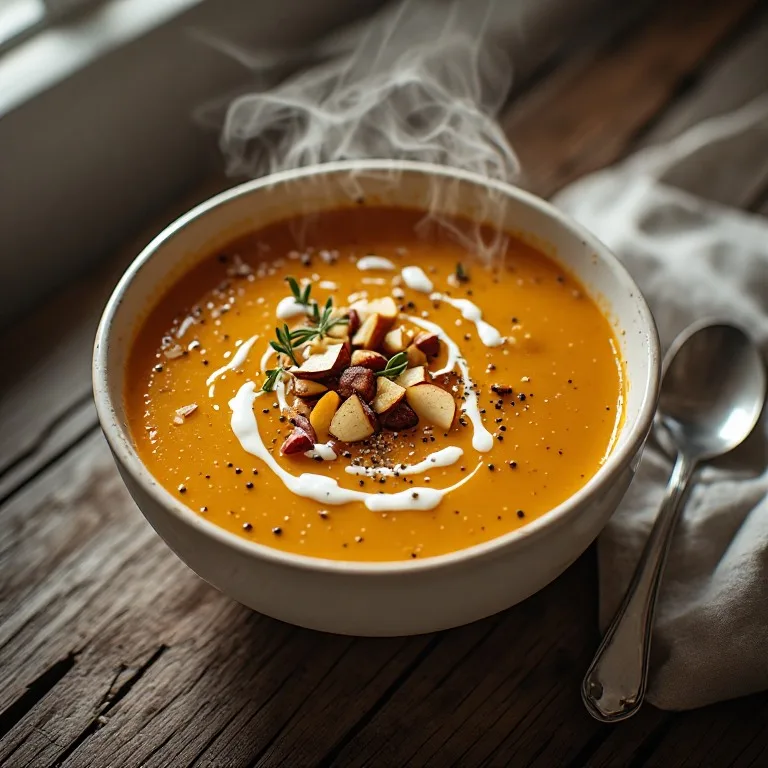



Union Square Cafe Butternut Squash and Apple Soup with Chestnuts
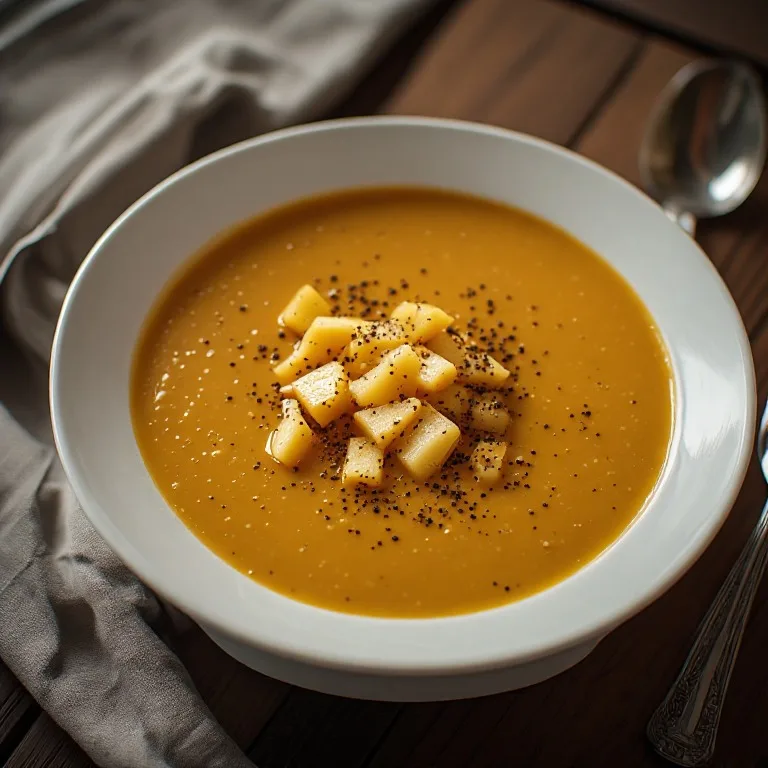
The soup that Danny Meyer put in his 1994 cookbook and never took off the fall menu. Roasted squash, golden delicious apples, browned butter — then strained until it’s genuinely silky. The chestnuts in the garnish are not optional. They are the whole point.
Why Roasting the Squash Changes Everything
Most home butternut squash soups start by peeling and cubing raw squash, adding it to simmering liquid, and blending the result. The soup is fine. Union Square Cafe’s is different.
Placing a halved squash cut-side down in a 400°F oven for 50 minutes does something boiling can’t: the direct contact with the hot pan caramelizes the squash’s natural sugars, building a layer of complexity that registers on your palate as depth and sweetness at the same time. The cut face goes golden-brown. That color is flavor. Scrape every bit of it into the pot.
The difference shows up immediately in the finished soup. Side by side, the roasted version tastes complete and savory-sweet; the boiled version tastes simply like squash. For a sweeter, cream-forward casual-chain take on the same fall flavor, our Panera autumn squash soup leans into pumpkin and warm spice — this version is drier, earthier, and built around the chestnuts rather than the spice rack.
The Straining Step: Non-Negotiable
After blending, the soup looks smooth but isn’t quite. Butternut squash flesh contains fine fibrous cell walls that survive blending and give the finished soup a slightly gritty texture — invisible in rustic soups, noticeable in a fine-dining context.
The Union Square Cafe version gets strained through a fine-mesh sieve, with a ladle pressing the purée through in firm circular motions. It takes five minutes. What comes out of the sieve is silky in the way only straining produces — the same texture as a restaurant velouté. What stays in the sieve are the solids responsible for any graininess.
Skip this step and the soup is still good. Do it and you’ll understand why the restaurant charges $20 a bowl.
Building the Flavor Base
The soup’s base is a browned butter with onion and apples:
Brown the butter properly. Melt 3 tablespoons of butter over medium heat, swirling occasionally, until the milk solids at the bottom of the pan turn light golden-brown and the butter smells like toasted hazelnuts. This takes 3–4 minutes. The brown butter becomes the first flavor layer — nutty, complex, slightly sweet.
Soften the onion fully. Add sliced onion with a pinch of salt and cook 10–12 minutes until completely translucent and beginning to soften further. Half-cooked onion tastes raw and sharp in a finished purée; fully cooked onion disappears into the soup.
Add the apples. Golden Delicious is the restaurant’s choice — mild, sweet, and low-acid so it harmonizes with the squash rather than competing. Two sliced apples go in for 5 more minutes. They don’t need to cook down entirely here; they’ll finish in the simmer.
The Chestnuts Are the Signature
Roasted chestnuts are the garnish that distinguishes this soup from every other butternut squash soup on the planet. Their flavor is earthy, sweet, and dense — totally different from the apple-forward soup beneath them. Every bite has contrast: silky squash, chewy chestnut, cool crème fraîche, aromatic thyme.
Jarred whole chestnuts (sold in the fall section of most grocery stores and widely available online) are the practical choice. They’re already cooked and peeled; roughly chop them. If you prefer fresh, score an X on the flat side of each nut, roast at 400°F for 15–20 minutes until the shell pulls back at the score, and peel while still warm. Either way: roughly chop, not finely minced. You want texture.
Make-Ahead Strategy for Thanksgiving
This soup was made for Thanksgiving. It gets better overnight as the flavors meld, and it reheats perfectly.
Up to 3 days ahead: Make through the straining step. Store the soup (without cream) in an airtight container in the refrigerator. This is the recommended approach — the one-day-old version is more complex than the fresh version.
Day of: Reheat the soup gently over medium-low heat, stirring. When hot, stir in the cream, adjust seasoning, and finish with the apple cider vinegar. Taste again — cold storage sometimes dulls the salt slightly. Ladle into warm bowls and garnish to order.
Freezing: Freeze the strained, pre-cream soup for up to 2 months. Thaw overnight in the refrigerator, reheat gently, add cream at the end.
Recipe Scaling
This recipe makes 6 starter portions — right for a Thanksgiving table. For 12, double everything and use a large stockpot. The straining step takes proportionally longer but produces the same result.
For smaller households, the recipe halves cleanly: one small butternut squash (about 1½ lbs), 1 apple, and 2 cups of stock.
Round Out the Thanksgiving Menu
This soup is a first course, not a main. Serve it before a Boston Market-style rotisserie chicken for the table that would rather not wrestle a whole turkey, with a basket of Texas Roadhouse rolls and cinnamon honey butter to catch the last of the bowl. For dessert, stay in Danny Meyer’s world with the Maialino orange olive oil cake — the other NYC restaurant recipe that left his kitchens and ended up in home ovens everywhere.
Union Square Cafe has been at 101 East 19th Street in Manhattan since 2016, when it moved from its original location two blocks away. The restaurant is open Tuesday through Sunday. A bowl of the butternut squash and apple soup runs $19–22 depending on the season.