
Pin It

V8 Original Vegetable Juice

V8 Original Vegetable Juice
Jump to Recipe
Prep 15 min Cook 0 min Serves 4 (8 oz each)
Quick answer: Blend 1½ lbs quartered ripe tomatoes with ½ cup water until completely smooth. Add 2 chopped carrots, 2 celery stalks, 1 small peeled beet, ½ cup fresh parsley, and 1 cup baby spinach. Blend on high 2 minutes. Strain through a fine-mesh sieve, pressing with a spoon — this step is essential for a smooth result. Stir in 1 teaspoon Worcestershire sauce, ¾ teaspoon salt, and 1 tablespoon lemon juice. Refrigerate 1 hour before serving. Makes 32 oz (4 cups), roughly 45 calories per 8-oz glass. Keeps 4 days in the refrigerator.

Shop the tools

Gear matched to this recipe. These are Amazon affiliate links — we may earn a small commission if you buy, at no extra cost to you.

As an Amazon Associate, Copycat Spices earns from qualifying purchases. Product images are generic illustrations, not the exact item listed.

V8 Original Vegetable Juice

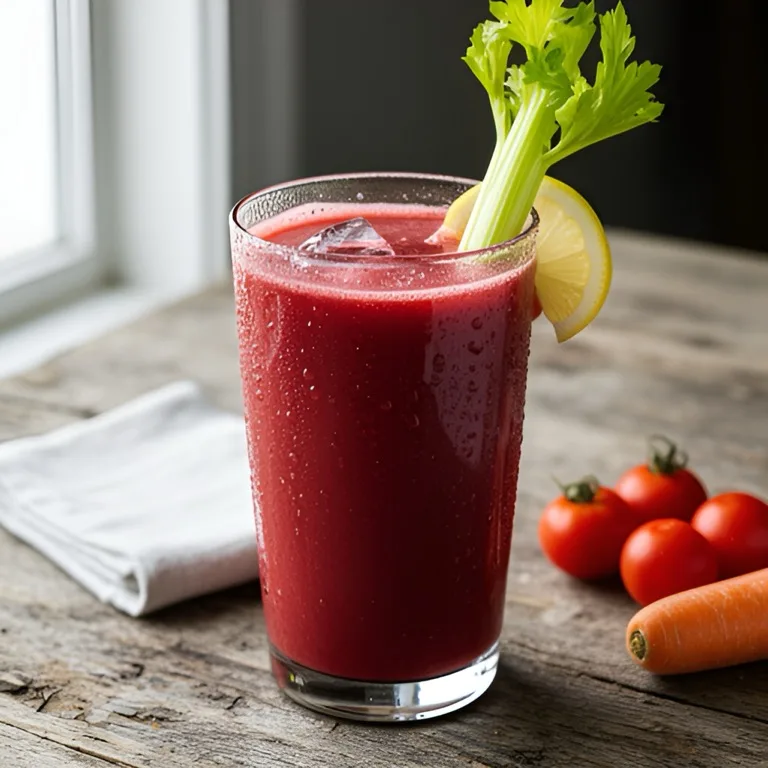
Make a copycat V8 juice at home in 15 minutes — all 8 vegetables, strained smooth, with real tomato depth and far less sodium than the bottle. About $2 per 32-oz batch vs. $3.63 for a 46-oz can.

Easy Prep: 15 min Cook: 0 min Total: 15 min4 (8 oz each) servings ~$4.50/serving
Prep15 min
Cook0 min
Total15 min
Servings
4
At home~$4.50/serving
vs
Restaurant~$20.25/serving
You save ~78%

The Story Behind the Recipe

V8 Original Vegetable Juice was developed around 1933 by W.G. Peacock at the New England Products Company in Massachusetts — named for the eight vegetables in the blend: tomato, carrot, celery, beet, parsley, lettuce, watercress, and spinach. It launched at a time when drinking vegetables was a novelty; early sales were strong enough to attract Campbell Soup Company, which acquired the brand in 1948. The commercial formula uses concentrated vegetable juices reconstituted with water, not fresh-pressed juice, which gives the shelf-stable product its uniform flavor and long shelf life. A 46-oz bottle retails for about $3.63 at Walmart — about 7.9 cents per ounce.

The practical challenge with the home version is the three vegetables that are nearly impossible to juice in meaningful quantities: lettuce, watercress, and spinach. The workaround most home cooks land on — and what this recipe uses — is a cup of baby spinach blended directly into the tomato base, which covers all three and adds almost nothing to the flavor profile (these vegetables contribute color and micronutrients, not taste). The other key difference: commercial V8 lists 640mg of sodium per 8-oz serving from added salt. This recipe uses ¾ teaspoon of salt across four servings, landing at about 450mg — noticeably less, and adjustable further down if you prefer.

Nutrition Facts

Per serving (4 (8 oz each) servings)
Calories45
Total Fat0g
Total Carbs9g
Dietary Fiber2g
Sugars7g
Protein2g
Sodium450mg

* Estimated values based on standard recipe preparation. Actual values may vary.

Ingredients

  • For the juice
  • To season

Instructions

💡
Pro tip: This recipe tastes even better the next day. The flavors need time to meld together in the fridge.
❄️
Storage: Keeps in an airtight container in the fridge for up to 2 weeks. Freezer-friendly for up to 3 months.
🎃 Free Halloween cookbook — download now The Copycat Halloween Cookbook A ready-made, photo-illustrated PDF of our best halloween copycat recipes — free to download, no building required. Pay what you want to support if you love it.

Free PDF — instant download. We'll also send new seasonal copycat recipes now and then; unsubscribe anytime. Or just download it →

V8 Original Vegetable Juice (Copycat)

Prep time: 15 min + 1 hr chill Cook time: 0 min Yield: 4 cups (4 × 8-oz servings)

V8 is eight vegetable juices in one bottle — tomato carrying most of the flavor, with carrot, celery, beet, parsley, lettuce, watercress, and spinach filling in the earthy, aromatic background. The commercial formula uses concentrated juices reconstituted with water and adds 640mg of sodium per serving, which is the main reason to make it at home. The copycat version takes 15 minutes, costs about $2 for a 32-oz batch, and has noticeably more fresh vegetable character than the can.

The one non-negotiable step: strain through a fine-mesh sieve. Blended vegetable juice without straining is a thick, pulpy smoothie — nothing like V8’s pourable, clean consistency. Everything else is flexible.

Why Blend, Not Juice

Most V8 copycat attempts call for a juicer. The blender-and-strain approach is better for most home kitchens for three reasons.

First, it handles leafy greens. A centrifugal juicer yields almost nothing from parsley and spinach — the leaves spin out the side without extracting juice. A blender reduces them completely, and the fine-mesh sieve removes the fiber afterward.

Second, yield is higher. Blending and pressing through a sieve captures more liquid from the vegetables than a centrifugal juicer, which discards a significant portion as wet pulp. Cold-press juicers match the sieve yield but take longer to clean.

Third, the result is closer to the commercial product. V8 is made from juice concentrates, not fresh-pressed juice — the flavor is slightly softer and more integrated than what comes straight out of a juicer. Blending and straining produces a similarly smooth, unified character.

What Worcestershire Sauce Does Here

The V8 label lists “natural flavoring” after the vegetable juice and salt. In the context of a savory vegetable drink, this almost certainly refers to a flavor profile built around umami: yeast extract, fermented compounds, or Worcestershire-style seasoning. Every home cook who has reverse-engineered the commercial V8 flavor lands on Worcestershire as the closest approximation — it adds depth without announcing itself.

One teaspoon across four servings adds about 2 calories and just enough savory background to make the juice taste like V8 rather than fresh tomato juice. For a fully vegan version, substitute low-sodium soy sauce in the same quantity.

The Sodium Gap

Commercial V8’s 640mg sodium per 8-oz serving is its most widely commented-on fact — it is higher than most sports drinks and approaches the sodium in a serving of potato chips. This is not a rounding error; the salt level is a deliberate part of the flavor profile, functioning as a seasoning for the vegetables in the same way salt functions in soup.

This recipe’s ¾ teaspoon of salt across four servings lands at about 450mg per serving — 30% less than the commercial product. The practical guidance: season after tasting cold, not warm. Cold juice tastes flatter than room-temperature juice, so you tend to undersalt at room temperature and be surprised at how flat the batch tastes straight from the refrigerator. Taste it fully chilled and adjust from there.

Scaling and Variations

Spicy Hot (V8 Spicy Hot copycat): Add 1 teaspoon of hot sauce (Tabasco or Crystal) and ¼ teaspoon of cayenne to the finished juice. The commercial V8 Spicy Hot adds heat without changing the base formula — the same quantity of vegetables, the same seasoning, just the heat layer on top.

Low-sodium: Reduce salt to ¼ teaspoon and use low-sodium Worcestershire. Each serving lands around 200mg sodium.

Bloody Mary base: This juice, as written, is an excellent Bloody Mary mix. Add 1½ oz vodka, a squeeze of lemon, and a dash of horseradish per serving. The fresh vegetable character stands out more clearly against the vodka than a canned Bloody Mary mix does.
🥗

Make It Healthier

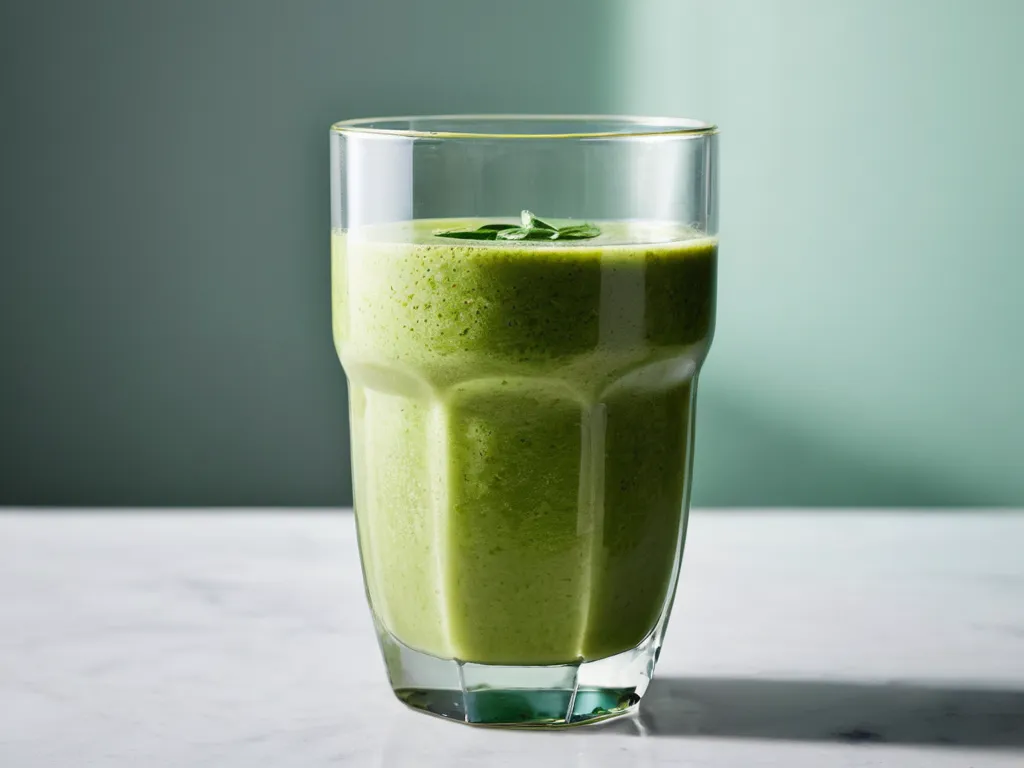
Love V8 Original Vegetable Juice but want a lighter version? Try these simple swaps:

  • ✓Reduce salt to ½ teaspoon — sodium drops to about 300mg per serving (vs. 640mg in the commercial bottle) while the vegetable flavor stays intact
  • ✓Add 1-inch piece of fresh ginger to the blend — it contributes warming depth that pairs naturally with carrot and beet without adding calories
  • ✓Use canned fire-roasted tomatoes instead of fresh for a deeper, more concentrated flavor and an extra day of refrigerator life
  • ✓Skip the Worcestershire sauce for a fully vegan, additive-free version and add 1 teaspoon of low-sodium soy sauce or a small piece of kombu to approximate the umami depth

Frequently Asked Questions

What is the copycat V8 juice recipe?

Blend 1½ lbs quartered ripe tomatoes with ½ cup water until smooth. Add 2 roughly chopped carrots, 2 celery stalks, 1 small peeled and chopped beet, ½ cup fresh parsley, and 1 cup baby spinach. Blend on high for 2 minutes until completely smooth. Strain through a fine-mesh sieve, pressing firmly with a spoon or rubber spatula to extract as much juice as possible. Discard the solids. Stir in 1 teaspoon Worcestershire sauce, ¾ teaspoon fine salt, and 1 tablespoon fresh lemon juice. Chill 1 hour before serving over ice. Makes 4 cups.

What does V8 stand for?

V8 stands for the eight vegetable juices in the original formula: tomato, carrot, celery, beet, parsley, lettuce, watercress, and spinach. The commercial product uses concentrated juice from all eight, reconstituted with water. Tomatoes dominate the formula by volume — recipes that reverse-engineer V8 consistently find tomatoes make up roughly 70–75% of the juice. The other seven vegetables each contribute a small percentage, adding earthiness (beet), aromatic depth (celery, parsley), and mild sweetness (carrot).

Do I need a juicer to make copycat V8 at home?

No. A blender and a fine-mesh sieve work better for most home cooks than a centrifugal juicer. A blender processes the vegetables in under 3 minutes and gives you complete control over the blend; the sieve removes all the pulp and produces a smooth result. A cold-press (masticating) juicer also works well and produces a slightly cleaner flavor, but it is slower to clean and the yield is about the same. A centrifugal juicer is the one to avoid for this recipe — it works poorly on leafy greens like parsley and spinach, which are key flavor components here.

Why does my homemade V8 taste different from the bottle?

Three likely reasons. First, commercial V8 uses concentrated and reconstituted vegetable juice — the concentration process slightly deepens and mellows the flavors compared to fresh. Second, the commercial product adds beta carotene and Worcestershire-style 'natural flavoring' that give it a slightly savory, umami depth beyond raw vegetables. This recipe adds Worcestershire sauce to approximate this, but the result is still brighter and more tomato-forward than the bottle. Third, salt level matters: the commercial product has 640mg sodium per 8 oz — if your batch tastes flat, the first fix is more salt. Taste cold, after chilling — flavors mute at room temperature.

How much sodium is in V8 juice?

Commercial V8 Original contains 640mg of sodium per 8-oz (240mL) serving — that is 28% of the recommended daily value and makes V8 one of the highest-sodium bottled juices on the market. This copycat recipe uses ¾ teaspoon of salt across four 8-oz servings, which works out to roughly 450mg per serving — 30% less than the bottle. You can reduce further to ½ teaspoon for about 300mg per serving without significantly affecting flavor, since the Worcestershire sauce adds some background salinity. Campbell's also sells V8 Low Sodium, which contains 140mg per serving.

Can I make V8 juice without a beet?

Yes. The beet adds earthy depth and a dark reddish-purple color contribution to the mix, but its flavor is subtle relative to the tomato volume. If you skip the beet, the juice will be a brighter, cleaner tomato-red without the faint sweetness and earthiness the beet provides. A reasonable substitute is a small roasted red pepper, which adds color and a mild sweetness. Alternatively, a tablespoon of beet powder stirred in at the end replicates the color and some of the earthy flavor without the prep. Omitting the beet entirely is also fine — the result tastes like a very fresh, lightly vegetable-forward tomato juice.

How long does homemade V8 juice keep?

Stored in a sealed jar or airtight container in the refrigerator, homemade V8 keeps for 3 to 4 days. Fresh-squeezed juice lacks the preservatives and commercial pasteurization of the bottled product, so it oxidizes faster and can develop off-flavors quickly. The lemon juice in this recipe helps slow oxidation. For longer storage, freeze the juice in ice-cube trays, then transfer to a zip-lock bag — it keeps up to 3 months and can be thawed overnight in the refrigerator or defrosted quickly in a glass of cold water. Do not pressure-can this recipe without following a tested USDA home-canning procedure for vegetable juice (35 minutes at 10 psi in a pressure canner).

Can I use canned tomatoes instead of fresh?

Yes, and the result is actually closer to the commercial V8 flavor. Canned whole tomatoes (28-oz can, drained slightly) produce a more concentrated, mellow tomato base than fresh — similar to the concentrated tomato juice in the commercial formula. Use fire-roasted canned tomatoes for a slightly richer, deeper flavor, or plain whole peeled tomatoes for a cleaner result. The Worcestershire and salt ratios stay the same. Canned-tomato V8 also keeps a day or two longer than the fresh-tomato version because the canning process has already neutralized many of the microorganisms that cause fresh juice to spoil.

Love this recipe? Share it!

Free PDF: our 12 most-wanted copycat recipes — instant download.

Made it? Buy us a coffee

Every recipe here is free, with no paywalls. If this one was a hit at your table, a small tip keeps new copycats coming.

$

V8 is a trademark of its owner, used here only to describe the dish this recipe recreates. This is an independent copycat written in our own words — Copycat Spices is not affiliated with, endorsed by or sponsored by V8.

Ratings & Reviews

—
No ratings yet

Rate this recipe

Click a star to rate

Leave a Review

0/500

CS

Copycat Spices Editorial

Researched + fact-checked. Every recipe on Copycat Spices is built from published sources — official ingredient lists, brand-published recipes, interviews and food-science references — and fact-checked before it goes live, then written as clear, step-by-step instructions for home cooks of all skill levels.

Learn more about our mission →