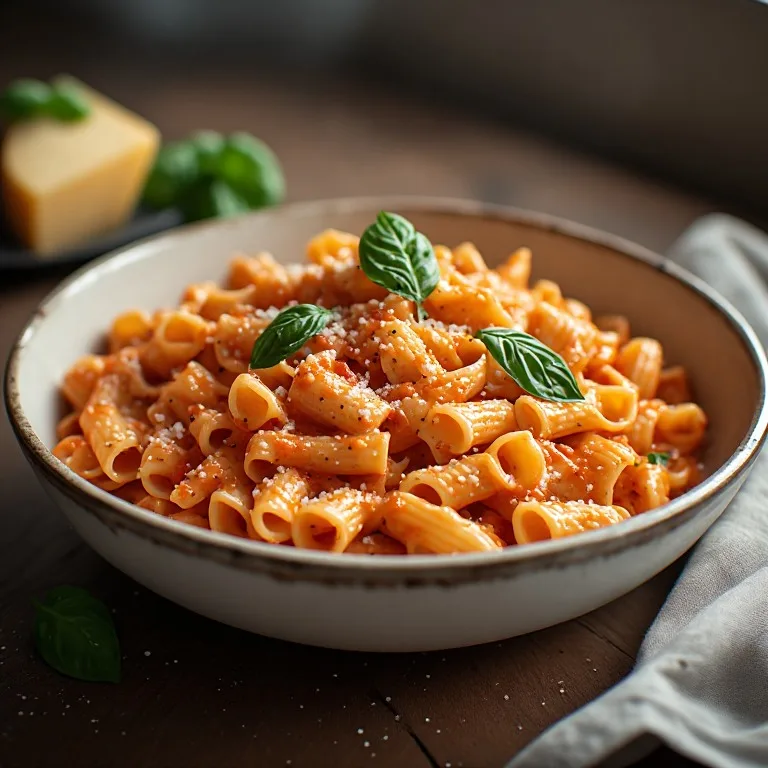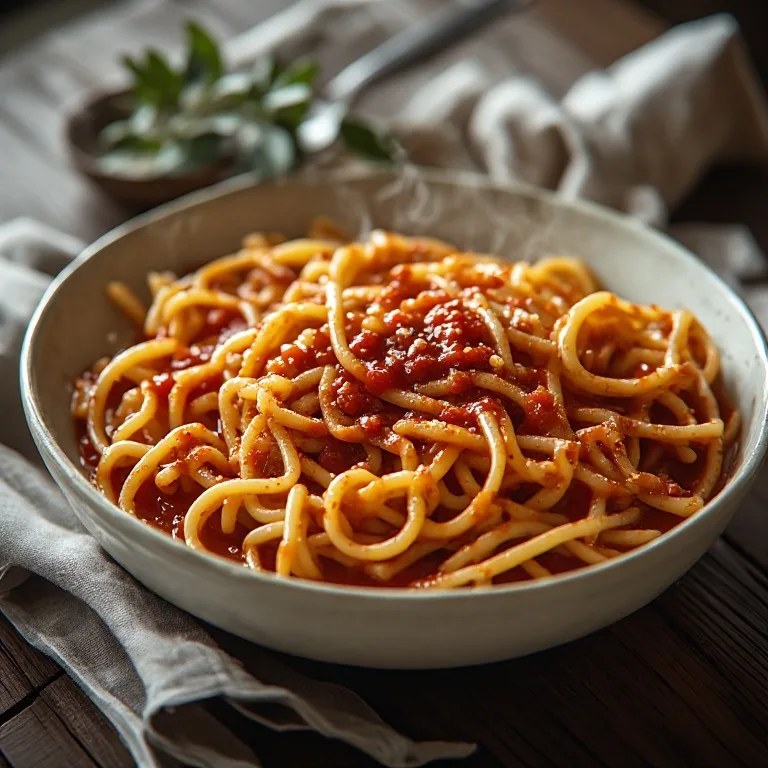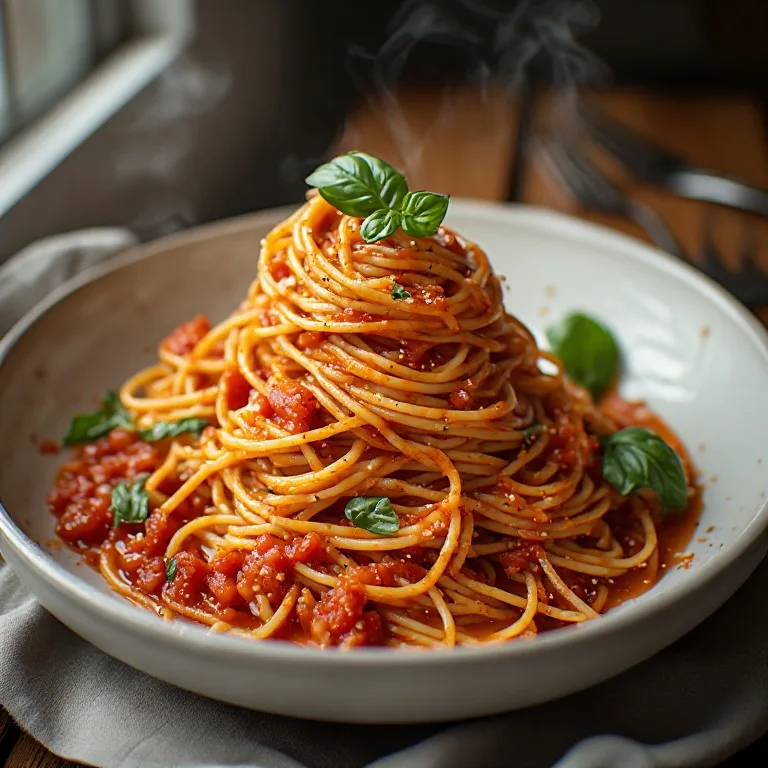



If there is a more argued-over recipe in New York City food writing than Via Carota’s spaghetti al pomodoro, it is not obvious what it would be. The dish is deceptively plain — pasta in tomato sauce — served in a West Village restaurant where people wait two hours on the sidewalk without a reservation. It has been written about in the Times, Eater, and Bon Appétit. The cookbook sold. The salad gets the attention, but the pasta is the reason a lot of regulars keep going back.
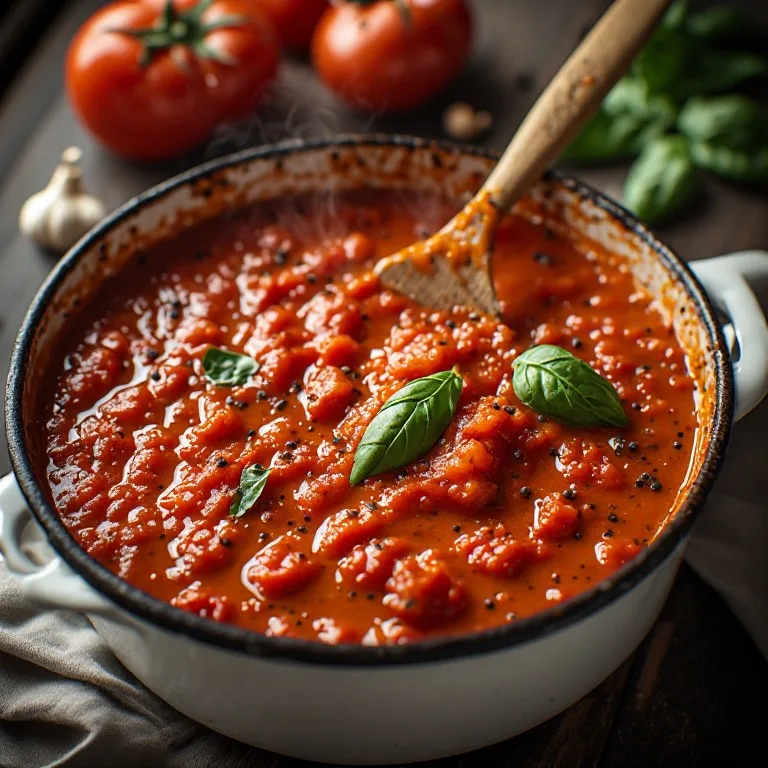
The sauce is the dish. It is a Florentine tomato sauce — Rita Sodi’s tomato sauce, to be precise, from the part of Italy where the rule is fewer ingredients and longer time. No onion. No butter. No sugar. Two cans of San Marzano tomatoes crushed by hand into a pan already holding more olive oil than most recipes will admit to, with garlic sliced thin enough to melt in the cook. Then 45 minutes, uncovered, while the sauce darkens from bright red to a deep brick orange and condenses into something with a body no quick recipe can produce. The pasta goes in raw-ish, finishes in the sauce with starchy cooking water, and comes out coated — not pooled under — in a glossy, emulsified sauce that stays on the pasta instead of collecting in the bowl.
What to know before you start: This recipe is easy but not fast. The 45-minute simmer is not optional — it is the recipe. A 20-minute sauce will taste like a can of tomatoes warmed in olive oil. The 45-minute sauce tastes like something a restaurant charges $27 for. Plan accordingly.
Why the Olive Oil Amount Is Not a Typo
The recipe calls for 6 to 7 tablespoons of extra-virgin olive oil. This is a lot. Most home tomato sauce recipes call for 2 or 3 tablespoons. The difference is intentional and consequential.
During the long simmer, the olive oil does not float on top. It emulsifies into the tomatoes as the water cooks off, becoming part of the sauce’s body and fat structure rather than a separate layer. The result is a sauce that is rich and round in a way that reads as deeply satisfying without any cream or butter involved. This is the same principle behind why a properly made aglio e olio — which is just pasta water and olive oil — can be so rich: the emulsion of oil and starchy water creates a coating that behaves like a much heavier sauce.
If you reduce the oil, you get a different (thinner, sharper) sauce. You can try it. But the olive oil is not an indulgence to cut for health reasons — it is the structural ingredient.
The Only Tomato to Use
San Marzano DOP-certified whole peeled tomatoes. The DOP seal (a European protected designation of origin) means the tomatoes were grown in the San Marzano dell’Agro Sarnese-Nocerino area of Campania, Italy, near Mount Vesuvius, in volcanic soil that is consistently low-acid and mineral-rich.
These tomatoes are measurably less acidic, more naturally sweet, and less watery than generic domestic whole tomatoes. In a sauce this spare — where the tomatoes are doing almost all the flavor work — the difference between DOP San Marzanos and a generic store-brand can is the difference between a sauce that is balanced and one that needs sugar added to correct the acid.
Look for Cento (their San Marzano certified line), La Valle, or Bianco DiNapoli. Do not use crushed tomatoes or purée — hand-crushing whole tomatoes gives you textural variation that a uniform product cannot.
The Garlic Slice (It Matters)
The garlic goes in sliced paper-thin — ideally on a mandoline or with a sharp knife. Not minced, not pressed, not smashed. Why does this matter?
Thinly sliced garlic melts into the oil during 3-4 minutes of gentle cooking and then continues to break down over 45 minutes in the sauce. It flavors the sauce evenly and deeply, with no sharp raw-garlic pockets. Minced garlic would over-brown in the initial sauté and create concentrated bursts of harsh garlic flavor rather than the smooth garlic background the recipe is built for. The thin slice is not a stylistic choice — it produces a functionally different outcome.
Building the Sauce
The sequence is straightforward once you understand the goals:
The garlic and oil come first, over medium-low, cooked until the garlic is just beginning to soften and turn the faintest golden color — about 4 minutes. You want fragrant and soft; you do not want browned.
Then the tomatoes: hand-crushed, directly into the pan. Squeeze each tomato until it breaks apart into rough, uneven pieces. The irregular texture is intentional. Season with salt right away — salting at the start helps the tomatoes break down and release their liquid.
Then the long simmer: 45 minutes, uncovered, stirring every 8-10 minutes. Watch the sauce change: at 15 minutes it is still liquid and bright red; at 30 minutes it has started to reduce and deepen; at 45 minutes it should be a deep brick orange, noticeably thicker, with the olive oil fully integrated. The color change is the visual cue — a pale red sauce is an undercooked sauce.
Basil goes in at the very end, off the heat, torn. Heat destroys the volatile compounds that make fresh basil worth using.
Finishing the Pasta
Cook the spaghetti until 90 seconds before the package’s al dente time. It needs those 90 seconds in the sauce to finish.
Reserve a full cup of pasta cooking water before draining — this water is cloudy with starch, which is the emulsifier that makes the sauce adhere to the pasta rather than pooling underneath it.
Add the drained spaghetti to the sauce over medium heat. Add a splash of pasta water. Toss vigorously with tongs for 2 minutes, lifting and folding continuously. The sauce will loosen and coat every strand. Add more pasta water as needed to keep it moving. When each strand of pasta is lacquered and the sauce has no visible pools, the pasta is done.
Finish with raw olive oil. Eat immediately.
Related Recipes to Cook Next
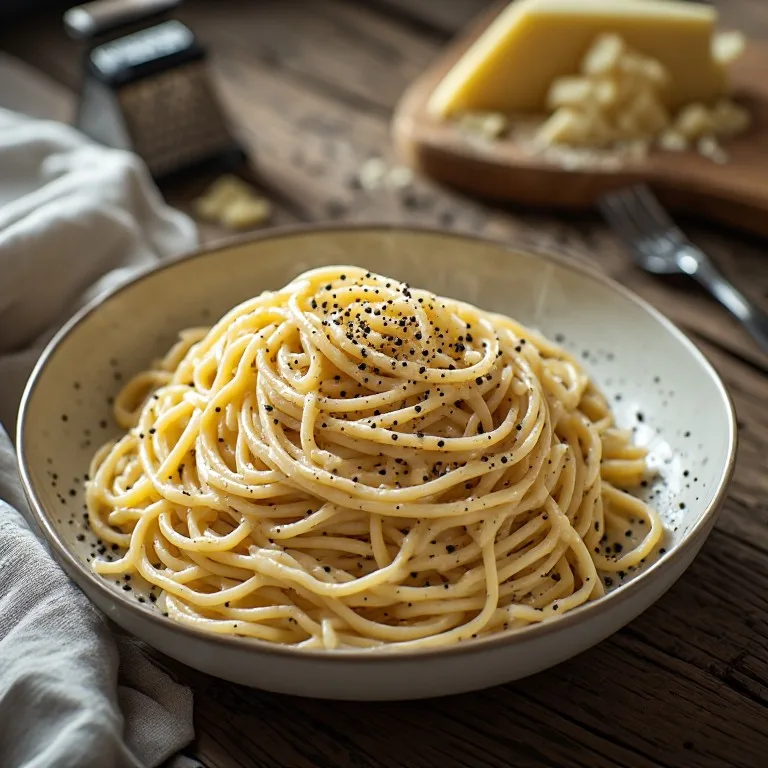
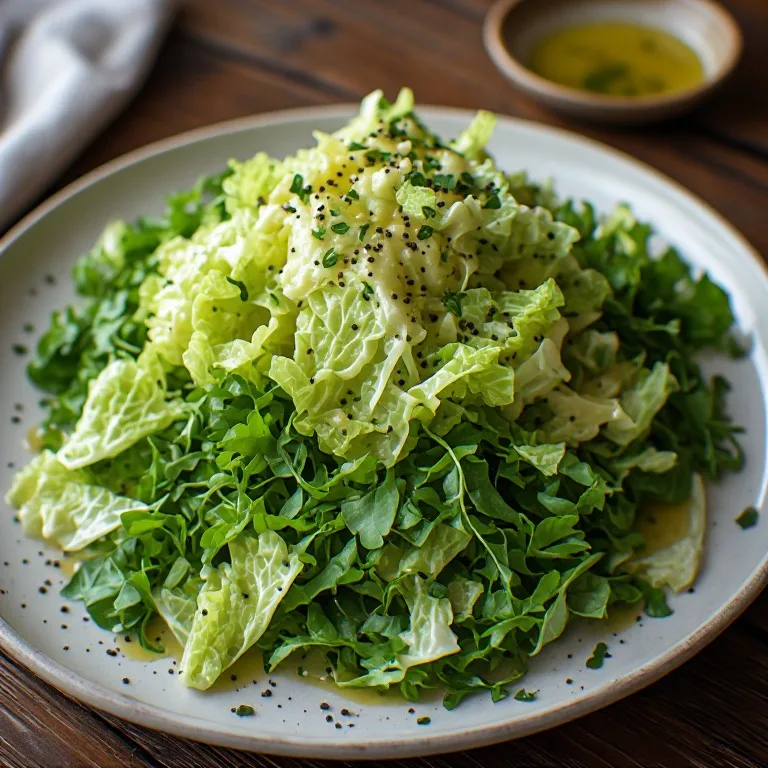
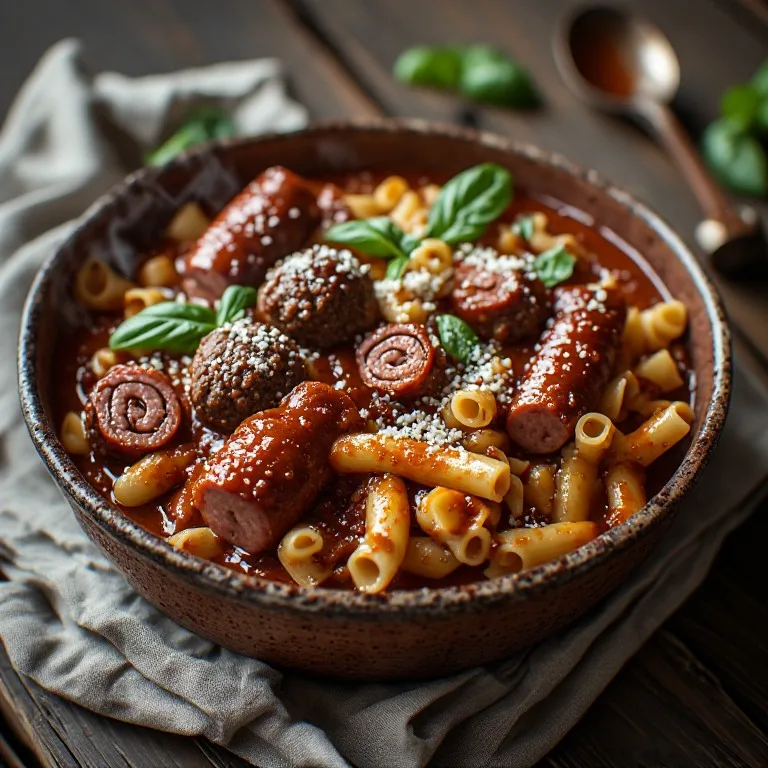
The sauce technique here is the opposite of Rao’s Sunday Gravy — Rao’s cooks meat in the tomatoes for three hours; this cooks only the tomatoes, but for nearly as long. Rao’s Marinara is a closer comparison — the Via Carota version is lighter on aromatics (no onion) and heavier on olive oil. Via Carota’s insalata verde is the famous green salad from the same kitchen; Via Carota’s cacio e pepe is the other pasta on their menu. Carbone’s spicy rigatoni uses a vodka cream base — a different approach to the Italian-American red sauce from a restaurant a few miles uptown.