

Pin It

I Sodi Pici all'Aglione (Rita Sodi's Tuscan Hand-Rolled Pasta, Made at Home)

I Sodi Pici all'Aglione (Rita Sodi's Tuscan Hand-Rolled Pasta, Made at Home)
Jump to Recipe
Prep 45 min (plus 30 min rest) Cook 35 min Serves 4
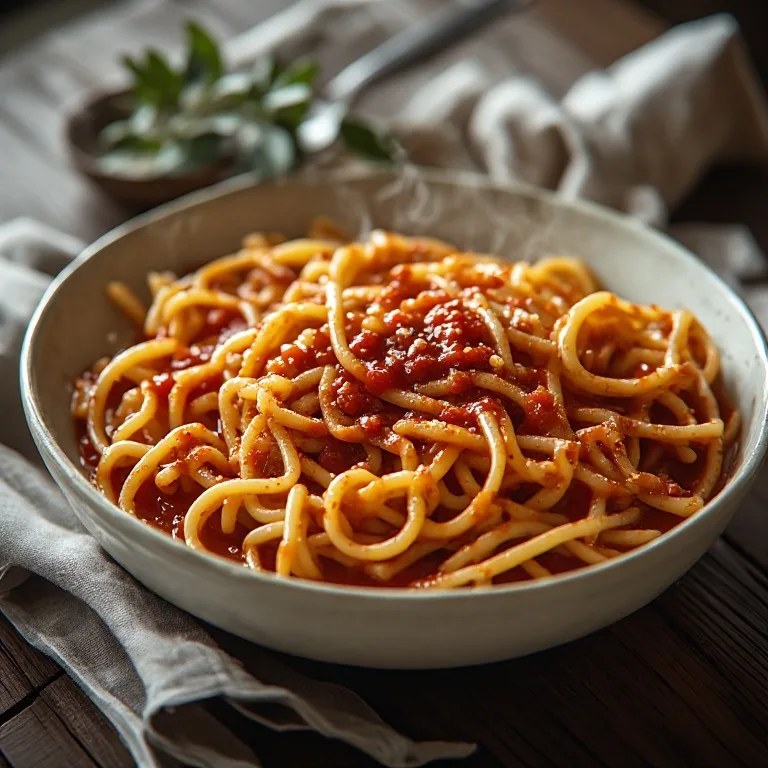
Quick answer: Make the pici dough first: combine 2 cups (250g) all-purpose flour and ½ teaspoon kosher salt in a bowl, make a well in the center, and add 6 tablespoons warm water and 1 tablespoon extra-virgin olive oil. Mix, then turn out and knead 8 minutes until smooth and slightly tacky. Cover with a damp towel and rest 30 minutes — this is not optional, the rest makes the dough rollable. While it rests, make the sauce: slice 12 large garlic cloves paper-thin and combine them with ½ cup extra-virgin olive oil in a wide skillet over the lowest heat you can manage. Cook 12 to 15 minutes, stirring occasionally, until the garlic is faintly golden at the edges and completely tender — it should smell sweet and mellow, not sharp. If it browns darkly, the pan is too hot. Add 1 teaspoon crushed red pepper flakes and stir 30 seconds, then add one 28-ounce can of whole San Marzano tomatoes, crushed by hand directly into the pan (crush them over the pan, not a bowl, so you catch all the juice). Season with 1 teaspoon kosher salt. Simmer 20 to 25 minutes over low heat, stirring occasionally, until the sauce darkens and thickens slightly. To roll the pici: divide the rested dough into 4 pieces. Work with one piece at a time, keeping the rest covered. Roll the piece into a rough log about 8 inches long, then cut or tear off pieces about the size of a large marble (25 to 30 grams each). Place one piece on a wooden board or clean counter — no flour — and roll it under your flat palms using a back-and-forth motion while moving your hands outward from center, gradually thinning the strand into a rope about ¼ inch thick and 8 to 10 inches long. The strand should be thicker than spaghetti but thinner than a pencil. Some irregularity is correct: pici is meant to be rustic, with thick and thin sections that catch sauce differently. Set finished pici on a floured tray. Cook pici in generously salted boiling water for 3 to 4 minutes (it should be tender but with a slight chew). Reserve 1 cup of pasta water. Drain and transfer directly to the sauce pan over medium-high heat. Toss 60 to 90 seconds, adding pasta water in small splashes until the sauce coats the pici in a glossy, unified layer. Divide into warm bowls and finish with a drizzle of good olive oil and, if you like, freshly grated Parmigiano-Reggiano.

Shop the tools

Gear matched to this recipe. These are Amazon affiliate links — we may earn a small commission if you buy, at no extra cost to you.

As an Amazon Associate, Copycat Spices earns from qualifying purchases. Product images are generic illustrations, not the exact item listed.

I Sodi Pici all'Aglione (Rita Sodi's Tuscan Hand-Rolled Pasta, Made at Home)

I Sodi is Rita Sodi's West Village Italian restaurant — perpetually impossible to book — serving Florentine and Sienese food at the highest level. One of its beloved pastas is pici all'aglione: thick, hand-rolled pasta made without egg, tossed with a slow-cooked giant-garlic tomato sauce from Tuscany. Here is the full recipe, including the hand-rolling technique most recipes skip.

Medium Prep: 45 min (plus 30 min rest) Cook: 35 min Total: 1h 20m4 servings ~$4.50/serving
Prep45 min (plus 30 min rest)
Cook35 min
Total1h 20m
Servings
4
At home~$4.50/serving
vs
Restaurant~$20.25/serving
You save ~78%

The Story Behind the Recipe

I Sodi is Rita Sodi's West Village Italian restaurant — perpetually impossible to book — serving Florentine and Sienese food at the highest level. One of its beloved pastas is pici all'aglione: thick, hand-rolled pasta made without egg, tossed with a slow-cooked giant-garlic tomato sauce from Tuscany. Here is the full recipe, including the hand-rolling technique most recipes skip.

Nutrition Facts

Per serving (4 servings)
Calories610
Total Fat25g
Total Carbs88g
Dietary Fiber5g
Sugars9g
Protein13g
Sodium510mg

* Estimated values based on standard recipe preparation. Actual values may vary.

Ingredients

  • For the pici
  • For the aglione sauce
  • To finish

Instructions

💡
Pro tip: This recipe tastes even better the next day. The flavors need time to meld together in the fridge.
❄️
Storage: Keeps in an airtight container in the fridge for up to 2 weeks. Freezer-friendly for up to 3 months.
🎃 Free Halloween cookbook — download now The Copycat Halloween Cookbook A ready-made, photo-illustrated PDF of our best halloween copycat recipes — free to download, no building required. Pay what you want to support if you love it.

Free PDF — instant download. We'll also send new seasonal copycat recipes now and then; unsubscribe anytime. Or just download it →

Copycat I Sodi Pici all’Aglione (Rita Sodi’s Tuscan Hand-Rolled Pasta, Made at Home)

Prep time: 45 min (plus 30 min rest) Cook time: 35 min Servings: 4

I Sodi has been one of the hardest tables to book in the West Village since Rita Sodi opened it in 2008. The original room on Christopher Street was tiny — about 35 seats — and in July 2023 the restaurant moved a few blocks to a larger space at 314 Bleecker Street. It still serves Florentine and Sienese food the way it was cooked in Tuscany before it was simplified for export, and reservations (via Resy) remain among the most coveted in the neighborhood. In 2019, Sodi and her partner and co-owner Jody Williams won the James Beard Award for Best Chef: New York City, recognized for their work at their other restaurant, Via Carota — one of the first times the award went to a pair.

I Sodi’s most famous plate is the pappardelle al cinghiale, a wild-boar ragù. But the pasta this recipe recreates — pici all’aglione — is the one home cooks most often want to learn, because it is achievable without hard-to-source game and it teaches two genuinely useful techniques. Two components, both ancient, both from Siena: pici, thick hand-rolled pasta made without egg, and all’aglione, which means dressed with aglione — a giant mild garlic from the Valdichiana valley, cooked slowly in olive oil until it loses all its sharpness and becomes something sweet and entirely different.

What Pici Is (and Why It Is Not Just Thick Spaghetti)

Pici is made from three ingredients: flour, water, and olive oil. No egg. The dough is stiff and workmanlike — closer to bread dough than to the supple egg-pasta doughs you roll on a machine. Every strand is shaped entirely by hand: a small piece of dough, rolled under flat palms on a wooden board, gradually thinned into a thick, irregular rope. Some sections come out thicker, some thinner. This is not a mistake; it is the point. The variation in thickness means that within a single serving, some strands are chewier and denser, others more tender, and they catch and hold sauce differently along their length.

The texture when cooked is genuinely unlike any extruded dried pasta. Pici is chewy in the way a very good loaf of bread is chewy — substantive and slightly resistant, with a toothsome pull before it gives. Because there is no egg to enrich the dough, the flavor is cleaner and more neutral than egg-pasta ribbons, which is by design: the pasta’s job is to carry the sauce without competing with it.

Pici recipes appear in Sienese texts from the Middle Ages. It is one of the oldest forms of pasta still made in Italy. At I Sodi, Sodi rolls it herself or has her cooks roll it to order, by hand, for every service.

What “All’Aglione” Actually Means

Aglione (ahl-YO-nay) means “big garlic” in Tuscan dialect. It refers to aglione della Valdichiana — a specific cultivar, grown in the clay soils of the Valdichiana valley, that produces bulbs significantly larger than standard garlic and cloves that are notably milder and sweeter. The difference is meaningful: where regular garlic is pungent, sharp, and briefly dominant, aglione is soft and slightly sweet even raw, and it loses almost all its sharpness when cooked.

The Sienese preparation is simple. Slice the garlic paper-thin. Cook it in a generous amount of olive oil over the lowest possible heat for 10 to 15 minutes, until it is completely golden and soft. Add peperoncino (crushed red pepper). Add crushed San Marzano tomatoes. Simmer 20 minutes. That’s the sauce.

Outside Italy, genuine aglione is nearly impossible to find — it is a small-production regional crop that does not travel in volume. For home cooks: use fresh garlic, large cloves from a young head, and cook it on the lowest heat your stove can produce for the full 12 to 15 minutes. The result will not be identical — standard garlic has more sharpness even when cooked — but it will capture the essential idea of the sauce: garlic as a vegetable, not just a seasoning.

The Garlic Cannot Burn

This is the one rule the sauce will not forgive. Garlic that browns darkly or burns in the oil carries that bitterness forward into the tomatoes and through the entire sauce. There is no rescuing it; you must start over.

The mechanism is chemistry. When garlic cooks slowly in warm oil, the harsh allicin compounds that cause sharpness break down and the natural sugars in the clove caramelize into softer, sweeter flavors. This takes time at low temperature — 12 minutes minimum. The same transformation happens faster at higher heat, but fast-cooked garlic also produces bitter compounds from the outside layer before the inside has had time to mellow. Low and slow is the only way to get sweet, golden garlic with no edge.

Set the pan on the lowest heat your stove can hold. The oil should barely shiver. A few tiny bubbles around the garlic, nothing more. Cook with patience and check every 3 minutes. When the garlic is faintly golden at the edges, completely soft, and smells sweet and slightly nutty — not sharp — it is ready.

How to Roll Pici

The rolling technique is simple but not immediately intuitive if you have only worked with sheeted pasta or extruded shapes. Here is exactly what to do.

Rest the dough at least 30 minutes before touching it. Gluten in unrested dough springs back immediately when stretched, and the strands tear rather than elongate. The rest is the difference between dough that rolls cooperatively and dough that fights you.

Work on a wooden board or a surface with some grip. Not smooth marble, not a slick laminate countertop. The friction between the dough and the board is what allows the rolling motion to extend the strand; on a smooth surface the dough slides and the strand won’t thin evenly. Do not flour the board — the dough needs to grip.

Pinch off a piece of dough about the size of a large marble. Lay both hands flat on top of it, with all fingers touching. Apply light downward pressure — not hard, just the weight of your hands — and roll the piece back and forth while simultaneously moving your hands outward from the center, as if you are unrolling something. The strand should thin and lengthen as your hands spread. Work from the center outward, not from one end to the other. If a section is too thick, place your hands over it and repeat the motion.

Target thickness is about ¼ inch — slightly thicker than a pencil. Target length is 8 to 10 inches. Sections that are thicker or thinner than others are correct and expected. The point of pici is that it is irregular. Set finished strands on a floured tray in a single layer and don’t let them touch until you are ready to cook.

The Finishing Step Matters

Pici all’aglione is not pasta with sauce poured on top. The pasta finishes in the sauce in a hot pan, with reserved pasta water added in splashes until the sauce coats each strand in a continuous glaze. This is the same principle as every good Italian pasta — mantecatura, the emulsification of pasta starch with the fat and liquid of the sauce.

Pici’s thick surface area absorbs sauce differently from thin pasta. Pull more pasta water than you think you’ll need (at least 1 cup) and add it aggressively during the 90-second pan toss. The sauce should glide when you tilt the pan, not sit as a pool at the bottom, and every strand should be visibly coated rather than bare with sauce only at the ends.

This pasta does not hold. It must be served immediately — within a minute or two of plating. The thick strands absorb the sauce as they cool and stiffen, and the dish that looked glossy and perfect in the pan will look dry and heavy by the time it reaches the table if you wait. Plate it and eat it.

On Cheese

Traditional pici all’aglione is served without cheese. The Sienese tradition is that the clean, direct flavors of garlic, olive oil, and tomato don’t need enrichment, and Pecorino or Parmigiano would muddy them. At I Sodi the dish is served as is, with the pasta and sauce as the whole picture.

If you add cheese, use a sharp aged Pecorino Romano rather than Parmigiano — it is saltier and more rustic, and its slightly animal funk complements the garlic-forward sauce better than Parmigiano’s milder nuttiness. Either way, add it off the heat, grated finely on a Microplane, after the pan comes off the burner. Cheese added to a hot active pan seizes and turns grainy.
🥗

Make It Healthier

Love I Sodi Pici all'Aglione (Rita Sodi's Tuscan Hand-Rolled Pasta, Made at Home) but want a lighter version? Try these simple swaps:

  • ✓Reduce the olive oil in the sauce to 6 tablespoons. The garlic will still cook properly at this lower ratio, and the sauce will be slightly thinner — add a small splash of pasta water to compensate. You save about 50 calories per serving.
  • ✓Reduce the pasta portion to 55g per person (instead of 65g) and pair with a simple green salad. The sauce and technique remain the same; the serving size shifts toward a pasta course in a larger Italian meal rather than a standalone dinner.
  • ✓Skip the optional cheese finish entirely — the aglione sauce is complete without it, and this saves around 55 calories and 180mg sodium per serving without changing the dish at all.

Frequently Asked Questions

What is pici and how is it different from spaghetti or any other pasta?

Pici (pronounced PEE-chee) is a thick, hand-rolled pasta from the province of Siena in Tuscany. It is made from only three ingredients — flour, water, and olive oil — with no egg. The dough is stiffer than egg-pasta dough and more similar to bread dough in texture. Each strand is rolled entirely by hand, under flat palms on a wooden board, until it forms a thick, uneven rope roughly the thickness of a pencil or slightly thicker. Because there is no egg to enrich or tenderize the dough, pici has a distinctly chewy, toothsome texture — more substantial in the bite than egg-pasta tagliatelle, and much thicker and chewier than dried spaghetti. The surface of hand-rolled pici is also slightly rough and irregular, which means sauce adheres differently than on a smooth machine-extruded noodle. Pici is ancient — recipes appear in medieval Sienese texts — and it is still made and served throughout the countryside around Siena, typically dressed simply with a meat ragù, with aglione (the giant garlic sauce), or with breadcrumbs and olive oil. It is a genuinely different eating experience from any extruded or machine-sheeted pasta, and that difference is the reason I Sodi serves it.

What is aglione and is there a substitute?

Aglione literally means 'big garlic' in Tuscan dialect — it refers to a specific cultivar called aglione della Valdichiana, grown in the Valdichiana valley south of Arezzo. Aglione bulbs are significantly larger than standard garlic, and the cloves have a notably milder, sweeter, less pungent flavor than common garlic. The classic Sienese preparation 'pici all'aglione' is built around this mildness: the garlic is sliced thinly and cooked slowly in olive oil until it is completely golden and soft, then tomatoes go in. With standard grocery-store garlic the dish works but requires even more care to keep the garlic from turning sharp and bitter. The most practical substitution is large cloves from a fresh, young garlic head (not the dried-out paper-skinned bulbs that have been sitting on a shelf for months) — the newer the garlic, the milder. Cook it lower and slower than you think you need to. True aglione della Valdichiana is occasionally available through specialty Italian food importers and farmers markets in the US, but it is genuinely hard to find outside Italy. The sauce is excellent with standard garlic cooked with patience.

Why does the garlic cook for 12 to 15 minutes in olive oil before the tomatoes go in?

In most pasta sauce recipes, garlic is an aromatic — it goes in briefly at the start to flavor the oil and then gets covered by everything else. In pici all'aglione, the garlic IS the dish. It is not a background flavor; it is the named ingredient the sauce is built around. Cooking it slowly in olive oil for 12 to 15 minutes transforms it completely. Raw garlic is sharp, acidic, and briefly dominant. After 12 minutes in warm oil, it becomes sweet, mellow, and complex — more like a roasted vegetable than a seasoning. The oil itself absorbs these sweeter flavors, which means by the time the tomatoes go in, the entire fat base tastes of slow-cooked garlic rather than raw heat. If you rush this step and add the tomatoes after 3 or 4 minutes, you will taste raw garlic's sharpness in the finished sauce. The long cook is the technique — it is what makes this sauce taste specifically like this sauce and not like a standard aglio e olio or a garlic-forward marinara.

My pici keeps breaking when I roll it. What am I doing wrong?

Three things cause this. First, the dough did not rest long enough. Thirty minutes is the minimum; gluten in unrested dough snaps back immediately when you try to stretch it, and the strands tear rather than elongate. Cover the dough with a damp towel (not cling wrap) and wait the full 30 minutes. Second, the dough was too dry. If your kitchen is humid the dough will need slightly less water; if dry, slightly more. Well-made pici dough should feel smooth and slightly tacky — like a very firm Play-Doh — not stiff and crumbly. If it's cracking at the edges after resting, work in a teaspoon of warm water at a time until it holds together. Third, your rolling motion isn't quite right. Rather than pressing down hard into the board, pici rolls best with a light, spreading pressure — both hands flat, moving outward from the center of the strand as if ironing it. Let the weight of your hands do the work. If you are forcing it, the dough hasn't rested enough or is too dry.

Can I use a pasta machine instead of rolling by hand?

You can sheet pici dough through a pasta machine on the thickest setting and then cut thick strips, but the result is noticeably different — more uniform, smoother-surfaced, without the handmade irregularity that makes pici catch sauce differently in thick and thin sections. The dough also behaves differently in a machine; pici dough is stiffer than standard egg-pasta dough and may need to be rolled in smaller portions. The hand-rolling method is simple enough that it is worth learning even if it takes a practice batch or two. Most people can roll a serviceable pici after one attempt — it does not require skill so much as patience and the right dough texture. If you want to use a machine, set it to setting 1 (thickest) and cut the sheet into strips about ¼-inch wide, then gently round them with your fingers. It will taste similar but look different.

What is the connection between I Sodi and Via Carota?

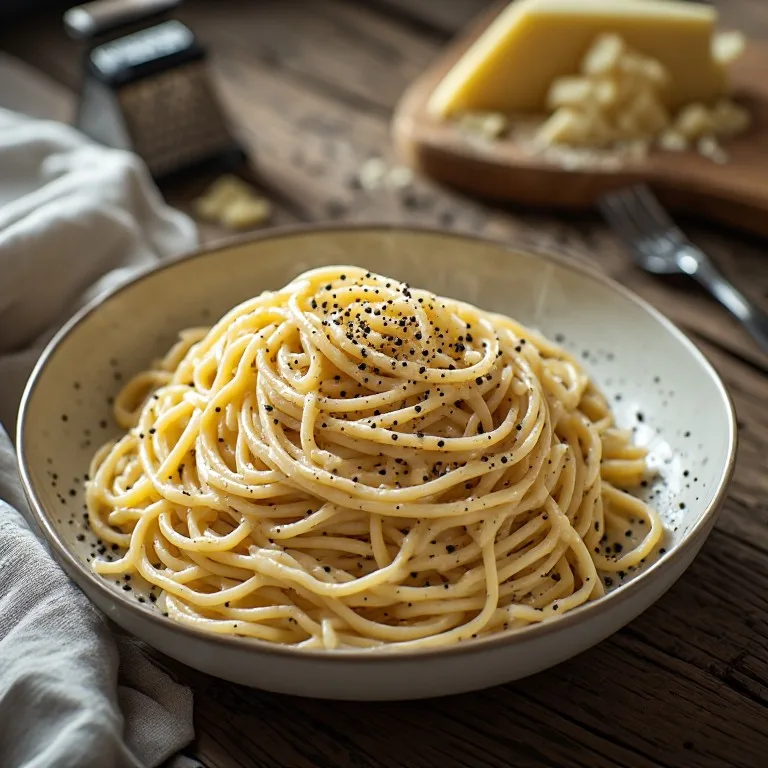
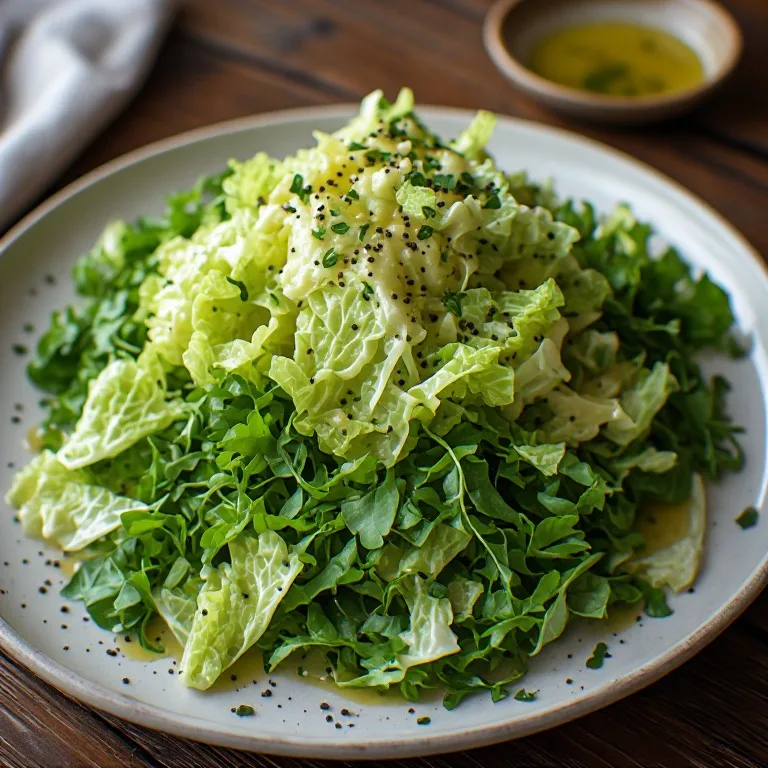
Rita Sodi, who opened I Sodi in 2008, and Jody Williams are partners — both personally and professionally. They jointly own I Sodi and Via Carota, two of the West Village's most beloved Italian restaurants. Via Carota (at 51 Grove Street, opened 2014) is more casual and vegetable-forward, famous for its Insalata Verde and Svizzerina chopped steak. I Sodi is more intimate and focused, with a shorter menu of Florentine and Sienese classics. Williams also owns Buvette, the tiny French gastrotheque a few doors down on Grove Street. Together, Sodi and Williams were awarded the 2019 James Beard Award for Best Chef New York City — one of the first times a team rather than an individual received the award. If you have made Via Carota's insalata verde or cacio e pepe at home, you will recognize I Sodi's approach: extreme restraint, premium sourced ingredients, classic Italian technique with no shortcuts.

Can I make the pici dough ahead of time?

Yes. The dough keeps well wrapped in plastic in the refrigerator for up to 24 hours. Remove it and let it come to room temperature — about 30 minutes on the counter — before rolling, since cold dough stiffens and tends to tear. You can also roll the pici completely and freeze them uncooked on a floured tray; once frozen, transfer to a bag and cook directly from frozen in well-salted boiling water, adding 1 to 2 minutes to the cooking time. The sauce keeps refrigerated for 3 to 4 days and actually improves slightly on the second day as the garlic and tomato flavors deepen.

Does I Sodi's version include Parmigiano on the pici all'aglione?

Traditional pici all'aglione is served without grated cheese — the Sienese perspective is that cheese competes with the clean garlic-and-tomato flavors rather than enhancing them. At I Sodi, the dish is presented as a celebration of the sauce and pasta themselves. That said, freshly grated Pecorino Romano (which is saltier and more rustic than Parmigiano) is a traditional Sienese addition, and Parmigiano-Reggiano is a perfectly reasonable finish for home cooks. If you add cheese, add it off the heat, as with any pasta — dropping cold grated cheese into a hot pan over an active burner causes it to clump and seize.

What wine pairs with pici all'aglione?

This is a Sienese dish, so Sienese wines are the natural partners. Rosso di Montepulciano — the lighter, younger sibling of Vino Nobile di Montepulciano — is the most classically correct choice: medium-bodied, bright cherry fruit, enough acidity to match the tomato without overwhelming the garlic. Morellino di Scansano (a Sangiovese from Maremma) is slightly earthier and works equally well. A basic Chianti Classico is an excellent value option. For white wine, a Vernaccia di San Gimignano — a light, minerally white grown near Siena — is the local pairing and stands up to the acidity in the sauce without competing with the garlic. Avoid heavily oaked reds and full-bodied whites; the dish needs acidity and freshness, not weight.

My sauce tastes sharp and garlicky instead of sweet. What went wrong?

The garlic did not cook long enough. Sharp, biting garlic flavor means the allicin — the compound responsible for garlic's pungency — has not fully broken down and the sugars have not caramelized. This happens when the heat is too high (the garlic browns quickly on the outside without cooking through) or the cooking time was cut short. The fix: start over with the garlic and oil, this time using the lowest heat setting on your stove that maintains a very gentle simmer in the oil — the garlic should barely bubble. When it is ready, it should be completely translucent to faintly golden, smell sweet and nutty rather than sharp, and cut easily with a spoon. The longer you cook it, the milder it becomes. Twelve minutes is a minimum; 15 is better; 20 is not too long if the heat is truly low.

Love this recipe? Share it!

Free PDF: our 12 most-wanted copycat recipes — instant download.

Made it? Buy us a coffee

Every recipe here is free, with no paywalls. If this one was a hit at your table, a small tip keeps new copycats coming.

$

I Sodi is a trademark of its owner, used here only to describe the dish this recipe recreates. This is an independent copycat written in our own words — Copycat Spices is not affiliated with, endorsed by or sponsored by I Sodi.

Ratings & Reviews

—
No ratings yet

Rate this recipe

Click a star to rate

Leave a Review

0/500

CS

Copycat Spices Editorial

Researched + fact-checked. Every recipe on Copycat Spices is built from published sources — official ingredient lists, brand-published recipes, interviews and food-science references — and fact-checked before it goes live, then written as clear, step-by-step instructions for home cooks of all skill levels.

Learn more about our mission →