



Pin It

Willie Mae's Scotch House Fried Chicken (The James Beard Classic, Made at Home)

Willie Mae's Scotch House Fried Chicken (The James Beard Classic, Made at Home)
Jump to Recipe
Prep 20 min Cook 25 min Serves 4
Quick answer: Brine bone-in chicken pieces (thighs, drumsticks, breasts) in buttermilk and Crystal hot sauce for at least 2 hours or overnight. Make the wet batter: whisk 2 cups all-purpose flour, 3 tablespoons cornstarch, 1 teaspoon baking powder, 1½ teaspoons kosher salt, and 1½ teaspoons coarsely ground black pepper, then whisk in 1¼ cups of cold water until smooth — the batter should coat a spoon thickly but drip off slowly. Heat 3 inches of vegetable oil to 325°F in a heavy pot. Lift chicken from the brine, let the excess drip off, and dip each piece into the wet batter, letting the excess drip back into the bowl. Lower into the oil carefully. Fry bone-in thighs and breasts 16–18 minutes, drumsticks and wings 12–14 minutes, turning once, until the batter is deep golden brown and an instant-read thermometer reads 165°F in the thickest part. Drain on a wire rack set over a sheet pan — never on paper towels, which steam the bottom. Serve immediately.

Willie Mae's Scotch House Fried Chicken (The James Beard Classic, Made at Home)

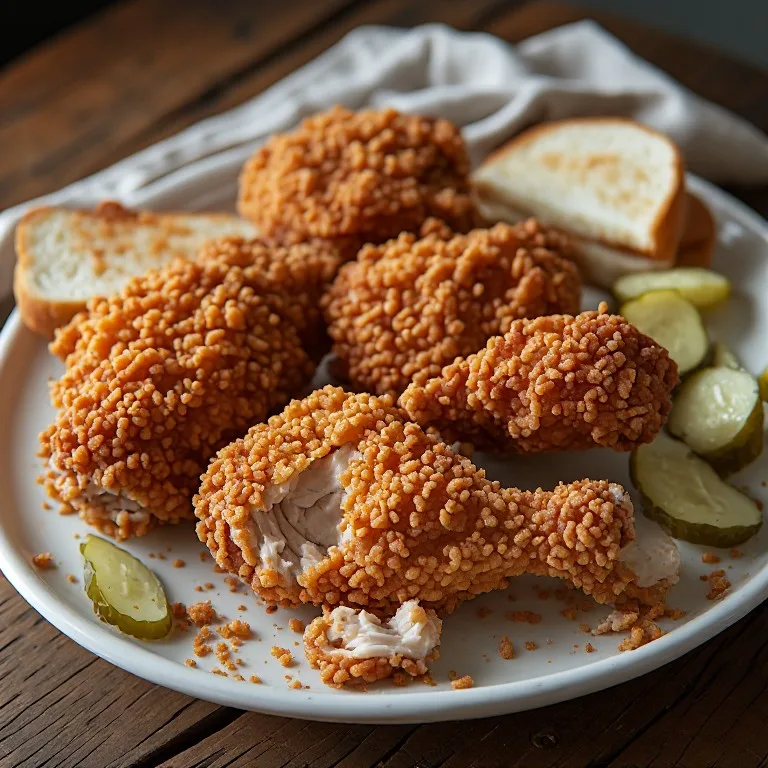
Willie Mae's Scotch House fried chicken copycat recipe — the 1957 New Orleans Tremé legend's shatteringly crisp wet batter technique, made at home. The wet batter (not a dry flour dredge) is the secret to the iconic thick, crunchy crust.

Medium Prep: 20 min Cook: 25 min Total: 45 min4 servings ~$4.50/serving
Prep20 min
Cook25 min
Total45 min
Servings
4
At home~$4.50/serving
vs
Restaurant~$20.25/serving
You save ~78%

The Story Behind the Recipe

Willie Mae's Scotch House opened in 1957 on St. Ann Street in New Orleans' Tremé neighborhood — one of the oldest African American neighborhoods in the country. Willie Mae Seaton started it as a bar and beauty shop, then began cooking fried chicken for regulars, and within years the chicken was the whole reason people came. In 2005, the James Beard Foundation named it an America's Classic — the award given to cherished regional restaurants with timeless appeal — making Seaton, then in her nineties, one of the oldest recipients in the award's history. Months later, Hurricane Katrina flooded the restaurant. Volunteers organized by the Southern Foodways Alliance raised roughly $200,000 and rebuilt it by hand. It reopened in 2007. Seaton died in 2015 at 99; her great-granddaughter Kerry Seaton Stewart now runs it.

The line outside the small dining room on St. Ann Street is a New Orleans institution unto itself. A three-piece order runs $18–$22 and includes one side dish. At home, a full batch feeding four costs roughly $12–$16 in ingredients. The technique that defines the chicken is a wet batter — not the dry flour dredge of most Southern fried chicken — which produces a dramatically thick, shattering crust. Kerry Seaton Stewart has said the batter is seasoned simply with salt and pepper. Everything else — the hot sauce brine, the cold batter, the oil temperature — is the technique that makes it work.

Nutrition Facts

Per serving (4 servings)
Calories680
Total Fat36g
Total Carbs29g
Dietary Fiber1g
Sugars1g
Protein48g
Sodium940mg

* Estimated values based on standard recipe preparation. Actual values may vary.

Ingredients

  • For the buttermilk brine
  • For the wet batter
  • For frying

Instructions

💡
Pro tip: This recipe tastes even better the next day. The flavors need time to meld together in the fridge.
❄️
Storage: Keeps in an airtight container in the fridge for up to 2 weeks. Freezer-friendly for up to 3 months.
🎃 Free Halloween cookbook — download now The Copycat Halloween Cookbook A ready-made, photo-illustrated PDF of our best halloween copycat recipes — free to download, no building required. Pay what you want to support if you love it.

Free PDF — instant download. We'll also send new seasonal copycat recipes now and then; unsubscribe anytime. Or just download it →

Willie Mae’s Scotch House Fried Chicken (The James Beard Classic, Made at Home)

Prep time: 20 min (plus 2–12 hours brine) Cook time: 25 min Serves: 4

Willie Mae’s Scotch House at 2401 St. Ann Street in New Orleans’ Tremé neighborhood has been producing fried chicken since the late 1950s. It won the James Beard Foundation’s America’s Classic award in 2005 — the designation reserved for restaurants with years of community identity, not just critical rankings — and Hurricane Katrina flooded it months later. Volunteers rebuilt it piece by piece. It is now a pilgrimage destination, with a line that forms before the doors open.

The chicken is famous for one structural reason: wet batter. Almost all American fried chicken uses a dry flour dredge, which fries into a thin, relatively fragile coating. Willie Mae’s wet batter — a pourable, thick mixture of seasoned flour and cold water — produces a crust that is dramatically thicker, more rigid, and more shatteringly crisp. When you bite through it, it audibly cracks. The family has described the batter as seasoned only with salt and black pepper. The simplicity is the point.

The Wet Batter Difference

Most fried chicken recipes build the coating in two steps: wet (buttermilk soak) then dry (flour dredge). The dry flour makes direct contact with the hot oil and fries into a thin shell. Willie Mae’s reverses this logic: the batter is itself wet, and it goes straight from the bowl into the oil.

When wet batter hits hot oil, the water in it flashes almost instantly to steam. This steam creates thousands of tiny pockets throughout the coating as it sets, giving the crust an open, crunchy structure that is thicker and more shattering than a dry dredge could produce. The same principle governs Japanese tempura and Korean karaage. The batter must be cold — warm batter is less viscous and will not cling as thickly — and the cornstarch in the formula (not traditional for Southern fried chicken) absorbs moisture and ensures the crust stays crisp for longer after leaving the oil.

The Brine

The buttermilk and hot sauce brine is the other half of the recipe. Buttermilk’s natural lactic acid tenderizes the protein structure of the chicken over 8–12 hours, allowing the wet batter to adhere more uniformly. The hot sauce — Crystal is the Louisiana standard — adds a faint tangy heat that survives the batter layer and surfaces in the finished chicken as a background warmth. The brine is discarded before battering; none of it remains on the surface after the excess drips off.

Overnight brining (8–12 hours) produces a noticeably juicier, more evenly seasoned result than a 2-hour brine, because the salt and lactic acid penetrate deeper into the meat. If you have a night to spare, use it.

Temperature and Patience

325°F is lower than many fried chicken recipes specify. The lower temperature compensates for the batter’s thickness: a thin dry-flour coating sets and crisps at 350°F in 12 minutes; a wet batter at the same temperature browns too quickly on the outside before the center of a bone-in thigh reaches 165°F. At 325°F, the thick batter has time to set gradually, the center climbs evenly, and the crust reaches a deep caramel brown rather than a quick, pale gold. It takes patience. The reward is a crust that does not separate from the meat when you bite into it.

Use a thermometer clipped to the pot. Cold chicken drops oil temperature significantly when added; you need to track recovery. Do not overcrowd — two to three pieces per batch keeps temperature swing manageable.

Serving

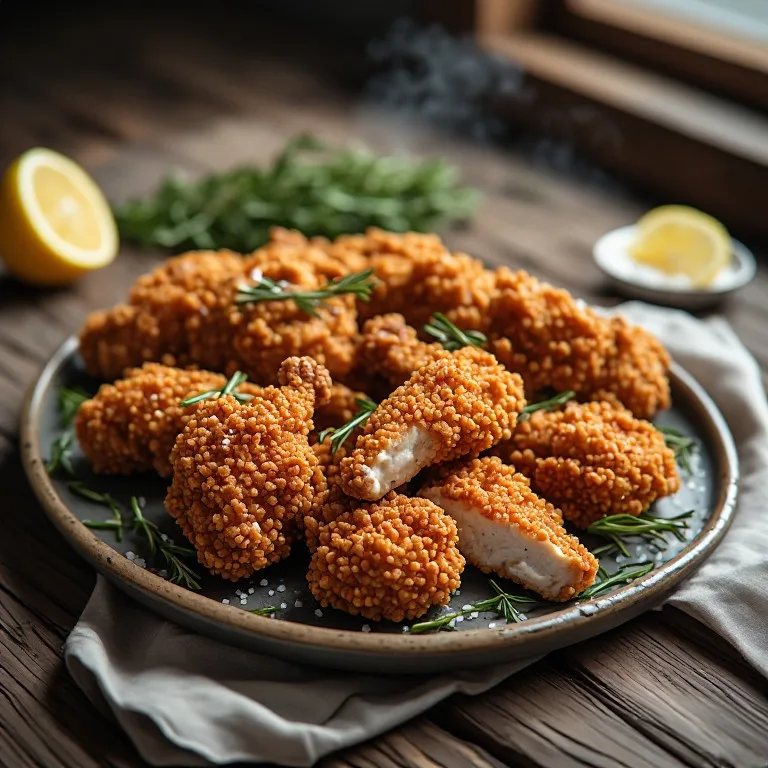
Willie Mae’s serves the three-piece order on a plate with one side. The chicken has no dipping sauce, and it does not need one — the crust is the condiment. Common sides at the restaurant: butter beans, potato salad, and red beans and rice. At home, a vinegar-dressed coleslaw works particularly well because the acidity cuts the richness of the thick batter in the same way citrus cuts oily fish.

🥗

Make It Healthier

Love Willie Mae's Scotch House Fried Chicken (The James Beard Classic, Made at Home) but want a lighter version? Try these simple swaps:

  • ✓The wet-batter technique is inherently higher in absorbed oil than dry-flour coatings because the batter is porous. Draining on a wire rack (not paper towels) is the single best way to minimize oil retention — the excess drips off instead of being absorbed back into the crust.
  • ✓Dark meat (thighs and drumsticks) has more fat than breast meat, but it is also more forgiving in the fryer — it tolerates the long fry time without drying out. If reducing fat intake, substitute boneless skinless thighs and reduce fry time to 10–12 minutes.
  • ✓Serve with a vinegar-based coleslaw (no mayo) alongside — the acidity cuts through the richness of the thick fried crust and lightens the plate without adding fat. Willie Mae's own classic sides are butter beans and potato salad.
  • ✓The buttermilk brine itself is a health-neutral step — the acid tenderizes the meat and is discarded before frying. The calories here are in the batter and frying oil.

Frequently Asked Questions

What makes Willie Mae's fried chicken different from regular Southern fried chicken?

The difference is the batter. Almost all classic Southern fried chicken uses a dry coating — the chicken is dredged in seasoned flour, sometimes double-dredged after a buttermilk soak, and fried. The flour coating fries into a relatively thin, pebbly crust. Willie Mae's uses a wet batter: AP flour mixed with liquid until it reaches a thick, pourable consistency, closer to a heavy pancake batter or a Japanese karaage batter. When wet batter hits hot oil, the liquid in the batter flashes to steam in tiny pockets throughout the coating, creating a crust that is dramatically thicker, crisper, and more shatteringly brittle than a dry-flour crust. The batter puffs slightly as it fries and then collapses into a rigid shell. It produces a crack when you bite through it. The family has confirmed the wet batter publicly — it is the structurally irreducible part of what Willie Mae's chicken is.

What hot sauce should I use for the brine?

Crystal Hot Sauce is the Louisiana standard and the most historically appropriate choice for a New Orleans preparation. Crystal is milder than Tabasco — more pepper flavor, less intense heat — and it is the sauce you will find on tables in New Orleans diners and joints. It adds a faint tang and mild heat to the brine without making the finished chicken fiery. Tabasco (original red) works and adds more heat. Frank's RedHot is a reasonable substitute. The goal is the acidic tang and mild heat that the buttermilk alone does not provide. Avoid thicker hot sauces (Cholula with its thickener, or any wing sauce) — you want a thin, vinegar-based Louisiana-style sauce that disperses evenly through the liquid brine.

Can I use boneless chicken breasts instead of bone-in pieces?

You can use boneless chicken, but the result will be noticeably different from Willie Mae's. Bone-in pieces — thighs, drumsticks, breast halves — insulate the meat as it fries, allowing the thick wet batter to set completely before the meat inside overcooks. Bone-in chicken also self-bastes as the fat around the bone renders during frying, keeping the meat moister. Boneless breasts cook much faster, which means the thick wet batter may not reach the deep golden brown color before the meat inside is overcooked and dry. If using boneless chicken, cut breasts into large chunks (not thin cutlets), reduce frying time to 8–10 minutes, and check temperature carefully. Thighs, both bone-in and boneless, are the most forgiving cut and closest to the classic Willie Mae's preparation.

Why does my batter slide off the chicken?

Two causes: the chicken has too much liquid on it, or the batter is too thin. After pulling chicken from the brine, shake off the excess buttermilk — the surface should be damp, not dripping. Do not pat dry; the batter needs moisture to adhere, just not a flood of liquid that dilutes it. If the batter is too thin, it will flow off the curved surfaces of the chicken like water. The batter should coat a spoon in a thick layer that drips slowly, not runs off immediately. If yours runs, whisk in an additional 2 tablespoons of flour. Second: after dipping the chicken, hold it over the bowl for a full 5 seconds to let excess batter drip off — then lower slowly into the oil. A thick drip is fine; a cascade is not. Cold batter adheres better than room-temperature batter, so keep the bowl over ice or refrigerate it between batches.

What oil temperature is correct, and why is it lower than many fried chicken recipes?

325°F is correct for thick bone-in pieces with a wet batter. Many dry-flour fried chicken recipes call for 350°F, which works for thinner coatings where the crust sets quickly. At 350°F, a thick wet batter browns rapidly on the outside before the meat inside reaches 165°F — you end up with a dark, almost burnt exterior and a pink center. At 325°F, the thick batter has time to set and brown gradually, the oil temperature recovers after you add cold chicken, and the interior cooks evenly without rushing. The trade-off is time: 325°F takes 16–18 minutes for thighs versus 12–14 minutes at 350°F. Do not be tempted to raise the heat to speed things up. A probe thermometer in the oil is essential — a Dutch oven or cast-iron pot holds temperature better than a thin saucepan and will drop less when cold chicken goes in.

How is Willie Mae's Scotch House different from other famous New Orleans fried chicken spots?

Willie Mae's is the James Beard America's Classic — the award specifically honors restaurants with broad community identity and timeless appeal, not just critical acclaim. It is a small room on St. Ann Street with limited seating and long lines, not a restaurant group with multiple locations (the second Uptown location opened 2014). The chicken itself is distinct: the wet batter produces a crust that is unlike the cornmeal-heavy coatings of some New Orleans chicken styles, and unlike the Cajun spice profiles of restaurants such as Dooky Chase. Willie Mae's seasoning is simple — salt and black pepper — and the crust is the star, not a complex spice blend. This simplicity has made it one of the most imitated and least-successfully-cloned fried chickens in the country.

Can I make the batter ahead of time?

The batter should be made fresh, but it holds in the refrigerator for up to 2 hours before using. The baking powder in the batter activates when it contacts the liquid; over time, the leavening activity diminishes and the batter becomes slightly denser and less effective at creating air pockets during frying. If making a large batch, mix the dry ingredients ahead and add the cold water within 30 minutes of frying. The buttermilk brine, however, benefits from extra time: 8–12 hours in the refrigerator makes the chicken measurably more flavorful and juicy than a 2-hour brine. Brine the night before; make the batter the same day.

Love this recipe? Share it!

Free PDF: our 12 most-wanted copycat recipes — instant download.

Made it? Buy us a coffee

Every recipe here is free, with no paywalls. If this one was a hit at your table, a small tip keeps new copycats coming.

$

Willie Mae's Scotch House is a trademark of its owner, used here only to describe the dish this recipe recreates. This is an independent copycat written in our own words — Copycat Spices is not affiliated with, endorsed by or sponsored by Willie Mae's Scotch House.

Ratings & Reviews

—
No ratings yet

Rate this recipe

Click a star to rate

Leave a Review

0/500

CS

Copycat Spices Editorial

Researched + fact-checked. Every recipe on Copycat Spices is built from published sources — official ingredient lists, brand-published recipes, interviews and food-science references — and fact-checked before it goes live, then written as clear, step-by-step instructions for home cooks of all skill levels.

Learn more about our mission →