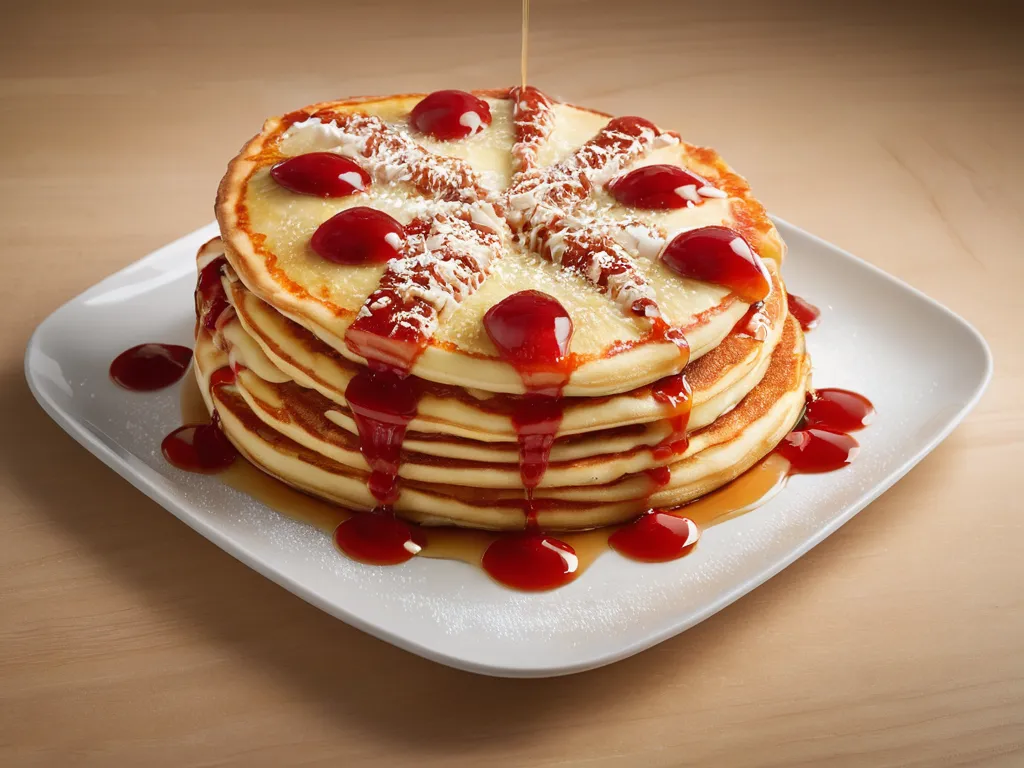
Copycat Pizza Hut Pancakes
Pizza Hut is remembered for its 1990s all-you-can-eat pizza buffet. Less remembered is that some locations — usually smaller, franchise-owned dine-in restaurants — also ran a breakfast buffet, where pancakes were part of the spread, served alongside scrambled eggs, hash browns, and the chain’s oddly memorable breakfast pizza. Most of those breakfast buffets were gone by the mid-2000s. The pancakes, though, are easy to recreate — and they come down to exactly one ingredient most people don’t keep in the pantry.
TL;DR
Add 3 tablespoons of malted milk powder (Carnation Original — not chocolate) to standard buttermilk pancake batter. Combine dry and wet separately. Stir just until no dry flour streaks remain — batter stays lumpy. Rest 5 minutes. Cook on a 350°F griddle; flip once when bubbles cover the surface and edges look set. Total active time: about 10 minutes plus cook time. Makes about 10 five-inch pancakes (6 servings).
What Made Pizza Hut Pancakes Taste Different
The difference between a restaurant pancake and a home pancake is not a secret technique or a complex ratio. It’s one ingredient: malted milk powder.
Restaurant chains, diners, and commercial pancake mixes almost universally use malted milk as a core ingredient. IHOP’s batter is famously built on it. Most diner-style and family-restaurant mixes use it. If Pizza Hut’s buffet pancakes came from a commercial mix — as buffet pancakes almost always do — malted milk was very likely in it too. It’s the ingredient that produces the faintly toasty, caramel-adjacent undertone that home pancakes made with plain flour and sugar don’t have.
Malted milk powder is made from malted barley, wheat flour, and dried whole milk. The malting process — allowing barley to germinate, then kiln-drying it — converts some of the grain’s starches to sugars through enzymatic action. Those sugars caramelize differently in the oven (or on a griddle) than plain granulated sugar: with more complexity and a characteristic malt flavor. The dried milk component adds tenderness through its fat content and contributes to the light browning on the surface. Combined, they produce a pancake with more depth than you can get from flour and sugar alone.
This isn’t a subtle difference. Make one batch of standard buttermilk pancakes and one batch of this recipe and taste them side by side. The malt is immediately noticeable.
The History of Pizza Hut’s Breakfast Buffet
What people remember about 1990s Pizza Hut is the all-you-can-eat buffet — but that was the pizza buffet. Starting around 1992, Pizza Hut rolled out dine-in buffets to more than 2,000 locations: pizza, pasta, breadsticks, a salad bar, and dessert pizza, often for just a few dollars a head. That lunch-and-Sunday buffet is the one that stuck in most people’s memories.
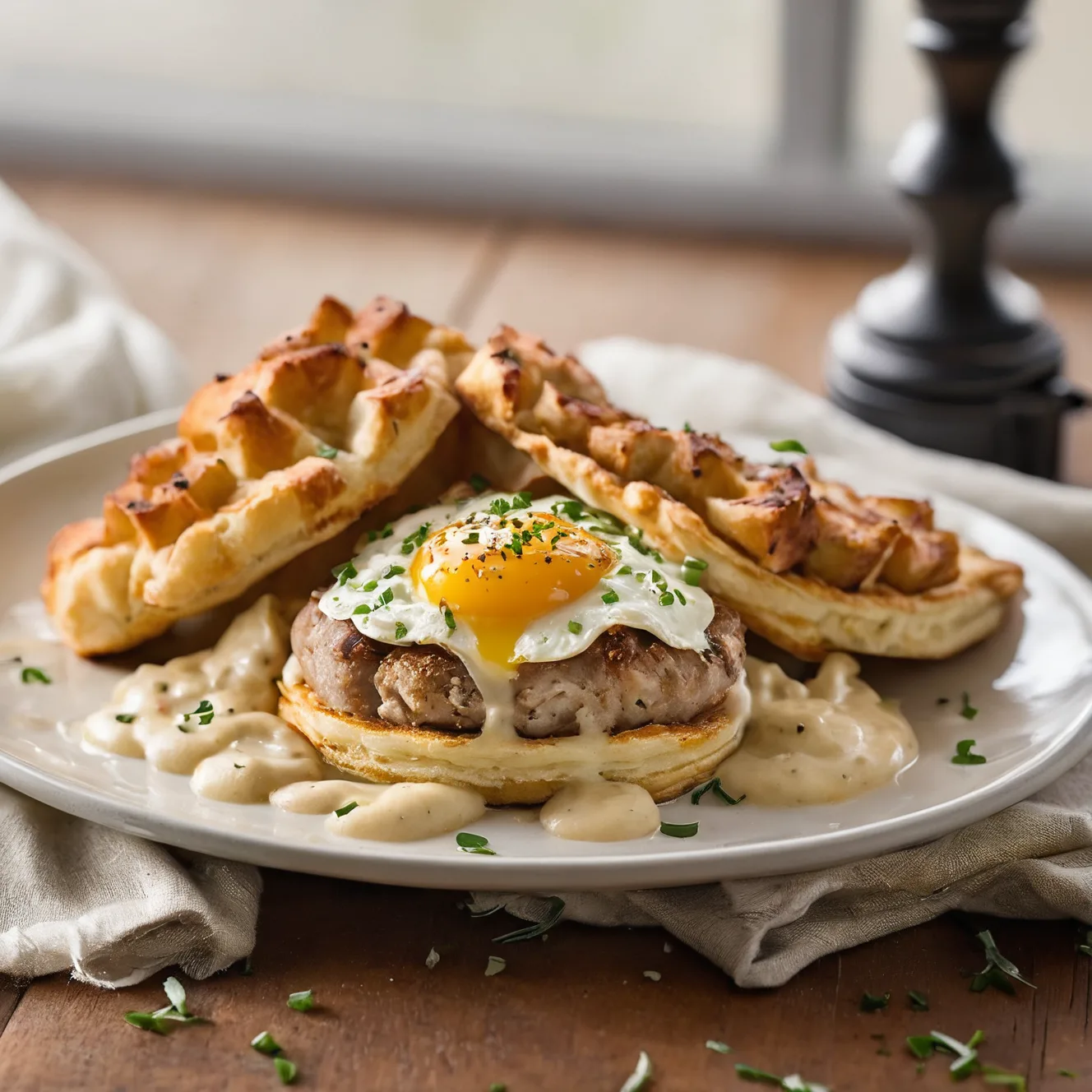
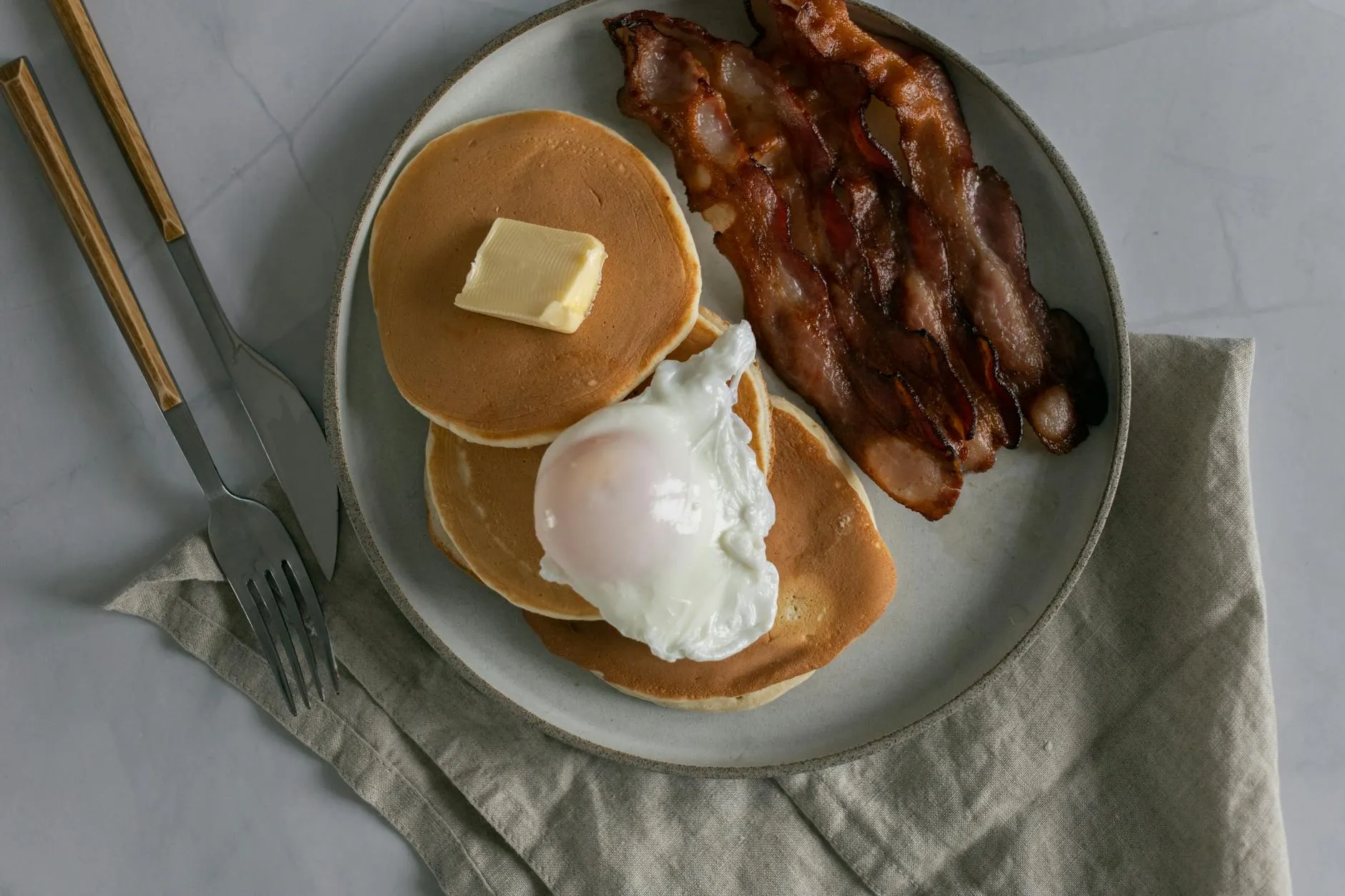
Less remembered — and far less widespread — is that some Pizza Hut locations also ran a breakfast buffet. It was never a national program; it showed up mainly at smaller, franchise-owned dine-in restaurants in mid-size and rural markets, in the red-roofed buildings with booths and stained-glass lamp shades. Where it existed, the spread typically included pancakes, scrambled eggs, hash browns, sausage and bacon, pastries, and — the detail people remember most — breakfast pizza. A simple cheese or sausage breakfast pie at a chain built on dinner pizza struck a lot of diners as strange, and that strangeness is exactly why it stuck.
As the chain (spun off from PepsiCo in 1997 into what became YUM! Brands) shifted its focus toward delivery and carryout through the 2000s, dine-in locations closed or shrank, and the breakfast buffets went with them. A handful of franchise locations reportedly still serve breakfast today, but they’re rare exceptions. If you ate Pizza Hut pancakes as a kid, you ate them at one of a limited number of restaurants — which is part of why the memory feels so specific.
The Batter: What to Mix and What Not to
The batter for this recipe is straightforward buttermilk batter with one addition. The execution comes down to technique:
Mix dry and wet separately. Whisk the flour, malted milk powder, sugar, baking powder, baking soda, and salt in one bowl. Whisk the buttermilk, egg, melted butter, and vanilla in another. Keeping them separate until the last moment controls how much gluten develops — gluten forms when flour and liquid meet, and the less time they spend together before cooking, the more tender the result.
Stir, don’t whisk, when combining. Use a spatula or a fork. A whisk is too efficient — it removes lumps, but removing lumps means overworking the gluten and letting all the CO2 from the baking powder escape before the batter hits the heat. The batter should be visibly lumpy after combining. Visible streaks of dry flour at this stage are fine; they hydrate during the rest.
Rest the batter for exactly 5 minutes. This is not optional. Set a timer. The baking powder and baking soda start reacting with the buttermilk and liquid immediately on contact — resting lets those bubbles form in the batter, thickening it and producing a lighter crumb when cooked. After 5 minutes, the batter looks different: slightly puffed, noticeably thicker. Cook it immediately after the rest, not 30 minutes later.
Griddle Temperature: The Thing That Actually Matters
Home pancakes fail most often because of heat, not ingredients. Two failure modes:
Too hot: The griddle scorches the surface within 90 seconds, leaving the exterior burned and the interior raw. This happens most often on gas burners on high heat, or electric burners preheated too long.
Too cool: The pancakes spread flat, take forever to bubble, and come out pale and soft rather than lightly browned and structured.
The target is 350°F — medium heat on most stoves. The practical test: melt a small knob of butter on the surface. It should foam and sizzle immediately, but not brown within 10 seconds. If the butter goes from pale to brown in under 10 seconds, the surface is too hot. If it takes 30 seconds to start sizzling, it’s too cool.
An electric griddle with a temperature dial is the easiest home solution — set to 350°F and forget it. A 12-inch nonstick skillet on medium works well for 2-3 pancakes at a time; just be aware that the center of the skillet is hotter than the edges.
The Flip: When and Why Only Once
The bubbles on the surface of a pancake batter are CO2 released by the baking powder and baking soda reacting. When the bubbles cover the surface AND the edges look dry and set — no longer glossy — the structure has formed enough on the bottom to support a flip. That’s typically 2 to 2 1/2 minutes at 350°F.
After flipping, cook 1 to 1 1/2 minutes more. The second side takes less time because the batter is already cooked through from the bottom; you’re just browning the surface. Do not press the pancake down with the spatula — pressing expels the steam that creates the fluffy interior and produces a flat, dense result.
Flip only once. Flipping back and forth doesn’t improve the pancake; it develops the structure in a way that makes it slightly rubbery. One flip, done.
Toppings: Keeping It Buffet-Authentic
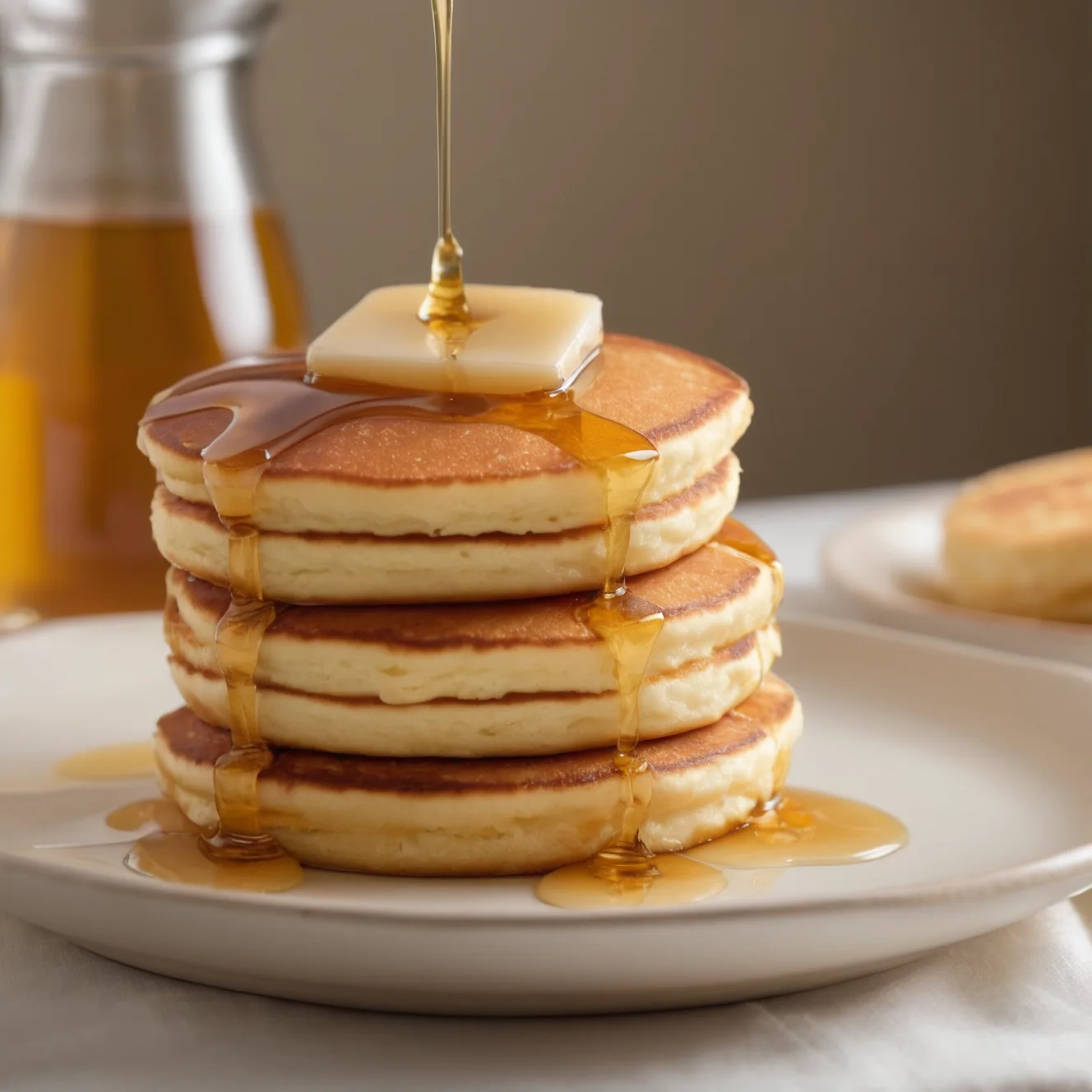
At Pizza Hut’s breakfast buffet, pancakes came with the standard restaurant accompaniments: a pat of butter in a foil wrapper and a syrup dispenser (typically a commercial pancake syrup, not maple syrup).
For home replication, salted butter pats and a good commercial pancake syrup (Log Cabin or Mrs. Butterworth’s) is the most buffet-accurate choice — closer to the experience than premium maple. The salt in salted butter works with the malt flavor in a way that unsalted butter slightly undersells.
If you prefer real maple syrup, the dark, robust grade (labeled Grade A: Dark Color / Robust Flavor, formerly Grade B) has more complexity and stands up to the malt flavor better than the lighter grades.
Cinnamon sugar (cinnamon and granulated sugar mixed 1:4) dusted over buttered pancakes was a common buffet option and works particularly well with the malt flavor.
Comparison: Pizza Hut vs. Other Chain Breakfast Pancakes
| Pizza Hut Buffet | IHOP | Cracker Barrel | |
|---|---|---|---|
| Batter style | Malted buttermilk | Very thin, malted | Thicker buttermilk |
| Thickness | Medium | Thin | Thick |
| Flavor | Toasty/malt-forward | Neutral, sweet | Tangy, buttery |
| Texture | Tender, slight chew | Thin, soft | Dense, cloud-like |
| Distinguishing ingredient | Malt powder | Malt powder | High buttermilk ratio |
IHOP’s version (copycat IHOP pancakes →) is thinner and milder — designed to carry fruit compotes and whipped cream toppings. Cracker Barrel (copycat Cracker Barrel pancakes →) is noticeably thicker and more tangy. Pizza Hut’s buffet pancakes were squarely between the two — malt-flavored, moderately thick, and served plain with butter and syrup.
Variations
Blueberry: Fold 3/4 cup fresh or frozen blueberries into the rested batter. Frozen berries don’t need to be thawed but should be patted dry to prevent extra moisture from thinning the batter. The malt flavor pairs especially well with blueberries.
Cinnamon-brown sugar: Stir 1/2 teaspoon cinnamon and 2 tablespoons brown sugar into the dry ingredients. Serve with cinnamon butter (1 stick softened butter + 2 tablespoons powdered sugar + 1/2 teaspoon cinnamon, whipped together).
Chocolate chip: After pouring batter onto the griddle, press 6–8 mini chocolate chips into the raw top surface of each pancake before the flip. The chips stay in place and melt into the underside when the pancake is flipped, creating pockets of melted chocolate rather than chips scattered through the crumb.
Banana-walnut: Add 1/2 mashed ripe banana and 1/4 cup roughly chopped walnuts to the wet ingredients before combining. The banana adds sweetness and moisture; the walnuts provide textural contrast to the soft crumb.
Make-Ahead and Storage
Pancake batter does not store well — the baking powder degrades and the pancakes come out flat if the batter sits more than 30 minutes. Make the batter fresh.
Cooked pancakes store well. Stack them with parchment between each to prevent sticking, place in a zip-close bag, and refrigerate up to 3 days or freeze up to 1 month. Reheat from refrigerator in a toaster at medium or in a 350°F oven for 5 minutes. From frozen, toast twice at medium or bake 8–10 minutes. Do not microwave — steam makes the surface gummy.
More Pizza Hut Recipes
- Copycat Pizza Hut Pan Pizza — the thick, crispy-bottomed pizza that put Pizza Hut on the map, made in a cast iron skillet
- Copycat Pizza Hut Breadsticks — the garlic-butter breadsticks with marinara dipping sauce, from the same dough as the pizza
- Pizza Hut Cheese Sticks — mozzarella-topped sticks from the stuffed crust dough
- Copycat McDonald’s Hotcakes — the fast-food pancake comparison: McDonald’s uses a thinner, slightly sweeter batter without malt