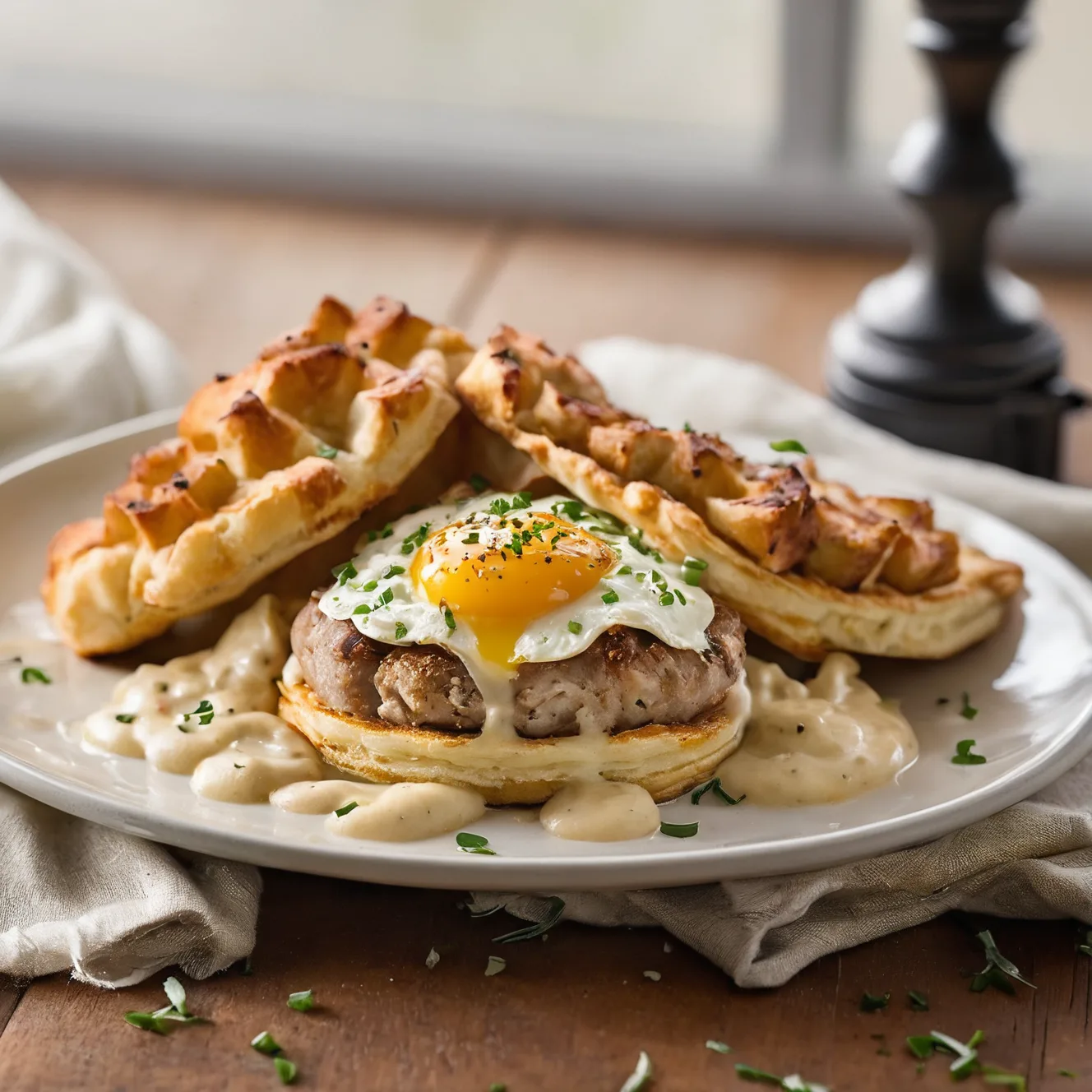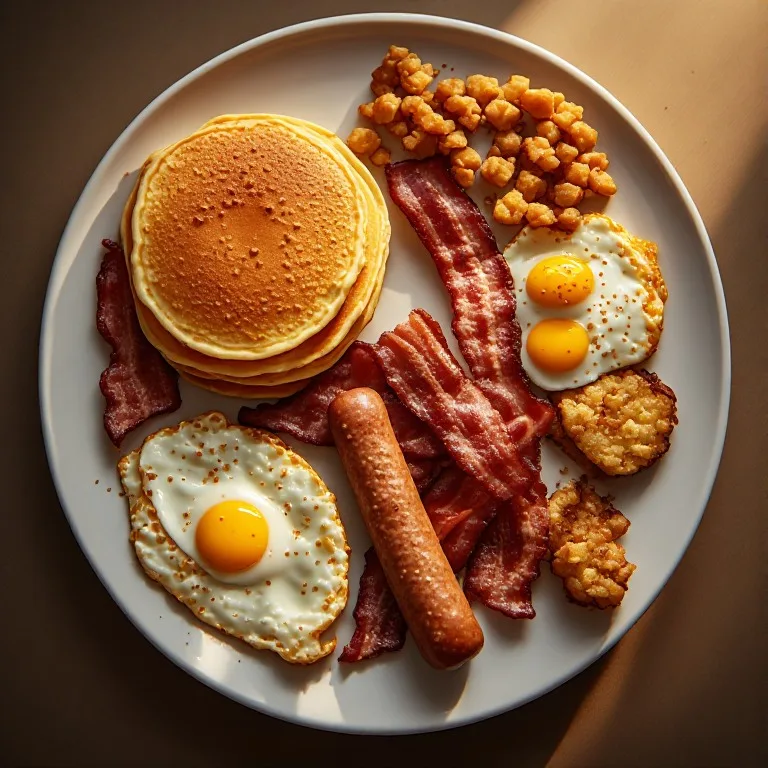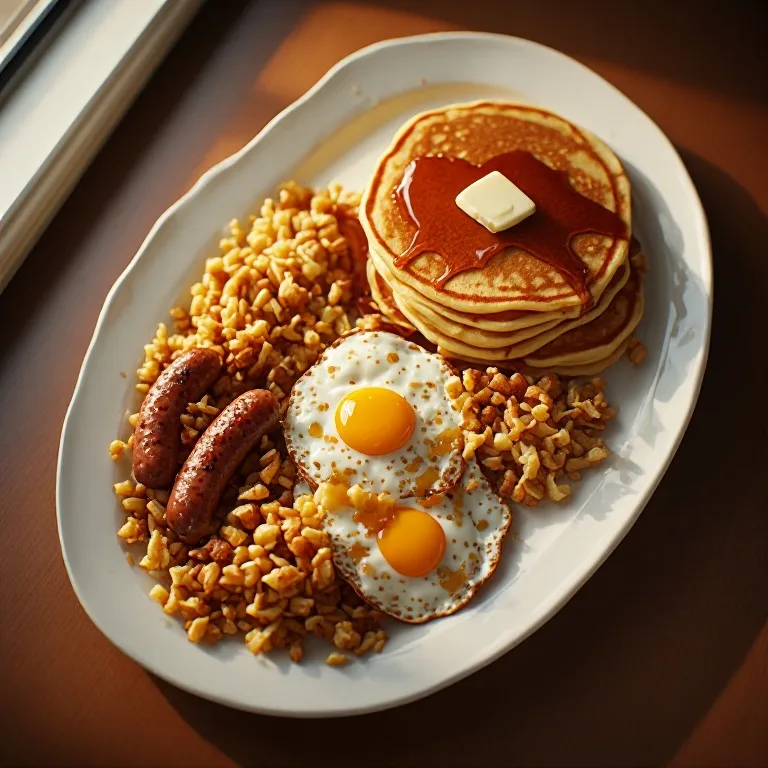


Bob Evans built its restaurant chain around a single idea: farm-fresh breakfast, made from the same ingredients the company sold in grocery stores, served by people who knew exactly how it was supposed to taste. The Farmer’s Choice platter is that ethos on a plate — you pick your components, the kitchen makes each one to order, and the result is more reliable than most diner breakfasts because the chain’s supply chain is the brand.
At home, the platter is reproducible but not automatic. Two of the four components have specific techniques that most home cooks skip, and skipping them produces noticeably inferior results. This guide covers both — and the timing sequence that gets a four-component hot breakfast on the plate simultaneously.
Why the Hotcakes Are Different
Bob Evans hotcakes are thicker and tangier than the flat, neutral discs you get at IHOP or Denny’s. Two things produce that result:
More buttermilk, less water. Bob Evans’ batter is built on full-fat buttermilk rather than a buttermilk-water mix. Buttermilk brings three things: lactic acid (which tenderizes the gluten and creates tang), fat (which adds richness the water-diluted versions lack), and the other half of the baking soda reaction (baking soda needs acid to activate; the more buttermilk, the more lift).
The 5-minute batter rest. Most home recipes say “mix and pour immediately.” That’s wrong for buttermilk pancakes. The instant the baking soda meets the buttermilk’s lactic acid, a reaction starts — carbon dioxide bubbles form inside the batter. Pouring immediately means those bubbles are still forming on the griddle, unevenly, which creates irregular rise. A 5-minute rest allows the initial burst of bubbles to form and stabilize before the batter hits heat, producing a more consistent, open crumb throughout the hotcake.
The visible sign: after 5 minutes, the surface of the batter will show small bubbles. Those are CO₂. That’s the lift.
What Most Copycat Recipes Miss
The single most common mistake: pressing the hotcake after flipping. The instinct to press down feels productive — it looks like it’s speeding up the cooking. What it actually does is compress the bubble structure the 5-minute rest just built. The hotcake goes from fluffy to dense. Don’t press. One flip, then hands off.
The Hash Brown Problem (and the Fix)
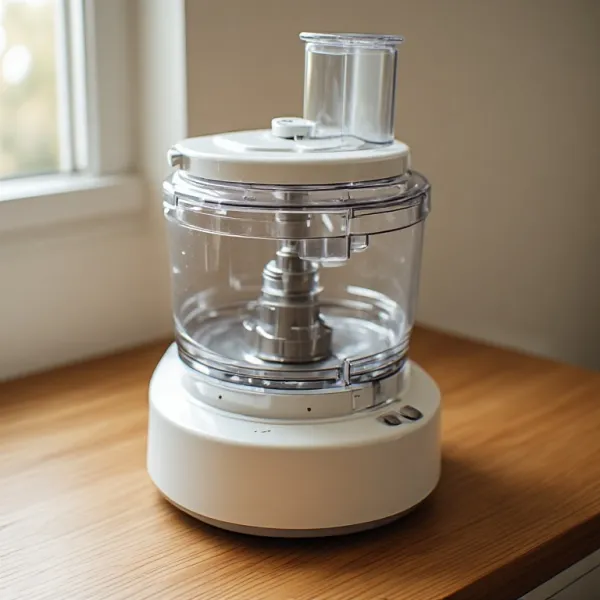
Russet potatoes are approximately 80% water by weight. Shred a russet and drop it on a griddle without removing that water and the potato steams instead of fries — you get pale, soft, sticky shreds that never develop a crust, no matter how hot the pan is.
The double wring. Wring the shredded potato in a kitchen towel, then wait one minute. That waiting time is not arbitrary: moisture wicks from inside the potato cells to the cut surface in about 60 seconds. Wring again. The second wring removes significantly more liquid than the first pass because of that migration. After both passes, the shreds should feel almost dry — paper-like, not wet.
The undisturbed 4–5 minutes. Press the dry shreds into a compact, even layer in a preheated pan with hot oil and butter. Then leave it entirely alone. The potato starch gelatinizes and, combined with the Maillard reaction on the surface, forms a golden crust that locks the shreds together. Moving the hash browns before that crust forms prevents it from forming at all — you end up with loose shreds that fall apart every time you try to flip.
When the crust is ready, a spatula will slide under a solid mass. If the shreds resist and break apart, they need more time.
The Timing Sequence
A four-component breakfast fails when the eggs are cold, the hotcakes are sitting in condensation, or the hash browns went soft while you waited for everything else. The sequence below runs all four components into a 200°F oven rest (on a wire rack — not paper towels, which trap steam) and puts the eggs on last, since eggs are the most time-sensitive:
- Hash browns (longest, most forgiving when rested in oven): start first
- Meat (sausage patties, bacon, ham — 3–10 minutes depending on cut): second
- Batter rest (mix the hotcakes while the meat cooks, let rest 5 minutes): third
- Hotcakes (2.5–4 minutes per side): fourth
- Eggs (1.5–4 minutes): last — plate immediately after eggs are done
With this order, hash browns and meat rest comfortably in the 200°F oven for 5–10 minutes without losing quality. Hotcakes hold for 3–4 minutes without getting soggy if they’re on a wire rack. Eggs go directly to the plate.
How It Compares to Other Breakfast Platters
| Platter | Griddle Item | Hash Browns Style | Eggs | Approx. Cal (standard) |
|---|---|---|---|---|
| Bob Evans Farmer’s Choice | Buttermilk hotcakes or Brioche French toast | Shredded, crispy | Any style, to order | 1,070–1,460 |
| Denny’s Grand Slam | Buttermilk pancakes (thinner) | No (not standard) | Any style | 990 |
| Cracker Barrel Country Boy | Buttermilk biscuits or pancakes | Hash brown casserole | Fried or scrambled | 1,190 |
| IHOP Classic Breakfast | Thick, buttermilk-style pancakes | Crispy hash browns | Any style | 1,010 |
The Farmer’s Choice distinguishes itself from the Grand Slam in two ways: the hotcakes are tangier and thicker, and the hash browns are shredded (not the patty style Denny’s uses, and not the casserole-style Cracker Barrel serves). If you want to build those platters at home too, we have full copycat guides for the Denny’s Grand Slam and Cracker Barrel pancakes.
The Bob Evans Cluster
The Farmer’s Choice platter is the framework; the components are what built Bob Evans’ reputation. If you want to build out the full Bob Evans table:
- The sausage gravy recipe covers the standalone gravy in detail — including the rendered-fat roux technique and the exact black pepper amount.
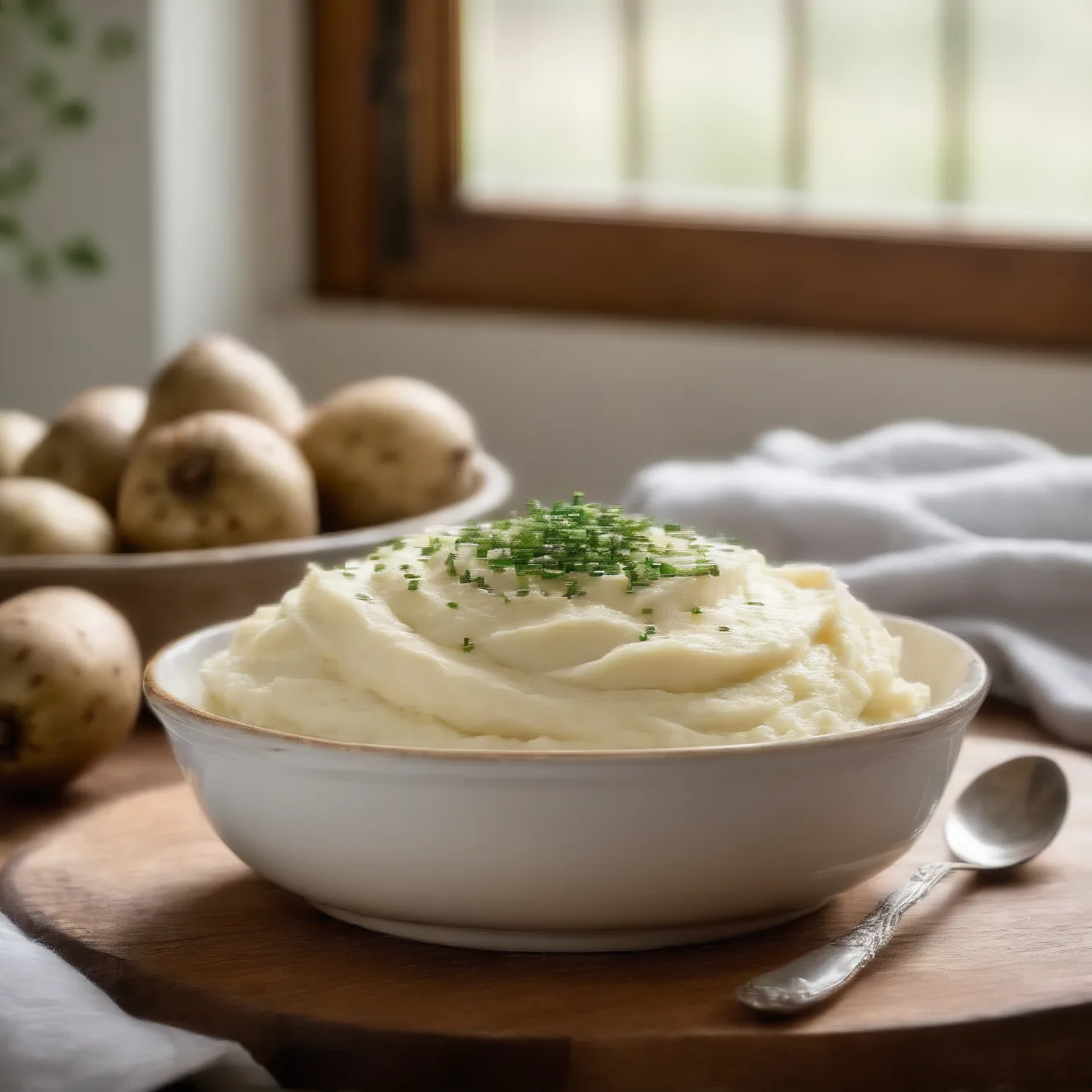
- The mashed potatoes are the chain’s signature side: Yukon Golds, steam-dried before mashing, with warm cream and sour cream for silky texture.
- Glazed carrots — made with honey as the primary sweetener, not brown sugar, which is what gives them a lighter, more floral character.
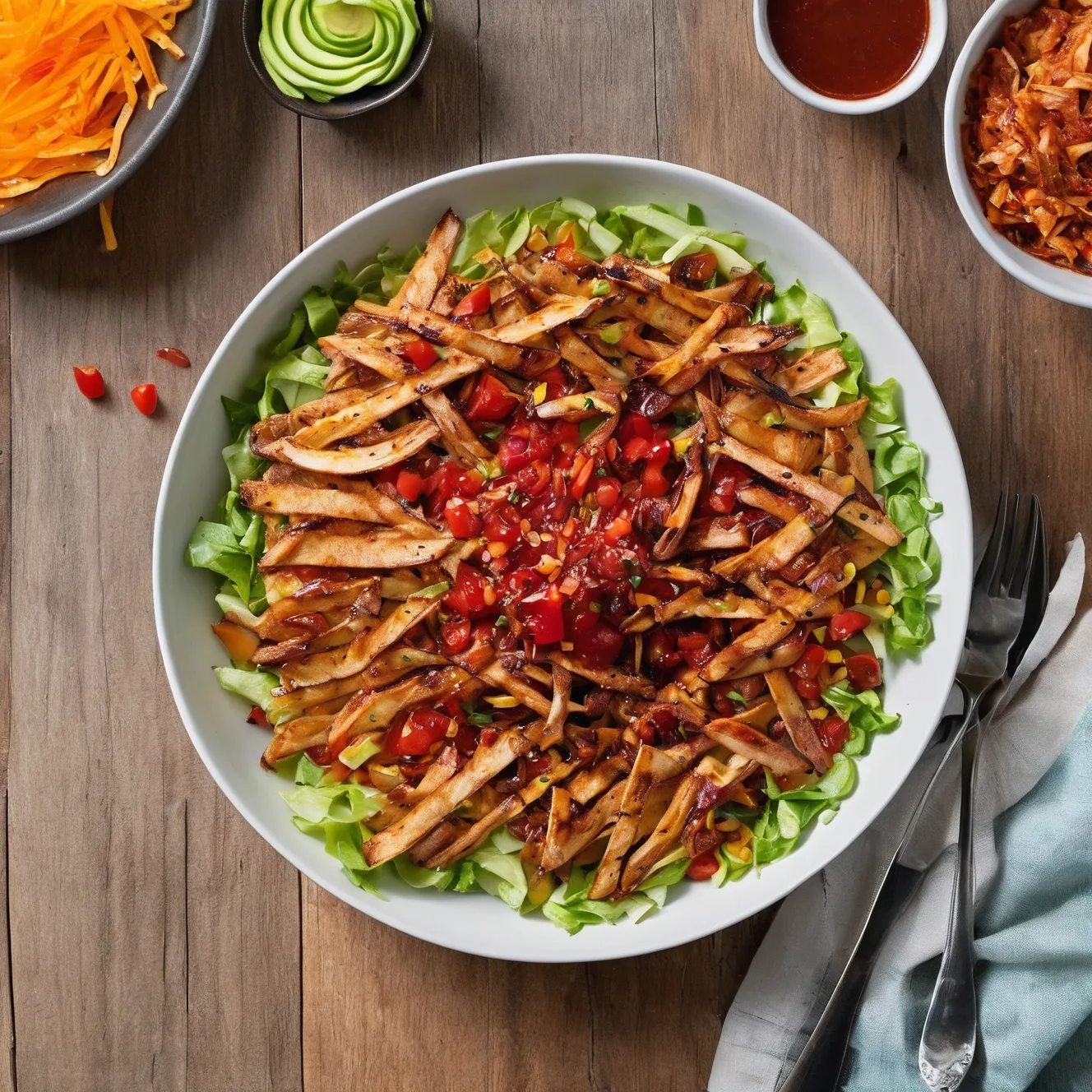
- The Wildfire Chicken Salad is the chain’s best-known lunch item: the dressing is 50% BBQ sauce, 50% ranch, in equal parts — and the ratio is what almost every copycat gets wrong.