


Beef and Broccoli
Prep time: 20 min (includes 20 min velveting rest) Cook time: 15 min Servings: 4
Beef and broccoli is the dish TikTok used to teach home cooks the most important technique in Chinese-restaurant cooking. Not a new sauce or a special ingredient — just the 20-minute baking soda marinade that every Chinese restaurant uses and every American cookbook ignores. Once that secret spread, homemade beef and broccoli went from a pale imitation of takeout to something that consistently beats the delivery box.
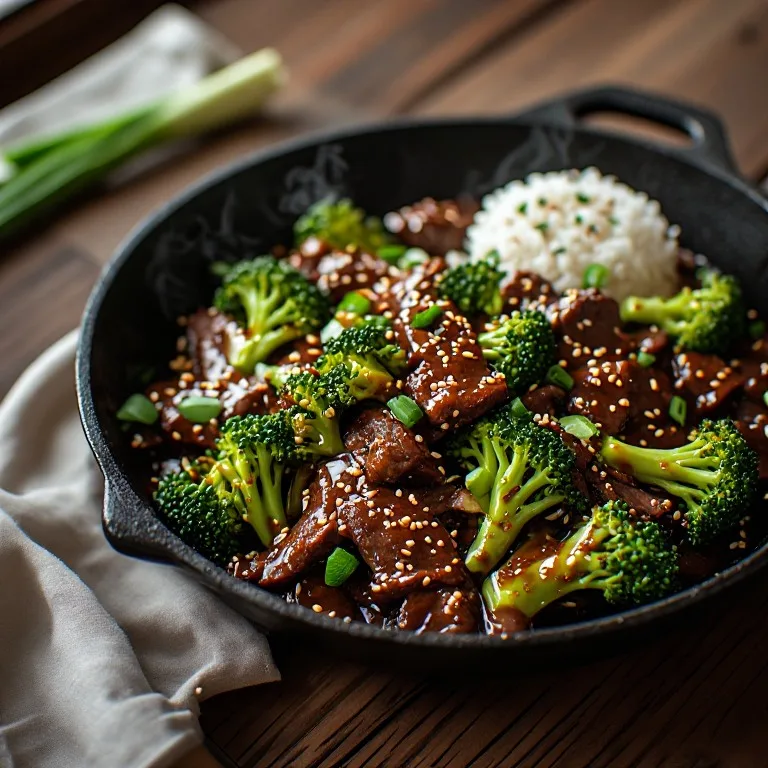
The recipe has two other moments that matter. The broccoli blanch — 60 seconds in boiling salted water followed by an ice bath — keeps the florets vivid green and crisp-tender, exactly the texture that restaurant versions lose in the reheating process. And the pre-mixed sauce, poured all at once into a hot wok, goes from liquid to glossy glaze in under a minute. That visual is half the reason beef and broccoli became a TikTok standard: the sauce transformation happens fast and looks dramatic, and the finished dish photographs better than most of what gets delivered in a bag.
Why This Went Viral on TikTok
The velveting revelation drove everything. Before 2022, most home cooks assumed restaurant-quality beef tenderness came from a wok burner with 10x more BTUs than a home stove. When food creators demonstrated that three-quarters of a teaspoon of baking soda — a pantry ingredient that costs pennies — was the actual variable, the implication was almost offensive: restaurants have been sitting on this secret the whole time.
The visual proof made it shareable. Side-by-side cuts of beef before and after velveting show unmistakable texture differences. The un-velveted beef looks like any home-cooked stir-fry. The velveted beef looks like it came from a professional kitchen. That contrast built trust in the technique and pushed the comparison videos across every platform simultaneously.
The “better than takeout” framing did the rest. Mongolian beef had already established the genre, but beef and broccoli hit a different nerve: it’s the dish almost everyone has ordered but almost no one had successfully recreated at home. The gap between expectation and reality was frustratingly wide. The baking soda technique closed it.
The Velveting Step Explained
Velveting is a standard Chinese restaurant prep technique, not a TikTok invention. The term covers two slightly different methods; this recipe uses the baking soda approach (also called “dry velveting”).
Baking soda is alkaline. When it contacts the surface of raw meat, it raises the local pH. Higher pH disrupts the protein bonds responsible for muscle toughness — specifically the myosin and actin proteins that contract and tighten during cooking. The result is a strip of beef that stays pliant and tender even at high stir-fry heat, because the surface proteins were chemically relaxed before cooking began.
The ratio matters. Too little baking soda and you won’t notice a difference. Too much and the beef develops a metallic, soapy taste that is immediately obvious and unpleasant. Three-quarters of a teaspoon per 1.5 lbs of beef is the reliable middle ground. Timing matters too: 20–30 minutes is the window. Under 15 minutes and the reaction is incomplete. Over 4 hours and the meat starts to become mushy.
The Broccoli Blanch vs. Raw Stir-Fry
Most takeout beef and broccoli uses raw broccoli thrown directly into the wok. The broccoli cooks from the residual heat and steam of the sauce. The results are inconsistent: overcooked and gray-green if the wok isn’t hot enough, undercooked and crunchy if it is.
Blanching solves both problems. Sixty to ninety seconds in aggressively boiling salted water partially cooks the broccoli — past the raw, harsh stage, but well short of soft. The ice bath stops carryover cooking instantly and sets the brilliant green color. In the wok, blanched broccoli needs 30–45 seconds of tossing in sauce rather than several minutes of cooking. This means the beef and broccoli finish at the same time, the sauce doesn’t over-reduce, and the broccoli stays vivid green on the plate.
What Makes This Sauce Different From Mongolian Beef
The two dishes are often compared, but the sauce formulas are meaningfully different. Mongolian beef is built on soy sauce and brown sugar — it’s intentionally sweet, sticky, and simple, closer to a teriyaki profile. Beef and broccoli sauce centers on oyster sauce, which is savory, briny, and umami-forward without the sweetness. Brown sugar is present but plays a supporting role. The ratio of oyster sauce to soy sauce is what gives beef and broccoli its particular depth — richer, more complex, and less sweet than its TikTok counterpart.
Make-Ahead and Meal Prep Notes
The velveted beef can be prepped up to 4 hours ahead (refrigerated). The sauce can be whisked together and kept covered at room temperature for up to 8 hours. Blanched broccoli holds for 3 days in the refrigerator, drained and stored in a covered container. Day-of, the stir-fry itself takes 12–15 minutes.
Leftovers keep for up to 3 days refrigerated. The sauce thickens as it cools; reheat in a skillet over medium heat with a splash of water or broth, stirring until the sauce loosens and the beef heats through. Microwave reheating works but dulls the flavor compared to stovetop.
Frequently Asked Questions
Do I really need to do the velveting step? Yes, if you want restaurant-comparable texture. Without it, flank steak stir-fried at high heat will be chewy and firm. The baking soda step is 3 minutes of prep time and 20 minutes of waiting. The difference in the finished dish is immediately obvious.
Can I use frozen broccoli? Yes, with adjustments. Thaw the frozen broccoli completely and pat it as dry as possible — excess moisture is the main enemy. Skip the blanching step (it’s already par-cooked). Add it directly to the wok after the aromatics and toss for 1–2 minutes before adding the sauce. The texture will be softer than fresh broccoli but still good.
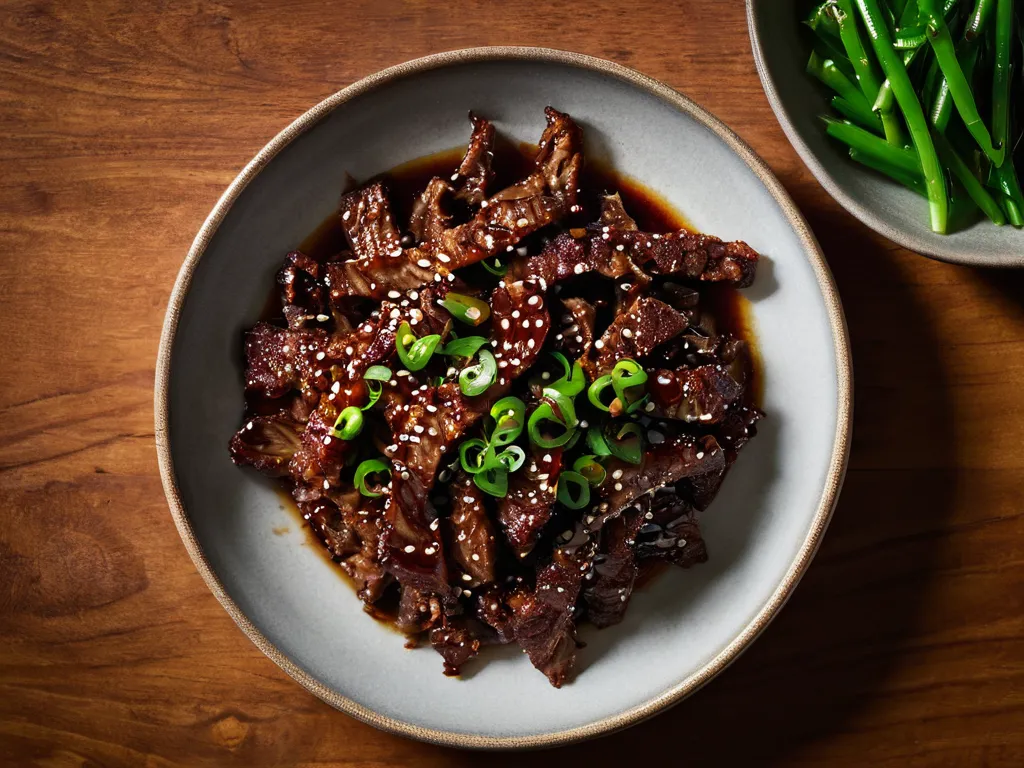
What’s the difference between this and Mongolian beef? Beef and broccoli uses an oyster-sauce-forward sauce — savory, umami-heavy, less sweet. Mongolian beef uses a soy-and-brown-sugar sauce that’s noticeably sweeter and has a more caramel-like glaze. Mongolian beef typically includes green onions and no broccoli, and uses enough cornstarch to get a crispier coating on the beef. They taste distinctly different despite sharing many of the same base ingredients.
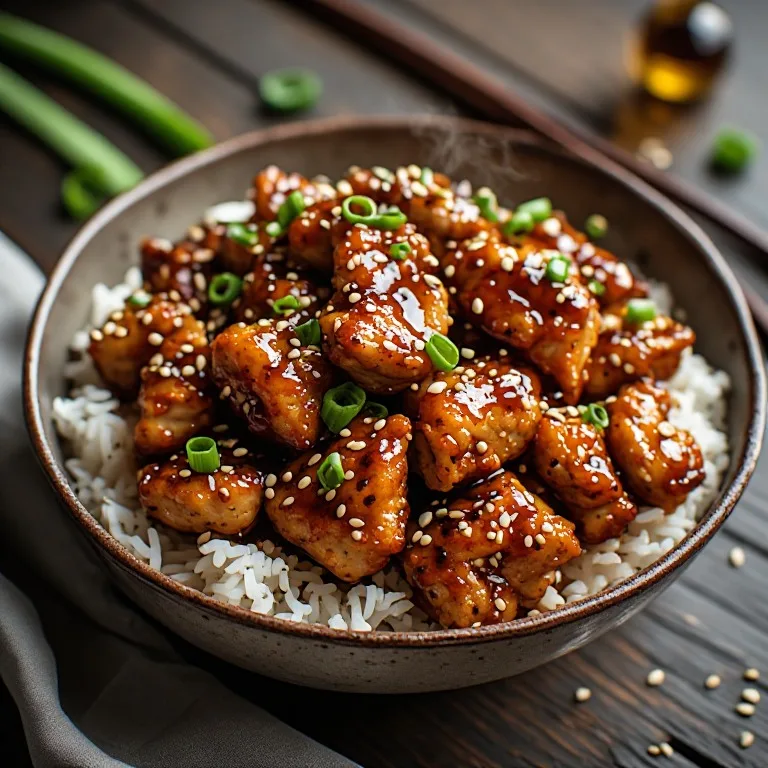
Can I make this with chicken instead of beef? Yes. Use 1 lb boneless, skinless chicken thighs sliced ½-inch thick. Reduce the baking soda to ¼ teaspoon (chicken has less connective tissue to tenderize). Everything else stays the same. Chicken cooks faster — 90 seconds per side in the searing step, not 2 minutes.
My sauce isn’t thickening — what went wrong? Either the heat is too low, or the cornstarch wasn’t fully dissolved when you mixed the sauce. Make sure the wok is at a strong simmer before you pour in the sauce, and stir the sauce mixture immediately before pouring (the cornstarch settles). If the sauce is still thin after 60 seconds of simmering, mix ½ teaspoon cornstarch with 1 teaspoon cold water in a small bowl and drizzle it in while stirring.
Can I use regular broccoli stem pieces instead of just florets? Yes. Peel the outer fibrous layer off the stem with a vegetable peeler and slice into ¼-inch coins. The stems have slightly more bite than the florets and hold their texture through stir-frying well. Blanch them for the same 60–90 seconds.