


The Two Things That Make or Break Garlic Noodles
Most garlic noodle recipes fail in the same two places: the garlic goes too dark and turns bitter, or the butter breaks into a greasy pool instead of a glossy sauce. Both are fixable with straightforward technique.
Garlic timing. The goal is pale gold, not brown. The sequence takes 2 to 3 minutes over medium-low heat with constant stirring — garlic starts white, passes through pale yellow, hits light gold (that’s the moment), and within 30 more seconds turns brown. You want to pull the pan off the heat while it’s still light gold because residual heat in the butter and pan carries it forward by one shade while you pour in the sauce. The window is genuinely narrow, and it’s not forgiving — a bitter batch cannot be corrected. Having the sauce pre-mixed before the garlic goes in eliminates the scramble and gives you full attention for the garlic color.
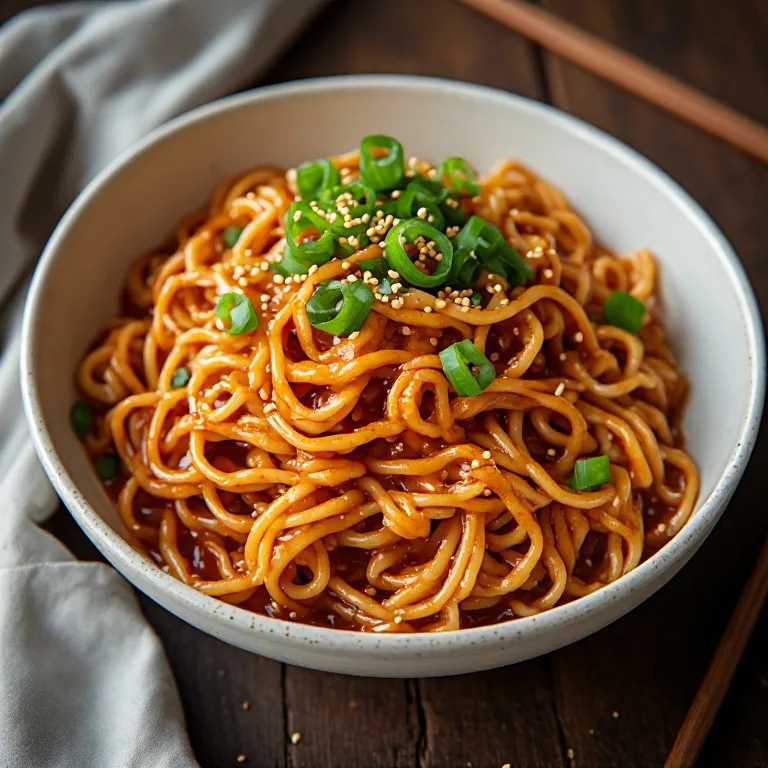
The emulsion. Butter in a hot pan by itself is just fat — it coats noodles and pools at the bottom. The technique for a clingy, glossy garlic noodle sauce is the same one professional kitchens use for pan sauces: add cold butter in pieces while the noodles move constantly, and use pasta water starch as the emulsifier. The cold butter melts gradually and each fat droplet gets surrounded by pasta starch before it can re-separate. This is why the pasta water matters — plain water will not do the same thing. Scoop it out before you drain the pasta.
Choosing the Right Noodle
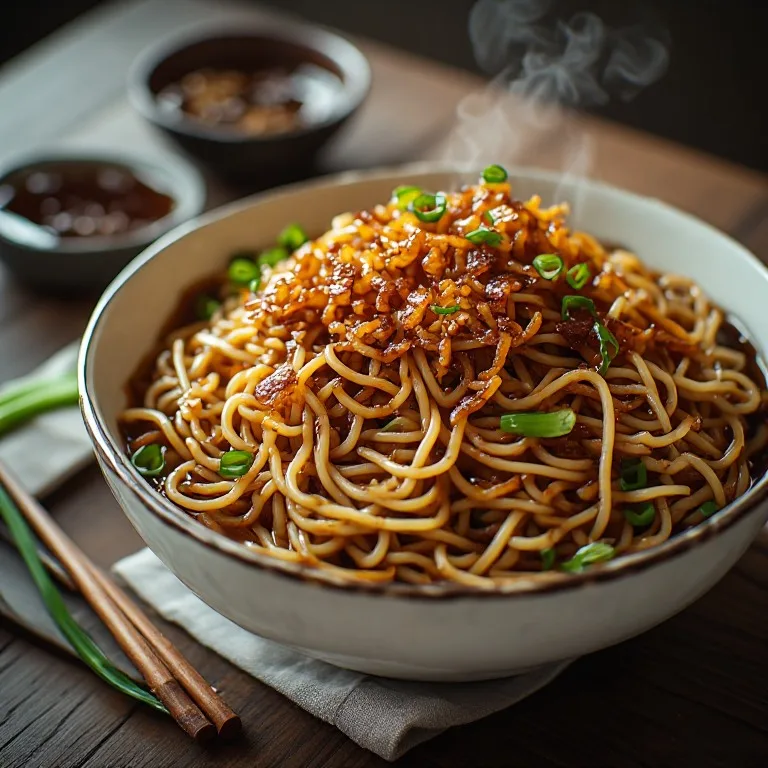
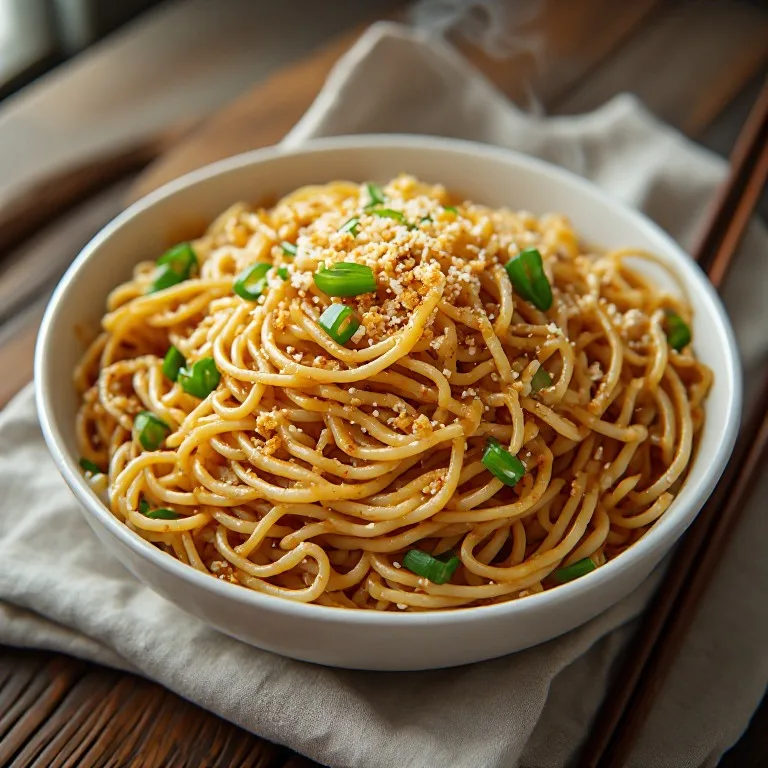
The original Thanh Long version uses thin Chinese egg noodles — lo mein style, about 2mm thick, slightly chewy from the egg in the dough. They take 3 to 4 minutes in boiling water and absorb the sauce without going soft. They’re sold fresh or dried at Asian grocery stores and most international sections. Dried spaghetti at 8 minutes al dente is a practical substitute that most people have in the pantry. The sauce is assertive enough that the flavor outcome is essentially the same; the textural difference is subtle unless you’ve eaten both versions side by side.
Avoid angel hair — it’s too delicate and goes from al dente to overcooked in the pan tossing step. Thick udon works if you want something sturdier and more filling, but the heavier noodle absorbs less sauce per bite and the dish reads closer to a stir-fry than the silky restaurant version. Whatever you use, pull it one minute early and let the pan finish the cooking.
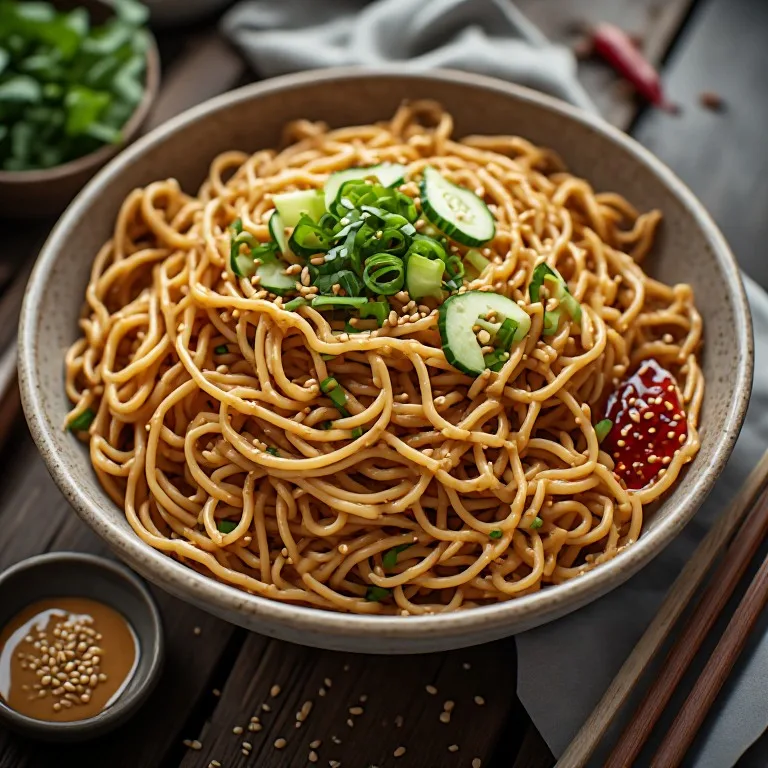
If you like this format — a few pantry sauces tossed with hot noodles in under 15 minutes — the same approach drives the scallion oil noodles (infused oil instead of butter) and the fierier Sichuan chili oil noodles. All three reward the same move: get the sauce built before the noodles finish, then toss hard with a splash of pasta water.
Scaling Up for a Crowd
This recipe scales directly: double all ingredients for 8 servings, but cook in two separate pans rather than trying to toss a doubled batch in one skillet. Crowded pans cool the butter too quickly, the emulsion breaks before the noodles absorb it, and you get sauce pooling instead of coating. Two pans running simultaneously produce two excellent batches in the same time it takes to do one batch, and each serving comes out with the right glossy coating. At a dinner party, this approach lets you serve 8 people a dish that costs around $10 total and takes 15 minutes, which is the other reason the restaurant version commands $32 a plate.