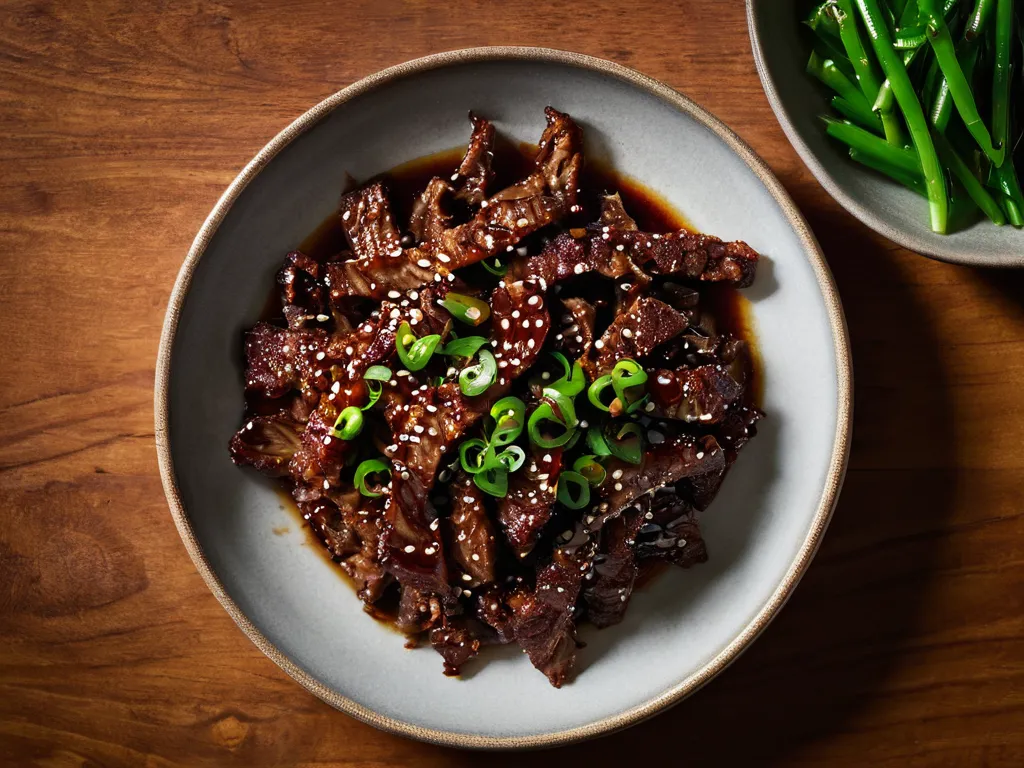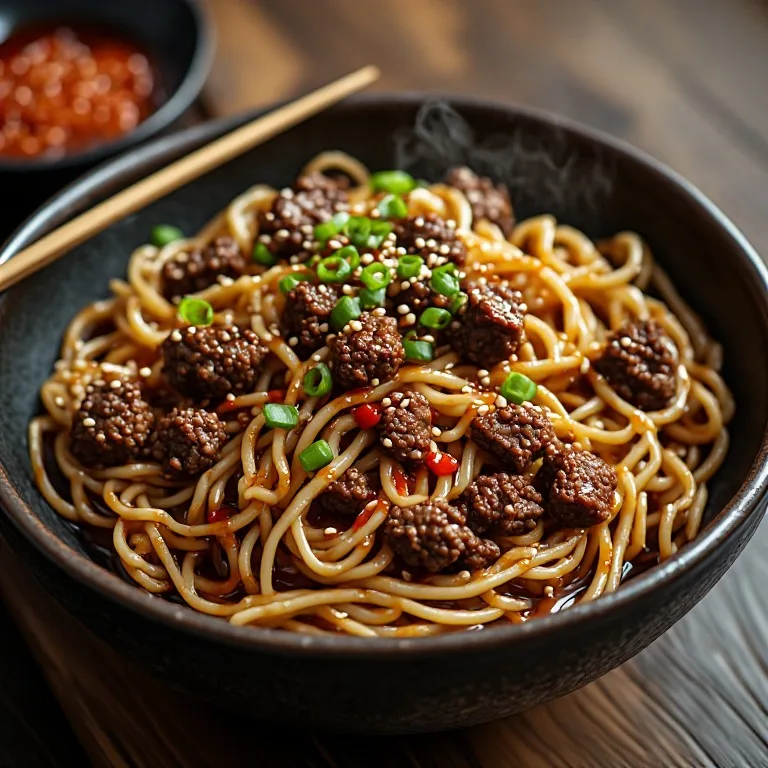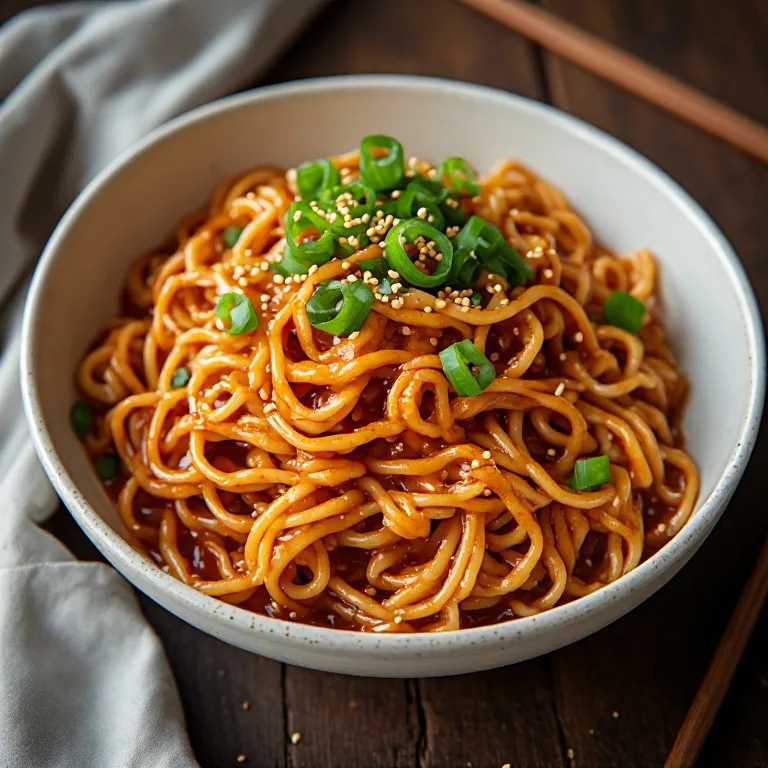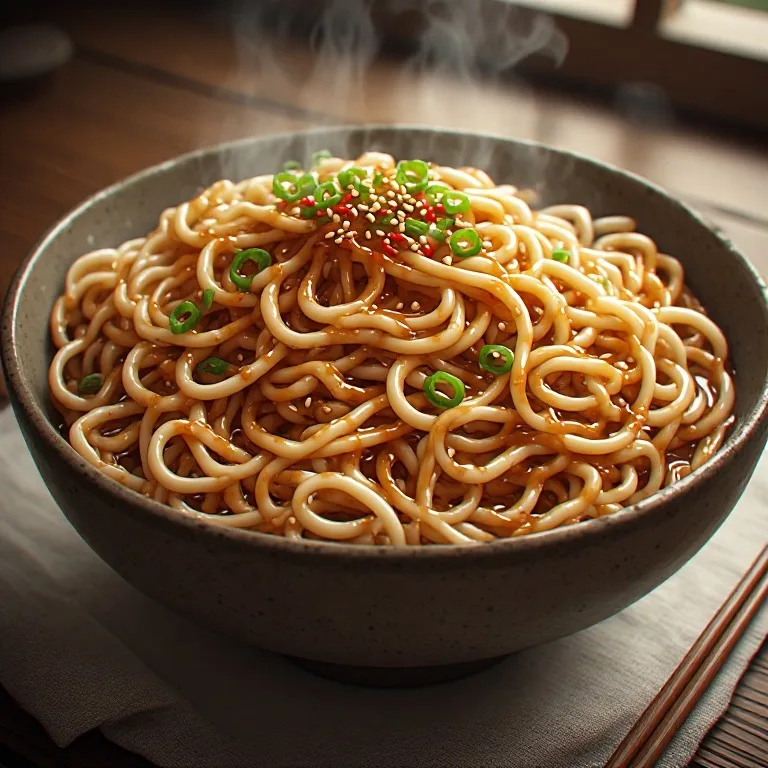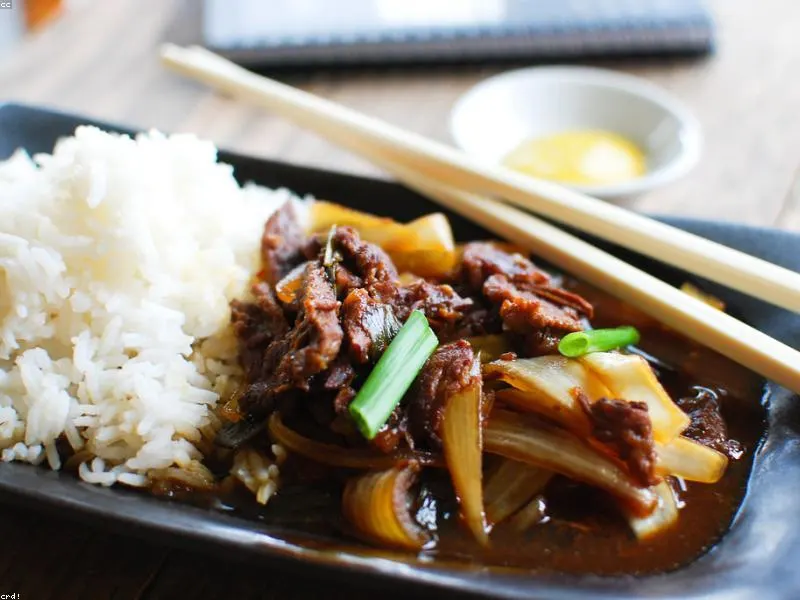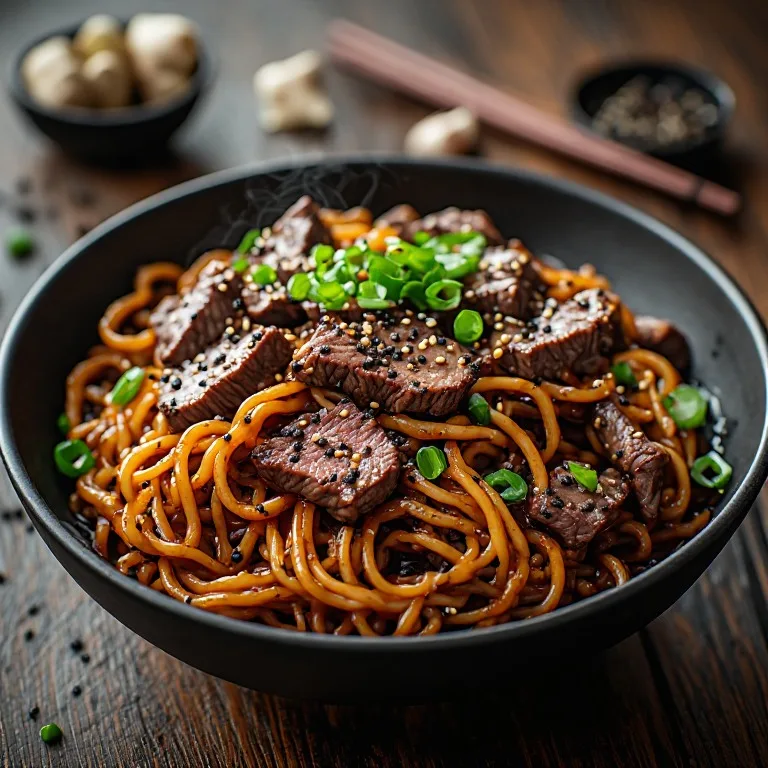




The viral TikTok black pepper beef noodles is a 25-minute wok dish with three things going for it: velveted beef that stays silky in screaming heat, thick chewy noodles that hold the glossy oyster-soy sauce, and a quantity of freshly cracked black pepper that surprises people who’ve never made it — two full tablespoons, which produces a sharp, floral heat nothing like chili.
The setup: slice the beef thin, velvet it briefly, sear in batches, build the sauce, toss the noodles. The structure is a standard Chinese stir-fry; the distinctive elements are the specific sauce ratio and the amount of pepper.
Why the Velveting Step Matters
Flank steak is lean and seizes fast in high heat. Without treatment, a 90-second wok sear produces chewy, slightly tough strips. Velveting — tossing the sliced beef in baking soda, cornstarch, and a splash of soy for 15 minutes — changes that. The baking soda slightly alkalizes the surface of the meat, which slows protein cross-linking during cooking. The cornstarch forms a thin coating that buffers against moisture loss. The result is beef that stays silky and tender even after a hard sear.
This is standard technique in Chinese restaurant kitchens. It’s why takeout beef is almost always more tender than beef stir-fried at home without the step.
The Black Pepper Is the Point
Two tablespoons of freshly cracked black pepper sounds like a lot. It is. That’s why the dish went viral — creators filmed themselves adding full spoonfuls of pepper and people’s reactions drove shares. But the quantity is correct: black pepper in this amount produces a sharp, aromatic heat that’s completely different from chili heat, and it fades noticeably into the background if you use pre-ground powder from a jar (which has lost most of its volatile compounds).
Use whole peppercorns cracked coarsely with a burr grinder or mortar and pestle. The coarse grind matters — you want some pieces that still have texture, not fine powder.
Dark Soy Sauce and the Signature Color
The dish’s distinctive near-black, glossy appearance comes from dark soy sauce, not oyster sauce. Dark soy is thicker and more molasses-forward than regular soy; it stains the sauce almost immediately and gives the noodles that visual that reads as restaurant-quality on video. If you can find it (most Asian grocery stores carry Pearl River Bridge or Lee Kum Kee brand), use it. If you can’t, sub ½ teaspoon of molasses and accept a lighter color.
Wok Heat at Home
Home burners max out around 8,000–12,000 BTU; professional wok ranges run 60,000–100,000 BTU. You can’t replicate restaurant wok hei at home, but you can get close by preheating the empty pan over maximum heat for a full 2–3 minutes until it smokes, cooking the beef in a single layer without crowding, and not moving it for the first 90 seconds. Crowding the pan steams instead of sears — if your pan is smaller than 12 inches, sear the beef in two batches.