
Pin It

Crème Brûlée Cookies

Crème Brûlée Cookies
Jump to Recipe
Prep 20 min Cook 12 min Serves 16 cookies
Quick answer: Whisk 2¼ cups flour, ½ teaspoon baking powder, and ¼ teaspoon salt. Beat 1 cup softened butter with 4 oz room-temperature cream cheese until smooth, then add 1 cup granulated sugar and beat for 3 minutes until fluffy. Mix in 1 egg yolk and 2 teaspoons vanilla. Add the flour mixture and mix until just combined. Scoop 2-tablespoon portions, roll smooth, flatten to ½-inch-thick discs on parchment-lined baking sheets, and refrigerate for at least 30 minutes. Bake at 350°F for 11 minutes until the edges are just set. Cool completely on the pan — at least 30 minutes. Sprinkle 1 teaspoon granulated sugar on each cookie and spread it to the edges. Hold a kitchen torch 2–3 inches away and move it in tight circles until the sugar turns deep amber and glassy. Let set 2 minutes, then tap the surface with a spoon.

Shop the tools

Gear matched to this recipe. These are Amazon affiliate links — we may earn a small commission if you buy, at no extra cost to you.

As an Amazon Associate, Copycat Spices earns from qualifying purchases. Product images are generic illustrations, not the exact item listed.

Crème Brûlée Cookies

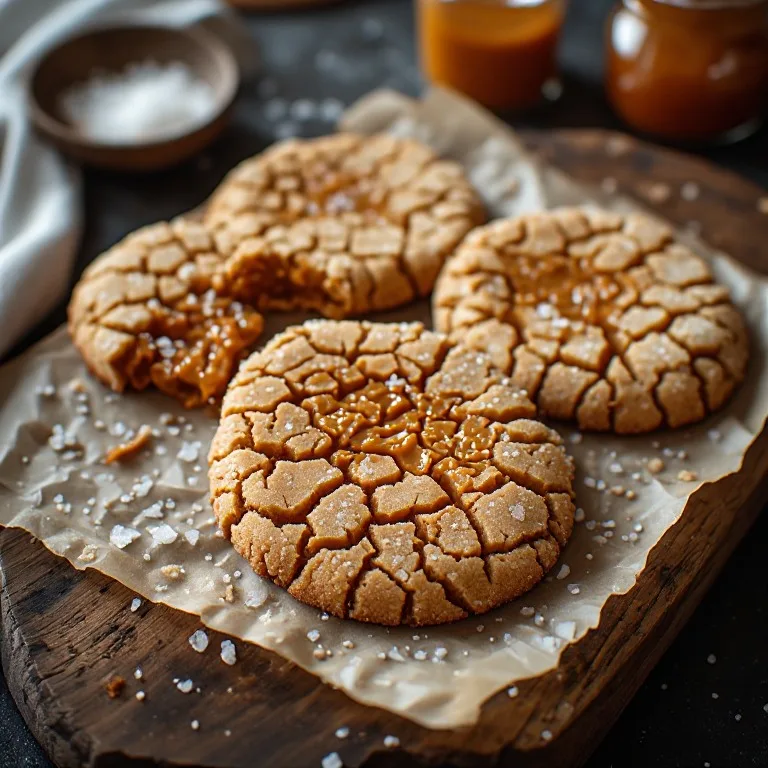
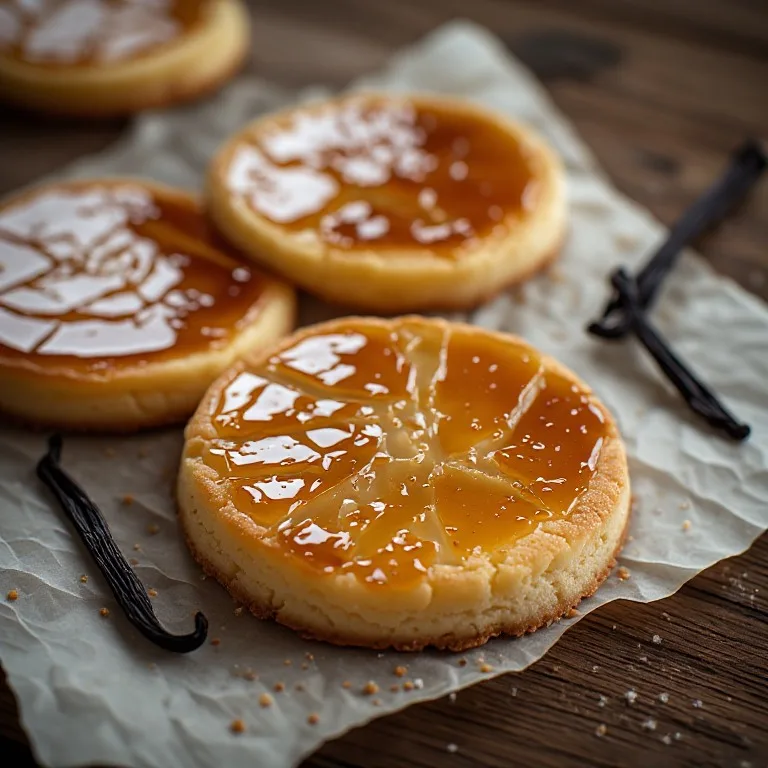
The viral TikTok crème brûlée cookies — a cream cheese butter cookie topped with a torched caramel shell that cracks just like the real thing. One key rule: the cookies must be completely cool before you torch them, or the sugar sinks instead of forming a glass. 30 minutes rest, then torch.

Easy Prep: 20 min Cook: 12 min Total: 32 min16 cookies servings ~$4.20/serving
Prep20 min
Cook12 min
Total32 min
Servings
16
At home~$4.20/serving
vs
Restaurant~$18.90/serving
You save ~78%

The Story Behind the Recipe

Crème brûlée cookies went viral on TikTok in 2023 when food creators realized that cream cheese — the same ingredient that makes crème brûlée cheesecakes so rich — transforms a simple butter cookie into something custard-tender, and that torching a thin layer of granulated sugar on top produces the exact caramel glass you crack at a restaurant. The spoon-tap moment — that satisfying splinter through the amber shell — is what made these a sensation. Videos of the crack racked up tens of millions of views across TikTok and Instagram Reels in the space of a few months, making this one of the most-replicated dessert techniques of the decade so far.

A crème brûlée at a bistro or upscale restaurant runs $12 to $18 per serving. One batch of these cookies — 16 shareable portions for roughly $7 in ingredients — delivers the same crack and the same caramelized custard flavor in a form you can gift, stack in a tin, or bring to a holiday party. The one technique that separates a great crème brûlée cookie from a mediocre one: the cookie must be completely cool before you torch it. On a warm cookie, the sugar liquefies and sinks into the surface rather than forming a raised glass shell. Thirty minutes at room temperature is the minimum; overnight in the refrigerator, torched right before serving, is even better.

Nutrition Facts

Per serving (16 cookies servings)
Calories255
Total Fat14g
Total Carbs30g
Dietary Fiber0g
Sugars18g
Protein3g
Sodium115mg

* Estimated values based on standard recipe preparation. Actual values may vary.

Ingredients

  • For the cookies
  • For the brûlée topping

Instructions

💡
Pro tip: This recipe tastes even better the next day. The flavors need time to meld together in the fridge.
❄️
Storage: Keeps in an airtight container in the fridge for up to 2 weeks. Freezer-friendly for up to 3 months.
🎃 Free Halloween cookbook — download now The Copycat Halloween Cookbook A ready-made, photo-illustrated PDF of our best halloween copycat recipes — free to download, no building required. Pay what you want to support if you love it.

Free PDF — instant download. We'll also send new seasonal copycat recipes now and then; unsubscribe anytime. Or just download it →

The crème brûlée cookies that broke TikTok — cream cheese butter cookies with a torched caramel shell that cracks just like the real thing.

What makes creme brulee cookies different from a regular butter cookie

Two things: cream cheese in the dough and a torched sugar shell on top.

The cream cheese replaces a portion of the butter and adds richness, a faint tang, and a custard-like tenderness that plain butter cookies don’t have. It’s the same ingredient that makes crème brûlée cheesecakes taste so silky — here it does the same work in a cookie. The result is a cookie that feels more like a shortbread but with a softer, more complex interior. If you like the flavor but not the torch step, the same caramelized-sugar idea powers these crème brûlée overnight oats.

The torched sugar is the other half. Granulated sugar caramelizes under direct heat into a glass-like amber shell — the same technique used in restaurants to finish a ramekin of crème brûlée. Torch it on a completely cool cookie and it sets hard. Tap it with the back of a spoon and it cracks.

That crack is why these went viral.

The one rule that makes or breaks the recipe

The cookies must be completely cool before you torch them.

On a warm cookie, the residual heat from the baked dough keeps the butter soft. When the torch melts the sugar from above, that warmth keeps it liquid from below — the sugar soaks into the surface instead of setting as a shell. You end up with a sticky, uneven coating instead of a clean crack.

Thirty minutes at room temperature is the minimum. One hour is better. If you want to make these ahead and torch them right before serving (the best approach for a party), the un-torched cookies keep at room temperature for up to 24 hours.

How to torch for an even shell

Hold the flame 2 to 3 inches from the cookie surface and move it in constant tight circles — never hold it still. A stationary flame scorches the center while the edges stay pale.

Watch the stages: the sugar melts to a clear liquid first, then turns pale gold, then amber. Stop at deep amber, which is the peak flavor — just past butterscotch. Dark brown means bitter. The entire process takes 30 to 40 seconds per cookie.

The torched shell sets in 2 to 3 minutes as it cools. Then tap it.

Making them ahead for a party or gift

The shell is the one thing that doesn’t keep. Torched sugar pulls moisture from the air and goes from crisp to tacky within a day, so the crack you went to all this trouble for is at its best in the first hour. For an event, that means doing all the work up front and finishing at the last minute.

Bake the cookies, cool them, and store the un-torched discs in a single layer at room temperature (loosely covered, not sealed airtight) for up to 24 hours. Torch them within an hour of serving and they’ll shatter exactly like the videos. For longer lead time, freeze the shaped raw dough and bake straight from frozen the morning of — the same approach that works for a brown butter cookie or a batch of snickerdoodles. Packed into a tin, torched-fresh, these make a genuinely impressive holiday gift that almost nobody thinks to make at home.
🥗

Make It Healthier

Love Crème Brûlée Cookies but want a lighter version? Try these simple swaps:

  • ✓Swap 2 tablespoons of the butter for 1½ tablespoons of plain full-fat Greek yogurt — the yogurt adds a trace of tartness that actually reinforces the custard flavor, and the reduction in saturated fat is about 1.5g per cookie without changing the texture noticeably
  • ✓Use turbinado (raw) sugar for the brûlée topping instead of white granulated — it caramelizes at a slightly lower temperature to a deeper amber, adds a faint molasses note that reads as more complex, and has the same caloric profile as white sugar
  • ✓Reduce the sugar in the dough by 2 tablespoons and add ¼ teaspoon of almond extract alongside the vanilla — almond extract amplifies sweetness perception, so less sugar tastes just as sweet; the almond flavor also plays well with the caramelized top
  • ✓Bake in a smaller batch of 8 (halve everything) if you are prone to eating the whole tray — the un-torched dough freezes perfectly, so bake half now and pull the rest from the freezer when you need them

Frequently Asked Questions

What makes the creme brulee cookies go viral — what's the actual technique?

The viral moment is the crack. Cream cheese in the dough gives the cookie a custard-like richness, and torching granulated sugar on a cool (not warm) cookie produces a hard glass shell identical to the caramel top on a restaurant crème brûlée. When you tap it with a spoon, it shatters cleanly. The trick that most early recipes got wrong: torching warm cookies. Heat from the cookie warms the sugar from below while the torch heats from above, liquefying it completely so it sinks into the surface instead of forming a shell. The cookies must be fully cool before the torch goes on.

Can I make these without a kitchen torch?

The broiler is the only practical substitute, but the results are noticeably worse. Position the oven rack at the top level, turn the broiler to high, sugar the cookies, and watch them every 10 to 15 seconds. The broiler caramelizes from above like the torch, but the heat radiates in all directions and the oven's ambient temperature warms the cookies, causing some spreading. You also lose precise control — the difference between amber and scorched is about 15 seconds under a broiler. If you bake frequently, a small kitchen torch ($20–30) pays for itself quickly.

Why does my torched sugar sink into the cookie instead of forming a shell?

The cookie was still warm when you torched it. Even if it feels cool to the touch on top, residual heat inside the cookie keeps the butter in the dough soft. When the torch melts the sugar, that residual heat keeps it liquid long enough to seep into the surface rather than setting as a shell. The fix is time: 30 minutes at room temperature minimum, or 15 minutes in the refrigerator. Another cause: the sugar layer was too thin in places, those spots melt entirely and sink. Spread the sugar so it forms a consistent opaque layer before torching.

Can I make the dough ahead and refrigerate it overnight?

Yes, and it produces better cookies. Dough that rests overnight develops flavor from the flour hydrating fully and the fats settling — the cookies taste more complex and slightly more buttery. You can refrigerate the shaped, unbaked discs (on the baking sheet, covered) for up to 48 hours, or the unformed dough in a bowl for up to 3 days. The dough also freezes beautifully as individual shaped discs; freeze until solid on a parchment-lined tray, then transfer to a freezer bag. Bake from frozen at 350°F for 13 to 14 minutes.

What is the best sugar for the brûlée topping?

Standard white granulated sugar is the default and it works well. The crystals melt at a predictable temperature and caramelize to a clean amber. Turbinado (raw) sugar is an excellent upgrade: the larger crystals melt slightly slower (giving you more control), caramelize to a richer amber, and add a faint molasses-brown-butter note. Avoid powdered sugar (too fine, burns in seconds), brown sugar (too much moisture, forms a sticky rather than glassy surface), and Demerara sugar (crystals are too large and don't melt evenly without a very long torch time).

Love this recipe? Share it!

Free PDF: our 12 most-wanted copycat recipes — instant download.

Made it? Buy us a coffee

Every recipe here is free, with no paywalls. If this one was a hit at your table, a small tip keeps new copycats coming.

$

Ratings & Reviews

—
No ratings yet

Rate this recipe

Click a star to rate

Leave a Review

0/500

CS

Copycat Spices Editorial

Researched + fact-checked. Every recipe on Copycat Spices is built from published sources — official ingredient lists, brand-published recipes, interviews and food-science references — and fact-checked before it goes live, then written as clear, step-by-step instructions for home cooks of all skill levels.

Learn more about our mission →