


The One-Pot Pasta That Went Viral for Being Ugly
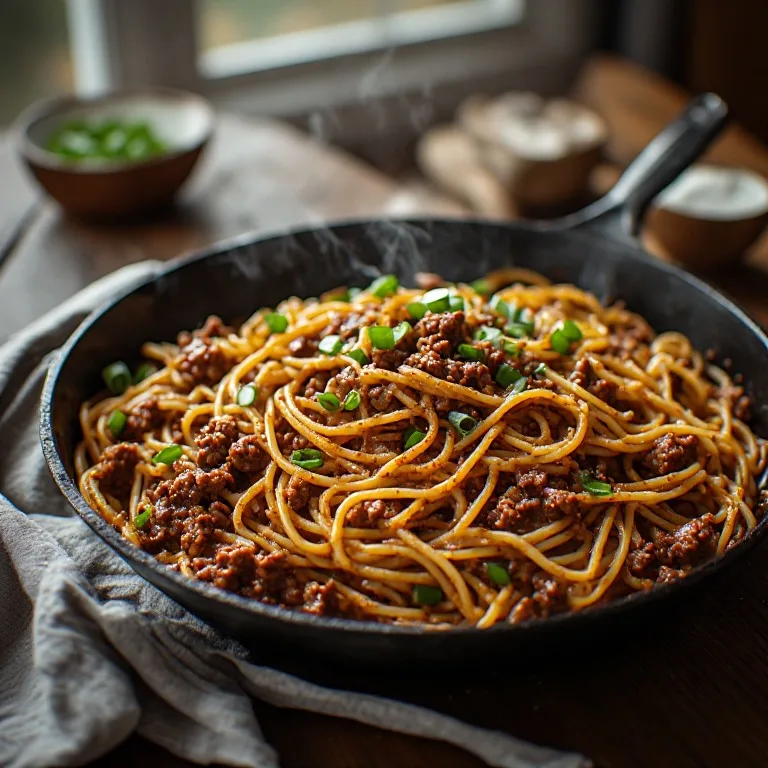
Dirty spaghetti is a viral TikTok one-pot pasta where spaghetti cooks directly in seasoned ground-beef-and-sausage drippings and beef broth — thickened with a quick roux and boosted with a packet of Lipton Beefy Onion Soup Mix — until every strand turns a deep Cajun brown. It borrows its name and method from Louisiana dirty rice, takes about 35 minutes, and uses one pan. The three things that make or break it: brown the meat hard enough to build fond, don’t skip the roux, and stir the pasta every 2 to 3 minutes so it doesn’t clump.
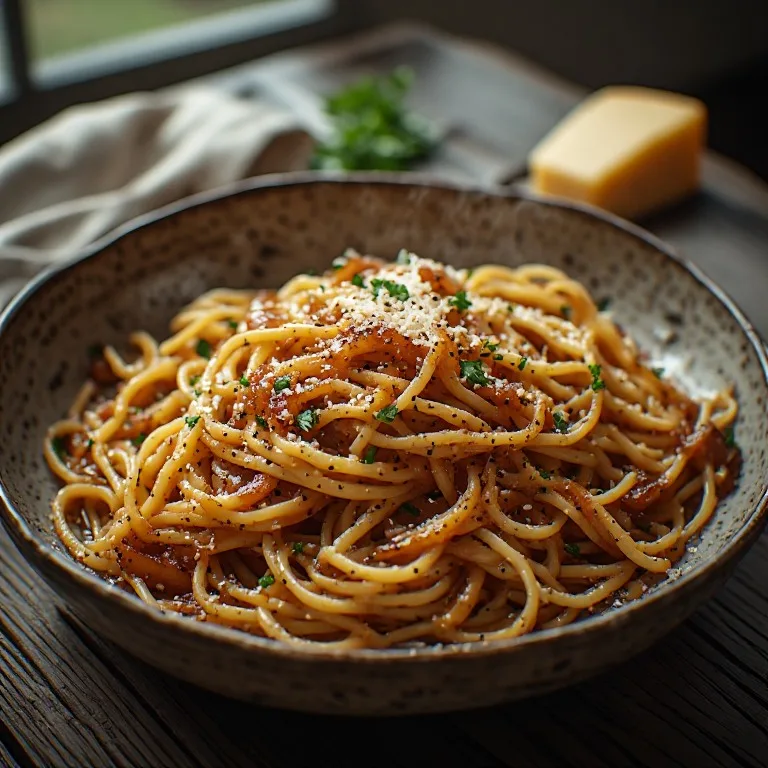
Most pasta dishes are built to look clean. Dirty spaghetti is the opposite — every strand gets stained a deep, uneven brown, the sauce is thick enough to coat a spoon, and the bowl at the bottom is never perfectly smooth. That is not a flaw. That is the entire technique.
The dish takes its name and its method from dirty rice, the Louisiana Creole staple where white rice is cooked with ground meat, chicken livers, and Cajun seasonings until it absorbs the drippings and turns an appetizing shade of brown. Dirty spaghetti swaps the rice for pasta and the liver for a two-meat combination of ground beef and Italian sausage, but keeps the core idea: instead of cooking starch in water and adding sauce, you cook starch directly in seasoned meat drippings and broth, absorbing both flavor and color in a single vessel.
The result is pasta that does not taste like pasta-with-sauce. It tastes like the pasta has been marinated in the meat. Because, effectively, it has.
The Three Failure Modes
1. Pale, grey meat. The most common starting mistake. Browning ground beef and sausage properly means leaving it alone long enough to develop fond — the dark, sticky layer that forms on the pan bottom when protein and fat hit high heat. Constantly stirring grey crumbles is steaming, not searing. To fix: spread the meat out in a single layer, set the heat to medium-high, and do not stir for at least 2 minutes. The meat should release from the pan naturally once it has browned. The fond that builds on the pan bottom is the foundation of the dish’s flavor — it dissolves into the braising liquid and turns the whole pot dark.
2. Skipping or rushing the roux. The braising liquid needs a thickener or the pasta absorbs all the liquid and then sits in its own starch with no sauce. A 60-second roux — butter and flour whisked over the residual heat — takes almost no time and makes the difference between noodles that look glossy and coated versus noodles that look waterlogged. It is the structural move that turns the dish from a soup into a gravy-pasta.
3. Not stirring while the pasta cooks. Spaghetti cooking in thick, starchy broth wants to clump. In boiling water, constant convection keeps the noodles moving. In a covered skillet over a low boil, there is no convection — the noodles sit in contact with each other and the bottom of the pan and bond together if left alone. A stir every 2 to 3 minutes prevents this. Set a timer.
Why the Pasta Turns Brown
The color transfer happens for two reasons. First, the braising liquid is already dark: beef broth plus dissolved fond plus tomato paste plus smoked paprika creates a liquid that starts deep amber-brown before the pasta touches it. Second, the pasta absorbs liquid rather than releasing starch into water — in boiling water, pasta loses some starch and the water turns cloudy; in this method, the pasta absorbs the brown liquid, staining the starch inside each strand. The longer the pasta cooks in the liquid, the more color it absorbs. Fully cooked dirty spaghetti looks nothing like pasta cooked in water.
This is also why the pasta tastes different from pasta with sauce applied on top. Sauce-on-top means the outside of each noodle picks up flavor while the inside stays neutral. Braise-cooked pasta absorbs flavor throughout — the interior is seasoned, not just the surface.
Why Two Meats
The most common combination — 80/20 ground beef plus Italian sausage — uses both proteins for different reasons.
Ground beef provides fat and fond-building. The high fat content of 80/20 beef renders into the pan and creates a rich, beefy base for the roux. A leaner ground beef (90/10 or higher) produces less fond and results in a drier gravy.
Italian sausage contributes seasoning and fennel. Sausage is pre-seasoned with garlic, fennel, and black pepper — removing the casings means those seasonings go directly into the meat base without needing to be added separately. Hot Italian sausage also adds a different heat profile from cayenne: deeper, oil-soluble heat rather than sharp surface heat.
Using only ground beef produces a fine result but a blunter flavor. Using only sausage produces a more intense, anise-forward dish that competes with the Cajun spices. The combination gives depth without any single note dominating.
The Lipton Soup Mix
Every credible recipe for this dish includes one ingredient that sounds odd: a packet of Lipton Beefy Onion Soup Mix. Today.com tested multiple versions and noted it consistently; Chili Pepper Madness called it essential. The reason it works is that the mix contains hydrolyzed soy protein, beef extract, yeast extract, and dehydrated onion — a combination that adds umami depth, distributed onion flavor, and a slight thickening quality that broth alone cannot replicate.
It is not the same as just adding more onion or more beef broth. The dehydrated onion in the mix behaves differently from fresh onion cooked in the pan: it rehydrates gradually in the liquid and becomes fully distributed through every spoonful of sauce. The hydrolyzed protein adds a savory roundness that homemade beef broth lacks.
If the packet bothers you: there is a substitution in the FAQ. Most people who try it once stop questioning it.
Variations
Andouille instead of Italian sausage. Andouille is smoked coarse-ground Cajun pork sausage — stronger, smokier, and more aggressively seasoned than Italian. Using andouille in place of Italian sausage shifts the dish from Cajun-Italian fusion to full Cajun. Reduce or eliminate the added Cajun seasoning blend since andouille is already heavily spiced.
Add a can of Rotel. Rotel (diced tomatoes with green chilies) stirred in with the broth adds acidity, texture, and an extra layer of heat. Use the original variety for moderate heat or hot for significant kick. Drain half the liquid from the can before adding to prevent excess dilution.
Creamy finish. Stir 3 to 4 tablespoons of heavy cream into the finished pasta off heat. The cream lightens the color from deep brown to a brick-red and rounds out the Cajun heat — it becomes slightly reminiscent of a vodka sauce but Cajun-spiced. Add a splash of pasta cooking water (or reserved broth) to loosen if the sauce tightens too much on the heat.
Shrimp addition. Add 1 lb of large shrimp (peeled, deveined) during the last 3 to 4 minutes of pasta cooking, pressing them into the liquid. Shrimp overcooks quickly — 3 minutes in the simmering broth turns them pink and just cooked through. Remove the lid for the last minute to let the broth concentrate slightly with the shrimp in it.
Storage and Reheating
Dirty spaghetti keeps for up to 4 days in an airtight container in the refrigerator. The pasta absorbs more liquid as it sits and the sauce tightens considerably — it will look almost dry the next day, which is normal.
To reheat: add 3 to 4 tablespoons of beef broth or water per serving to the pan, place over medium heat, and stir as the liquid heats and loosens the pasta. It takes about 4 minutes to reheat evenly. Do not microwave without adding liquid — the pasta dries out and the sauce becomes gummy.
The dish freezes reasonably well (up to 2 months), though pasta texture is slightly softer after thawing. Freeze in single-serving portions with an extra splash of broth for easier reheating.