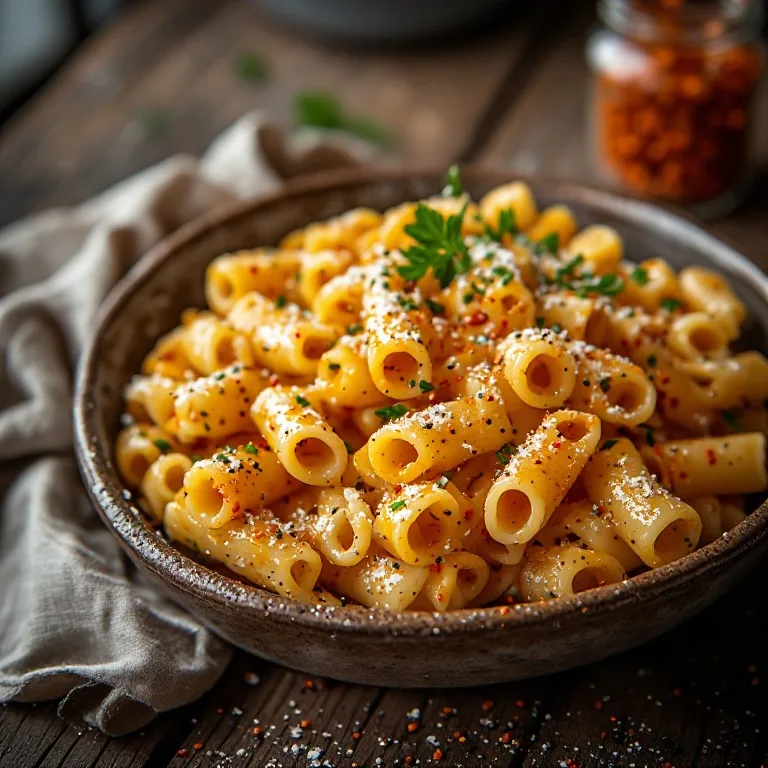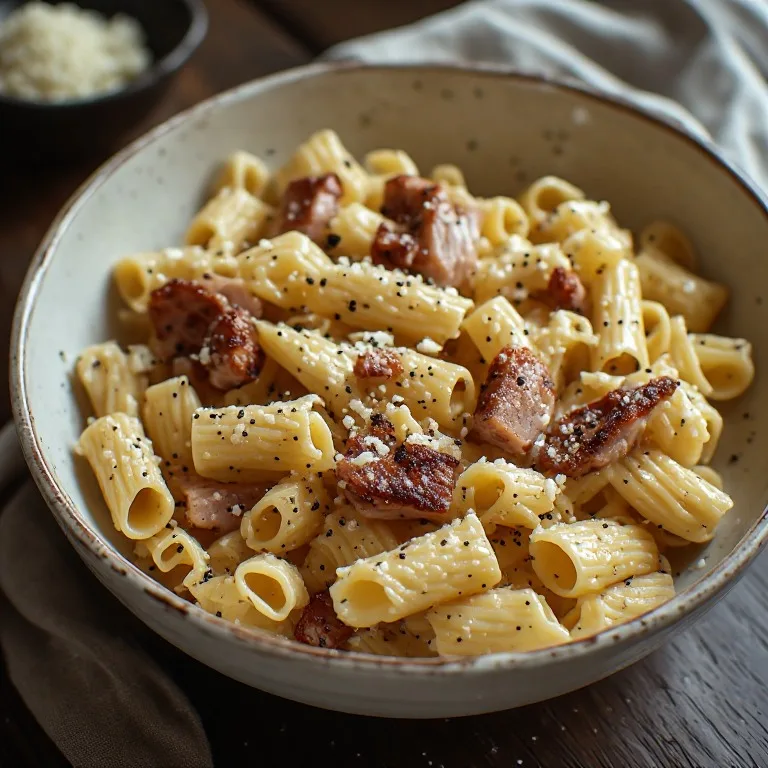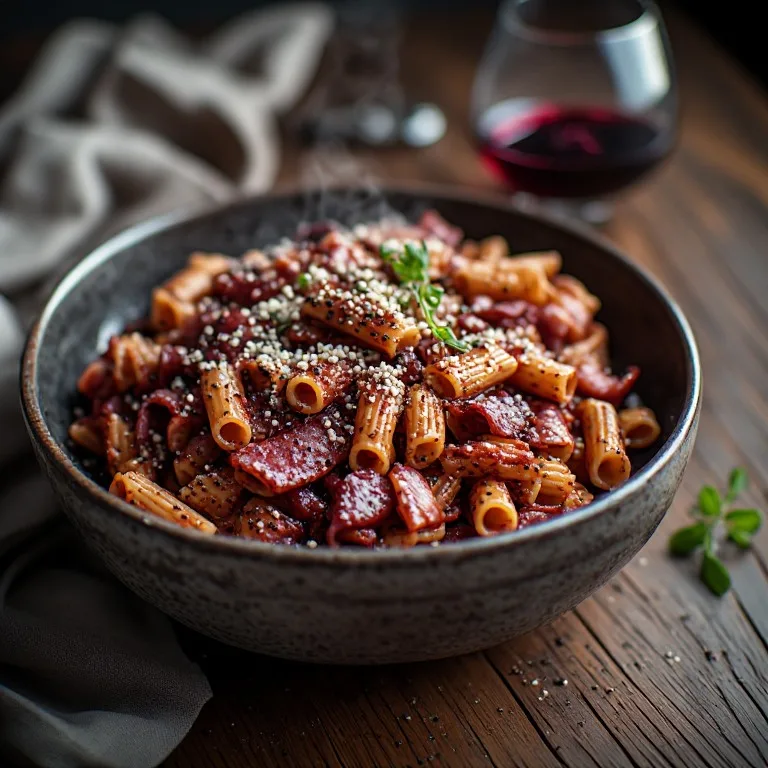



Pasta all’ubriaca — drunken pasta — is one of those recipes where watching it being made is as good as eating it. You add a splash of red wine to the pan and the rigatoni, still pale from partial boiling, drinks it in and turns the color of a bruise. Add more wine and it deepens. By the time it’s done — 25 minutes from a cold pan — you have a bowl of pasta that looks like it was made from grapes, stained deep burgundy-purple, coated in a glossy reduced wine sauce, topped with shards of crispy guanciale.
That color is the reason the dish went viral on TikTok. The transformation from cream-colored pasta to deep eggplant-purple is dramatic enough to stop a scroll, but the technique behind it — cooking pasta risotto-style, absorbing liquid in stages — is genuinely one of the better methods for building flavor directly into the noodle rather than just coating the surface. Every ridge of the rigatoni is stained through. The wine’s tannins are concentrated into the sauce. The guanciale’s fat carried the shallot and garlic. You end up with pasta that tastes like a glass of Chianti became a bowl of dinner.
The technique is Italian in origin, from wine country regions where the harvest produced more than could be drunk and the surplus went into cooking. Pasta all’ubriaca appears in recipes from Tuscany, Umbria, and Piedmont — wherever the wine is serious. TikTok gave it an audience, but the dish itself has been working for a long time.
What makes this different from regular pasta
Standard pasta prep: boil in salted water, drain, sauce. The pasta cooks in hot water and picks up only salt and starch. The sauce goes on top.
Drunk pasta inverts this. You pull the pasta after 4 minutes — still chalky, not done — and transfer it to the pan. Then you add wine in stages, the way you would add stock to risotto. The pasta finishes cooking by absorbing red wine rather than water. Every molecule of liquid that soaks in is flavored. When the wine reduces to a glaze, the starch that leaked from the pasta emulsifies it into a glossy sauce that clings to every ridge rather than pooling at the bottom of the bowl.
The result is fundamentally different from pasta tossed in a wine reduction: the flavor is inside the pasta, not just around it.
The wine choice matters more than you think
The wine reduces by roughly half during cooking, concentrating its character significantly. A good Italian red in the $12–$18 range — Chianti Classico, Barbera d’Asti, Montepulciano d’Abruzzo — will give you bright acidity, fruit, and earthy depth. A cheap, thin wine will reduce to something sharp and metallic. Avoid anything labeled “cooking wine,” which contains added salt and preservatives designed to make it shelf-stable, not to concentrate into sauce.
The one rule: use something you would drink. Not something special, but something drinkable. Pour 1.5 cups into the pasta, drink the rest with dinner.
The guanciale is not optional (but can be substituted)
Guanciale — cured pork cheek — renders a fat that is softer, sweeter, and more delicate than bacon fat. It starts cold in a cold pan, the fat melts slowly, and by the time it is done you have translucent, barely-crispy pieces and a pan full of liquid gold that will carry your shallot and garlic. The rendered fat becomes the flavor backbone of the dish before the wine even enters.
Pancetta is an acceptable substitute. Thick-cut bacon works but its smokiness competes with the wine. The vegetarian version — butter and olive oil — produces a lighter result that still shows off the wine technique, just without the savoriness that guanciale contributes.
The technique: add wine in stages, not all at once
The most common mistake is treating this like pasta in tomato sauce — adding all the liquid at once and simmering until done. That approach produces pasta that boils in wine rather than absorbing it, and the pasta cooks unevenly (the edges soften first, the center stays hard).
The correct approach is the risotto method: add wine in ¼-cup additions, toss until absorbed, add more. Each addition gives the pasta time to drink the liquid fully before you add the next round. The texture is more even, the color is more uniform, and the sauce reduces properly between additions rather than staying watery throughout. It takes 6 to 8 minutes and requires you to stand at the stove and pay attention. That is the price of the dish.
The 4-minute pre-boil is your buffer: it gives the pasta enough structural integrity to survive the tossing without breaking, while leaving enough chalkiness in the center to finish properly in the wine.
Finishing: the butter emulsion
The final step — cold butter and finely grated Pecorino, added off the heat and tossed vigorously — is the technique that most Italian pasta recipes require and most home cooks skip. The cold butter, combined with the starchy pasta water that transferred with the noodles, emulsifies the wine reduction into a sauce that is glossy rather than greasy. If you skip the butter toss or do it over too much heat, the fat separates and the sauce looks oily. If you do it correctly, the sauce coats every ridge of every rigatone and there is almost no liquid pooling at the bottom of the bowl.
Pecorino Romano, grated on a microplane, dissolves on contact with the hot pasta. Use real Pecorino — its saltiness and slight funk cut through the wine’s tannins in a way that Parmesan alone does not, though aged Parmigiano works as a substitute if Pecorino is not available.
The pasta is ready when it looks like it belongs on a marble counter in a restaurant in Siena. Serve it immediately.