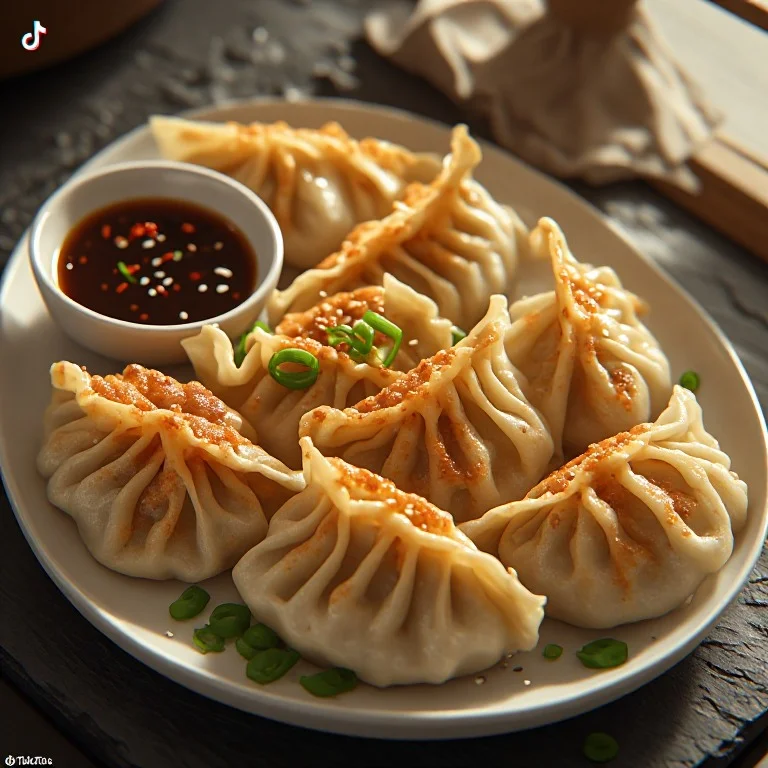



The Dumpling Dish That Took Over TikTok (and For Good Reason)
The viral TikTok dumpling bake is one bag of frozen gyoza, one can of coconut milk, and two tablespoons of red curry paste, baked covered in the oven for 25 minutes. No stovetop, no searing, no separate sauce pot. The entire dish — including prep — takes under 30 minutes and requires one pan.
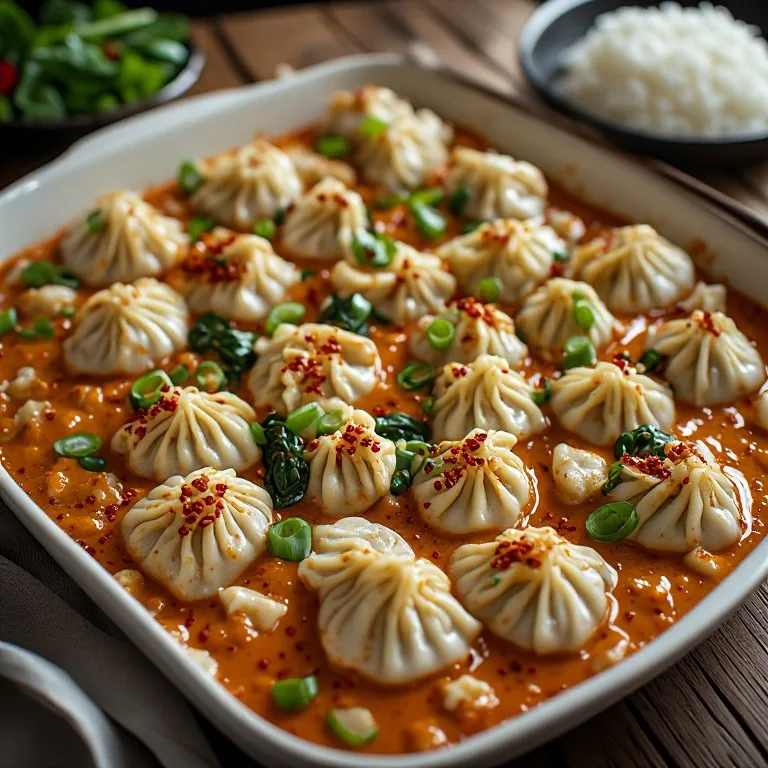
The concept is simple: arrange frozen dumplings in a shallow pool of coconut curry sauce, seal with foil, and let the oven do everything. The bottoms braise in the liquid while the tops steam through. The sauce thickens from the starch the dumplings release and concentrates from the heat. When it comes out of the oven, the dumplings are tender at the base and slightly set on top, sitting in a pool of spiced coconut sauce that is good enough to drink.
What makes the dish work is the same principle behind every great braise: the enclosed environment traps steam, which cooks the dumplings from all sides simultaneously, while the liquid stays hot enough to develop flavor but not hot enough to destroy the wrappers. The foil is not optional — it is structural.
The Three Things That Actually Matter
The dish has almost no technique, but there are three decisions that determine whether it works.
1. Do not thaw the dumplings. This is the most common mistake. A thawed dumpling has already released moisture from its filling into the wrapper — the wrapper is already compromised before it enters the oven, and it will dissolve into the sauce rather than hold its shape. Frozen dumplings go in stiff, with intact skins, and cook gradually as the oven temperature brings the interior up to temperature. The baking time (20–25 minutes) is calibrated for a frozen start. Use them straight from the freezer.
2. Half-submerged, not fully submerged. The dumplings should be pressed into the liquid so the flat bottom makes contact with the sauce, but the pleated top should poke above the surface. Full submersion produces uniformly tender — soft — dumplings with no textural contrast. Half-submerged means the bottoms braise and the tops can develop a light set (and browning, if you uncover them at the end). The sauce level in the dish determines this; if your dish is too small and the dumplings are buried, the sauce will be too deep.
3. Cover tightly with foil. The foil is what creates the steam pressure that cooks the frozen dumplings through from the inside. A loose seal — foil draped over but not pressed down — lets steam escape and the tops dry out. Press the foil down firmly against the rim of the baking dish on all four sides.
Red Curry vs. Tom Yum: Both Went Viral
The original viral recipe used Thai red curry paste. A few months later, a second wave of creators substituted tom yum paste and the variation went equally viral — to the point where the internet now debates which one is “correct.”
They are different dishes. Red curry paste is oil-based and dense, made from dried chilies, lemongrass, galangal, shrimp paste, and aromatics ground together. Mixed into coconut milk, it creates a thick, rich, creamy sauce with a warming, complex heat. Tom yum paste is more acidic and thinner — it contains lemongrass, galangal, kaffir lime, fish sauce, and chilies in a lighter, sharper base. Mixed into coconut milk, it produces a brighter, tangier sauce that is closer to a creamy tom yum soup than a curry.
If you are making this for the first time: use red curry paste. It is smoother, more widely available, and more universally liked. If you want something brighter and more acidic, or you have tom yum paste already: use that instead. The technique is identical; only the flavors differ.
Why the Sauce Thickens Without Any Thickener
The sauce in the finished dish is noticeably thicker than the raw coconut milk and curry paste mixture you put in. This happens for two reasons.
First, the coconut milk reduces during the 25-minute bake. Water evaporates — even inside a foil-covered dish, some steam escapes through imperfect edges — and the coconut fat and solids concentrate.
Second, the dumplings release starch from their wrappers as they cook. Gyoza wrappers are made from wheat flour and water; at oven temperature, starch granules absorb liquid and swell, then release some of that starch back into the surrounding sauce. This released starch acts as a light thickener — the same reason pasta water is starchy and useful for finishing pasta sauce.
The result is a sauce that starts at the consistency of pourable coconut milk and finishes at something closer to a light cream sauce — thick enough to coat a spoon, thin enough to spoon over rice.
The Chili Crisp Finishing Move
The single best upgrade to this dish is a spoonful of chili crisp spooned over the dumplings just before serving. Chili crisp — an infused chili oil with crunchy fried garlic, shallots, and spices — does three things: adds heat without cooking it in, contributes textural contrast to the soft dumplings and sauce, and cuts through the richness of the coconut milk with its acidity and savory depth.
Lao Gan Ma is the most widely available brand (available at most Asian grocery stores and increasingly at Target and Walmart). Fly by Jing is spicier and more complex. Any quality chili crisp works. Drizzle about a teaspoon per serving directly over the dumplings, not stirred into the sauce — the crunchy bits should stay on top.
Variations
Tom yum version. Substitute 2 to 3 tablespoons of tom yum paste for the red curry paste. Omit the fish sauce (most tom yum pastes already contain it) and add a squeeze of fresh lime juice after baking to reinforce the citrus notes.
Add shrimp. Add 12 oz of large peeled, deveined shrimp during the last 8 minutes of baking — pull back the foil, add the shrimp between the dumplings, and re-cover. Shrimp at this temperature cook through in 8 minutes. They will be pink and just cooked through; pull them out the moment they curl into a C-shape and opaque throughout.
Swap the greens. Baby spinach wilts to almost nothing during baking — fine for flavor and color but minimal texture. For more substantial vegetables, use: torn kale (remove the stems, tear into 2-inch pieces), bok choy (halved small, or quarter-inch slices), or thinly sliced mushrooms. Broccoli florets work but need to be small — large florets will not cook through in 25 minutes.
Add noodles. Soak a nest of rice vermicelli in cold water for 10 minutes, drain, and add it to the baking dish on top of the greens and under the dumplings. The noodles absorb the sauce during baking and eliminate the need for a separate side dish. The dish becomes a complete one-pan meal.
Storage and Reheating
The dumplings do not store particularly well once baked — the wrappers absorb the sauce and soften further as they sit. The dish is best eaten directly from the oven.
If you have leftovers: refrigerate in an airtight container for up to 2 days. To reheat, add a splash (about 2 tablespoons) of coconut milk or broth per serving, cover with foil, and warm in a 350°F oven for 10 minutes, or microwave covered at 70% power for 2 to 3 minutes. The texture will be softer than freshly made but the flavor remains good.
The sauce, separated from the dumplings, keeps for up to 4 days and is excellent as a broth for ramen, a base for a quick shrimp soup, or a dipping sauce for fresh gyoza.