
Pin It

Viral TikTok Rice Paper Dumplings (Crispy, Gluten-Free, Pan-Fried)

Viral TikTok Rice Paper Dumplings (Crispy, Gluten-Free, Pan-Fried)
Jump to Recipe
Prep 25 min Cook 15 min Serves 4 (makes 16–18 dumplings)
Quick answer: Mix 1 lb ground pork with ½ cup squeezed-dry napa cabbage, 3 garlic cloves, 1 tsp ginger, 2 tbsp soy sauce, 1 tbsp oyster sauce, 1 tsp sesame oil, 1 tbsp Shaoxing wine, ½ tsp white pepper, and 3 sliced scallions. Dip one rice paper sheet in room-temperature water for 5–7 seconds (it will keep softening as you work), lay flat, add 2 tablespoons of filling in the center. Dip a second sheet the same way and lay it directly on top of the first — this double layer is what keeps the dumpling intact and gives you the crispy crackle. Fold the long sides over the filling, then roll from the bottom up like a burrito to seal. Pan-fry in 2 tablespoons of neutral oil over medium heat without moving for 2–3 minutes until the bottom is deep golden, flip once with a spatula, and cook 1–2 minutes more. Serve immediately with a dipping sauce of 2 tbsp soy sauce, 1 tbsp rice vinegar, 1 tsp sesame oil, and 1 tsp chili crisp.

Shop the tools

Gear matched to this recipe. These are Amazon affiliate links — we may earn a small commission if you buy, at no extra cost to you.

As an Amazon Associate, Copycat Spices earns from qualifying purchases. Product images are generic illustrations, not the exact item listed.

Viral TikTok Rice Paper Dumplings (Crispy, Gluten-Free, Pan-Fried)

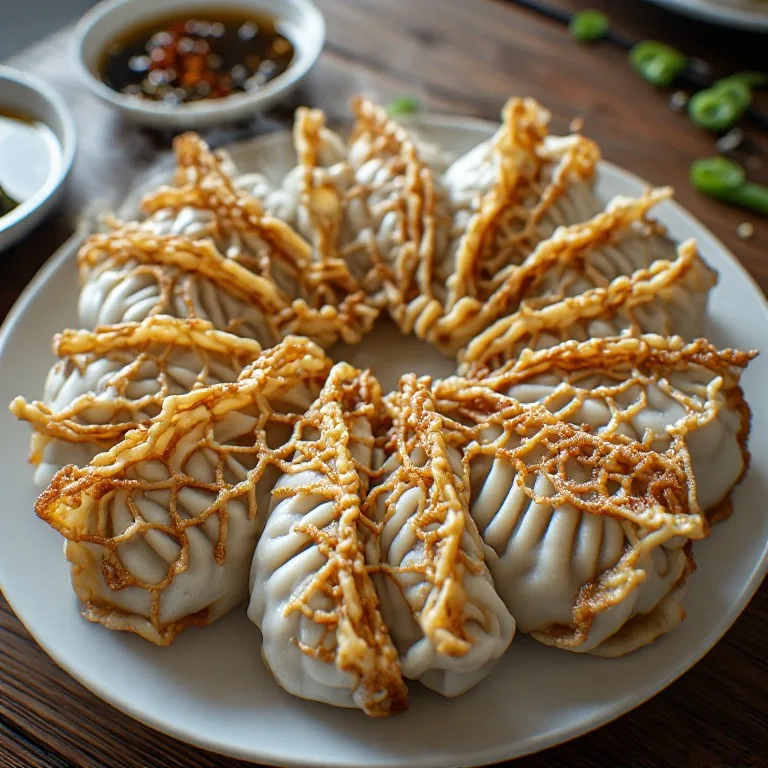
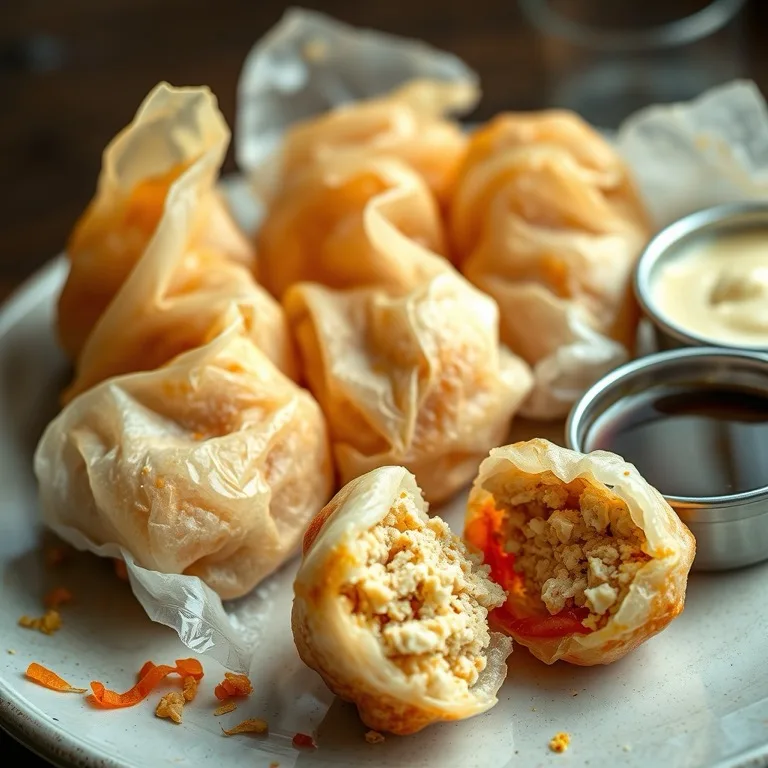
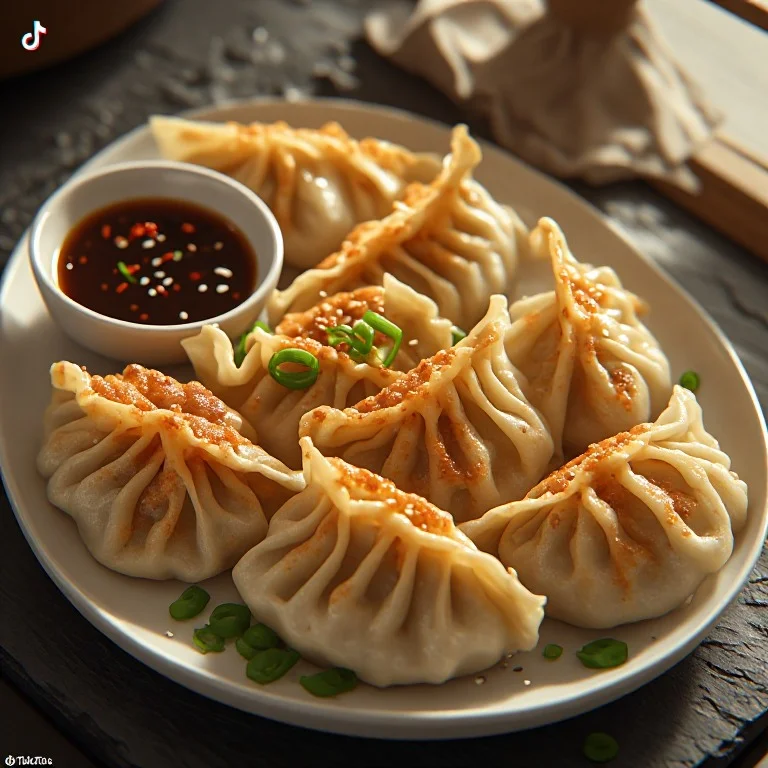
The viral TikTok rice paper dumplings made at home — juicy pork-cabbage filling wrapped in double-layered rice paper and pan-fried until shatteringly crispy. The double-wrap is why they don't tear. Here's exactly how to soak, fold, and fry them.

Easy Prep: 25 min Cook: 15 min Total: 40 min4 (makes 16–18 dumplings) servings ~$4.50/serving
Prep25 min
Cook15 min
Total40 min
Servings
4
At home~$4.50/serving
vs
Restaurant~$20.25/serving
You save ~78%

The Story Behind the Recipe

The viral TikTok rice paper dumplings made at home — juicy pork-cabbage filling wrapped in double-layered rice paper and pan-fried until shatteringly crispy. The double-wrap is why they don't tear. Here's exactly how to soak, fold, and fry them.

Nutrition Facts

Per serving (4 (makes 16–18 dumplings) servings)
Calories310
Total Fat14g
Total Carbs24g
Dietary Fiber1g
Sugars2g
Protein18g
Sodium620mg

* Estimated values based on standard recipe preparation. Actual values may vary.

Ingredients

  • For the filling
  • For assembly and frying
  • For the dipping sauce

Instructions

💡
Pro tip: This recipe tastes even better the next day. The flavors need time to meld together in the fridge.
❄️
Storage: Keeps in an airtight container in the fridge for up to 2 weeks. Freezer-friendly for up to 3 months.
🎃 Free Halloween cookbook — download now The Copycat Halloween Cookbook A ready-made, photo-illustrated PDF of our best halloween copycat recipes — free to download, no building required. Pay what you want to support if you love it.

Free PDF — instant download. We'll also send new seasonal copycat recipes now and then; unsubscribe anytime. Or just download it →

Why This Went Viral

Rice paper dumplings hit TikTok around 2022 and never really left. The reason is simple: they look like something from a specialty restaurant, they’re faster than traditional dumplings, and they’re naturally gluten-free — which opened them up to a huge audience who’d never been able to eat wheat-wrapper dumplings at all.

The visual is striking: a golden, crinkled, semi-translucent shell with the filling just visible through the wrapper, served with a chili-dark dipping sauce. The crunchy pull in video content travels well, and the satisfying crackle of the crust has kept the hashtag circulating on FoodTok years after the initial burst.

Traditional dumpling wrappers require either skill (rolling your own from scratch) or a specialty grocery trip for pre-made. Rice paper is available at any Asian grocery and most large supermarkets now, it stores dry indefinitely, and it requires zero rolling technique. The main skill is the soak-and-fold, which takes about three practice dumplings to get right.

The Double-Layer Technique Explained

The single most important detail in the recipe — the one most written versions skip or mention only in passing — is why two sheets of rice paper instead of one.

Rice paper sheets are made from rice flour, water, and tapioca starch. When dry they’re rigid and break if bent. When soaked they become pliable and slightly sticky. When they hit hot oil they want to blister, bubble, and crack at the points where filling pressure pushes outward against the seams.

One sheet doesn’t have enough tensile strength at the fold points to survive the frying process without tearing — the filling forces the seam open, oil gets inside, and the dumpling blows out. Two sheets soaked and layered while still slightly tacky laminate together as they dry slightly on the board. The result is a bonded sheet that’s roughly twice as resistant to tearing at the folds, and thick enough to develop the crisp crust that makes the texture — that shattering exterior with a slightly chewy interior layer just inside — so satisfying.

Some recipes push to three layers for extra crunch. Two is the sweet spot for most fillings at standard rice paper thickness (22cm sheets). If you’re using larger sheets (24cm or more), two layers are definitely enough.

The Two Mistakes That Ruin Rice Paper Dumplings

Over-soaking. The rice paper soak should be 5–7 seconds in room-temperature water. It will feel underdone when you lift it — slightly stiff, tacky but not fully pliable. Put it on the board anyway. It finishes softening during the 20–30 seconds you spend adding the second sheet and portioning the filling. If you soak until the paper feels perfectly soft in the water, by the time you try to roll it the edges will be gelatinous, tear when you apply pressure, and stick to your hands rather than to themselves.

Crowding the pan. Rice paper needs dry heat from the pan surface to form its crust. Pack too many dumplings in at once and they steam each other — you get a pale, slightly gummy exterior instead of the golden crinkled crust. Cook in batches with at least ½ inch between each dumpling, in oil that’s properly hot before you add them (shimmer, not smoking).

Filling Variations

The pork-cabbage combination in this recipe is the most popular version, but the technique works with nearly anything.

Shrimp and garlic chive: Replace the pork with ¾ lb raw shrimp (peeled, deveined, roughly chopped) and add ¼ cup finely chopped garlic chives or regular chives. Skip the oyster sauce. Fry time drops to 1½–2 minutes per side.

Tofu and mushroom (vegan): Crumble 1 lb firm tofu and squeeze dry. Finely chop 1 cup shiitake mushrooms and cook in a dry pan over medium-high for 4 minutes until the moisture evaporates and the edges brown. Combine with tofu, add 1 tsp white miso, and use the same seasoning profile from the main recipe.

Kimchi and pork: Replace the napa cabbage with ½ cup well-drained, finely chopped kimchi (squeeze out the liquid thoroughly — it’s even wetter than fresh cabbage). Reduce the soy sauce to 1 tablespoon since kimchi is already salted. The fermented funk from the kimchi carries through the wrapper beautifully.

Spicy peanut tofu: Combine crumbled firm tofu with 2 tbsp peanut butter, 1 tbsp soy sauce, 1 tsp chili garlic sauce, 1 tsp sesame oil, and 1 tsp honey. Wrap and fry identically. Serve with a lime-forward peanut dipping sauce.

More Viral TikTok Recipes to Try
🥗

Make It Healthier

Love Viral TikTok Rice Paper Dumplings (Crispy, Gluten-Free, Pan-Fried) but want a lighter version? Try these simple swaps:

  • ✓Ground chicken thigh (not breast) is an excellent swap — slightly leaner than pork but still fatty enough to stay juicy. Increase oyster sauce to 1½ tablespoons and add a splash more soy sauce to compensate for the reduced fat carrying flavor.
  • ✓For a fully vegetarian version: substitute the pork with 1 cup finely chopped firm tofu (squeeze dry in a towel first) + 1 cup finely chopped shiitake mushrooms (cook in a dry pan for 4 minutes to drive off moisture before mixing in). Add 1 tsp white miso for depth. Filling technique and fry time stay identical.
  • ✓Shrimp filling: replace the pork with ¾ lb raw shrimp, peeled, deveined, and roughly chopped into pea-sized pieces. Skip the oyster sauce (shrimp doesn't need it). Pan-fry time drops to 1½–2 minutes per side — shrimp cooks much faster than pork.
  • ✓The rice paper sheets are naturally gluten-free (made from rice flour and water). Use tamari in place of soy sauce and GF-labeled oyster sauce to keep the entire recipe GF.
  • ✓Each dumpling runs about 70 calories, so a 4–5 piece serving lands around 290–350 cal with roughly 18–22g protein — comparable to a restaurant appetizer order, but with no MSG and full control over the salt and oil.

Frequently Asked Questions

Why double-layer the rice paper? Can I just use one sheet?

One sheet tears. Rice paper is very thin (less than 1mm when dry), and when it hits a hot pan with oil it wants to blister and crack at the seams where the filling puts pressure on the wrapper. Two bonded sheets give you roughly double the tensile strength at the fold points — not just thickness. The bond between the two wet sheets forms a laminated layer that distributes stress evenly during frying, which is why double-wrapped versions crisp up into a shatteringly crunchy exterior while single-wrapped ones blow out at the corners and leak filling into the oil. Some recipes even go to three layers for extra crunch, though two is the sweet spot for most fillings.

My rice paper tore when I was rolling. What went wrong?

Almost certainly over-soaked or the filling was still warm. Over-soaked rice paper (more than 10–12 seconds in warm water, or any time in hot water) turns gelatinous and tears the moment you apply rolling pressure. Pull it from the water when it still feels slightly stiff — it finishes softening on the board while you're laying down the second sheet and portioning the filling. Warm filling also steams the rice paper from below, accelerating the softening. If your filling was refrigerated, that's fine; if it was freshly made and still warm, give it 20 minutes to cool before wrapping.

Can I air fry these instead of pan-frying?

Yes, with a tradeoff: the bottom crust won't be quite as uniformly golden as pan-frying, but air frying is hands-off and works well. Brush or spray both sides of the assembled dumpling lightly with oil, place seam-side down in the air fryer basket without overlapping, and air fry at 390°F for 10–12 minutes, flipping once at the halfway mark. The exterior crisps well but more unevenly — the raised points contact the basket grid and brown faster than the flat surfaces. For the crispiest result, pan-fry; for convenience, air fry.

Can I make these ahead or freeze them?

Freeze assembled (uncooked) dumplings on a parchment-lined baking sheet until solid, about 2 hours, then transfer to a zip-top bag for up to 1 month. Fry from frozen in the same oil setup — add 2 extra minutes per side and use medium-low heat so the exterior doesn't brown before the filling cooks through. Don't refrigerate assembled-but-uncooked dumplings: the rice paper absorbs moisture from the filling overnight and turns sticky and difficult to separate. Cooked dumplings don't reheat well (the rice paper toughens in the microwave and loses its crisp in all methods); these are best made and eaten immediately.

What's the best dipping sauce to serve with them?

The simplest: straight chili crisp + a splash of soy sauce in a small dish. For a more composed sauce, combine 2 tablespoons soy sauce, 1 tablespoon rice vinegar, 1 teaspoon sesame oil, ½ teaspoon sugar, and 1 teaspoon chili crisp — this is a standard dumpling dipping sauce and it pairs perfectly. If you have fish sauce, a nuoc cham (2 tbsp fish sauce + 2 tbsp lime juice + 1 tbsp sugar + 1 garlic clove minced + 1 chili thinly sliced + 3 tbsp water) takes these in a Vietnamese direction that works beautifully with the rice paper. Peanut sauce (2 tbsp peanut butter thinned with soy sauce + lime + honey) pairs well with the vegetarian tofu version.

Does the filling need to be cooked before wrapping?

No — raw ground pork goes in and cooks fully during the 3–4 minutes of total pan contact time. The thin layer of filling (golf-ball amount per dumpling spread to about ½ inch thick when pressed flat) cooks through quickly from direct pan heat and the radiant heat of the crispy rice paper surrounding it. The only exception is if you're using a filling with vegetables that need precooking (like shiitake mushrooms in the vegetarian version, which you should cook in a dry pan first to drive off moisture).

Love this recipe? Share it!

Free PDF: our 12 most-wanted copycat recipes — instant download.

Made it? Buy us a coffee

Every recipe here is free, with no paywalls. If this one was a hit at your table, a small tip keeps new copycats coming.

$

Ratings & Reviews

—
No ratings yet

Rate this recipe

Click a star to rate

Leave a Review

0/500

CS

Copycat Spices Editorial

Researched + fact-checked. Every recipe on Copycat Spices is built from published sources — official ingredient lists, brand-published recipes, interviews and food-science references — and fact-checked before it goes live, then written as clear, step-by-step instructions for home cooks of all skill levels.

Learn more about our mission →