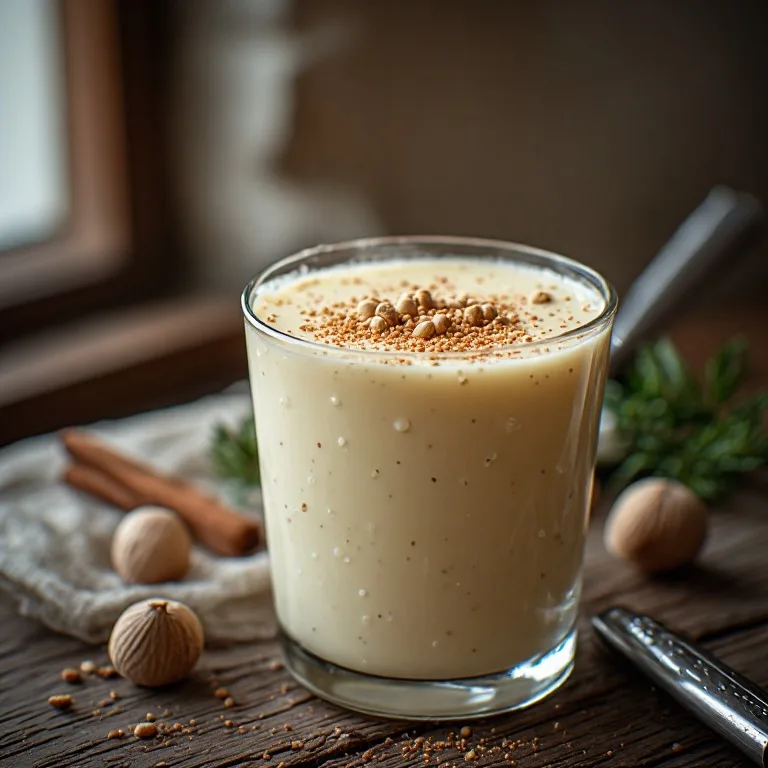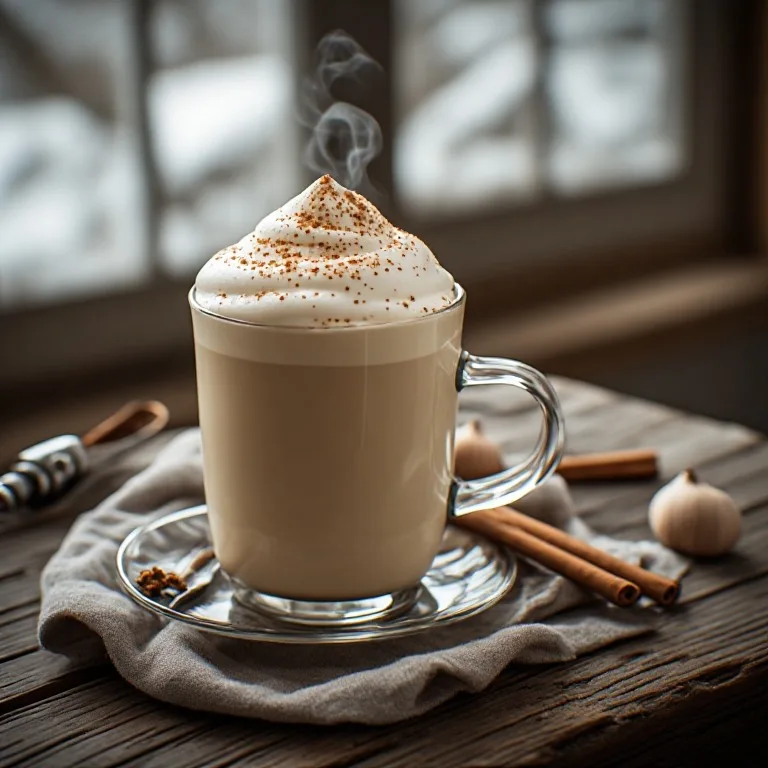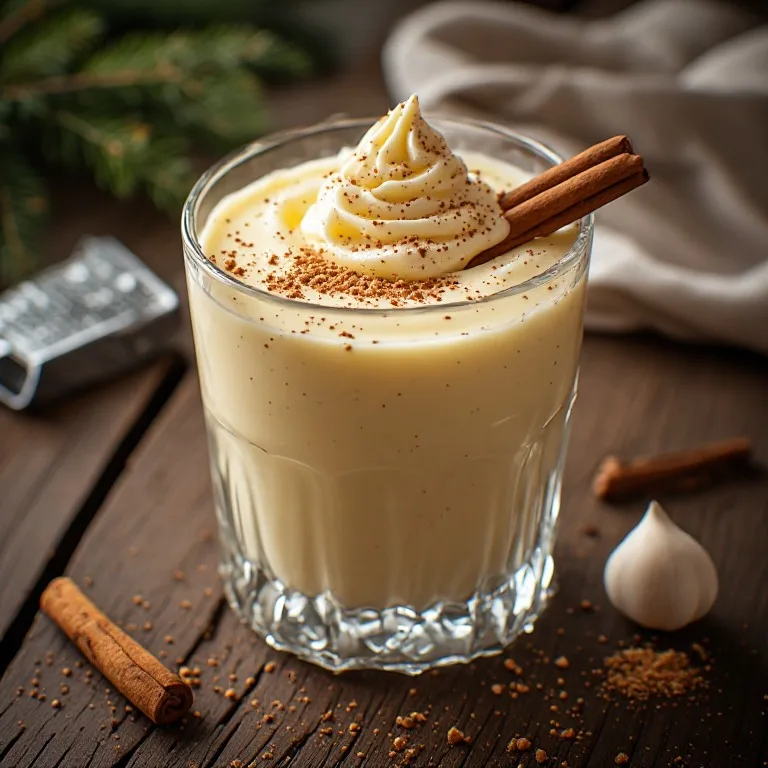



The viral TikTok homemade eggnog moment is always the same: someone makes it for the first time, takes a sip, and says “I didn’t know eggnog was supposed to taste like this.” Store-bought carton eggnog — ultra-pasteurized, thickened with carrageenan, flavored with imitation vanilla — is such a different product that many people genuinely don’t know what the real thing is. This recipe produces the real thing: a cooked egg yolk custard poured over warm cream, seasoned with real vanilla and freshly grated nutmeg, chilled until thick, and served with or without a generous pour of bourbon or dark rum.
The one technique worth understanding before you start: tempering. You cannot pour hot cream directly onto cold egg yolks — they scramble instantly. Tempering means adding the hot cream to the yolks a few tablespoons at a time while whisking, slowly raising the yolks’ temperature before they see real heat. After the first four or five tablespoons, the yolk mixture is warm enough that you can add the rest in a thin stream. This is not complicated — it takes about 90 seconds of focused attention — but it is the technique that separates eggnog from sweet scrambled eggs.
The yolks
Six egg yolks is the right amount for a batch that serves 8. More yolks make a richer, almost pudding-thick drink; fewer make something closer to thin cream. Beat the yolks with the sugar until the mixture is pale and ribbon-thick — this takes 2 minutes by hand and ensures the sugar dissolves fully into the yolks, which helps prevent curdling during tempering.
The egg whites are not used in this recipe. You can save them for meringue, freeze them, or fold them (beaten to stiff peaks) back into the finished chilled eggnog for a lighter, frothier result — old-fashioned “Tom and Jerry” punch uses this approach. The frothier version is less rich but carries the nutmeg and spirit flavors differently and is excellent.
The cream ratio
Two parts whole milk to one part heavy cream produces eggnog that is rich enough to feel indulgent but thin enough to drink. All cream is thicker than most people want from a beverage; all milk is lighter than what most people associate with eggnog’s character. The 2-to-1 ratio hits the right balance. Full-fat dairy matters here: skim milk produces a watery result that no amount of egg yolk will fix.
The nutmeg
Use whole nutmeg and a microplane. Pre-ground nutmeg works and the recipe is still good, but the difference is large enough to be immediately obvious if you’ve tasted the fresh-grated version. Whole nutmeg has volatile oils that dissipate quickly once the spice is ground; grating it fresh releases those oils directly into the eggnog. One whole nutmeg costs about the same as a jar of pre-ground and lasts for years. Grate half the nutmeg into the custard while it’s warm, then grate fresh nutmeg directly over each glass at serving.
The spirit
Bourbon is the standard American choice and the one most people associate with spiked eggnog — its vanilla and caramel notes are a natural match for cream and nutmeg. Dark rum is the original colonial choice, slightly sweeter and more molasses-backed. Brandy or cognac is the European tradition. The recipe works with any of these at ½ to ¾ cup per full batch. Add the spirit after the eggnog is fully chilled — not during cooking, where the alcohol evaporates. Start conservative and taste: the richness of the cream mutes the warmth of the alcohol, and it’s easy to add more.
For a genuinely excellent version, split the spirit: ¼ cup bourbon and ¼ cup dark rum. The combination captures both the American and colonial-era character of the drink at once. If you want a branded-carton flavor profile instead, the Southern Comfort old-fashioned eggnog uses this same cooked base. And any leftover batch makes an excellent Starbucks eggnog latte — just don’t steam the eggnog straight, or it scorches.
Make-ahead
This eggnog is actively better made a day ahead. The custard thickens as it chills, the nutmeg blooms into the cream, and the flavors come together overnight in a way they don’t in two hours. It keeps refrigerated for 4 to 5 days; stir before each serving. Add the spirits on the day you’re serving rather than storing them in the batch — spirits added and chilled for 24 hours integrate beautifully, but a large batch with spirits added too far ahead can become slightly flat in character by day three.