Viral TikTok Olive Oil Cake (One Bowl, No Mixer, Still Moist on Day 5)
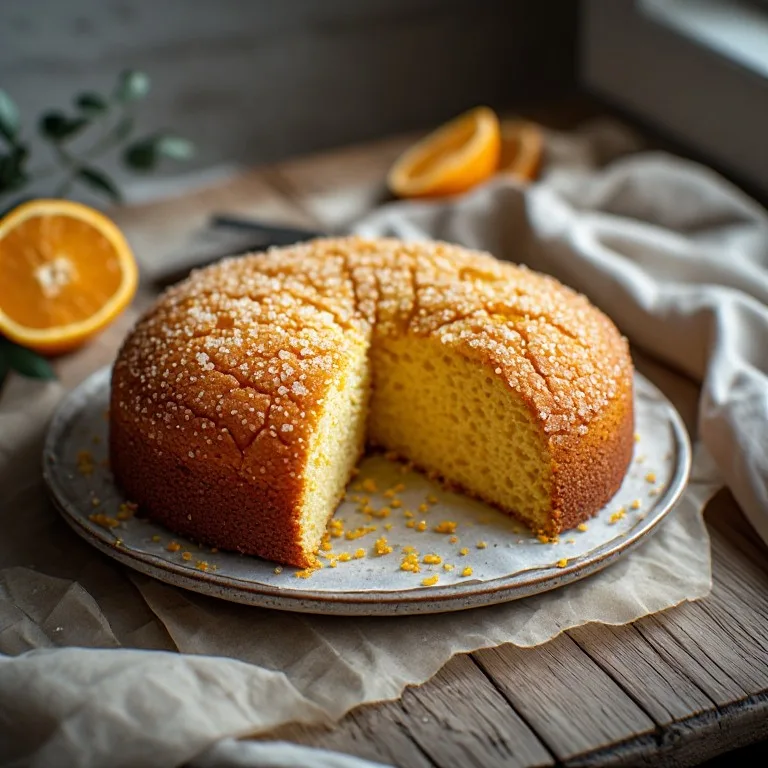
Quick answer: Preheat your oven to 350°F. Grease a 9-inch round cake pan and line the bottom with parchment. In a large bowl, whisk 3 room-temperature eggs with ¾ cup (150g) granulated sugar for about 90 seconds until pale and slightly thickened. Stream in ¾ cup (180ml) good extra-virgin olive oil while whisking, then whisk in ½ cup (120ml) whole milk, 3 tablespoons fresh orange juice (or lemon juice), the zest of 1 large orange, and ½ teaspoon vanilla extract. In a separate bowl, whisk together 1½ cups (190g) all-purpose flour, 1½ teaspoons baking powder, ¼ teaspoon baking soda, and ¾ teaspoon fine sea salt. Add the dry ingredients to the wet and fold with a spatula in 15–18 deliberate strokes — stop the moment the flour streaks disappear. Do not overmix. Pour into the prepared pan, smooth the top, and scatter 2 tablespoons of turbinado (coarse) sugar evenly over the surface. Bake at 350°F for 40–45 minutes until the top is deep golden and crackly, and a toothpick inserted in the center comes out with moist crumbs (not wet batter). Cool in the pan on a rack for 20 minutes, then turn out and cool completely. Keeps at room temperature, loosely covered, for 4–5 days without drying out.
Shop the tools
Gear matched to this recipe. These are Amazon affiliate links — we may earn a small commission if you buy, at no extra cost to you.
 Illustrative imageKitchenAid Artisan 5 Qt Stand MixerDoughs and batters without the arm workoutCheck price on Amazon →
 Illustrative imageStainless Steel Mixing Bowl SetNesting bowls for prep, marinades, and doughsCheck price on Amazon →
 Illustrative imageWire Cooling Rack (Half-Sheet Size)Keeps fried and baked things crisp, never soggyCheck price on Amazon →
As an Amazon Associate, Copycat Spices earns from qualifying purchases. Product images are generic illustrations, not the exact item listed.
Viral TikTok Olive Oil Cake (One Bowl, No Mixer, Still Moist on Day 5)
The olive oil cake blowing up on TikTok: no mixer, one bowl, 10 minutes to assemble, and a crackly sugar top over a deeply moist crumb that doesn't dry out for days. The science behind why oil produces a better texture than butter, which olive oil to use, and the citrus-zest step that takes it from good to exceptional.
Easy
Prep: 10 min
Cook: 45 min
Total: 55 min8–10 servings
~$4.50/serving
At home~$4.50/serving
vs
Restaurant~$20.25/serving
You save ~78%
The Story Behind the Recipe
The olive oil cake blowing up on TikTok: no mixer, one bowl, 10 minutes to assemble, and a crackly sugar top over a deeply moist crumb that doesn't dry out for days. The science behind why oil produces a better texture than butter, which olive oil to use, and the citrus-zest step that takes it from good to exceptional.
Nutrition Facts
Per serving (8–10 servings)Calories335
Total Fat19g
Total Carbs38g
Dietary Fiber1g
Sugars22g
Protein4g
Sodium265mg
* Estimated values based on standard recipe preparation. Actual values may vary.
Ingredients
- Wet ingredients
- Dry ingredients
Instructions
Pro tip: This recipe tastes even better the next day. The flavors need time to meld together in the fridge.
Storage: Keeps in an airtight container in the fridge for up to 2 weeks. Freezer-friendly for up to 3 months.
Free PDF — instant download. We'll also send new seasonal copycat recipes now and then; unsubscribe anytime. Or just download it →
🎉 Your Halloween Cookbook is ready!
It's free — but if it's worth something to you, you can pay what you want. It keeps the recipes coming.
$
✓ Downloading your free Halloween Cookbook — check your downloads folder. Happy cooking!
Make It Healthier
Love Viral TikTok Olive Oil Cake (One Bowl, No Mixer, Still Moist on Day 5) but want a lighter version? Try these simple swaps:
- ✓Reduce the sugar to ½ cup (100g) without significantly changing the texture. Olive oil cake is not as dependent on sugar for moisture as butter cakes. The top crust will be thinner and less crackly, but the crumb stays intact.
- ✓Substitute 3 tablespoons of the all-purpose flour with fine almond flour — it adds a subtle nuttiness and very slightly increases the protein per serving without changing the structure.
- ✓Use buttermilk in place of whole milk for more protein and slightly less fat per serving, while improving the lift of the crumb.
- ✓The recipe is naturally dairy-free if you use a non-dairy milk (oat milk or unsweetened almond milk work; avoid sweetened varieties, which throw off the sugar balance). The crumb is marginally less rich, but the olive oil carries it.
Frequently Asked Questions
Which olive oil should I use — extra-virgin, light, or pure?
Extra-virgin, always. 'Light' and 'pure' olive oils are refined oils with the flavor compounds removed; using them defeats the entire point of this recipe. The olive oil is the star ingredient — you need EVOO that has actual flavor: fruity, slightly grassy, with a faint peppery finish. That said, you don't need an expensive or artisanal bottle. A standard California Olive Ranch, Kirkland Organic, or any reputable Italian or Spanish EVOO from the grocery store is exactly right. The heat of baking diminishes some of the oil's subtlety, so mid-range EVOO is the sweet spot — more flavor than refined oil, less wasted than finishing-quality oil.
My cake has a dense, gummy layer at the bottom — what went wrong?
Two likely causes. First: the cake was underbaked. Olive oil cake looks done on the surface before the center sets — the top colors more aggressively than a butter cake due to the oil. Always verify with a toothpick: moist crumbs, not wet batter. If the toothpick comes out wet, add 5 minutes and check again. Second: the cake cooled in the pan too long. After 20 minutes, the bottom traps steam between the cake and the pan, which makes the lower crumb gummy. Once cooled for 20 minutes, always transfer to a wire rack to cool the rest of the way.
Why is my cake not rising much?
Usually one of three things: the baking powder is expired (test it: drop 1 teaspoon into hot water — it should fizz immediately), the eggs were cold from the refrigerator (they don't emulsify the oil properly, which suppresses the structure), or the batter was overmixed (developed gluten locks out air). The fix for next time: fresh leaveners, room-temperature eggs, and stop folding the moment the flour disappears.
Can I make this with lemon instead of orange?
Yes — lemon makes the more common American version; orange is the more traditional Italian version. With lemon: use 3 tablespoons fresh lemon juice and the zest of 2 lemons (lemons have less aromatic oil per fruit than oranges, so you need twice the zest). Lemon produces a brighter, more acidic cake with a sharper citrus flavor. Orange produces a warmer, more rounded, slightly floral cake. Both are excellent. A 50/50 split — zest of one orange and juice of one lemon — is a baker's trick that captures the warmth of orange and the sharpness of lemon simultaneously.
Why does olive oil cake stay moist so much longer than butter cake?
It comes down to the difference between solid and liquid fat. Butter is about 80% fat and 20% water; at room temperature, the fat is semi-solid. As butter cake cools and ages, the fat solidifies further and contracts, physically squeezing moisture from the crumb. Olive oil is pure fat with no water; it doesn't solidify at room temperature. The oil stays liquid and mobile inside the crumb structure, keeping it tender and moist for 4–5 days. There's also the gluten factor: liquid fat (oil) coats flour proteins more evenly than melted or creamed butter, which produces slightly less gluten development and a more tender, less-drying-prone crumb.
Can I taste the olive oil, and is that good or bad?
You can, subtly — and it's the point. A well-made olive oil cake has a background richness and very faint peppery depth that a butter cake doesn't. This is not an aggressive savory note; it's a subtle complexity, similar to how sesame oil in baking adds depth rather than making things taste like sesame. If the olive oil flavor is overwhelming and unpleasant, the oil used was either rancid (check the harvest date) or too strongly flavored. Good EVOO in a baked cake registers as richness, not a pronounced 'olive' taste. If you genuinely want a neutral result — for serving people who are olive oil–skeptical — use a mild, buttery-flavored EVOO (many Spanish oils fall in this category).
Can I make this in a loaf pan instead of a round?
Yes. Use a standard 9×5-inch loaf pan prepared the same way (oiled + parchment). The batter fills it to about two-thirds full. Keep the oven at 350°F but bake 55–65 minutes — the longer time accounts for the greater depth. If the top browns too fast before the center sets, drop to 325°F for the final 15 minutes or tent loosely with foil. The loaf shape produces a beautiful crack down the center top (classic pound-cake style), and the turbinado crust on top is just as satisfying. Slice it after full cooling for clean slices.
Does this work with gluten-free flour?
A 1:1 gluten-free all-purpose blend (Bob's Red Mill 1:1, King Arthur Measure for Measure) works with no other adjustments. The final texture is slightly gummier and the crumb is a bit denser, which is typical of GF baking — but olive oil cake is more forgiving than butter cake in this context, because the oil's natural moisture-retention hides some of the GF texture issues. Almond flour alone does not work as a 1:1 swap — you'd need a different recipe formulated for nut-flour structure.
Love this recipe? Share it!
Made it? Buy us a coffee
Every recipe here is free, with no paywalls. If this one was a hit at your table, a small tip keeps new copycats coming.
$
💛 Support checkout is coming soon — the cookbook stays free either way.
Ratings & Reviews
Rate this recipe
Click a star to rate