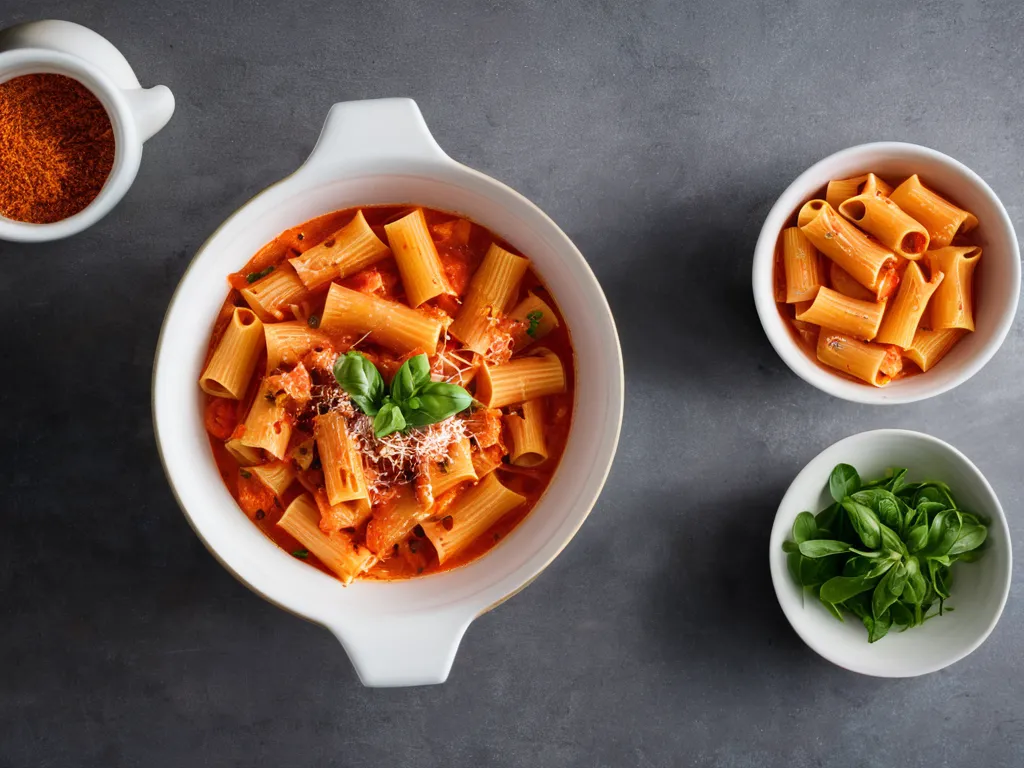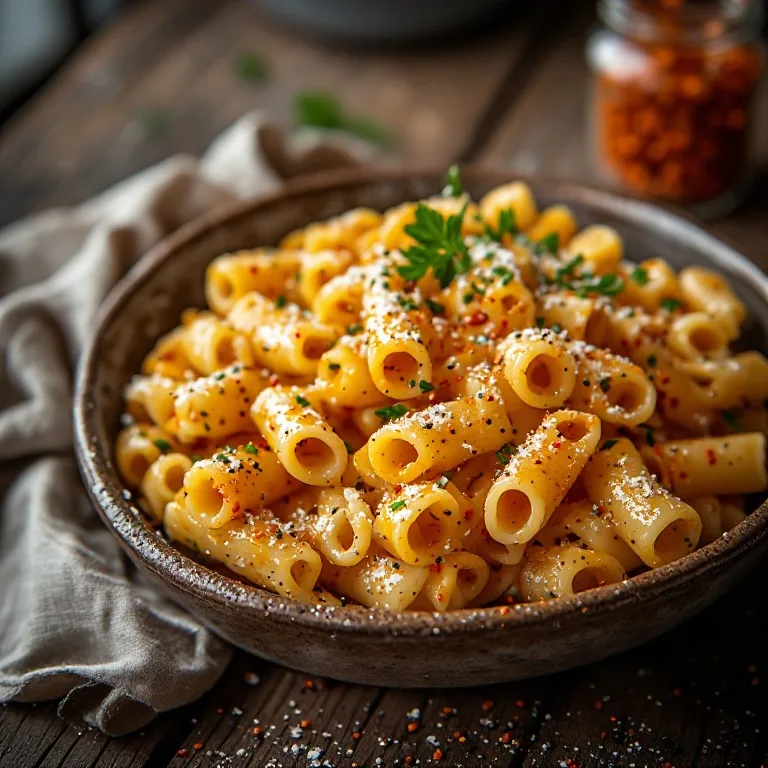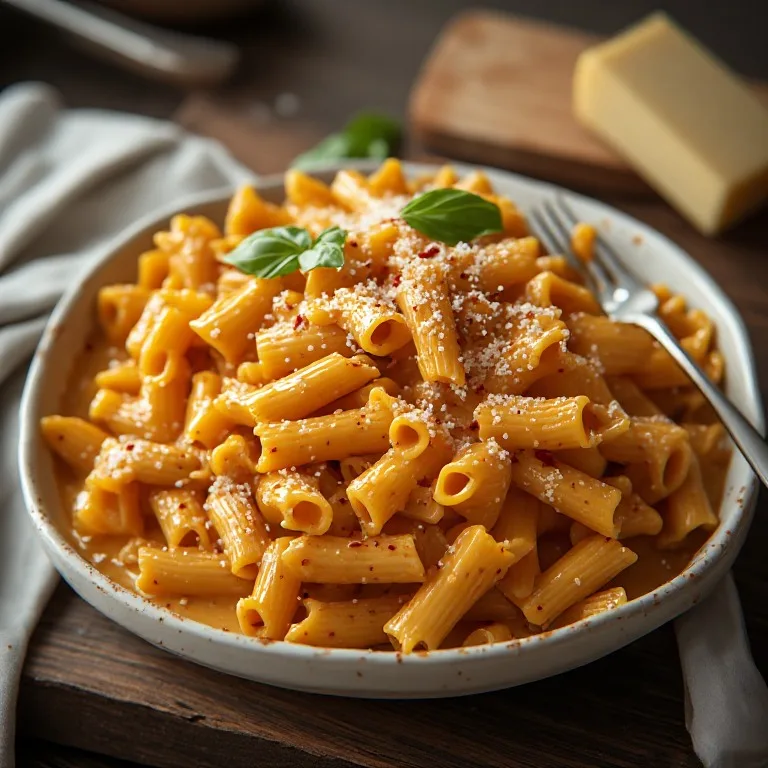


Pumpkin vodka pasta is exactly what it sounds like: the classic Italian-American vodka sauce — shallot, garlic, tomato paste, vodka, heavy cream, Parmesan, red pepper flakes — with canned pumpkin puree swapped in for the crushed tomatoes. The result is a golden-orange, creamy, spicy pasta with a subtle sweetness that makes it the most fall-appropriate 30-minute weeknight dinner you can make.
It went viral on TikTok in fall 2023 and kept spreading because it answers the same impulse as spicy vodka pasta — rich, restaurant-quality, no real technique required — while looking dramatically seasonal. The tomato paste stays in the recipe (without it the sauce tastes flat), the vodka does its chemistry, and the pumpkin does the rest. Rigatoni is correct; the tubes fill with sauce.
Pumpkin Vodka Pasta vs. Regular Vodka Pasta
The only change is the base: canned pumpkin puree replaces the crushed tomatoes. Everything else — the shallot, garlic, tomato paste, vodka, cream, Parmesan, and red pepper flakes — stays the same. Here’s what that swap actually does:
| Regular vodka pasta | Pumpkin vodka pasta | |
|---|---|---|
| Base | Crushed tomatoes | Canned pumpkin puree (100% pumpkin, not pie filling) |
| Color | Pink-red | Golden orange |
| Acidity | Bright, tangy | Softer, rounder — less acid |
| Sweetness | Low | Mild natural sweetness |
| Heat needed | 1 tsp red pepper flakes | Slightly more, to balance the sweetness |
| Season | Year-round | Fall |
Because pumpkin is sweeter and less acidic than tomatoes, you lean a little harder on the red pepper flakes and keep the tomato paste in to hold the savory line. Everything else is muscle memory from the original.
Why Pumpkin Works in Vodka Sauce
Vodka pasta sauce is an emulsification of fat (cream, olive oil), liquid (pasta water, vodka), and flavor from the tomato paste and aromatics. Canned pumpkin puree has nearly the same water content and body as crushed tomatoes, which means it behaves similarly when cooked with cream: it emulsifies, thickens, and coats pasta with the same logic. The difference is that pumpkin has less acidity (no citric acid, no brightness from tomatoes) and more natural sugars, which is why tomato paste stays in the recipe — it provides the savory backbone and the slight fermented depth that keeps the sauce tasting adult rather than sweet.
The vodka’s role is unchanged: it releases alcohol-soluble flavor compounds from the tomato paste and aromatics that wouldn’t emerge in a pure cream-water sauce. Those compounds contribute most of what makes vodka sauce taste “deeper” than a plain cream sauce. The vodka itself mostly cooks off during the 2–3 minute simmer.
The One Technique That Separates Good from Great
Toss the pasta in the sauce over low heat for 60 full seconds before serving. The starch on the surface of the pasta binds with the cream and olive oil as you toss, thickening the sauce from a pourable liquid to a coating emulsion that clings to every piece. If you just pour the sauce over the pasta in a bowl, it pools at the bottom. The toss in the pan is the difference between restaurant-quality pasta and a bowl of noodles with orange cream on the side.
Serving Variations
Classic vegetarian: Rigatoni + pumpkin vodka sauce + Parmesan + red pepper flakes. Done in 30 minutes.
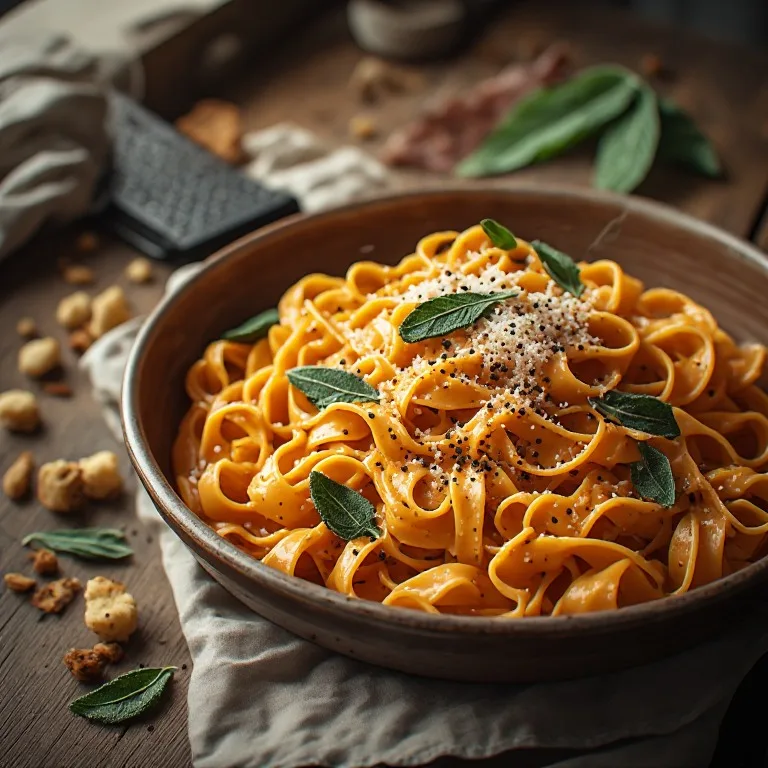
With crispy sage: Fry 8–10 fresh sage leaves in 1 tablespoon butter over medium-high heat for 60–90 seconds until crisp. Spoon the browned butter over the plated pasta, add the sage leaves. The nutty brown butter and herbal sage are the natural fall complement to pumpkin.
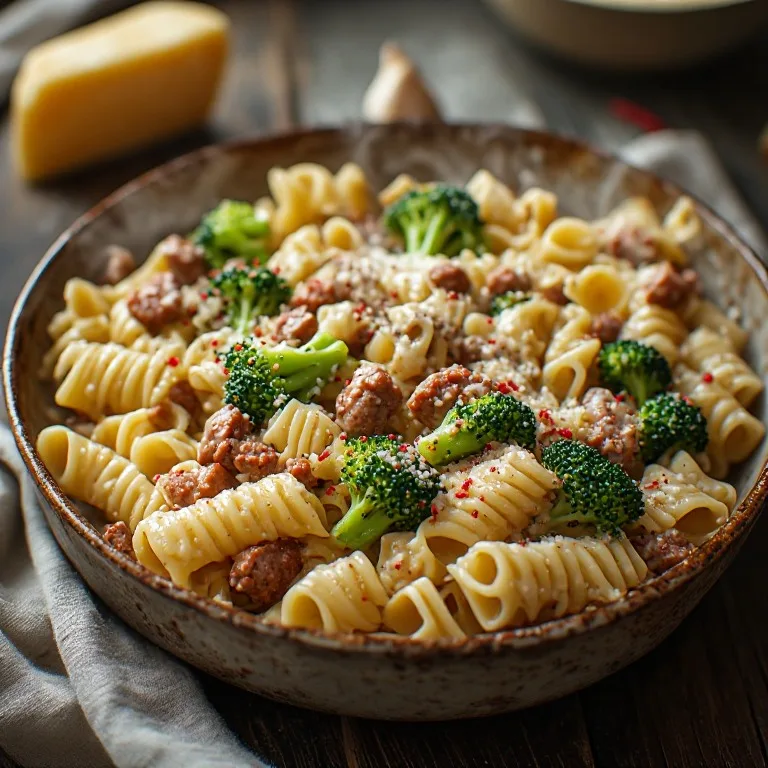
With Italian sausage: Brown 1 lb sweet or hot Italian sausage (casings removed, crumbled) in the skillet first, drain excess fat, then build the sauce in the same pan using the sausage fond. One of the best pasta dishes for a cold October night.
With burrata: Serve the pasta in bowls and tear one ball of burrata over each. The cream runs into the orange sauce and creates something genuinely absurd.