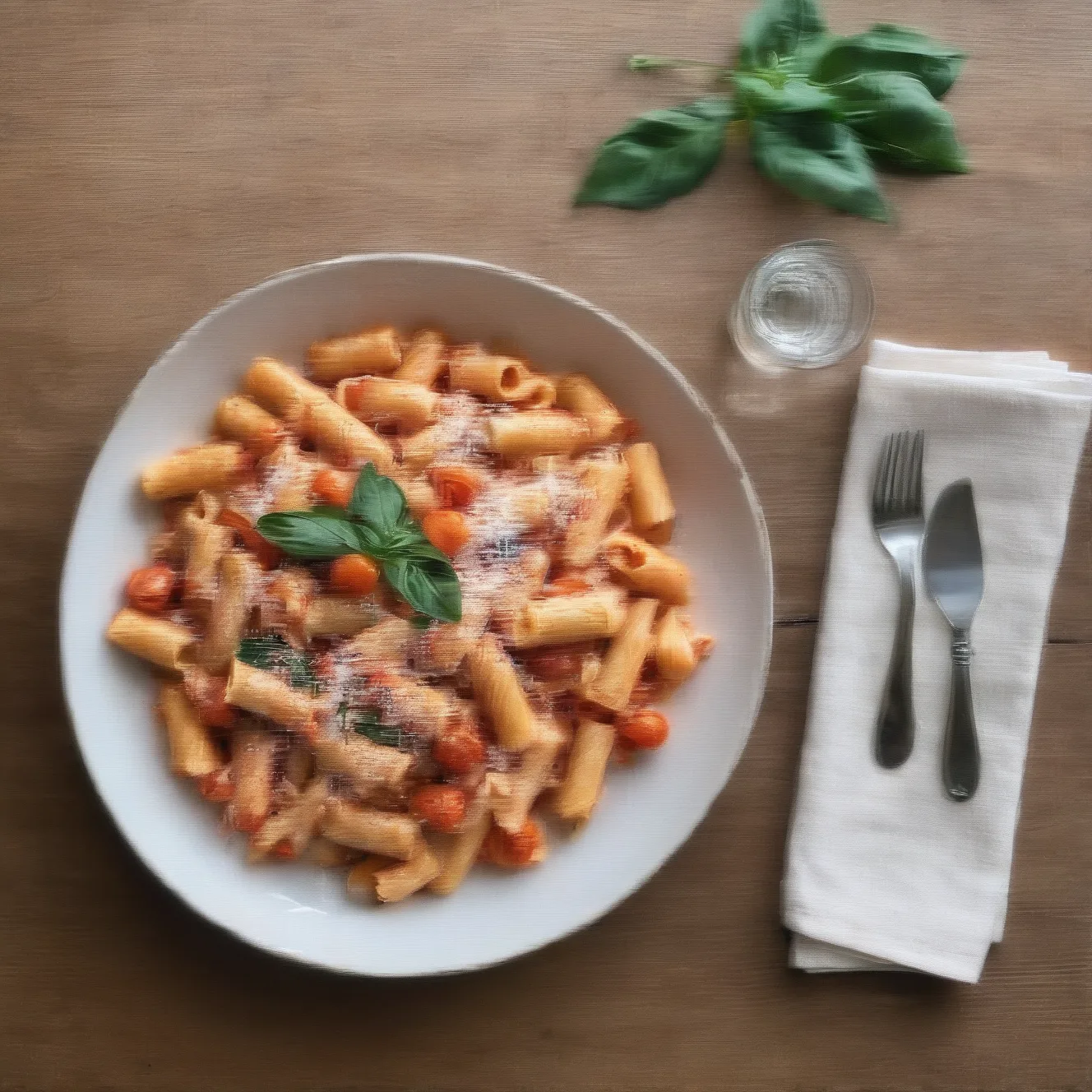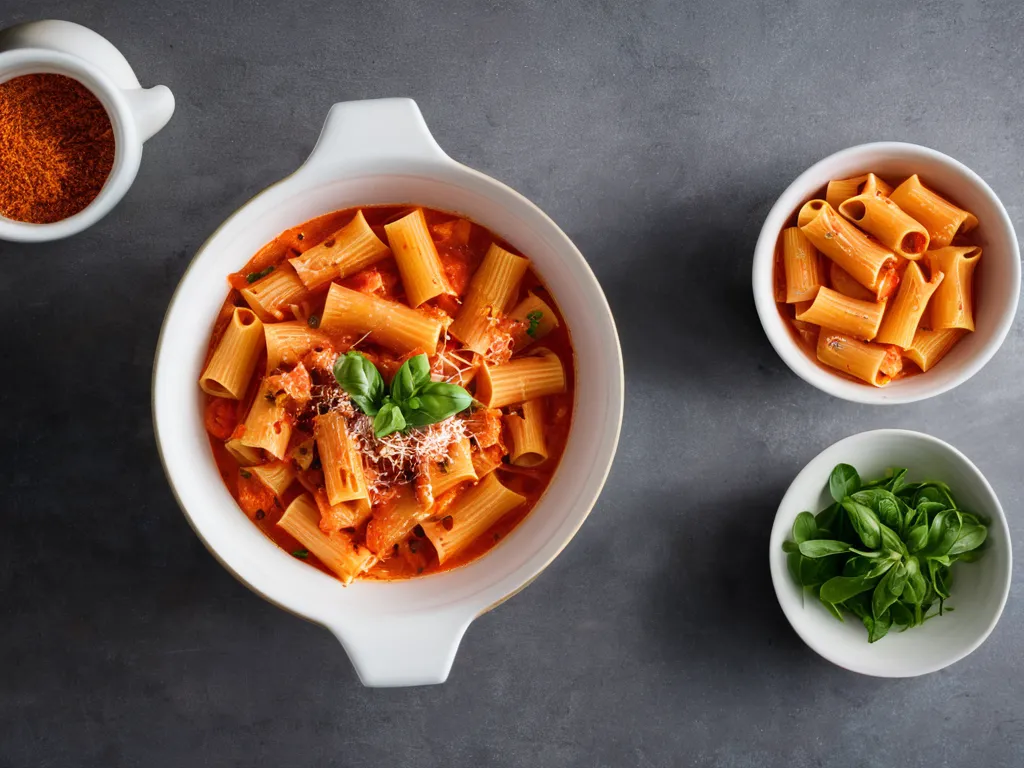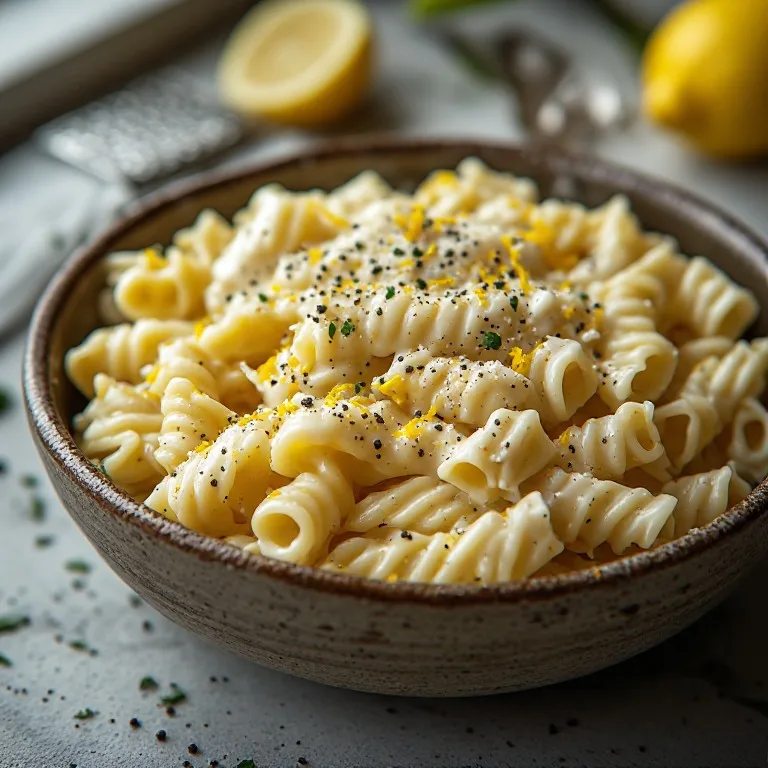



Creamy ricotta pasta has a simple pitch: a pasta sauce that takes no time to make because you never turn on a second burner. The sauce is whole milk ricotta, grated Parmesan, and lemon zest, mixed cold in a bowl. Hot pasta and a splash of starchy pasta water go in. You toss for 60 seconds. The result is glossy, silky, and restaurant-quality.
TikTok rediscovers this every few months under different names — “ricotta pasta,” “creamy white pasta,” “the easiest pasta sauce” — because the technique keeps surprising people. It shouldn’t work. Cold dairy poured over pasta usually ends in a grainy, broken mess. What makes ricotta different is the pasta water: the starch released by the cooking pasta emulsifies the ricotta the same way it binds the cheese in cacio e pepe or the eggs and cheese in carbonara. It’s the same principle, and it works the same way every time.
Why the Sauce Works (the Pasta Water Principle)
As pasta cooks in boiling water, it releases amylose and amylopectin — two types of starch — into the water. That’s why pasta water looks cloudy and slightly silky rather than clear. These starch molecules are the key: they attach to both the fat droplets in the ricotta and the water molecules in the pasta water simultaneously, creating a bridge between what would otherwise refuse to mix. This is emulsification, and it’s the same chemistry at work in carbonara, cacio e pepe, and French beurre blanc.
The hot pasta accelerates the process by warming the ricotta gently and uniformly — not enough to cook it (which would make it grainy), but enough to loosen the curds. The vigorous tossing does the mechanical work: breaking the curds apart and distributing them evenly as the starch molecules grab them. After 60 seconds of active tossing, the sauce looks completely different from what you started with.
Whole Milk vs. Part-Skim Ricotta: Why It Matters
Ricotta is made from whey — the liquid drained off during the cheesemaking process — reheated until proteins precipitate out and form curds. Whole milk ricotta contains cream, which is added back after the initial whey separation, raising the fat content. Part-skim ricotta skips this step.
The fat is functional in pasta sauce. When you toss ricotta with hot pasta and starchy water, the fat molecules disperse into tiny droplets that the starch molecules coat and stabilize. With whole milk ricotta, there are enough fat droplets relative to protein that you get a smooth, glossy emulsion. With part-skim ricotta, the protein-to-fat ratio is higher. Those extra proteins — specifically whey proteins — can coagulate when heated even gently, giving the sauce a grainy texture.
Whole milk ricotta is labeled as such in most grocery stores. Brands like Calabro, BelGioioso, and Polly-O make reliably smooth whole milk versions. The freshest option, if you have an Italian market nearby, is ricotta made that day — even part-skim fresh ricotta behaves better than supermarket whole milk because freshness matters more than fat content once the curds are high-quality.
The Five-Minute Setup That Makes the Difference
Before the pasta is done, you need one minute of prep work that determines whether the dish is good or great:
The bowl. Use your largest bowl. If you’re using a bowl instead of the pasta pot, run hot tap water into it for 30 seconds and dump it out — a warm bowl keeps the sauce from stiffening before you can serve it.
The Parmesan. Grate it finely on a Microplane, not on the coarse grater. Coarsely grated Parmesan doesn’t melt into the sauce; it sits in visible chunks. Microplane-grated Parmesan integrates fully.
The lemon zest. Zest the lemon directly over the bowl, not onto a cutting board. The aromatic oils in the zest are volatile — they start dissipating the moment they leave the skin. Zesting directly over the sauce means none of that is lost.
The measuring cup. Set a liquid measuring cup next to the pot. When the pasta is almost done, scoop out a full cup of pasta water and set it nearby. Do not trust yourself to remember this after you’ve drained the pasta — you won’t.
Variations
Roasted cherry tomato ricotta pasta. Toss 1 cup cherry tomatoes with olive oil, salt, and a pinch of red pepper flakes. Roast at 400°F for 20–25 minutes until blistered and jammy. Fold into the ricotta pasta at the end. The sweet acidity of caramelized tomatoes against the cool creaminess of ricotta is one of the better flavor contrasts in pasta.
Spinach ricotta pasta. Add 2 large handfuls (about 3 oz) of baby spinach to the empty, drained pasta pot immediately after draining — the residual heat wilts it in 30 seconds. Add the ricotta sauce and toss together. The spinach adds color, iron, and a mild vegetable note without competing with the ricotta.
Prosciutto and ricotta pasta. Lay 3–4 torn slices of prosciutto di Parma over the finished pasta. Do not cook it. The salt and funk of dry-cured ham against the mild cream of ricotta is a classic combination.
Hot honey ricotta pasta. Drizzle 1 tablespoon of hot honey (store-bought or homemade) over the finished bowl. The sweetness and heat against the cool, lemony ricotta reads more like a restaurant dish than a weeknight pasta — surprisingly good.
Common Mistakes
Not salting the pasta water enough. The pasta itself absorbs salt as it cooks; the ricotta sauce doesn’t get salted separately. Under-salted pasta water means under-salted pasta means a flat-tasting finished dish no matter how much Parmesan you add. Salt the water until it tastes like mild seawater.
Adding the pasta to the ricotta bowl too slowly. The pasta needs to hit the ricotta while it’s as hot as possible. Drain it, shake the colander once, and immediately transfer. Every second the pasta sits in the colander it loses heat that you need for the emulsification.
Applying direct heat. Do not put the bowl over a burner or stir the ricotta in a pan. Direct heat makes ricotta grainy. The hot pasta is enough.
Using the wrong pasta. Smooth pasta slides; ridged pasta grips. Buy pasta labeled “rigate” — rigatoni rigate, penne rigate, fusilli — for a noticeably better coating.
Stopping tossing too soon. The sauce looks lumpy and wrong for the first 30 seconds. Keep going. It transforms.